Image Credit: Associated Press
Listen to the audio version of this article (generated by AI).
Key Points
- SpaceX wants to make its own gas-turbine blades and vanes to speed up AI data-center power deployment, but the project is still years away from production.
- The turbine-parts bottleneck is real, but SpaceX still needs permits, a foundry, and specialized talent to make its plan work.
- If successful, the project could make SpaceX a major turbine-parts supplier. But for now, it’s a high-risk, long-term bet.
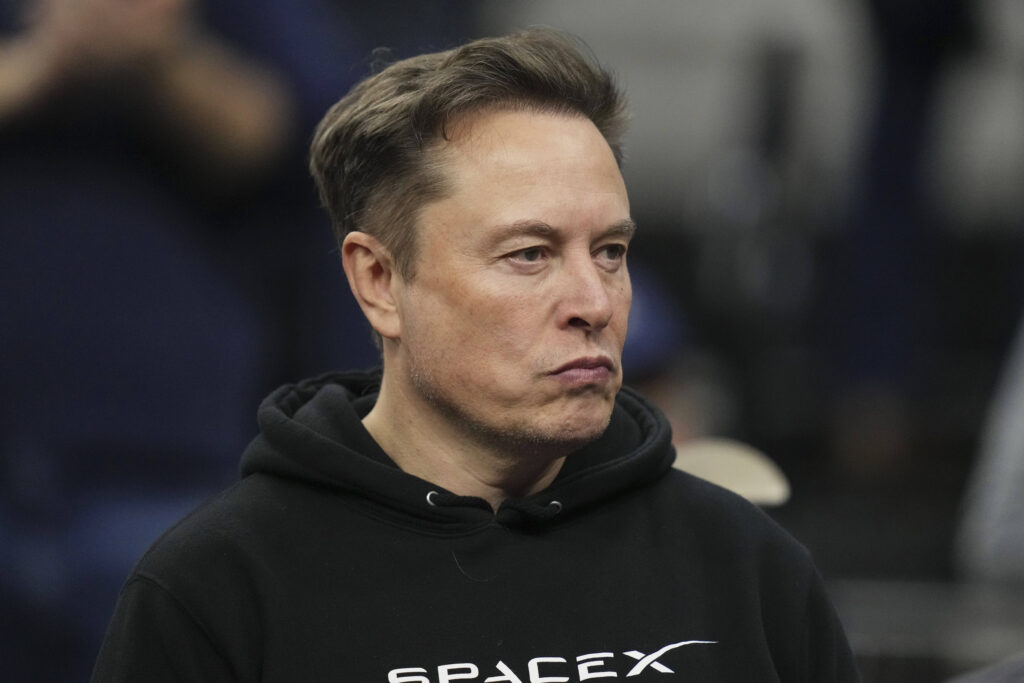
Elon Musk likes to move as quickly as possible. The Tesla (TSLA) and SpaceX (SPCX) CEO has been known to occasionally bypass reality when it comes to his projects and businesses. Recently, Musk has become a major proponent of using natural gas turbines for the artificial-intelligence (“AI”) build-out.
All of that came into focus on August 29, when Musk announced that SpaceX will manufacture its own gas-turbine parts – specifically blades and vanes – to help speed up the process of getting natural gas turbines online to provide power for its data centers.
As you can see in Musk’s X post, he believes casting gas-turbine blades and vanes in-house will cut production time by up to 18 months and be a “profound game-changer” for SpaceX.
And he’s probably right. If SpaceX can actually expedite the process by up to 18 months, it will be a huge win for Musk and company. As he stated in his post, natural gas is still a critical energy source needed to supplement solar power.
But some questions remain unanswered:
- How quickly can SpaceX get a gas-turbine parts-casting factory up and running?
- Does Musk have a team capable of building these parts?
- And assuming this all goes smoothly, how long will it take for SpaceX to produce these parts at scale?
Building Natural Gas-Turbine Parts Is the Next Phase of Musk’s ‘Dark Energy’ Plan
If you’re unfamiliar with the concept of “Dark Energy,” let me take you back to a June 5 article by my colleague Steven Longenecker.
In that piece, he wrote:
Elon Musk will be one of the world’s top buyers of gas turbines over the next few years…
SpaceX has committed to spending more than $2.8 billion on these turbines for its artificial intelligence (“AI”) build-out, the company recently revealed in its initial public offering (“IPO”) filing…
In March, SpaceX agreed to buy $805 million worth of turbines from an unnamed supplier, with deliveries running through 2029. Then in late April, the company struck a separate, still-pending deal for roughly $2 billion worth of mobile gas turbines and related equipment from another vendor.
Steven’s article continued:
And it confirms something my colleague Professor Joel Litman has been saying for months…
This kind of off-grid “Dark Energy” is the next stage of the AI boom. As I explained in our Dark Energy deep-dive last month:
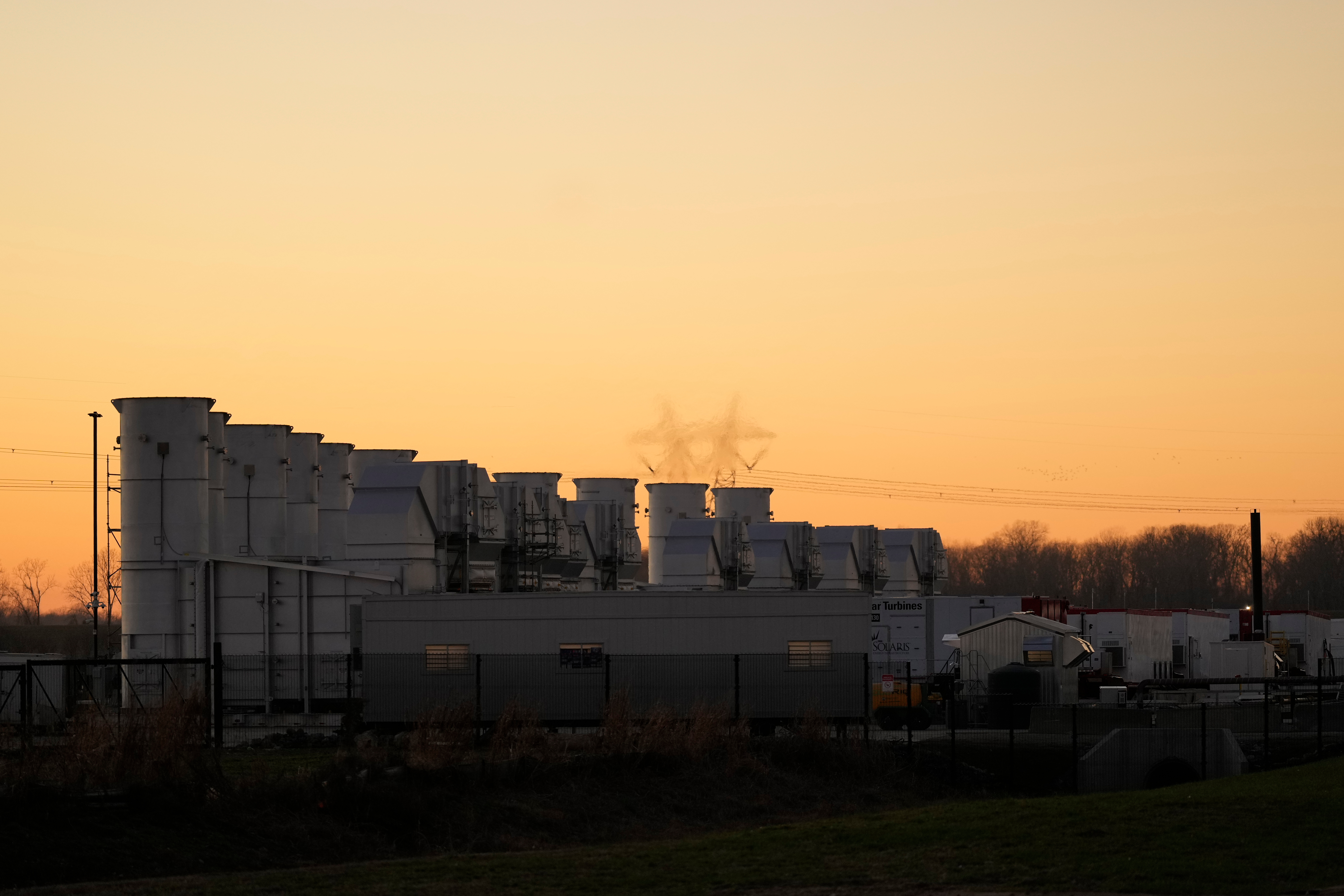
Dark Energy is a clean, reliable power source. Specifically, it’s a class of natural-gas turbines… essentially a jet engine adapted into an electric generator. They start in minutes, run on natural gas instead of jet fuel, and can produce tens of megawatts of power per unit. Stack enough of them together, and you have a private power plant…
But until recently, no one was using them at scale to power the world’s most advanced AI labs. Now that they are, the suppliers building them are sold out for years.
Since then, SpaceX has also purchased APR Energy, a Jacksonville-based power company specializing in rapidly deployable, modular power generation.
I covered that transaction in a July 21 article, in which I wrote:
The deal, which is thought to be worth at least $1 billion, gives Musk what APR Energy’s website describes as “one of the world’s largest mobile gas turbine fleets,” with solutions that scale from 20 megawatts (“MW”) to 500 MW. APR Energy has delivered more than 50 terawatt-hours of power to more than 35 countries.
Most importantly, the company claims it can “deliver reliable energy in 30 to 90 days.”
And that’s exactly what Musk – and every other data-center operator and hyperscaler in the world – desperately wants and needs. Plenty of power… and fast.
Musk is clearly a big believer in the fast power that natural gas turbines can provide to SpaceX’s data centers. But, based on his recent X post, that power can’t be delivered fast enough. So, the next logical step after buying up natural gas turbines and then buying an energy company for its fleet of mobile gas turbines is to help build them yourself, right?
Regardless of how he procures the turbines, Musk is in the midst of taking Dark Energy to the next level.
The Texas Foundry Building the Natural Gas-Turbine Parts
Bastrop, Texas, a small town of roughly 14,000 residents located around 30 miles outside of Austin, was once known as a filming location for the iconic 1974 horror classic, The Texas Chain Saw Massacre. Today, it’s Elon Musk’s playground.
Along with Musk’s huge SpaceX Starlink factory, Bastrop will soon be home to the new foundry that will cast blades and vanes for natural gas turbines. Musk, through his recent dealings with gas-turbine production, learned that the primary bottleneck is the casting process.
TechCrunch, via the Information, explained why:
The blades inside a gas turbine’s hottest section run at temperatures around 3,000 to 3,600 degrees Fahrenheit, which is roughly 800 degrees hotter than the melting point of the very metal alloy they’re made from. That’s only possible because of the blades’ internal cooling channels and thermal-barrier coatings, plus the specific way each blade is cast. Just four companies worldwide have mastered the casting process well enough to produce them at industrial scale, and all of them are tapped out right now.
To repeat, only four companies on the planet know how to do this on a large scale. But they’re completely booked through 2029 and into 2030. And, as we’ve learned, patience is not a virtue of Musk’s. So, he’s opting to do it in-house rather than wait.
The problem is that the entire operation is obviously very complex and delicate.
As TechCrunch noted:
What makes the whole thing especially difficult is that each blade has to be cast as a single, unbroken crystal, grown slowly inside a vacuum furnace, without the microscopic seams that let ordinary cast metal crack under stress. It’s a tricky process even for the smaller blades used in jet engines; the blades in power-plant turbines are considerably larger, which makes producing them at that scale and without defects even harder.
Which takes us back to some of those unanswered questions I posed at the start of this article…
The answer to all three questions is, essentially, a giant shrug.
We do know that SpaceX bought roughly 830 acres of land in Bastrop between March and June. But that’s pretty much all we know. As of August, the state of Texas had no record of any environmental or building permits being filed by SpaceX for construction of the facility.
Let’s also not forget that these types of gas turbines release smog-forming compounds and dangerous chemicals like formaldehyde, as well as pollutants linked to asthma, respiratory disease, and certain cancers into the air. That’s why significant industrial air-quality permits are required before construction can even begin.
Those permits haven’t appeared yet.
The next part to consider, assuming permits are granted and foundry construction goes smoothly, is the time it takes to create the product.
Peter Perri III, an energy investor with more than 20 years of experience in building and financing power infrastructure, noted in an August 30 Substack post:
A vacuum casting foundry capable of single-crystal work is 18 to 24 months from groundbreaking to commissioning, and the job listings say they’re still hiring the people who will build it. Process development on single-crystal yield typically runs another two to three years.
At this point, no ground has been broken, and no team has been assembled. So, realistically, we’re probably looking at a minimum of five years before the foundry yields any product. History tells us that Musk won’t want to wait that long.
The Turbine-Blade and AI-Power Bottlenecks Are Real… But Is Musk’s Plan Realistic?
Global research company Gartner projects that the amount of energy consumed by data centers around the world will reach 565 terawatt-hours (“TWh”) by the end of this year. To put that into perspective, here are some fun facts about how much 565 TWh is worth in real-world contexts:
- It’s nearly twice the annual energy consumption of the entire continent of Australia.
- If the world’s data centers were one country, it would be one of the top 10 largest electricity-consuming countries on Earth.
- It could fully charge every smartphone on the planet – around seven billion – every day for the next 40 years.
By 2030, that number will hit nearly 1,000 TWh, according to the International Energy Agency.
The current electrical-grid infrastructure simply can’t handle this type of load. Something needs to power the rapidly growing number of data centers, which shows no signs of tapering off anytime soon. This has hyperscalers like Amazon (AMZN), Meta Platforms (META), Alphabet (GOOGL), Microsoft (MSFT), OpenAI, and SpaceX looking for quick energy sources.
Most of those companies have already gone the renewable, clean-energy route, like solar and wind. But they’re all turning – or have already turned – to natural gas because it has typically been a faster way to get their data centers online.
But the AI-driven demand has overwhelmed the supply. GE Vernova (GEV), the world’s largest manufacturer of natural gas turbines, is effectively sold out of production capacity through 2030.
That’s the reason Musk turned to APR Energy and its fleet of mobile gas turbines. And that’s why he decided to build his own parts to break the bottleneck holding up gas-turbine production.
But can SpaceX pull this off? As I mentioned, there is no foundry yet… permits haven’t been secured, and ground hasn’t been broken. And no team of experts is in place to oversee and take part in the extremely complicated and sensitive process of casting turbine blades.
Could it theoretically happen? Sure. Musk has the financial means to make virtually anything happen. He should be able to lure top talent to Texas to participate in the project. Although, considering the recent news that SpaceX completely restructured its data-center team because of engineering and reliability concerns at its Mississippi and Tennessee factories, is there any guarantee that SpaceX will even be able to bring in the right people?
If SpaceX does pull this off, it will position the company as one of only five Western companies capable of this type of manufacturing. SpaceX would have every AI-infrastructure builder across the globe lining up for its turbine blades and vanes.
But the lack of any progress and the daunting production timelines for both foundry construction and large-scale production make this feel closer to fantasy than reality.
And, let’s face it, Musk has a long history of grandiose ideas and projects that sound amazing at conception but barely get off the ground. The fully self-driving Tesla car (on a large scale), the Hyperloop, the mass rollout of Tesla robotaxis, personal rocket-travel across Earth, the Tesla Roadster, the city on Mars… you get the idea.
The man is undeniably brilliant and has conceptualized some incredible technological breakthroughs. But he also owns a long list of broken promises. Time will tell which category the turbine-blade foundry in Texas falls into.
Regards,
David Engle
Editor’s Note: A new “dark energy” is being rolled out as we speak… It completely bypasses our need for foreign oil. And it’s not nuclear or solar or wind or anything you would expect.
This new potential $10 trillion technology is already seeing investment by early backers of Microsoft, Google, Amazon, and more… Most important, these dozens of billionaires can’t make this tech themselves. They have to go through obscure “supplier” companies.
And in the coming months, this new “dark energy” could send three little-known stocks soaring… while wiping out 10 of the most popular stocks on the market. Learn more about this dark energy opportunity by clicking right here.