Image Credit: Associated Press
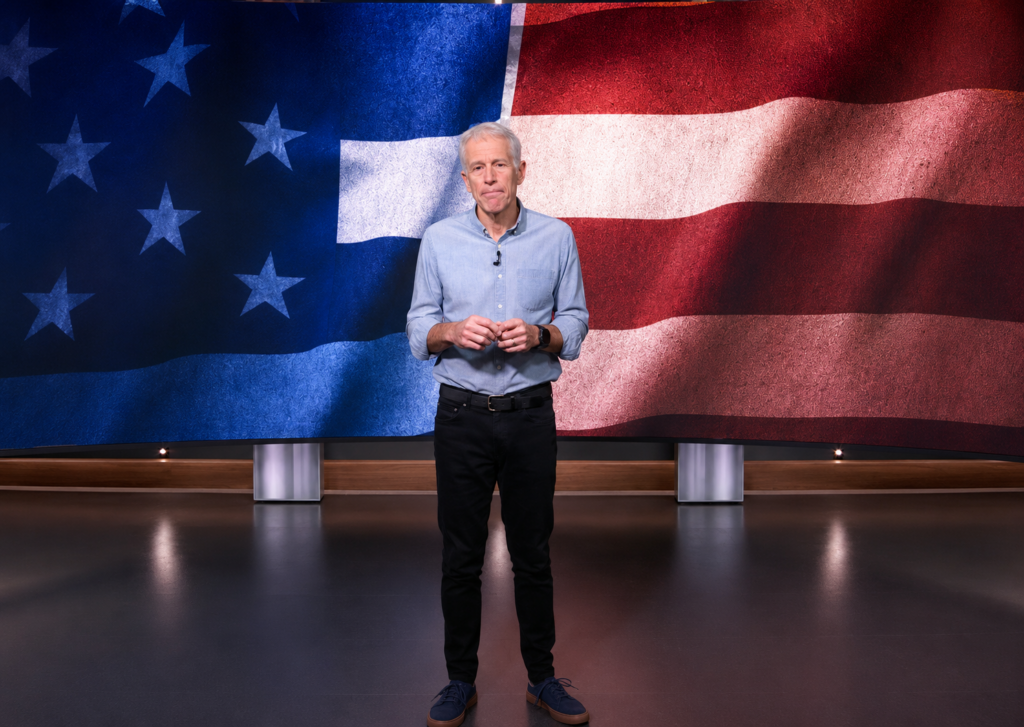
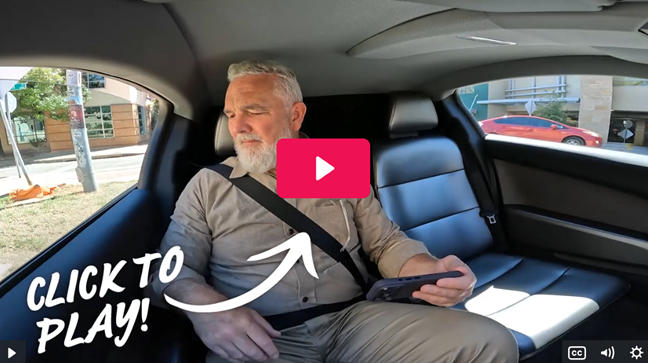
Jeff Brown opened his latest video interview by getting into a car with no steering wheel…
The former tech executive rode a Tesla (TSLA) Cybercab through Austin, Texas, to the site of what Elon Musk has called “the most epic AI project in history”…
Musk believes that artificial intelligence (“AI”) will unleash some $320 trillion in new wealth. Spread across America’s roughly 134 million households, Jeff notes, that works out to almost $2.4 million each. As Jeff admits…
I know that sounds crazy… But that’s exactly why I’m inside this Cybercab.
Jeff has built his career by checking out exactly this kind of claim, to see if it’s really crazy… or if it’s a potential opportunity for investors.
For example, he recommended Tesla shares to his readers in 2018, while the company had one of its wildest-ever years and most financial pundits thought the stock was heading for a crash. Instead, shares are up some 2,000% in the years since.
And he wrote about SpaceX going public years before most investors had it on their radar.
Now, he believes Musk is working on something bigger than cars, rockets, or chatbots… a plan to control the entire AI industry from top to bottom. Watch his investment thesis in his newest interview right here.
Or, read on as we dig into Jeff’s prediction…
Table of Contents
Three Steps to Make $320 Trillion
Jeff’s argument is simple… If you can control the full AI supply chain, you can win the whole industry.
As he puts it:
I’m talking about the chips that generate intelligence… The energy that powers AI… And the AI applications billions of people will use every day.
[Musk] will have control from top to bottom. And I believe it will unleash the biggest wealth creation event in history.
And the three steps to making this $320 trillion in new wealth are equally simple…
Step 1: Control the Chips
Musk’s companies need far more computing power than the world’s chipmakers can supply.
Already, Musk has claimed the planet’s entire chip output covers just 2% of what his ultimate plans need. His answer is Terafab, a Texas chip-making project that Intel joined in April, with the stated goal of producing a terawatt of compute per year.
That’s roughly 50 times the current computing power of the entire world.
Jeff visited the Austin site himself. And he believes a second partnership announcement is coming within weeks… more details in his full interview, which you can watch here.
Step 2: Control the Energy
Data centers are straining the power grid. Musk’s fix is to simply skip the grid and go straight to space, with practically unlimited power.
SpaceX has asked the FCC for permission to launch up to 1 million solar-powered data center satellites. SpaceX’s reusable rockets make it the only company that can launch at that scale cheaply.
Jeff’s second pick is a longtime SpaceX partner that makes a chip built to manage power in space.
Step 3: Control Physical AI
The last step moves AI into the real world…
This April, Tesla’s Cybercab entered production at Gigafactory Texas. And paid rides began in Austin in September.
Next comes Optimus, which is Tesla’s humanoid robot. Jeff’s third recommendation supplies the technology that helps power a robot’s motors without draining its battery.
So let’s walk through each step in more detail and weigh the evidence…
Step 1: Control the Chips – Inside Musk’s Terafab
Every AI plan starts with the same problem: You have to have chips. And frankly, there just aren’t enough.
Musk feels that squeeze more than anyone. His companies train self-driving software at Tesla, run the Grok chatbot at xAI, and plan to put computing power in orbit at SpaceX.
Musk went to the big chipmakers first. Reportedly, he explored buying chip plants outright from Intel (INTC), TSMC (TSM), and Micron (MU). They turned him down. So he decided to build his own.
The result is Terafab, a roughly $20 billion joint venture between Tesla and SpaceX in Austin, Texas. Musk announced it in a livestream on his social-media site X and called it “the most epic chip-building exercise in history by far.” His logic was blunt:
We either build the TeraFab, or we don’t have the chips. And we need the chips, so we build the TeraFab.
The plant will make two kinds of chips. One line goes into cars and robots. The other is hardened for space, where SpaceX wants to run orbiting data centers. The stated targets are massive: up to 200 gigawatts of computing per year for Earth-based data centers and up to 1 terawatt for space.
Jeff toured the first phase of the project, which Musk calls the Advanced Technology Fab, after his Cybercab ride through Austin. He describes a building that would dwarf Tesla’s Gigafactory Texas, a plant already the size of 174 football fields. And Musk plans to produce 50 times more chips than the entire world makes today.
Is that realistic? Musk regularly blows past expectations, but industry watchers are more cautious. Analysts expect Terafab to start at about 100,000 wafers per month before 2030. That is almost what TSMC, the world’s largest chipmaker, currently makes per month. So Musk’s goal of 1 million wafers per month is years away at best.
Still, the project is real and massively moving certain stocks. For example, look at what happened after Intel announced it had joined the Terafab project in April…
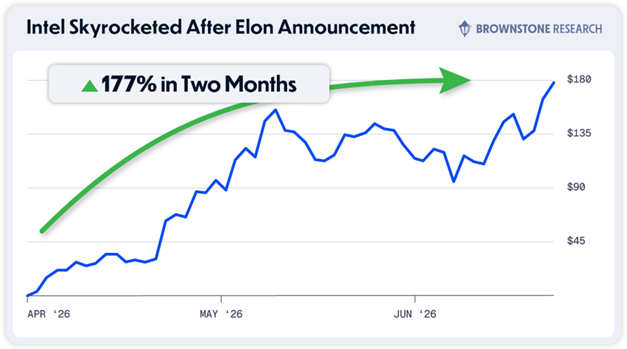
That brings us to his first stock pick. Jeff argues that no matter whose name is on the building, one supplier is unavoidable:
Obviously, you can’t use any regular tools to make semiconductors. Instead, you have to use one of the most precise machines humans have ever built.
Elon Musk will need that machine. This is not a guess. It’s not a prediction. It’s just physics.
Jeff says Musk has already approached the company that makes those machines. He points out that it has worked with Intel for decades and is building a new AI lab next to Intel’s big chip plant in Oregon, a site Musk toured earlier this year.
By some estimates, the company could see up to $500 billion in orders in 2027 alone.
We can’t share the company’s name here, but Jeff has detailed his full advice – including buy-up-to advice and a potential timeline – in a special report called Elon Musk’s 50X Blueprint: The #1 Stock for the Terafab Project.
You can claim this report for free with a trial subscription to Jeff’s research… and you can even skip the video by clicking here and go straight to the order form for your special offer.
Of course, none of these chips can run without power. And that’s where Musk’s plan gets wild…
Step 2: Control the Energy – AI Data Centers in Space
The AI boom has a dirty secret…
A single large AI data center can use as much electricity as 100,000 households, according to the International Energy Agency. And we keep building more of them. Goldman Sachs projects that data center power demand will grow 165% by 2030, a load the grid was never built to carry.
Jeff walks through a few potential fixes in his presentation, along with their downsides…
- Solar and wind shut off when the weather turns.
- New gas plants need turbines, and the wait for one can stretch as long as seven years.
- Nuclear plants take years of permits before anyone pours concrete.
If Musk has a chance of realizing his ambitions, he can’t afford to wait for traditional options. Instead, he has to go to space…
Musk has already committed to the idea in public. When an article about space data centers made the rounds last year, Musk responded on X:
Simply scaling up Starlink V3 satellites, which have high speed laser links would work.
SpaceX will be doing this.
Then SpaceX put it on paper. In early 2026, the company filed an application with the FCC to operate up to 1 million satellites as orbiting AI data centers. The satellites would run on near-constant solar power and shed heat through radiator panels into the cold of space. As we noted at the time:
Frankly, if SpaceX can make this happen, it could mark a whole new economic shift into space… and perhaps even a civilizational-level shift.
From SpaceX’s FCC filing:
Launching a constellation of a million satellites that operate as orbital data centers is a first step toward becoming a Kardashev Type II civilization – one that can harness the sun’s full power – while supporting AI-driven applications for billions of people today and ensuring humanity’s multiplanetary future among the stars.
Musk is pushing hard. And the timeline is aggressive, even for Musk.
For scale, Jeff notes the current Starlink fleet is about 11,000 satellites. One million would be roughly 100 times bigger.
And Amazon (AMZN) or Alphabet (GOOGL) can’t just copy the idea… only SpaceX has the launch capability and cost efficiency.
SpaceX’s reusable rockets made it about 20 times cheaper to reach orbit, and the company now accounts for the overwhelming share of mass launched from the U.S.
Starship, the largest rocket ever flown, is designed to cut costs another tenfold. Jeff says Musk plans one Starship launch per day by the end of 2027. Jeff Bezos’s Blue Origin has chased reusable rockets since 2000 and remains years behind.
Investors clearly believe something big is happening here. When SpaceX went public on June 12, 2026, it was the largest IPO in history. The company raised about $75 billion, opened at $150 a share, and hit a $2.1 trillion market value on day one.
Meanwhile, the business underneath keeps growing. As we noted in August when SpaceX posted its first quarterly earnings as a public company:
The headline numbers looked good: sales surged 92% in the quarter to $7.8 billion, while the company lost $541 million, a substantial improvement from the year-ago quarterly loss of $1 billion.
Starlink was a real bright spot in the quarter, with sales up 66% year over year, to $4.3 billion. The satellite-based telecom hit 12 million subscribers by the end of the quarter, on the way to lifting the unit’s operating income 79%, to $1.7 billion.
Jeff’s second recommendation rides this wave without the trillion-dollar price tag. Every satellite needs what he calls a “space chip,” a component that converts and distributes electricity in orbit. He says the company that makes it has partnered with SpaceX for more than a decade:
They’ve been working together for more than a decade…
And have already co-produced more than 5 billion chips that are used in every single Starlink Satellite and ground terminal.
As SpaceX grows its fleet, Jeff expects orders for this supplier to grow right along with it. Full details in his special report, Elon’s Secret Partner Primed for SpaceX’s 100X Growth. Claim your copy here.
Step 3: Control Physical AI – Cybercabs and the Optimus Robot
Chips and power are the primary ingredients for the third and final step of Musk’s plan… AI that can move through the physical world. This is exactly why Jeff filmed his pitch from inside a Cybercab.
Nvidia (NVDA) CEO Jensen Huang has said physical AI could grow 10 times larger than digital AI. Robots and autonomous machines will likely end up dwarfing chatbots as a business. And Jeff believes nobody is closer to that prize than Musk.
Start with the car Jeff rode in…
Tesla unveiled the Cybercab in October 2024, and production began at Gigafactory Texas in April 2026. It seats two, and has no steering wheel, no pedals, and no side mirrors. Paid Cybercab rides started in Austin in September 2026, on top of the Model Y robotaxi service Tesla has run there since June 2025.
Jeff’s case for Tesla’s lead comes down to one design choice. Waymo, Tesla’s main rival, maps every inch of a city before its cars can drive there. Tesla’s system drives by camera vision alone, the way a person drives by sight. As he puts it:
You can put a Tesla car anywhere. And it will just drive itself… Exactly like humans are able to do.
That, Jeff argues, is why Tesla can scale fast. He says Teslas have driven more than 15 billion miles autonomously and that the software has proven up to seven times safer than human drivers.
He also points to the economics. The same Austin trip he took costs roughly half as much in a Cybercab as in an Uber. And at a pricepoint of $30,000, a Cybercab owner could earn the car’s cost back in about a year. A fleet of four could produce six figures in annual revenue.
One caveat to our deep dive here… some of these details still have to get worked out with regulators.
In September, the National Highway Traffic Safety Administration (“NHTSA”) opened an investigation into the safety standards for this new technology. Jeff sees that as an opportunity for imminent national approval. Once a federal standard exists, he notes, Tesla could switch on unsupervised driving across millions of cars already on the road. Skeptics just see a speed bump.
Then comes the machine Jeff calls the real prize: Optimus, Tesla’s humanoid robot.
Tesla has said its third-generation robot is production-ready and is targeting mass production at scale by 2027. Jeff says the breakthrough is Tesla’s patented hand design:
They packed 25 motors into the Optimus forearm…
And those motors power flexible composite ligaments that mimic our tendons.
So the hand can delicately crack an egg, thread a needle, or swing a sledgehammer with insane grip strength!
The hand matters because a robot that handles objects the way people do can work in a home or a factory without special training for each site. Jeff says Musk projects 10 million units a year, with shipments to customers starting in 2027, and predicts growth of more than 14 million percent for the industry over the next decade.
Even if Musk is 90% wrong, Jeff argues, the business would still be historic.
His third pick follows the same supplier playbook. Robot joints run on dozens of small motors, and raw electricity wastes energy as heat. Jeff found a company already supplying Tesla with sensor technology that delivers power to those motors with less waste, so the robot stays cool and runs longer. He says Morgan Stanley has flagged the stock as a robotics play and 39 hedge funds hold it.
Full details in his report, The Elon Musk Moonshot: The #1 Stock for the Manifested AGI Revolution. Get your copy via the order form, here. (Note: This link does not go to a long video.)
What Is Brownstone Research?
Brownstone Research is a technology-focused investment research publisher founded by Jeff Brown.
Their mission is to help everyday investors spot technology trends before they go mainstream.
Importantly, the financial publishing firm is 100% funded by subscriptions. It’s not a brokerage or a money-management firm… and it certainly doesn’t accept payments from the companies it covers. Its revenue comes solely from readers like you, when you hear about an idea Brownstone covers and decide to subscribe to Brownstone’s research.
That structure aligns the firm’s incentives with its subscribers…
If the research or recommendations often turn out wrong, folks cancel. If they turn out right, time and time again, then subscribers stay… and even recommend Brownstone’s work to their friends.
And Brownstone has a strong track record. For example, founder Jeff Brown recommended bitcoin to readers in 2015, when it was trading around $240. He called Nvidia an AI play in early 2016, before most financial journalists had connected the dots between GPUs and machine learning. He made a contrarian Tesla recommendation in late 2018, at a moment when most of Wall Street was bearish, and some analysts were predicting bankruptcy within months.
All three of those calls turned out to be spectacular:
- Anyone who held bitcoin from 2015 to its peak saw gains well into the thousands of percent.
- NVIDIA has delivered roughly a 28,000% total return from Jeff’s 2016 call through its peak.
- And Tesla has delivered more than 2,000% since the 2018 buy call.
In addition, Jeff’s broad-market advice is compelling. On March 17, 2020, with markets in free fall during the pandemic panic, he told readers:
This will probably be one of the best opportunities to make investments over the course of the next decade.
Sure enough, the market bottomed just days later.
Jeff’s flagship publication is The Near Future Report, the service behind the $320 Trillion Blueprint presentation.
Every month, Jeff publishes a new issue with his top ideas in AI, robotics, self-driving cars, quantum computing, and other major tech trends. Subscribers also get a model portfolio with every open position, video updates, and a members-only website. Jeff explains the name this way:
It’s called the Near Future because the future is coming much, much faster than we think.
The normal price for one year of access to The Near Future Report is typically $499. But Jeff does have a special offer available for first-time subscribers to give his work a try. You can click here to go directly to the order form to see that special price and judge Jeff’s work for yourself.
Who Is Jeff Brown?
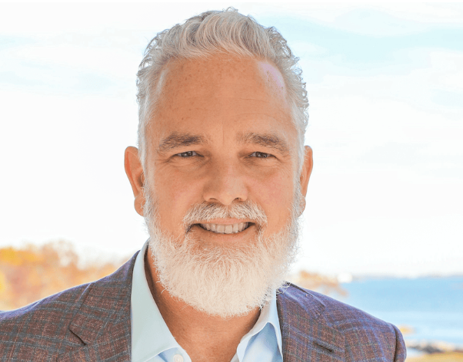
Jeff first wanted to be an astronaut…
He earned a degree in aeronautical and astronautical engineering from Purdue University, the school nicknamed the Cradle of Astronauts because it has produced more of them than any other university.
After Purdue, he worked as a contractor on Boeing’s 777 program in its earliest days.
He later added a master’s in management from London Business School, along with study at Yale’s School of Management and professional certificates from MIT, Stanford, and UC Berkeley’s School of Law.
Then came 25 years as a technology executive…
Jeff held senior roles at Qualcomm (QCOM), NXP Semiconductors (NXPI), and Juniper Networks (JNPR), three companies that together now generate more than $60 billion in yearly sales.
So when Jeff writes about what it takes to build a chip fab, he writes from experience. And that experience led government bodies to seek his input, including senior officials at the Department of Commerce, the National Institute of Standards and Technology, and the Defense Intelligence Agency.
Jeff is also an active angel investor who has backed hundreds of private tech deals.
Case Study: The 2018 Tesla Call Everyone Hated
In 2018, Tesla was a battleground stock. The Model 3 production ramp had nearly broken the company. Short sellers circled.
In the presentation, Jeff recounts the media mood of those years. Forbes had called Musk irresponsible and dismissed his autonomous car plans as hype. Bloomberg ran a piece saying he was wrong about self-driving. One New York tabloid even called him a total fraud.
As a whole, Wall Street analysts predicted the stock was about to crash.
Into that storm, Jeff sent his readers a buy recommendation. His reasoning had nothing to do with car sales. As he put it:
When I think about Tesla, I see one of the leading artificial intelligence companies in the world. This is the incredible part that most don’t see or understand. Tesla designed a software/AI platform designed to operate cars.
Read that again… In 2018, calling Tesla an AI company sounded like a stretch. Yet today, that’s exactly what happened.
Jeff says it was the most hated recommendation he ever published. Some readers wrote in to say they would never buy the stock at any price.
And sure enough, Tesla went on to gain more than 2,000% from his recommendation. By October 2021, Tesla’s market value had eclipsed its top five rival carmakers combined. And the Model Y later became the best-selling car in the world, gas or electric.
According to Jeff, Musk projects follow a typical pattern that can reward investors. Jeff calls them wealth windows. For example…
- PayPal pioneered internet payments in the late 1990s, when most people still mailed checks and dialed up to get online. Jeff says one early investor turned a $1,600 stake into $3.8 million.
- Tesla did it with electric cars and self-driving AI. A $5,000 investment at the 2010 IPO would be worth more than $1.1 million today, by Jeff’s math.
- SpaceX did it with reusable rockets, cutting launch costs roughly twentyfold. Jeff says the earliest backers from 2002 had the chance to turn $100 into almost $6.3 million by IPO day in June 2026.
Each cycle ran the same course… Musk announced something that sounded impossible. Experts laughed. The technology arrived anyway, and the people who positioned themselves early collected gains that sound made up.
Then the next announcement came, and the laughing started over.
The skeptics have a fair reply. Past patterns don’t guarantee future ones, and we only ever hear about the bets that worked.
After all, Musk has indeed missed deadlines on practically everything, from full self-driving timelines to the Cybertruck launch.
But the case study explains why Jeff refuses to dismiss Musk’s current plan, however wild it sounds. The impossible has indeed become a product three times already. Learn how to get access to the stocks Jeff is recommending to profit from this massive opportunity right here.
Five Questions Investors Are Asking
1. Should I just buy Tesla or SpaceX stock instead?
Jeff gets this question constantly, and his answer may surprise you…
He calls Tesla a great long-term holding with real upside. But he notes that Tesla was dirt cheap when he recommended it in 2018, and it isn’t anymore.
And SpaceX (SPCX) already carries a market value above $2 trillion after the biggest IPO ever. A company that size has to add trillions more to double your money.
A small supplier with a critical product can double on a single contract announcement. That math is why all three of his picks are suppliers, not the Musk companies themselves.
2. Is the $320 trillion number for real?
That is Elon Musk’s estimate, which he’s talked about publicly. In a podcast with biographer Walter Isaacson, Musk noted that digital superintelligence could lift the world’s output by roughly $30 trillion a year, and that robots could eventually grow the economy far beyond that.
Jeff’s own use of the number is more modest… After all, even a small slice of a figure that size, flowing to a handful of key suppliers, would massively move those stocks.
3. How soon could the Terafab partnership announcement happen?
Jeff believes Musk will announce his pick’s partnership within weeks. That urgency is the engine of the whole presentation.
His evidence: Musk toured Intel’s Oregon plant where the company’s machines are used, the company is building an AI lab next door, and Terafab cannot make chips without this type of equipment.
The precedent is Intel’s rally after it joined Terafab, covered in Step 1 above. But of course, these are just estimates – no one outside Musk’s circle can promise a date.
4. What do I actually get with The Near Future Report?
A one-year membership normally costs $499. But Jeff has cut that to a special price for new members.
That includes 12 monthly issues, a model portfolio with every open position, regular video updates, member support, and all three special reports: the Terafab stock, the SpaceX space chip partner, and the Optimus supplier. The reports name the companies, tickers, and Jeff’s full, easy-to-read analysis.
You can review the offer on the order page here, without watching a long video.
5. What if it’s not for me?
The membership comes with a 30-day money-back guarantee. Cancel within that window for any reason and you get a full refund, and Brownstone lets you keep the reports.
Brownstone’s long-term track record is solid, with an average gain of 43% across every recommendation the service has made – including both winners and losers.
What Should Investors Do Next?
Jeff Brown believes Elon Musk is in the prime position to gain control of AI across three specific layers… and he’s recommending the three suppliers that he believes will capture massive gains.
He’s detailed everything you need to know in order to buy and take advantage of these opportunities in three special reports:
- Elon Musk’s 50X Blueprint: The #1 Stock for the Terafab Project
- Elon’s Secret Partner Primed for SpaceX’s 100X Growth
- The Elon Musk Moonshot: The #1 Stock for the Manifested AGI Revolution
Watch the presentation for yourself… check out Jeff’s research and his past performance… And if it’s right for you, give his Near Future Report a try.
But please act soon. As Jeff puts it:
I believe Elon Musk is about to officially announce one of the companies I’m recommending as a new Terafab partner.
He already visited Intel’s factory, where Intel has been using this company’s technology.
That’s why I have no doubt an announcement is imminent.
If you wait until this Elon Musk partnership becomes breaking news on Bloomberg, The Wall Street Journal, and The Financial Times…
It will be too late.