Image Credit: Associated Press
Listen to the audio version of this article (generated by AI).
Key Points
- Tesla shares fell sharply after its second-quarter earnings report as heavy discounting weighed on profits and the company scaled back several key projects.
- CEO Elon Musk again pushed back expectations for the robotaxi rollout, raising questions about whether investors should apply the same scrutiny to Tesla’s Optimus robot timeline.
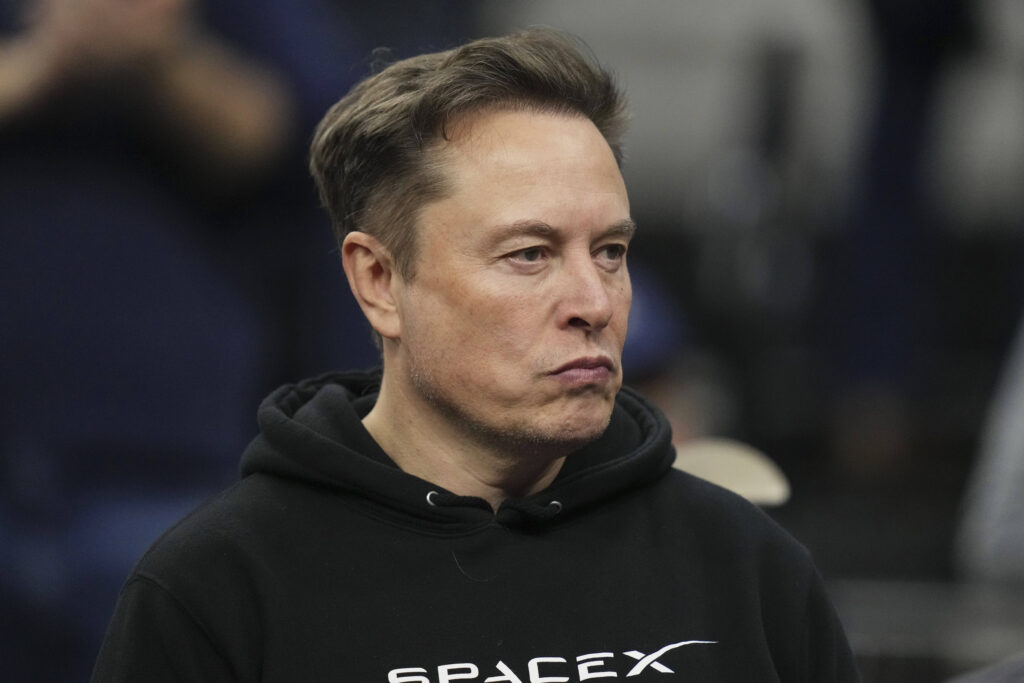
- Speculation about a potential Tesla-SpaceX merger continues to grow, with company executives stopping short of ruling out the possibility.
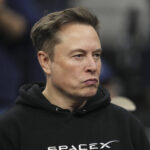
Tesla (TSLA) stock was down big after the company’s second-quarter earnings report on Wednesday. Amid falling profits and delays on key products such as its long-promised robotaxi, do investors finally understand that CEO Elon Musk’s promised projects “are farther away than they appear”?
Despite Tesla’s after-earnings plunge, it’s not at all clear that they do. The stock still sits where it did a year or so ago – still vastly overvalued, amid falling profits and rapidly rising spending.
The second quarter showed that Tesla is flailing to sell its vehicles, even if it did deliver a record 480,126 automobiles. The top line, in isolation, looked great. Sales grew 26% year over year. But it was how Tesla achieved this sales growth that’s problematic – large discounts. Those discounts really dented the company’s overall margins and led to quickly collapsing profits.
The gross margin on car sales, not including regulatory credits, dipped to 16.3% in the quarter, down from 19.2% in the sequentially prior quarter, and well below analysts’ estimates of 18.7%.
This decline in gross margin basically fell straight to the bottom line. Operating margin in the year-ago quarter was 4.1% but dropped to a meager 1.4% in the latest quarter. That difference of 2.7 percentage points nearly equals the decline of 2.9 percentage points in gross margin.
So, even with quarterly sales growing a robust 26%, operating profit was a scant $398 million. That’s not the kind of performance that Musk and company need from the auto unit, as they look to use its cash to make massive investments in self-driving cars, robotaxis, and Optimus robots.
But it wasn’t all bad news. Full self-driving subscriptions rose nicely, climbing from 1.26 million in the first quarter to 1.48 million in the latest quarter. Year over year, it was good for a gain of 56%.
Tesla touted the rollout of its robotaxi, which has now reached seven U.S. cities, and its Fremont factory began construction for the Optimus robot, with production to start later in 2026.
All those investments come with high costs. Management held to its $25 billion estimate for capital investment this year, which it had only last quarter boosted by an incremental $5 billion. With only about $8.3 billion of that spent so far, the company is primed to invest big in the second half.
So, following the second quarter’s cash burn of $1.1 billion, investors should expect a lot more cash to go out the door in the coming months. Tesla has $43.5 billion in cash at quarter-end, and CFO Vaibhav Taneja noted that Tesla had already opened $30 billion in credit facilities to help pay for its ambitious capital investments, which he expects will continue to grow for two or three more years.
Tesla could quickly consume its existing cash as it ramps up investment spending. Tesla investors should be looking for clear advancements toward viability in robotaxis and Optimus robots. Success in these areas is anything but guaranteed, with management’s explanations for delays sounding more like Musk’s endless “next year” promises, which he is well-known for.
Tesla’s Big Investments: Robotaxis and Optimus Robot
Tesla touted progress in its pursuit of robotaxis and its Optimus robot, but investors need to pay careful attention whenever Musk talks about the future. Investors have already priced in much of the future Musk has promised, making the stock pricey based on its current results.
A year ago, Musk promised that Tesla’s robotaxi presence would grow exponentially, with service to half the population of the U.S. by the end of 2025. Yet here we are halfway through 2026 with just seven cities in the mix (and barely those). So, it’s vital to examine the company’s progress reports to see if they really match reality.
That’s the thing with a “serial overpromiser” like Musk – who has been touting autonomous vehicles “next year” for about a decade – you don’t know what to believe anymore.
On the robotaxi front, the reality is that Musk massively overpromised and now must walk back those promises. Musk explained, “We want to grow as fast as possible with robotaxi, without harm to anyone.”
That’s a neat trick: Blame the slow robotaxi rollout on your exceeding caution for human safety. But don’t buy it for a second. Although it may well be true, what is the excuse for Musk’s big promises a year ago?
Other Tesla executives provided additional reasons for the delay. “Regulatory situations are different city by city,” said Lars Moravy, Tesla’s vice president of vehicle engineering. Tesla’s CFO Taneja explained that before deploying robotaxis in large numbers, they want to “sort these things out in a smaller fleet in a controlled manner.”
Tesla seems woefully behind Alphabet’s (GOOGL) Waymo. Tesla says paying customers have run up 2.5 million miles in its robotaxi service. Meanwhile, Waymo has put up 220 million miles on its fleet through the first quarter of the year, or nearly 90 times the mileage.
And the rollout of the robotaxi to seven cities touted in the earnings release? Up until the day before the earnings report, it had been just three cities, according to a Reuters report.
The big promises, the repeated walk-backs on the timeline, the stream of excuses – none of it bodes well for the Optimus robot, which is supposed to begin production later this year.
At Tesla’s current stock price, investors are betting big that Musk can deliver on his promises, which keep being delayed ever longer into the future. Investors should start asking, “What if he doesn’t?”
SpaceX-Tesla Merger: Is It Likely to Happen?
Some investors have been speculating for a while that Tesla may merge with the Musk-helmed SpaceX (SPCX). A variety of reasons – some operational, some personal – make a merger of the two companies a better-than-even bet, as I’ve explained in detail here.
We got a further “non-confirmation” confirmation of a merger in the latest quarterly report.
In the company’s earnings call, Musk laid the groundwork for that eventuality without specifically confirming or denying it. During the call, an analyst asked directly about this possibility.
Musk’s response:
Well, as you can tell from all the many collaborations on so many fronts with SpaceX, there’s more and more overlap, especially with Terafab, that’s really going to be a gigantic project. Obviously, we can’t talk about combining companies and that kind of thing on an earnings call. It’s got to be done with the appropriate process.
Tesla’s general counsel followed up with a similar non-committal response that outlined how the two companies had been working together and could continue to do so in the future.
While executives clearly didn’t confirm a tie-up, their responses are anything but dismissive of the possibility. In fact, their answers reinforce a key part of the rationale for such a merger – that the two companies are co-investing in various projects and will likely do so in the future.
But that’s the response you’d expect at this stage of the game. That is, anything short of a flat-out denial should be read as further confirmation that a Tesla-SpaceX merger could be in the cards, eventually.
If SpaceX were to acquire Tesla, Musk’s near-complete voting control of SpaceX means that he could call all the shots at the combined company, too. In other words, no one can fire Musk but Musk himself.
If you think Musk is running the ship as it should be run, then you might consider that to be a good thing. Others may see that as entrenching a CEO who’s already shown that he’s unresponsive to shareholders’ demands, particularly on corporate governance issues such as excessive compensation. Less accountability won’t help.
Regards,
James Royal, PhD
Editor’s Note: Elon Musk has spent 27 years waiting for this moment. Now, it’s rolling out across America… and has the potential to be 15X-bigget than Space X. Luke Lango, who called Palantir, AMD, and Nvidia before they soared, says Musk’s latest rollout is the biggest wealth-building opportunity of his career. He’s giving away one free stock pick in this presentation.