
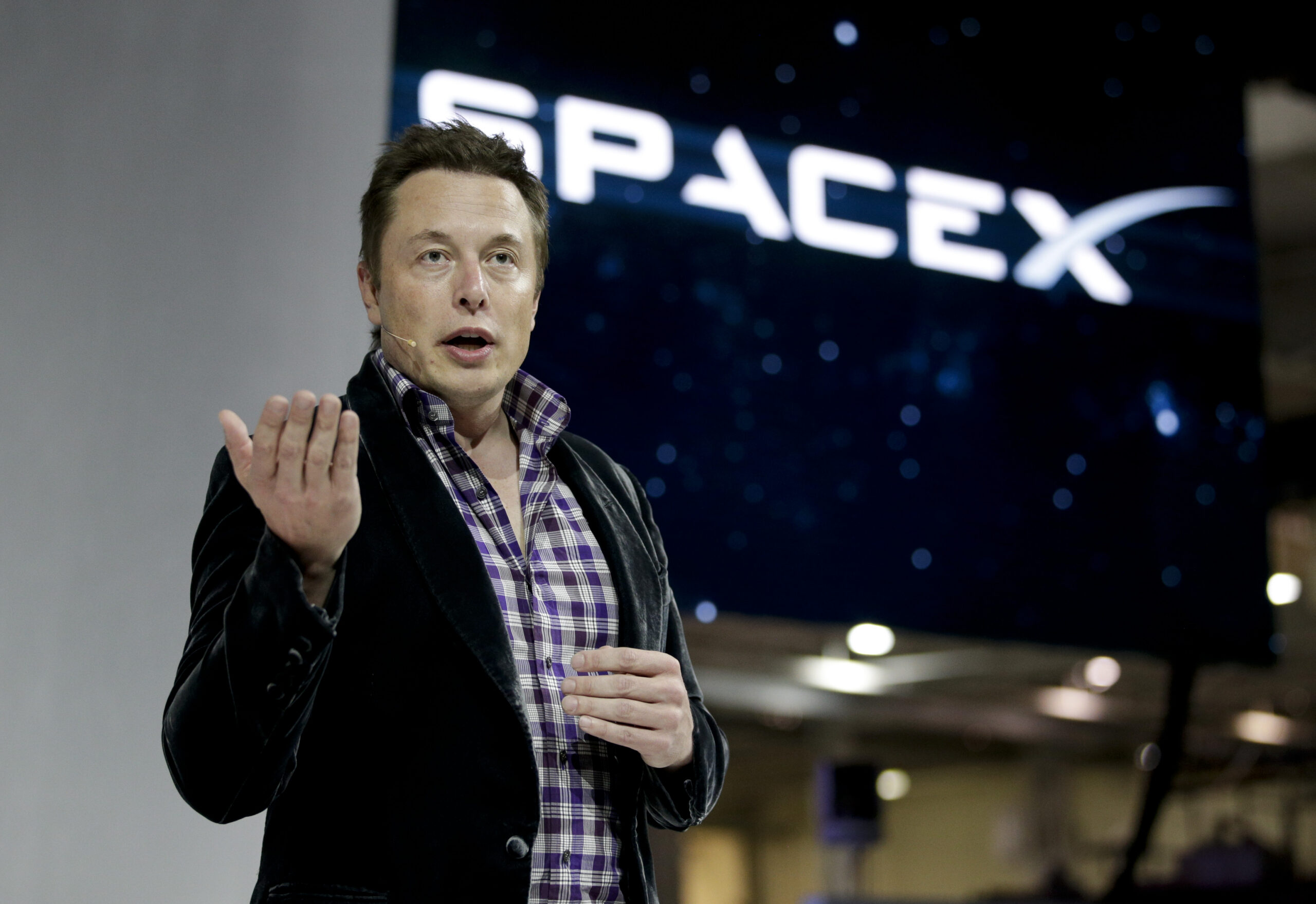
Image Credit: Associated Press
SpaceX is going public. Right now.
The company confidentially filed its S-1 with the SEC on April 1 — no joke. It held closed-door meetings with Wall Street analysts April 21 to 23. By SEC rule, the public S-1 has to land between now and May 22 — this week or next — because the roadshow is targeted for the week of June 8. The IPO itself follows somewhere between June 18 and June 30 if the schedule holds.
This is the biggest IPO in history – by valuation and by capital raised. Reuters and Bloomberg are reporting a $1.75 trillion target valuation with up to $75 billion raised. CFO Bret Johnsen reportedly told bankers that retail will be “a bigger part than any IPO in history” — up to 30% of shares for retail investors, when most IPOs reserve five to ten percent.
So why am I telling you to look at eight other stocks?
Because when the headline name goes public, the smart money is already in the family. By the time SpaceX goes public, every institutional desk on Wall Street will already have built the model. They will have already decided what every public peer is worth. Retail comes in late. The pop is in the stock before you can click buy.
Twenty-eight years in three different pits taught me one rule that has worked in every market, every cycle, every asset class. Nothing is expensive. Nothing is cheap. Everything is relative. A stock isn’t expensive in isolation. It’s expensive relative to what moved with it. And the trade is almost always the name in the family that forgot to move.
Below are eight public stocks that sit in the SpaceX family. You can buy any of them today, in any brokerage account. No accreditation. No lockup. No IPO allocation problem to solve. When SpaceX wins, these eight win with it — and several of them are already moving on the same thesis.
Follow the money.
Why ETFs and Pre-IPO Platforms Are the Wrong Way to Invest in SpaceX
There are three ways retail investors are being told to get SpaceX exposure right now. None of them are ideal – but there’s a fourth path almost nobody is writing about.
Path one: closed-end funds and ETFs that hold SpaceX. Destiny Tech100 (DXYZ), ARK Venture Fund (ARKVX), Baron Partners Fund (BPTRX), and the ERShares Crossover ETF (XOVR) all hold positions. The problem is structural. DXYZ trades at a steep premium to net asset value because retail bids it up. ARKVX is an interval fund with limited liquidity. The Baron funds carry mutual fund fee drag. XOVR’s SpaceX exposure has run well above stated targets due to outflow mechanics — meaning when other investors leave, you end up holding more SpaceX than you signed up for.
Path two: pre-IPO secondary marketplaces. Forge and EquityZen exist, but they require accredited investor status. SpaceX has right-of-first-refusal on transfers. Most retail investors get filtered out at the first form.
Path three: tokenized SpaceX exposure on crypto exchanges. Bitget, BingX, OKX, and others. Most are not available to U.S. investors. Use this only if you understand exactly what you’re buying — and most people don’t.
The fourth path is the one almost nobody is writing about. Buy the public companies that already have SpaceX exposure on their balance sheets, or whose business is so correlated with SpaceX’s outcome that they re-rate the moment SpaceX prints. Real stocks. Real brokerage accounts. No lockups. No accreditation. No premium to NAV.
Here’s how I think about that family.
How to Find Stocks That Benefit From the SpaceX IPO: My Framework
Before the eight names, let me show you the framework. Once you see it, you can apply it to anything for the rest of your investing life.
Twenty-eight years on the floor of the CME, then a bond desk, then the CBOE. Across all of it, the same four steps worked. I run them on every trade I take, on camera, every weekday at 11 ET. They’re not a secret. They’re a discipline.
Step 1: Notice. Find a move most people aren’t watching. SpaceX is obvious — the biggest IPO in history is weeks away. That’s the notice. The job now is to find the second-order effects that haven’t priced in yet.
Step 2: Map. Who else trades against the same thesis? When SpaceX goes public at $1.75 trillion, who else gets repriced? When the roadshow forces every Wall Street analyst to write a model that values satellite internet, reusable rockets, and orbital AI compute, who else benefits? That’s the family.
Step 3: Ask. Out of the family, who moved already, and who forgot to move? You don’t buy the obvious leader. You buy the name that hasn’t been bid up yet by traders who connected the dots first.
Step 4: Structure. Fixed risk. Defined exit. Decided before you click buy. Stock, options, or a position size you can hold through volatility — but you decide your worst case before you take the trade.
Notice. Map. Ask who forgot to move. Structure the risk.
Now let’s apply it to SpaceX.
Bucket 1: Top 2 Stocks to Buy Before the SpaceX IPO
If you only buy two names from this thesis, buy these.
Alphabet (GOOGL) — The hidden direct owner of SpaceX. Alphabet invested approximately $900 million in SpaceX in 2015 and holds a 6.11% pre-merger stake, per a routine Alaska regulatory filing — the state requires disclosure of any shareholder above 5% — made in late 2025. At the $1.75 trillion IPO valuation, that pre-merger stake was worth between $100 billion and $122 billion – dilution from the SpaceXAI merger has since adjusted that figure. Alphabet does not yet carry that on its balance sheet at full IPO value. The gain gets recognized the moment SpaceX trades publicly. And here’s the kicker — Alphabet trades on its advertising and cloud business. The SpaceX position sits in Alphabet’s investment disclosures, largely ignored by analysts who are focused on advertising and cloud. That’s the family member who hasn’t moved.
EchoStar (SATS) — The de facto public proxy for SpaceX. EchoStar entered a spectrum-for-equity deal with SpaceX in 2025 that left it holding a SpaceX equity stake reported at roughly $11.1 billion. For most of last year, that stake was worth more than the entire company. The stock has run hard on that thesis — that’s the family member that did move. Buy it now and you’re not getting the first leg. Buy it now and you’re betting the IPO unlocks more value than the run-up has already priced in. Position accordingly.
Bucket 2: 3 Space Stocks Set to Benefit From the SpaceX IPO
The space sector public peers and competitors. These re-rate when the SpaceX roadshow forces Wall Street to value satellite internet, reusable rockets, and government contracting at proper multiples.
Rocket Lab (RKLB) — The closest public peer to SpaceX. Rocket Lab is the only other publicly-traded company executing orbital launches at scale. Electron is flying. The larger Neutron rocket is targeting first launch in late 2026. When SpaceX goes public at $1.75 trillion, every analyst covering Rocket Lab is going to be forced to write a comparable-multiples model — and the multiples implied by SpaceX’s offering are radically higher than what Rocket Lab currently trades at. That’s the asymmetry.
AST SpaceMobile (ASTS) — The direct Starlink competitor in satellite-to-cellular. AST is building a constellation that beams cell signal directly to standard, unmodified phones — a real alternative to Starlink Direct-to-Cell. When the SpaceX prospectus forces investors to think hard about the addressable market for space-based mobile internet, AST gets re-rated as the leading alternative.
Iridium Communications (IRDM) — The established LEO satellite operator. 66 active satellites. A real commercial business across maritime, aviation, government, and IoT. When SpaceX’s offering puts a $1.75 trillion price tag on the satellite communications market, every constellation operator gets reconsidered. Iridium is the conservative way to be in that conversation.
Bucket 3: 3 More Stocks Riding the SpaceX IPO
The adjacent plays. Tesla, through the Musk connection, plus two fund vehicles for investors who want diversified exposure.
Tesla (TSLA) — The Musk halo trade. Tesla invested $2 billion in xAI shortly before SpaceX merged with the company and renamed the combined entity SpaceXAI. Tesla’s stock has historically moved positively on major SpaceX milestones. When the roadshow puts Musk on every financial network in America for six weeks, Tesla benefits from the attention. Don’t expect 1:1 correlation. But the halo is real.
Destiny Tech100 (DXYZ) — A NYSE-listed closed-end fund where SpaceX is roughly 14.5% of the portfolio as of May 2026. Trades like any other stock. No accreditation required. The caveat is the premium to net asset value, which can be substantial during periods of SpaceX hype. Check the current premium before you buy.
Tema Space Innovators ETF (NASA) — A NASDAQ-listed ETF holding SpaceX exposure through an SPV provided by Forge, now a Charles Schwab subsidiary. Diversified across other public space-sector names. The cleanest way for a retail investor with no accreditation, no NAV concerns, and standard ETF liquidity to get pure-play space exposure with embedded SpaceX positioning.
Why the Anthropic Deal Just Made the SpaceX IPO Even Bigger
One catalyst people aren’t talking about yet.
On May 6, Anthropic signed an agreement with SpaceX to use all the compute capacity at SpaceX’s Colossus 1 data center in Memphis — over 220,000 NVIDIA GPUs, 300 megawatts. The deal also includes “interest in partnering to develop multiple gigawatts of orbital AI compute capacity.” Translation: Anthropic just became a major customer of SpaceX’s AI infrastructure business, and SpaceX got validation that its $1.25 trillion January merger with xAI is producing real third-party AI revenue.
That changes the IPO story.
SpaceX is no longer just Starlink internet and Falcon rocket launches. It’s also one of the largest AI compute providers in the world, with Anthropic — currently in talks to raise capital at a $900 billion valuation — as anchor customer. When the public S-1 hits this week or next, the Colossus revenue line is one of the things institutional investors are going to focus on hardest. Every model gets bigger. Every comparable gets pulled higher.
The eight stocks above are positioned for that re-rating. Several of them have AI compute exposure on their own — Alphabet, especially. NVIDIA is the silicon underneath all of it. The signal in the Anthropic-SpaceX deal is that AI compute is now part of the SpaceX story, and the family above gets to ride that piece of it, too.
SpaceX IPO Date 2026: The Timeline
Three dates to watch.
Public S-1 filing: this week or next (May 17-22). Confidential filing was April 1. SEC rules require the public S-1 to land at least 15 calendar days before the roadshow. With the roadshow targeting the week of June 8, the public filing has to hit by May 22 at the latest. Once it lands, every stock in the family above moves. DXYZ’s premium widens. Alphabet analysts start writing about the unrealized gain. EchoStar gets re-rated.
Roadshow: week of June 8. This is where institutional pricing demand gets gauged, and the valuation range is set. Watch CFO Bret Johnsen’s interviews on Bloomberg and CNBC for the real price talk. Reports suggest SpaceX will also host approximately 1,500 retail investors after the roadshow launches on June 11.
IPO date: June 18 to June 30. The day SpaceX goes public will be the highest-volume trading day of the year for every public space-sector stock in America.
SpaceX IPO Risks: What Could Derail These Stocks
This is not a one-way trade.
The IPO could slip. Filings get delayed. Market conditions change. A delay puts the entire family above into a holding pattern.
The IPO could disappoint on pricing. If the offering prices at $1.5 trillion instead of $1.75 trillion, the implied re-rating for the family is smaller.
EchoStar has run hard already. The SpaceX stake is real, but the stock has moved on this thesis. Buying after the first leg is different from buying before one.
Alphabet and Tesla are not pure SpaceX trades. Both have their own business drivers. SpaceX is a kicker, not the core thesis. Don’t expect 1:1 correlation.
ETF and closed-end fund premiums can move against you fast. Read the prospectus on DXYZ and NASA. Understand the SPV mechanics before you buy.
A basket position beats a concentrated bet, sized so any individual name’s underperformance doesn’t damage the overall thesis.
The Bottom Line on the SpaceX IPO 2026
The S-1 lands this week or next. The roadshow kicks off June 8. CFO Bret Johnsen will be on every financial network in America for six weeks. By the time you can click buy on the SpaceX ticker, every institutional desk on Wall Street will have already run the model.
You don’t have to wait. The eight stocks above are how you get to the SpaceX trade today. Alphabet for the hidden direct ownership. EchoStar for the explicit balance-sheet stake. Rocket Lab for the pure-play peer. AST SpaceMobile for the Starlink alternative. Iridium for the conservative constellation play. Tesla for the Musk halo. DXYZ for the fund route. NASA ETF for the diversified retail wrapper.
I’m not telling you to buy all eight. I’m telling you to run them through the framework. Which ones moved already, which ones haven’t, and which ones are still cheap relative to the SpaceX-implied multiples that the roadshow is about to force into every model.
Notice. Map. Ask who forgot to move. Structure the risk.
That’s the whole job. I run that checklist on camera every weekday at 11 ET on Masters in Trading Live, on this and dozens of other setups. You don’t need a service to do it yourself. You need to know what to look for.
The biggest IPO in history is days away. The family is already trading. The trade isn’t waiting for the bell.
Follow the money.
To watch Jonathan map out institutional money flows and break down these market setups live on camera every weekday morning, you can register for his daily livestream here: Masters in Trading Live
Jonathan Rose is a former CBOE market maker and the founder of Masters in Trading at InvestorPlace. He hosts Masters in Trading Live every weekday at 11 AM ET. Follow him on X at @JRoseTrades. This article is for educational purposes only and is not investment advice.
Editor’s Note: Elon Musk has spent 27 years waiting for this moment. Now, it’s rolling out across America… and has the potential to be 15X-bigger than SpaceX Luke Lango, who called Palantir, AMD, and Nvidia before they soared, says Musk’s latest rollout is the biggest wealth-building opportunity of his career. He’s giving away one free stock pick in this presentation.