
Image Credit: Associated Press
Key Points
- Fervo Energy surpassed expectations with its Nasdaq IPO, raising $1.89 billion and reaching a valuation above $10 billion as shares began trading Wednesday.
- Fervo’s enhanced geothermal technology expands clean-energy production beyond traditional geothermal regions, helping meet rising electricity demand from AI data centers and hyperscalers.
- Supported by partnerships with Alphabet and major utilities, Fervo has emerged as a potential leader in next-generation geothermal energy, though investors still face risks tied to scaling costs, profitability, and long-term performance.
Fervo Energy’s (FRVO) highly anticipated IPO raised $1.89 billion by selling 70 million shares at $27 each, beating its upsized $25 to $26 target.
While the IPO priced the Houston-based company at $7.7 billion, massive market demand during its Nasdaq debut sent shares soaring roughly 35% to $36.54 by market close on Wednesday, giving the geothermal developer an impressive (clean-energy record) first-day market valuation of more than $10.2 billion.
Fervo gained another 11% in its second day of trading on Thursday, closing above $40 per share as investors kept pushing the stock even higher.
What prompted Fervo to pop during its trading debut? You guessed it: The never-ending need for power – especially clean-energy solutions – driven by AI and data centers.
Let’s look at how Fervo can help fill that need and why investors should pay close attention to this geothermal startup.
What Fervo Energy Does and How Its Geothermal Technology Works
Fervo specializes in geothermal energy, a renewable-energy technology that produces electricity using hot water. This is done by pumping cold water underground, where it’s heated by the Earth’s temperature, then brought back to the surface.
That geothermal energy is then efficiently converted into electricity through a process that doesn’t emit any carbon or pollutants. The water is then reinjected into the ground, without any water lost to evaporation during the process.
Geography typically poses a challenge for traditional geothermal companies. For example, the U.S. offers only a few locations with underground hot-water reservoirs near the Earth’s surface – mainly in California and Nevada.
That tracks with New York Times data stating that the country has roughly 3,800 megawatts (“MW”) of conventional geothermal capacity – mostly located in the Western part of the country.
Fervo’s mission is to grow the potential of geothermal energy by increasing production and expanding into previously inaccessible parts of the country.
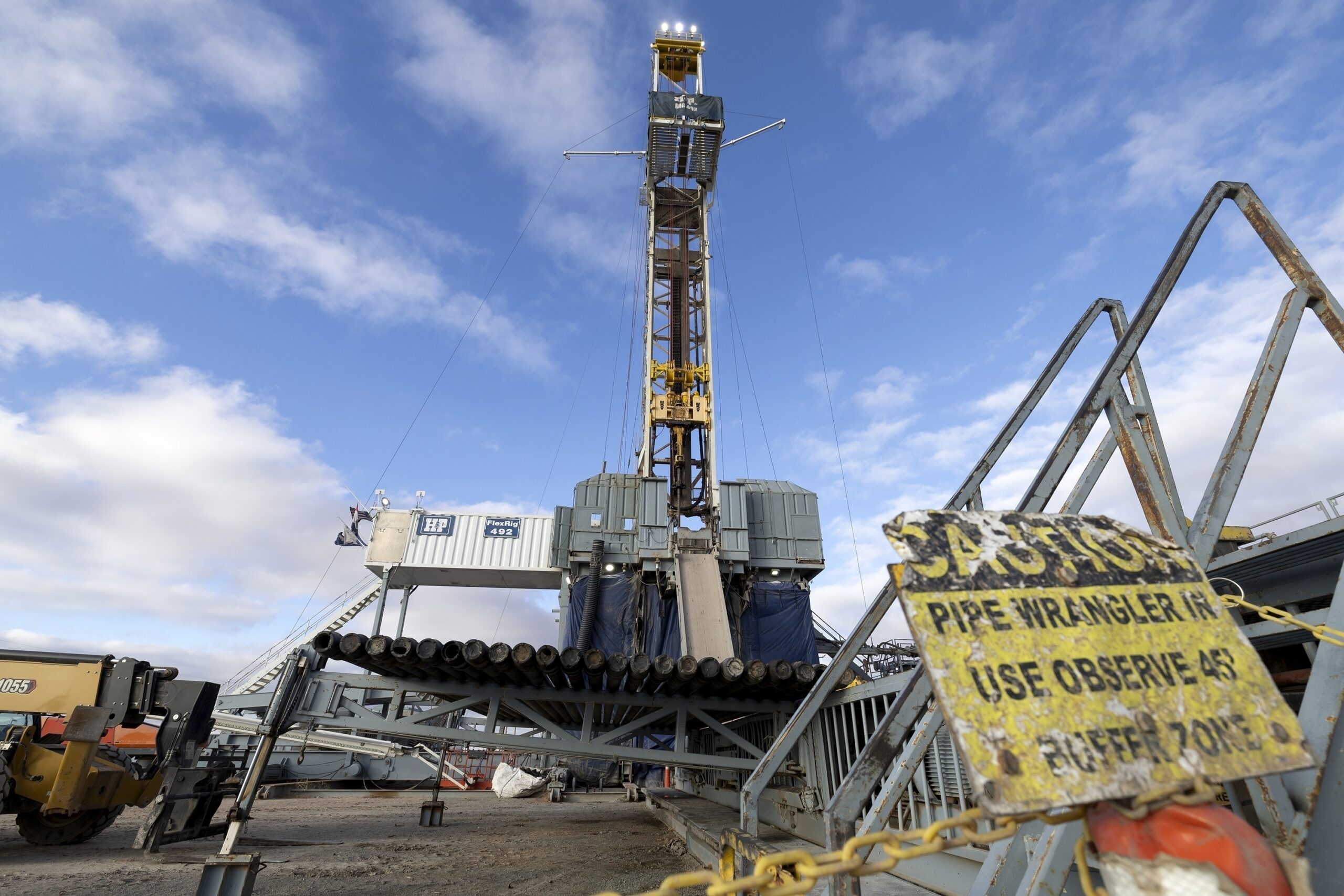
They’re doing so by using enhanced geothermal systems (“EGS”) technology that allows Fervo to access deeper heat reservoirs that traditional geothermal technologies cannot. This is achieved by drilling multiple wells from individual geothermal reservoirs. The company says that this process reduces drilling risks as well as its surface footprint.
And, if EGS technology proves successful at scale, geothermal electricity suddenly becomes available in more areas of the country. It won’t matter whether a potential geothermal source is deep underground or lacks water.
That’s one reason why some analysts project that geothermal energy could satisfy nearly 65% of new U.S. data-center demand through the early 2030s.
Fervo’s IPO comes at the right time, as hyperscalers and other data-center operators search for more resources to satisfy AI’s unquenchable thirst for energy. Geothermal is a logical choice, and Fervo is poised to capitalize on the opportunity.
The Case for Geothermal Energy Powering AI and Data Centers
The AI power struggle – in the literal sense – is real. In October 2025, I outlined data centers’ rapidly growing energy demand when I wrote:
According to Deloitte analysis, the power demand from AI data centers alone could increase [by] more than 30 times in the U.S., going from 4 [gigawatts (“GW”)] in 2024 to 123 GW by 2035. That’s enough to electrify nearly every household on the East Coast, or 100 million homes.
The report noted that AI only accounted for 12% of the 33 GW U.S. data-center power demand in 2024… a figure set to grow to 70% in 10 years.
Globally, the amount of electricity consumed by data centers is estimated to rise from around 2% to between 11% and 15% by 2030.
Existing power grids weren’t designed to handle that type of energy demand. These grids were built to support the predictable, consistent electricity demand from homes and businesses.
Data centers require energy well beyond that capacity.
The energy-grid crisis has led data-center operators and hyperscalers, such as Amazon (AMZN), Alphabet (GOOGL), Microsoft (MSFT), and Meta Platforms (META), to seek alternative power sources.
Renewable sources like solar and wind power are options, but they tend to be too intermittent to meet the 24/7 energy needs of data centers. Natural gas works, but it also presents infrastructure bottlenecks and environmental concerns.
Nuclear energy is an option. But nuclear requires massive capital investment – not to mention the time required to build an operational power plant, overcome regulatory hurdles, and address environmental concerns.
Then there’s geothermal energy, which offers significant upside for powering data centers.
Geothermal energy:
- Offers 24/7 clean, stable electricity, ideal for data centers.
- Provides baseload, emissions-free power that other renewable sources can’t.
- Delivers built-in, waste-free cooling using low-grade Earth heat to cool servers rather than electric coolers that devour energy.
- Avoids seemingly endless grid transmission interconnection queues and local grid instability.
Fervo and geothermal energy also have an important ally. President Donald Trump and his administration threw their support behind geothermal-energy technology earlier this year, with the Department of Energy announcing it was directing $171.5 million toward field tests.
That could signal positive developments are on the horizon.
Fervo Already Has Alphabet in Its AI Power Portfolio
It didn’t take long for Fervo to make its mark on the AI and data-center industry.
Back in 2021, Fervo and Alphabet collaborated on Project Red, the world’s first corporate agreement to develop geothermal power. The goal of this commercial pilot was to test whether Fervo’s EGS could deliver geothermal power in Nevada.
The pilot proved successful. And in late 2023, the 3.5 MW project began supplying electricity to the grid.
Project Red’s triumph paved the way for larger Fervo projects with Alphabet, including the 115 MW power purchase agreement (“PPA”) for the Corsac Station. This collaboration delivers 24/7, carbon-free geothermal power to Alphabet’s data centers in Storey County, Nevada and Google Cloud’s Las Vegas region via provider NV Energy.
This partnership between Alphabet and NV Energy was notable because it was Alphabet’s first deal under the Clean Transition Tariff (“CTT”). The CTT is a utility rate structure that allows major energy users – such as Alphabet and other data-center operators – to fund and use clean, firm energy projects without passing higher rates on to other consumers.
Fervo has since signed a geothermal framework agreement (“GFA”) that gives Alphabet the right of first refusal to purchase up to 3 GW of power from Fervo’s upcoming geothermal projects.
This essentially means that Alphabet has exclusive rights to any geothermal power sources Fervo unearths until at least March 2028 (when the agreement lapses, unless both companies sign another agreement to keep it going).
So, not only would Alphabet have a solution to its data-center energy issues, but it would also prevent Alphabet’s hyperscaler competitors from tapping into Fervo’s resources.
Fervo’s Other Deals and Upcoming Projects
According to the company’s IPO filing with the SEC, Fervo currently has 658 MW of binding PPAs in place, a backlog potentially worth $7.2 billion…
- Roughly half of that capacity (320 MW) comes from two PPAs with Southern California Edison, one of the country’s largest utilities. These 15-year agreements will provide nonstop, carbon-free power to the equivalent of 350,000 homes across Southern California.
- Fervo also has a 31 MW PPA with Shell (SHEL) to provide its retail load customers with geothermal power.
- Fervo’s Cape Station flagship geothermal power plant in Beaver County, Utah, is the world’s largest next-generation geothermal development.
Designed to deliver 500 MW of continuous, carbon-free electricity, Cape Station is fully contracted through 2028. Its first 100 MW should be on line and sending power to the grid later this year and into early 2027.
Cape Station, which offers up to 4.3 GW of total onsite capacity, will generate power for Alphabet, Southern California Edison, Shell, and others.
Over the next few years, businesses and investors will be tracking developments at Cape Station to determine whether Fervo and its EGS can consistently scale power to meet the needs of mega-users like Alphabet.
Potential Risks for Fervo and Geothermal Energy
At first glance, geothermal energy is an ideal solution for the constant power needs of data centers. It’s nonstop, clean, and not dependent on weather conditions.
But there are still some risks and challenges involved.
One worry is that geothermal wells might cool off as water is pumped through them. If that occurs within only a few years, new wells will need to be drilled, dramatically increasing costs.
There are also environmental concerns. For example, will drilling increase the risk of seismic activity, such as earthquakes? Or could drilling potentially contaminate groundwater?
Fervo seemingly has these scenarios covered through active operational monitoring, data-driven operational standards, and adherence to safety guidelines. But there are concerns, nonetheless.
Another major hurdle is the cost to build a geothermal plant and to continuously drill. According to Fervo’s SEC filing, the Cape Station plant will cost roughly $7,000 per kilowatt of electricity produced – though it’s aiming to lower that cost to $3,000 moving forward.
The $7,000-per-kilowatt price is less than it would cost to build a small nuclear power plant, but it’s also more than three times as expensive as building a natural gas plant.
And those costs are adding up for Fervo. The company’s 2024 and 2025 profit-and-loss statements are not easy on the eye. Its reported revenue in 2025 was just $138,000, which was down from $199,000 in 2024.
Operating losses, on the other hand, were $48.8 million in 2025 and $41.8 million in 2024. These losses are largely tied to construction costs associated with the Cape Station plant.
Put simply, Fervo has not yet been profitable.
But these numbers clearly illustrate a still-building company investing in its infrastructure. So, losses like these aren’t unusual. Besides, the numbers aren’t all bad for Fervo.
Investor Outlook for Fervo
Fervo’s balance sheet shows that, at the end of 2025, the company possessed nearly $462 million in cash and cash equivalents and total assets of $1.37 billion.
Despite its operating losses and lack of revenue, it’s important to acknowledge that Fervo is a well-funded company that has the capital to keep building – even with roughly $790 million allocated to construction in process.
That’s huge for investors.
Between its backing from former Microsoft CEO Bill Gates, its massive funding, and its seemingly ideal solution to data-center power problems, Fervo is a very intriguing play.
The company’s Project Red pilot proved that geothermal energy is a highly viable power source, and we’ll likely know in a year or two whether it can scale to meet the insatiable energy needs of data centers.
But Fervo’s institutional funding alone should provide investors with a healthy dose of confidence that geothermal could very well become the widespread solution for clean, 24/7 energy.
Of course, there are no guarantees that geothermal energy is the answer – or that Fervo will succeed in scaling its power.
But Fervo’s strong public trading debut makes it an energy stock worth watching.
Regards,
David Engle
Editor’s Note: A highly secure site in West Texas now houses an emerging potential $10 trillion technology backed by Elon Musk and Sam Altman. This breakthrough could completely replace our need for foreign oil – and send one small group of stocks soaring in the process. Click here to learn how you can invest in Elon’s next $10 trillion move.