Image Credit Associated Press
Alphabet’s (GOOGL) Google doesn’t need A24’s library. It doesn’t want the film studio’s library.
Instead, the tech titan wants something tough to buy – and nearly impossible to create from scratch…
The trust of working filmmakers.
The $75 million investment that Google recently announced – its first equity stake in a film studio – buys something specific…
It places Google’s DeepMind researchers in A24’s real film productions. The researchers work with directors and cinematographers during filming, editing, and distributing films. In exchange, DeepMind gets real-time creative feedback on its tools from professional filmmakers, the exact people those tools are designed for.
That “feedback loop” is what the deal is about.
The partnership lasts several years and is non-exclusive. It focuses on research collaboration instead of a content deal. Google gains no access to A24’s archive or data.
The $75 million is nearly the same amount that venture-capital firm Thrive Capital invested in A24’s last funding round. This shows valuation parity, not a controlling stake. For a company guiding $175 billion to $185 billion in capital expenditures for 2026, this is a modest check. The strategic value is the position it buys, not the ownership.
What is Google’s A24 Deal?
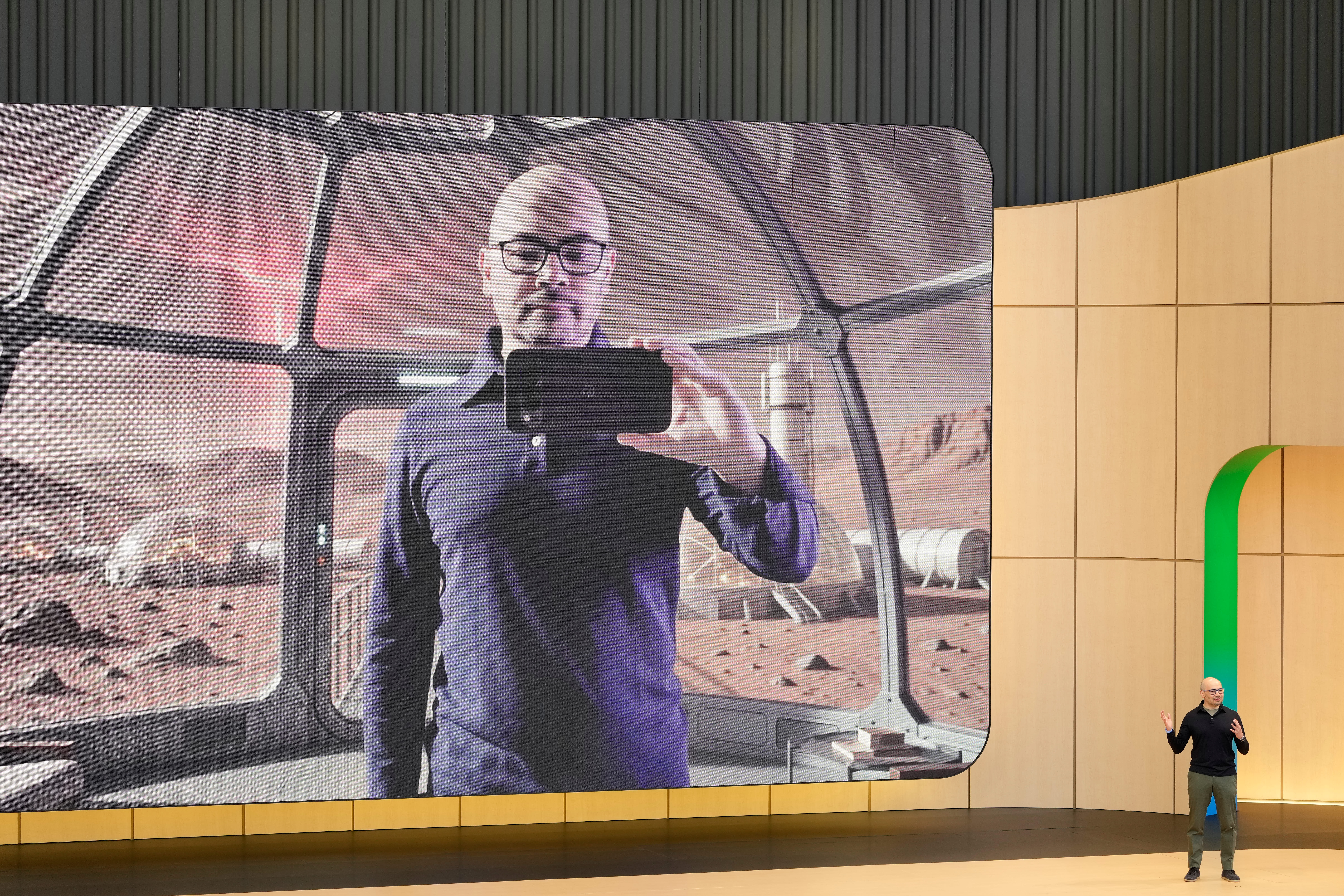
The technology at the center of the partnership is Veo – DeepMind’s video-generation model. Veo 3.1 creates 4K video clips from text or image prompts. It also produces synchronized audio and supports character consistency using reference images.
The current limit is eight-second clips. One of the partnership’s goals is to bridge the gap to feature-length films.
The near-term application isn’t replacing anything. A24 Labs has a tech team of 20 people led by Scott Belsky, who came from Adobe.
The team is already using AI to create storyboards. These are the visual sketches that directors use to plan scenes before filming begins.
That’s an “unsexy” use case – but exactly the right one. AI plays a supporting role – allowing directors to keep creative control. It provides real production data on tool effectiveness and exposes AI limitations. This approach also avoids the controversy of replacing human performers or writers.
Belsky was direct about what the partnership is not…
He told the Wall Street Journal that the new tools “won’t look anything like the prompted generation type of AI that people feel uncomfortable with.” He also said that the goal is to “preserve creative control and support risk taking.”
DeepMind VP Eli Collins framed it from the other side…
As he said, “We believe breakthroughs happen when you get technology into the hands of the best minds in the field.”
Both statements are doing real work. They aren’t just marketing…
They’re framing the partnership to address two main complaints about AI.
First, many folks view it as a cost-cutting tool. Second, it’s seen as a threat to creative authorship.
Why Alphabet is Investing in A24 Now
Google didn’t pick a random moment to make its first Hollywood investment…
The Screen Actors Guild-American Federation of Television and Radio Artists (SAG-AFTRA) union ratified a new four-year contract with studios just weeks before this deal closed, with AI projections at the center. Studios will use AI performers only if they offer “significant additional value” compared with live actors.
The Directors Guild of America (DGA) followed with its own four-year deal days later – directors now keep control over any AI-generated footage, and studios must consult the guild before using material to train AI models.
The deal came just days after Amazon (AMZN) canceled its nearly finished Sam Altman biopic. The film showed the OpenAI CEO in a negative light.
That episode highlighted a big issue…
The whole industry is now watching how a tech company’s profits clash with a studio’s creative freedom.
The Google-A24 structure has no library access. There are no content rights. It’s for research only. This directly answers that concern. Whether it holds under real pressure is a different question… But the architecture is deliberate.
Why Google Chose A24 Instead of Another Studio
A24 isn’t a random studio pick…
It turned indie credibility into a genuine consumer brand. The studio’s NRG survey data reveals that more than half of moviegoers identify as A24 fans. This brand loyalty puts A24 in a unique position, alongside major studios that spend 10 times more.
Its current slate reflects that position…
The adaptation of the Elden Ring video game – directed by Alex Garland – has a budget of around $175 million. This is the biggest in A24’s history. It shows the studio is shifting to larger projects while staying true to its roots.
The Marty Supreme and Backrooms films have already performed strongly in 2025 and 2026, respectively. For DeepMind, having its tools associated with A24’s output – rather than a generic effects house – matters. The brand signal to the broader creative community is real.
What Google’s A24 Deal Means for Alphabet’s Stock
Hollywood won’t determine Alphabet’s future. For Alphabet investors, this deal doesn’t move earnings. The $75 million is a rounding error against $175 billion in planned capital expenditures.
But the company understands that the next phase of AI won’t be won solely inside data centers. It will be won inside real workflows – where professionals decide which tools make them more productive.
Adobe’s Firefly found a home in design workflows by meeting designers where they worked. Google is making a similar push in film. It wants Veo to be part of real productions. The rules for AI in Hollywood are still being established.
The risk is the same one every tech-Hollywood partnership carries…
Editorial independence will be a concern when a film covers topics key to Google’s business. The non-exclusive, no library access setup limits exposure – but doesn’t remove it.
For long-term Alphabet stockholders, the A24 deal is a small but smart investment. It targets the creative software layer of AI. And that layer has been valuable to own from the start.
Good investing,
John Evelius
Editor’s Note: Marc Chaikin, the founder of Chaikin Analytics, built an award-winning system that flagged Nvidia as a BUY before it soared as high as 45,000%. It also turned “bearish” on software stocks two months before they crashed this year. Now, Marc’s warning that a “jump to lightspeed” has taken place behind the doors of a Silicon Valley AI lab – and says the repercussions are about to cleave the market in half this summer. This 60-year Wall Street legend has a FREE Hotlist of stocks to buy and an urgent Hitlist of stocks to sell now. Click for the full story, including stock names and tickers here…