
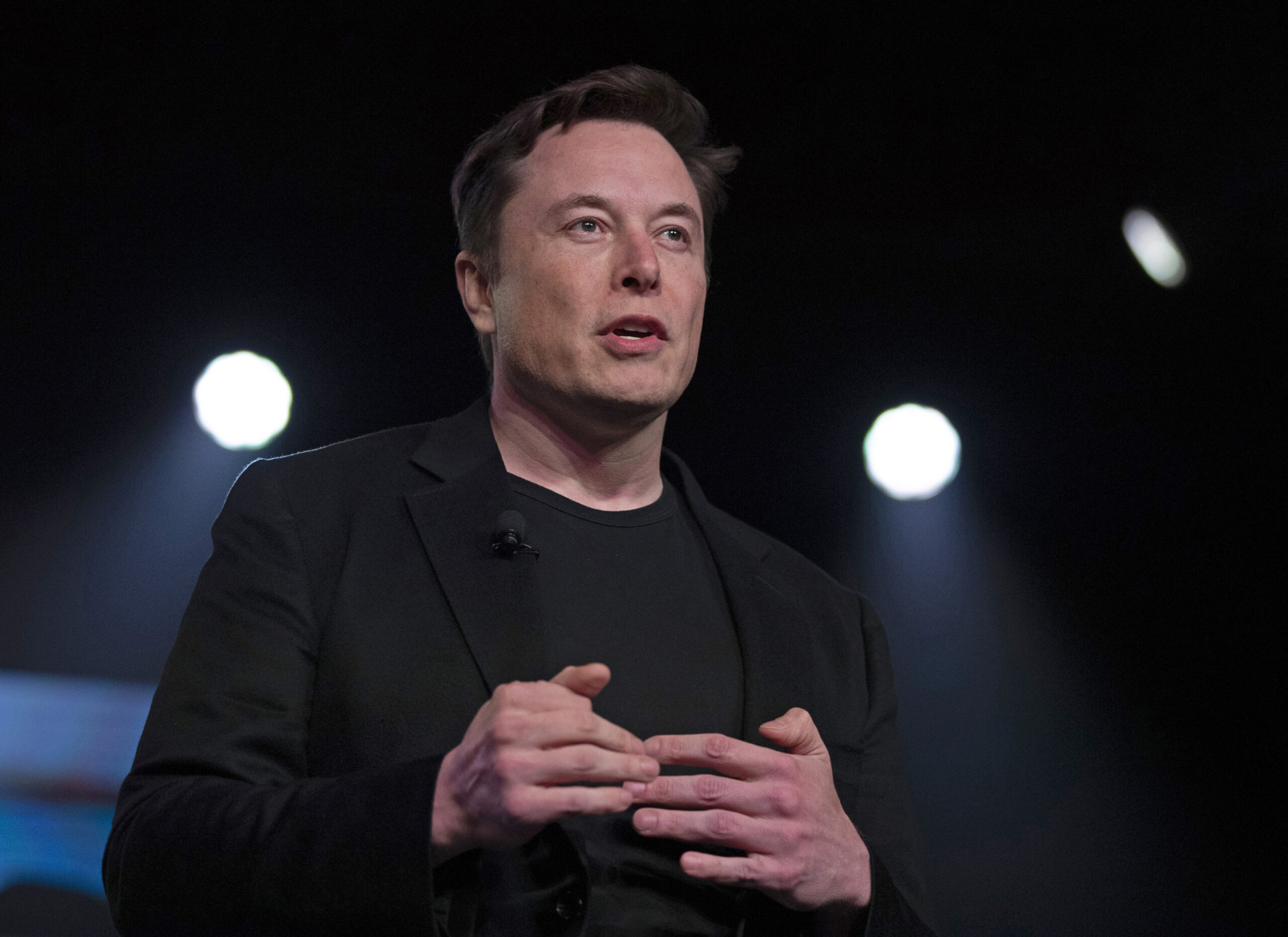
Image Credit: Associated Press
Key Points
- SpaceX’s pending $60 billion acquisition of Cursor could strengthen its position in the enterprise market, where its Grok chatbot has struggled to gain traction.
- Cursor would give SpaceX a fast-growing enterprise AI asset that could help attract business customers and improve its competitive standing in the AI sector.
- The deal would also increase SpaceX’s already substantial cash burn, adding financial pressure to a company that has burned roughly $30 billion in free cash flow over the past four quarters.
SpaceX (SPCX) is planning to buy coding startup Cursor for $60 billion, about a month after it closes its initial public offering (“IPO”), currently slated for June 12. The deal helps make SpaceX a more important player in enterprise artificial intelligence (“AI”), a space where its Grok AI chatbot has struggled to make inroads against tough rivals such as Anthropic and OpenAI.
Cursor offers products that help programmers write and debug computer code using AI tools. The company offers agentic coding models that allow programmers to specify their intent and then write code – an approach that has become popularly referred to as “vibe coding.”
Cursor is one of the fastest-growing startups ever, founded just four years ago in 2022. Its annualized revenue reached $100 million by January 2025, $500 million by June 2025, and then $1 billion by November 2025. In February, annualized revenue topped $2 billion.
Cursor’s valuation has followed those sales figures higher. Its Series A funding round closed in August 2024, valuing the company at $400 million. Another round five months later pushed the valuation to $2.6 billion, while a June 2025 capital raise saw the firm hit $9 billion. A further round in November 2025 bumped the valuation to $29.3 billion – 73 times its value 15 months before.
The valuation was set to move even higher just before the acquisition announcement. Cursor was discussing raising $2 billion in cash at a $50 billion valuation with major investors, including venture capitalists Andreessen Horowitz and Thrive Capital, as well as chip firm Nvidia (NVDA). Then SpaceX swooped in with a deal that lets them take control of this blisteringly hot property.
Cursor has more than 1 million paying customers and about 50,000 enterprise teams using its models. Nearly 70% of the Fortune 1000 companies use its models, according to the company. Nvidia CEO Jensen Huang has called Cursor his “favorite enterprise AI service.”
Here’s how Cursor can benefit SpaceX even as it hits the company’s cash flow.
How Cursor Helps SpaceX Become an Enterprise AI Player
Cursor puts SpaceX in the AI picture with a valuable asset that can attract enterprise users. That’s important, as SpaceX’s Grok model has had a rough time attracting users, especially enterprise users, compared with larger players OpenAI and Anthropic. Downloads of Grok have fallen from a high of 20 million in January to 8.3 million in April, according to AppMagic.
And when it comes to finding paying customers, Grok is not seeing much traction there either. In a second-quarter 2026 survey of more than a quarter-million U.S. AI users, a mere 0.174% paid for Grok, comparable with a year ago. Meanwhile, more than 6% paid for OpenAI’s ChatGPT.
Enterprise users are an especially important market for AI companies. Enterprises have more money to spend than individual users, and locking an AI model into their clients’ workflows could create long-term revenue streams for the AI companies. Anthropic and OpenAI have both been rushing to land corporate clients by creating joint ventures with private equity firms.
But Cursor gets SpaceX into the AI developer tools market. GitHub Copilot, an AI coding assistant from Microsoft (MSFT) and OpenAI, has an estimated 37% market share, with 4.7 million subscribers and 90% of the Fortune 100 as clients. Anthropic’s Claude Code has been surging recently and has helped scare the pants off investors in traditional enterprise software.
In a March survey from Enterprise Technology Research, almost half (48%) of respondents said their company was using Anthropic’s Claude and intended to keep using it. That was a marked increase from 21% in the prior year’s survey.
By pairing Cursor with its power-packed Colossus 2 AI data center, SpaceX can become a more potent player in enterprise AI, especially if SpaceX moves Cursor to its Grok models.
The Big Downside? Cursor Will Significantly Worsen SpaceX’s Cash Flow
The acquisition of Cursor, even if made with a stock swap for SpaceX stock and thus requiring no immediate cash outlay, would worsen the cash burn at the new parent company. While the move may make good strategic sense, it places further financial strain on SpaceX.
Reports suggest that Cursor has just swung to profitability on gross margins, not yet on an operating basis, let alone a net basis. That is, it’s now selling products or services for more than it costs to make them, but it’s not yet covering overhead, salaries, and operating expenses. In effect, up until now, all its revenue has been used to pay Anthropic and OpenAI for data calls.
While Cursor may use SpaceX’s Colossus data centers for computing, it won’t fundamentally change the economics of the business. Cursor will still need to earn enough gross margin to cover operating expenses, or it will continue to drain cash from SpaceX’s cash-burning AI unit.
All told, in 2025, SpaceX had negative free cash flow of $12.8 billion. Compared with SpaceX’s estimated $75 billion capital raise from the IPO, this level of spending may not seem worrisome.
But the AI unit has ramped up its cash spending markedly in the latest quarter, as the former xAI has been rolled into the larger SpaceX organization. SpaceX has various units that require significant capital to grow and compete, and its AI unit may be the most cash-consuming of them all.
This AI unit spent $12.7 billion on capital expenditures (“capex”) in 2025, but has already invested an additional $7.7 billion in just the first quarter of this year. Expect the higher level of capex to continue with xAI now in the fold and Musk committing to beat “everyone combined.” Despite the bold words, the AI unit reported revenue of $818 million in the first quarter, up just 12.5% year over year.
Add up all that spending over the past four quarters – factoring in the latest quarter with xAI – and SpaceX has burned around $30 billion. Even a $75 billion IPO haul will deplete cash quickly at this rate.
While the company’s Starlink unit is a cash generator, it’s not as robust as it could be. Yes, customers grew from 5 million to 10.3 million year over year in the first quarter. But monthly average revenue per user fell by 23% from $86 to $66, severely dinging profits.
AI businesses need immense amounts of capital to build and run. While SpaceX does have a solid cash generator in Starlink, it doesn’t have nearly the level of funding that these companies – OpenAI’s $122 billion in funding, for example – have raised recently either.
While SpaceX remains the market’s hottest IPO for 2026, it’s not all beer and skittles here.
Regards,
James Royal, Ph.D.
Editor’s Note: While everyone is focused on the SpaceX IPO, one America’s best stock pickers, Luke Lango says the real money is in something Elon has working on for decades. The world’s richest man is about to disrupt the $480 trillion global financial system in a way that few people see coming, and Luke is giving away his No. 1 way to play it, free, in this presentation.