Image Credit: Associated Press
Key Points
- SpaceX’s newly released prospectus highlights the company’s efforts to promote the stock while also revealing concerns about the realism of some of its long-term claims.
- The company’s lofty valuation, rapid cash burn, and highly ambitious plans may make the stock unattractive for many long-term investors.
- Despite broader concerns around SpaceX, the Starlink business remains appealing, though its cash flow could be directed toward riskier ventures.
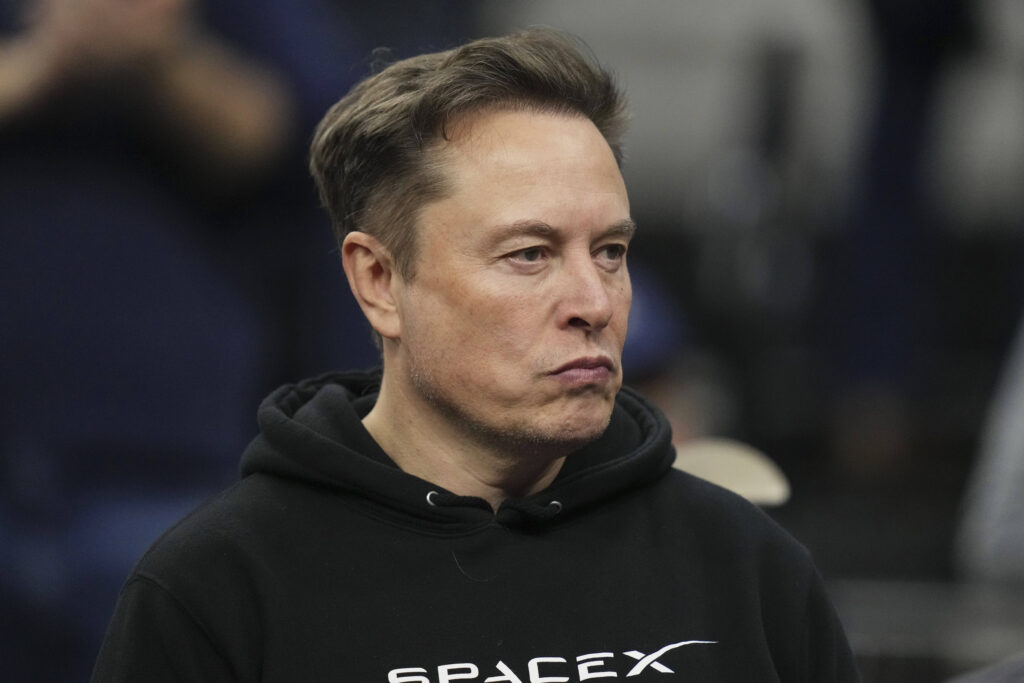
SpaceX (SPCX) filed its initial public offering (“IPO”) prospectus last week, and it’s a doozy, rife with issues that would derail any regular company. But for now, investors seem willing to give CEO Elon Musk a lot of leeway to make audacious predictions with little chance of being realized.
The tentative date for the SpaceX IPO is June 12, and the company is working hard to promote the stock. Musk has made big promises about establishing a lunar economy, setting up artificial intelligence (“AI”) data centers in Earth’s orbit, and creating a permanent settlement on Mars.
What SpaceX is doing currently has plenty of appeal. Its three business units include:
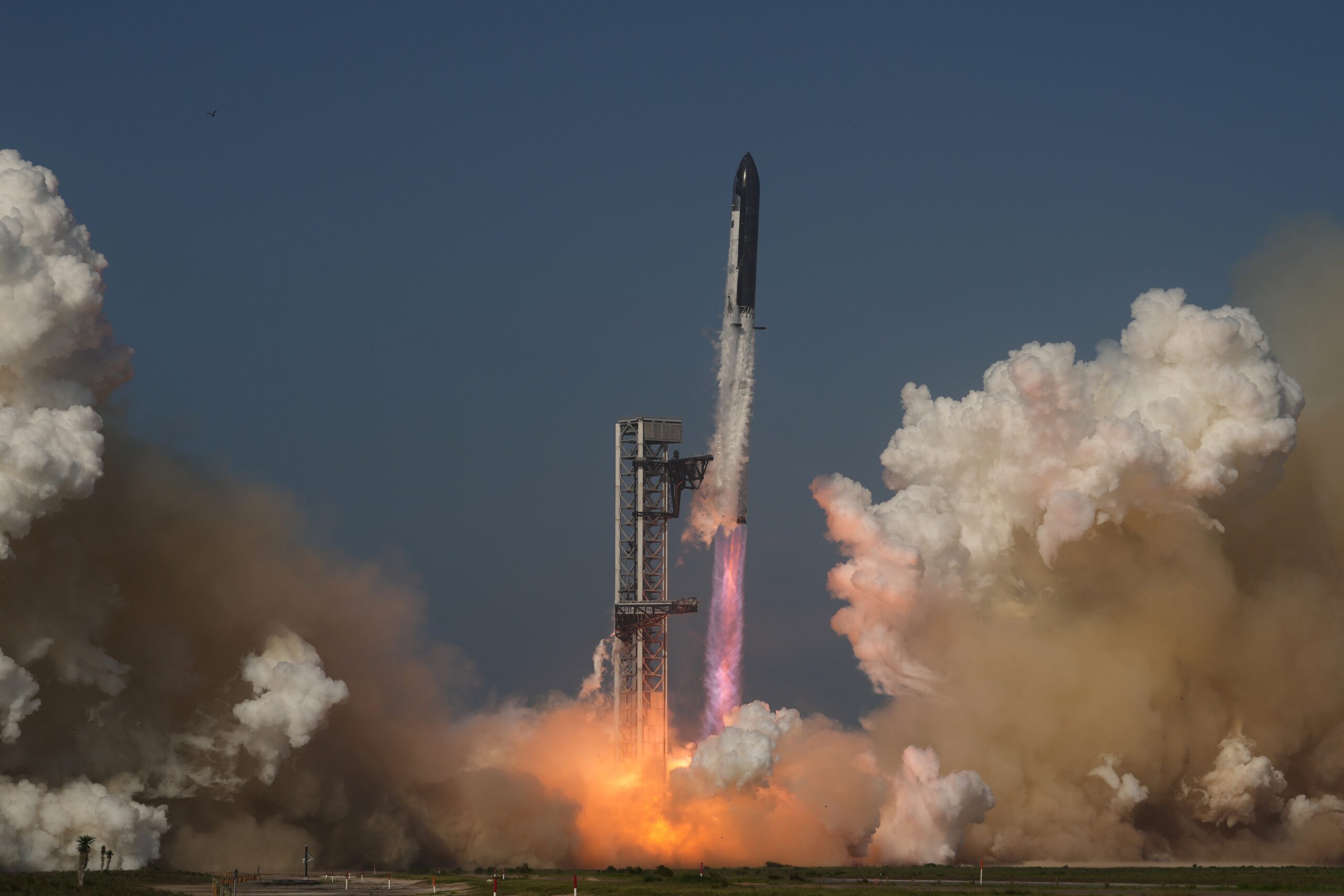
- Space:The Starship business shoots rockets into space with high frequency and low cost, making space more commercially accessible.
- Connectivity: The Starlink unit provides global, satellite-based high-speed Internet at an affordable price for residential homes, travelers, and businesses.
- AI: This unit was formerly known as xAI and features the Grok AI chatbot, as well as 550 million monthly active users across its AI platforms.
The newly filed prospectus helps cut through much of Musk’s spin to reveal the business’s actual economics. In short, while it’s an exciting mission, there are several reasons why SpaceX does not look like an investible stock.
Here are seven key things (many of which are outlandish) from the SpaceX IPO prospectus and what investors should be wary of as they consider buying the stock.
1. The Rocket Photos
SpaceX kicks off its Form S-1 with 18 photos of rockets, planets, satellites, and other inspiring space stuff. While some of the pictures form the backgrounds for a few factoids about SpaceX’s businesses (its Starship rocket unit, Starlink, and AI), they serve primarily to build excitement about putting up your money for a company that is burning through billions of dollars a year.
This intro section concludes with what the company (uniquely) calls its mission: “To build the systems and technologies necessary to make life multiplanetary, to understand the true nature of the universe, and to extend the light of consciousness to the stars.”
You’d almost expect to see the Star Trek tagline “To boldly go where no man has gone before…” somewhere in there.
If you saw this kind of statement from a much smaller company, you’d likely run away fast. It’s like the kind of puffery you’d see from penny stocks or pump-and-dump schemes that are trying to get investors to pay exorbitant sums for exaggerated hype.
2. SpaceX’s Insane Valuation
This initial prospectus doesn’t say how much the company is looking to raise and at what valuation, but Musk has been quite vocal about seeking a $1.75 trillion market capitalization. His talking has also helped boost SpaceX’s private market value.
However, the prospectus reveals the detailed financials, so investors can see what they’d be getting for their money. It really isn’t a lot. The summary balance sheet shows the company has total shareholders’ equity of just $34.5 billion. At a $1.75 trillion valuation, investors would be paying more than 50 times the company’s book value, not factoring in the cash raised.
To pay so much more than their net value, those assets must be generating tremendous profit, right? Nope. The company posted a $2.6 billion loss in 2025 and saw its 2026 first-quarter operating loss balloon to $1.9 billion, as soaring research and development costs for its AI unit hit the bottom line.
Since the company doesn’t have profits and we can’t generate a price-to-earnings ratio, let’s look at price-to-sales instead. Over the past four quarters, SpaceX had revenue of $19.3 billion. On that basis, the stock is trading at roughly 91 times sales – an utterly astronomical multiple.
3. SpaceX Businesses Are Burning Cash Furiously
SpaceX has a number of businesses that need substantial amounts of cash to grow. Its AI business may be the most cash-hungry. This unit spent $12.7 billion in capital expenditures in 2025 and has already spent an additional $7.7 billion in the first quarter of 2026. In contrast, the AI unit had revenue of just $818 million in the first quarter – up a mere 12.5% year over year.
We’ve already seen indications that SpaceX’s Grok AI chatbot is not faring well against OpenAI and Anthropic. App downloads are falling, and Anthropic is beating rivals in the key enterprise space.
In 2025, SpaceX had negative free cash flow of $12.8 billion. This figure has only gotten worse since the acquisition of xAI in February 2026. Over the past four quarters, SpaceX has burned around $30 billion, so a $75 billion IPO haul would disappear quickly at that rate.
4. Only Elon Musk Can Fire Elon Musk
If you don’t like the job Elon Musk is doing as CEO, tough luck. Musk has structured SpaceX’s voting stock so that the only person who can oust Musk is the CEO himself. SpaceX has two shares of stock, with Musk owning the Class B super-voting stock, giving him about 85% of the voting power for the company as a whole.
The prospectus says,
Mr. Musk… therefore will be able to elect all the members of our board. Mr. Musk, who will serve as our Chief Executive Officer and Chairman of our board under our charter and can only be removed from our board or these positions by the vote of Class B holders, as set forth in our charter, will exert significant influence over our business and affairs.
In other words, public shareholders will have virtually no say on how SpaceX is run – just the way Musk wants it. That’s a recipe for epic mismanagement. But this corporate structure is also the key reason why I think SpaceX is likely to merge with Tesla (TSLA), where Musk still has to answer to shareholders. If SpaceX were to own Tesla, Musk would no longer need to listen to its investors.
5. Massive Payouts to Musk for a Mars Base
Of course, when you control the board of directors, you get to set your own compensation. The board (ahem) decided that Musk would receive up to 1 billion Class B shares if the company achieves both of these milestones:
- About 66,666,665 shares for every $500 billion in SpaceX’s market cap, up to $7.5 trillion.
- A permanent human colony on Mars with at least 1 million inhabitants.
Worryingly, the conditions for Musk’s payout suggest that Musk believes his own hype. In any case, any issuance of these shares would severely dilute existing investors.
The chances of Musk establishing a Mars base are zero. The real value for Musk is being lionized as a “grand thinker” who is extending “the light of consciousness to the stars.”
6. Orbital AI and a Lunar Economy Are on a Distant Timeline
SpaceX has seemingly more realistic goals, such as putting AI data centers in Earth’s orbit and creating a lunar economy. Both are much farther away than SpaceX would have you believe.
Musk can make endless promises about what SpaceX can do when he’s hyping the company. But the law takes a much dimmer view of hype when it comes time to explain the realities to investors. That’s one reason why it’s vital to read legal documents such as the prospectus.
The prospectus offers a much more sober analysis of the state of play:
[M]any of our initiatives described above under “Our Growth Strategies,” including those to develop orbital AI compute at scale, manufacture AI chips at scale, establish a lunar economy, transport humans and cargo to the Moon and Mars, and develop human augmentation systems, involve significant technical complexity, unproven technologies or technologies that do not exist, and such initiatives may not achieve commercial viability….As a result, the timeline for certain of our initiatives involving unproven or new innovations, including our goal of deploying 100 gigawatts of annual compute power to orbit, the establishment of a lunar economy and interplanetary industrialization, and the launch cadence required to achieve these goals may be difficult or impossible to determine.
These much-hyped plans are so far out that SpaceX can’t even give you a credible timeline.
7. The Real Business Is Starlink
Before you walk away thinking the whole business is unattractive, it’s important to understand that Starlink could be a real gem. As a provider of satellite-based high-speed Internet, it has the potential for global scale. It’s growing quickly and generates high margins, meaning profits can balloon.
Starlink is growing its subscriber count rapidly, more than doubling from 5 million in the first quarter of 2025 to 10.3 million in this year’s first quarter. However, monthly average revenue per user declined from $86 to $66, as Starlink rushes to sign up new users with promotional pricing.
Due to lower average revenue per user, this customer growth translated into revenue growth of 31.6% year over year, reaching almost $3.3 billion in the first quarter of 2026. With various extra costs, however, operating income grew just 15.0% in the same period, to about $1.2 billion.
It all translated into an operating margin of around 36.5%. Plus, the company could scale some of those incremental costs across a larger customer base, boosting margins when it’s at scale.
So, Starlink could end up being a very attractive business when it scales up. But here’s the thing: Its profits are going to be rolled into SpaceX’s other initiatives, as Musk clearly explains in the prospectus on a page juxtaposed against one of those lush and inspiring Mars-like images.
Starlink internet is what’s being used to pay for humanity getting to Mars. So I’d like to thank everyone out there who bought Starlink, because you’re helping secure the future of civilization and helping make life multiplanetary.
Musk couldn’t make it any clearer that Starlink’s profits will not be returned to shareholders but will instead be rolled into further ventures that are as yet unprofitable.
Is SpaceX Stock a Good Investment?
Investors should carefully consider what they’re buying with SpaceX, because the stock has few attractive attributes – and investors are paying a fortune to own them. They’re also backing a CEO who has misled Tesla investors (about self-driving cars) for more than a decade, and lacks any corporate governance to restrain him from doing whatever he wants.
While SpaceX may rocket higher during its IPO as investors pay exorbitant amounts for Musk’s pipe dreams – in fact, investors may be forced to own SpaceX, whether they like it or not – the fundamentals will ultimately drive the stock’s long-term performance.
Regards,
James Royal, Ph.D.
Editor’s note: Former NASA adviser Jeff Brown believes the next great AI breakthrough won’t happen on Earth — it will happen in orbit. He calls it “Orbital AI,” a trillion-dollar opportunity that could reshape computing, energy, and the future of artificial intelligence. In this free presentation, Jeff explains the technology behind it, the company’s positioning to benefit, and one stock he believes could emerge as a major winner. Learn more now by clicking here.