Image Credit: Marketwise
Listen to the audio version of this article (generated by AI).
A strange new financial chapter may be unfolding in America…
Investors have whispered about the “Mar-a-Lago Accord” in elite circles for months … yet most everyday folks have never heard of it.
It refers to a to a deliberate plan to dramatically weaken the U.S. dollar’s value over the next few years.
This controversial strategy, as outlined by a major economic adviser to President Donald Trump, could hit unprepared savers hard…
In fact, if history is any guide, it could potentially slash the purchasing power of your savings by up to 40%.
But for those folks who are “in the know,” the upheaval will also create extraordinary opportunities to profit.
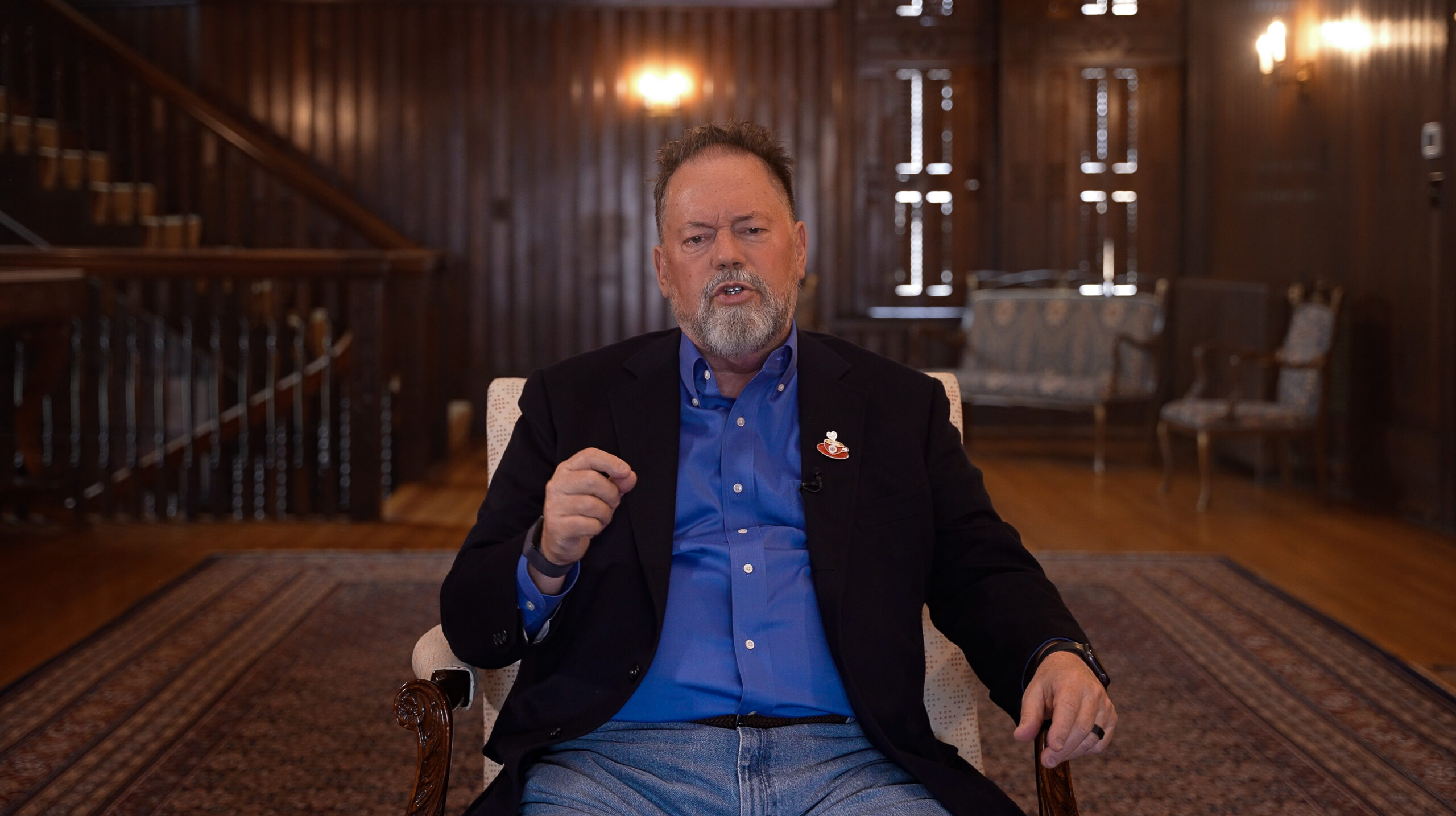
Former Wall Street trader and 40-year market veteran Dr. David “Doc” Eifrig is breaking his silence to warn that a very strange day is coming to America, thanks to this monetary reset. (Watch his full documentary on the Mar-a-Lago Accord by clicking here.)
Doc has successfully navigated multiple economic downturns… including 1987’s Black Monday crash, the global financial crisis, the COVID-19 pandemic, and the 2022 bear market… and now he believes we’re on the cusp of a “controlled demolition of the monetary order.”
A lot has happened since we first published this page in September of last year… Gold went vertical, then pulled back hard. The dollar sank to a four-year low. The national debt blew past $39 trillion. And a new Federal Reserve chair who may prove integral to the Mar-a-Lago Accord took office in May.
We’ve updated this important story below, so you have the full, current picture.
Understanding what the Mar-a-Lago Accord is and how it works can help you not only protect your wealth, but even potentially grow it dramatically in the years ahead…
Table of Contents
- Three Most Important Ideas Behind the Mar-a-Lago Accord: Quick takeaways on the dollar reset, gold’s role, and America’s industrial revival
- A ‘Controlled Demolition’ of the Monetary Order: Why U.S. policymakers might intentionally devalue the dollar and the parallels of this plan with past “accords”
- Idea No. 1 – The Dollar Reset: The forces driving a weaker dollar, key players (including Trump’s advisers Stephen Miran and Scott Bessent), and how a 40% devaluation could play out
- Idea No. 2 – The Comeback of Real Money: Why gold sits at the center of this reset and the historical precedents for big moves in real assets
- Idea No. 3 – America’s Industrial Renaissance: Massive investments to bring manufacturing and energy back to America require a nuclear boom
- About Stansberry Research: Why this financial research firm’s analysts have been focused on this story
- About Dr. David Eifrig: The unique background of the former Goldman trader turned doctor and financial writer who is sounding this alarm
- Frequently Asked Questions (FAQs): Common questions investors have about the Mar-a-Lago Accord, answered in plain English
- Key Terms Defined: Simple definitions of important terms that an investor should know
- What Investors Should Do Today: A few steps to take today to protect yourself and even profit in the months ahead
The Three Most Important Ideas Behind the Mar-a-Lago Accord
There are three big ideas behind the potential for the Mar-a-Lago Accord…
First, the U.S. dollar is being deliberately devalued.
Officials in the Trump administration’s economic team have a plan to reset the global currency system by weakening the U.S. dollar. The intent is to boost U.S. exports and domestic manufacturing competitiveness, a key part of the “America First” agenda.
In practical terms, this could mean the U.S. dollar’s value drops 20% to 40% over the coming years, similar to what happened after the 1985 Plaza Accord.
And the slide is well underway. The U.S. Dollar Index fell to its lowest level since early 2022 this winter, briefly breaking below the 95.5 level in late January.
Expect that imported goods will get more expensive for everyday Americans… But certain assets tend to rise when the dollar falls. It’s those assets that Dr. Eifrig is urging Americans to focus on in the coming years.
Case in point, gold is poised for a historic revaluation.
Many experts, including government insiders close to the plan, believe that the U.S. Treasury could officially revalue its gold reserves to a far higher price.
Right now, gold is carried on the government’s books at roughly $42 an ounce, a holdover from the 1970s after President Richard Nixon ended the dollar’s convertibility to gold.
But gold hit a record high of nearly $5,600 an ounce earlier this year… Even after its pullback to around $4,100 as we write, the market price sits at nearly 100 times the government’s “official” price. So there’s growing speculation that a new fixed price could be declared.
That move would instantly bolster the Treasury’s balance sheet… and likely send gold-related and other hard-asset investments skyrocketing.
Finally, an “America First” industrial revival is underway.
The Mar-a-Lago Accord isn’t just about the dollar and gold. It’s part of a broader strategy to rebuild American manufacturing… from industrial supply chains to factories, technology, and infrastructure.
And the one genuine requirement for this industrial resurgence is energy.
Whether you want to build semiconductor-chip plants, auto-manufacturing facilities, or artificial-intelligence (“AI”) data centers… they all need energy.
Power consumption is already climbing sharply across the nation. And unprecedented investment in U.S. energy – especially nuclear energy – is coming.
Before we get into each of these three themes, let’s take a look at the big picture behind why this is happening now…
A ‘Controlled Demolition’ of the Monetary Order
A secret meeting of power brokers behind closed doors deciding the fate of the world’s reserve currency… It sounds like the plot of a movie.
But in 1985, that’s exactly what happened at New York’s Plaza Hotel. The resulting Plaza Accord saw the U.S. join with allies in a coordinated agreement to actively push down the dollar’s value, which had been wreaking havoc on trade.
Now, four decades later, many analysts believe history is repeating…
This time, the term “Mar-a-Lago Accord” has emerged as a nickname for what could be a new Plaza Accord-style plan to remake the global financial system. It’s not yet a formal, signed deal… Rather, it refers to a series of signals and policy moves from the Trump camp indicating a grand strategy to devalue the dollar.
Stephen Miran coined the phrase in his wonkish 2024 paper titled, “A User’s Guide to Restructuring the Global Trading System.” Miran served as Trump’s top economic adviser before spending eight months on the Federal Reserve’s Board of Governors.
In Miran’s view, the current system of the dollar as the dominant reserve currency has ironically hurt the U.S. Because of the global demand for dollars, our currency valuation has been held artificially high… and as a result, our trade deficits have piled up.
In addition, Trump’s new Treasury Secretary, Scott Bessent, is a currency-market veteran who has openly hinted that a “grand global economic reordering” is necessary, as reported by the Wall Street Journal.
Bessent earned his fame (and fortune) working for billionaire George Soros… even helping to orchestrate Soros’ legendary bet against the British pound in 1992.
In other words, these are people who know how to strategically move currencies. And they’re now in the driver’s seat of U.S. economic policy.
Trump himself has repeatedly signaled displeasure with a strong dollar, both during his first term and more recently. So if these efforts to knock down the dollar work… the result would be resetting global trade with a cheaper dollar that makes U.S. exports like vehicles, technology, tractors, and soybeans more affordable to the rest of the world.
That would boost domestic industries… and also reduce the real burden of America’s $37 trillion national debt since we’d be paying back creditors in “cheaper” dollars.
And that debt keeps growing… The gross national debt crossed $39 trillion in March, according to the U.S. Treasury.
The Congressional Budget Office now projects debt held by the public will climb from roughly 101% of gross domestic product today to 120% by 2036… blowing past the previous 106% record after World War II.
This is a radical plan with massive and far-reaching implications. But there are also important precedents…
- The Bretton Woods Agreement in 1944 established the dollar as the reserve currency, albeit still pegged to gold.
- The Nixon shock in 1971 ended that gold peg, effectively devaluing the dollar and launching a new era of floating exchange rates.
- Then the Plaza Accord of 1985 knocked the dollar down as much as 40% compared with other currencies.
Each time, these were closed-door deals made by the nation’s elites… followed by major financial consequences for Americans from all walks of life. The Mar-a-Lago Accord may be the next major inflection point.
And the dollar has already weakened. As we wrote last summer…
Halfway through 2025, the U.S. dollar is looking downright sickly…
The once-mighty greenback has slumped so much this year that it will likely post its worst first-half performance since 1986. For context, that was right after the Plaza Accord – when the dollar was deliberately pushed off a cliff by global policymakers.
That prediction held up. The dollar kept sliding through year’s end and into 2026, ultimately touching a four-year low.
This fall has coincided with a flurry of actions from the Trump administration… from aggressive tariffs to jawboning the Federal Reserve for rate cuts to installing a new, friendlier Fed chair. And not coincidentally, we also saw gold prices rocket to all-time highs before settling above $4,000 an ounce.
Doc calls it a “controlled demolition of the monetary order.” And he warns it will affect everything you own…
Think about it…
What’s in your savings account? Your money market fund? What is your mortgage valued in? How do you express the value of your stocks and bonds? Unless you’re one of those rare Americans who has money parked overseas, every single thing you own is in dollars.
That’s what makes this intentional devaluation so dangerous.
Doc warns that Americans who don’t prepare could watch their retirement savings lose 40% in real value. But those who prepare could not only preserve their wealth… but potentially see significant gains over the long term. (You can watch Doc’s full Mar-a-Lago Accord documentary here.)
The Mar-a-Lago Accord is a high-stakes gambit…
- If it succeeds, it could reinvigorate American industry and lessen our reliance on the rest of the world.
- If it’s mismanaged, it carries significant risks… including higher inflation, spiking interest rates, and a loss of confidence in U.S. assets.
We’re seeing some of those risks flare up right now. The conflict between Israel, the U.S., and Iran has sent oil and energy prices surging. And headline inflation hit 4.2% in May, the hottest reading since April 2023.
So with that in mind, let’s take a look at the three big ideas behind the Mar-a-Lago Accord…
Idea No. 1: The Dollar Reset
Last spring, my colleague Sean Michael Cummings encapsulated the core idea of the potential for a Mar-a-Lago Accord with one line…
Currencies are only as good as people’s confidence in them… And right now, some of America’s biggest policymakers have knives out for the dollar.
The dollar fell roughly 10% in 2025… as anti-dollar chatter from the White House grew louder. Then it kept falling, hitting a four-year low early this year.
Trump publicly pressured the Federal Reserve to cut interest rates, which typically weakens a currency. The Fed delivered three rate cuts in 2025, bringing its target range down to 3.5% to 3.75% by the end of the year. Trump also appointed Mar-a-Lago Accord architect Miran to the Fed board. And then he went one step further… replacing Fed Chair Jerome Powell with his own hand-picked chairman, Kevin Warsh.
This has all sent a clear signal to the market… The U.S. government wants looser monetary policy and a softer dollar. And it will make drastic, unprecedented moves to get them.
So it’s worth taking a look at the mechanisms behind “resetting” a currency…
The first tool is typically monetary policy. If the Federal Reserve cuts rates or prints money, the dollar tends to fall.
We saw exactly that in 2025… Fed officials shifting from fighting inflation to worrying about growth, and three rate cuts followed. Lower interest rates mean less global demand to park money in U.S.-dollar-denominated assets, which weakens the dollar overall.
Of course, this “first option” faces a new complication right now… the oil shock from the Iran conflict has helped pushed inflation back up. And now, most of Wall Street expects the Fed to hold rates steady – or possibly even hike later this year.
The second tool is direct intervention. The U.S. government can sell dollars in the open market and buy other currencies to drive its value down.
Both the Treasury and the Federal Reserve are legally allowed to intervene in foreign-currency exchange markets. And in practice, they typically do so jointly.
Direct intervention used to be more common. But since the mid-1990s, the U.S. has only done so three times – in 1998, 2000, and 2011.
The third method is to reset the terms of global trade so other nations voluntarily drop the dollar standard.
For example, if tariffs make it painful to hold a strong dollar, countries may begin letting their currencies rise… or they may settle trade in alternate currencies.
Since World War II, the world has used the U.S. dollar as the default “reserve currency.” That means the greenback is the currency of choice to settle most cross-border trade… from barrels of oil to shipping containers of Labubu toy monsters.
The Mar-a-Lago Accord concept might include bilateral deals, currency swaps, or even digital currencies… all in an attempt to nudge global trade away from the U.S. dollar.
So what does this mean for everyday Americans?
In his public warning, Doc shows that your dollars could lose up to 40% of their value in the years ahead. That’s roughly how much the dollar fell after the 1985 Plaza Accord.
In addition, after Nixon abandoned the gold standard in 1971, the dollar lost more than 30% of its value compared with gold and other currencies in the following years.
In both cases, Americans saw inflation as imports and commodities got more expensive in dollar terms. That’s especially dangerous for anyone who is retired or on a fixed income… as you suddenly notice that your dollars don’t go as far.
And stock investors aren’t immune, either. A dollar decline can help boost the stock market initially… but as currency volatility picks up, so does broader market turmoil. As Doc noted in his documentary, you might have seen some of the warnings about the Mar-a-Lago Accord in mainstream headlines:
Forbes calls it a plan to remake the financial system… that could “turn global financial markets upside down.”
The Financial Times says, “the unimaginable is becoming imaginable”… and that it could “upend the global monetary system.”
And the Wall Street Journal calls it a “New World Order.”
Whatever happens in the short term with the Mar-a-Lago Accord, it’s clear that a monetary reset will create volatility.
And one major difference between a currency reset and a normal financial crisis is that cash is not king.
That is, it might feel safe to hold dollars in the bank… But if those dollars decline by 10% – as they have so far in 2025 – your nest egg is “safely” getting 10% smaller.
That’s why Doc recommends holding real assets…
Idea No. 2: The Comeback of Real Money
When a currency is intentionally devalued, where should investors go for safety?
Historically, the answer has been real assets, especially gold…
Gold might seem like an ancient relic to some, but it quickly becomes relevant in times of monetary stress.
Under Bretton Woods, gold was the anchor of the global monetary system. When Nixon broke the gold peg in 1971, gold’s price was set free… and it soared from $35 to $800 within the next decade.
Gold then stagnated for years, until after the 1985 Plaza Accord and dollar devaluation… when it again rallied. It climbed roughly 50% over the next two years.
Fast forward to the 2000s. Massive money-supply growth and a declining dollar again saw gold jump… from around $250 in 2001 to nearly $2,000 in the wreckage of the global financial crisis.
And the past year delivered one of the most dramatic moves for gold yet. After we first published this deep dive into the Mar-a-Lago Accord, gold soared from around $3,600 an ounce to a record high of nearly $5,600 in January.
Since then, it has pulled back roughly 25%, to around $4,100 an ounce. The correction was spurred from two directions at once… an oil-driven inflation shock that crushed hopes for near-term rate cuts, and a surprisingly strong jobs report that did the same.
Despite that painful pullback for anyone who “bought the top,” gold is still up more than 20% over the past year. Central banks bought 244 net tonnes in the first quarter of 2026 alone, according to the World Gold Council. And as our colleague James Royal wrote in his rundown of the best gold funds earlier this month…
Gold has performed quite well over the last few years, making it a profitable time to be a “gold bug.” Despite the recent dip in gold prices since reaching all-time highs earlier this year, investors have good reason to remain optimistic.
Central banks around the world continue to buy gold as a long-term store of value. At the same time, U.S. debt levels continue to climb, increasing inflation and hurting the value of the dollar.
If you’re keeping track… that’s a more than 11,000% increase in the price of gold during the past 50 years. And the bulk of the moves higher have happened shortly after monetary resets like what could come from the Mar-a-Lago Accord.
It’s no wonder that Ray Dalio, Paul Tudor Jones, Larry Fink, and many other billionaire investors have been buying gold. And gold was even the largest personal position of Bessent, as he noted in an interview before taking office as Treasury Secretary:
I think we’re in a long-term bull market in gold… It’s my biggest position.
And perhaps one of the most fascinating and controversial aspects of the Mar-a-Lago Accord is the possibility that the U.S. government could revalue its gold holdings to help fix its financial books.
Remember Bessent’s promise to “monetize the asset side of the U.S. balance sheet”? Here’s the simplest, most immediate way to do it.
Today, the U.S. Treasury officially values its hoard of 261.5 million ounces of gold at just $42.22 per ounce. This “book value” hasn’t changed since the early 1970s, even though the market price is nearly 100 times higher.
So if gold were revalued up closer to its market price… it would add more than $1 trillion in liquidity to America’s balance sheet. And it would also serve the broader goal of weakening the U.S. dollar.
Gold has been revalued four times in U.S. history. The most famous came in 1934, when President Franklin D. Roosevelt repriced gold from $20.67 per ounce to $35… adding $2.8 billion to the government’s coffers with the stroke of a pen as the country clawed its way out of the Great Depression.
In his documentary, Doc gets into the details behind a gold revaluation… and even looks at two currency experts’ predictions behind how the price of gold could climb to more than $20,000 per ounce. As he admits…
I’m far from a gold bug myself. First and foremost, I’m a stocks guy.
However, gold now sits at the center of our financial futures and security – whether we like it or not.
Owning real assets like gold offers protection if the worst outcomes happen… and immense upside if the Mar-a-Lago currency reset sends gold much higher.
And of course, gold isn’t the only real asset seeing huge demand today…
Idea No. 3: America’s Industrial Renaissance
The Mar-a-Lago Accord covers more than weakening the dollar and boosting gold… It’s a plan to restore American economic dominance.
Trump has long railed about the decline of U.S. manufacturing and our country’s reliance on foreign supply chains. Today, Doc notes that…
Trump’s administration has already secured more than $5 trillion in new U.S. investments, including:
- $100 billion from [Taiwan Semiconductor Manufacturing] to construct chip plants.
- $500 billion from OpenAI, investment firm SoftBank, and software giant Oracle to build out the AI infrastructure across the U.S.
- More than $500 billion from Apple, including developing data centers and opening a new manufacturing facility in Texas.
- And much more…
But in order to make America a powerhouse of production, you need power.
As new chip plants, AI supercomputers, electric vehicle factories and more are getting built, electricity demand is skyrocketing. As we wrote last year:
Electricity demand in the United States is rising for the first time in two decades. PJM, the electricity grid that covers the mid‑Atlantic, expects peak demand to grow 3% to 4% a year through 2035, double last year’s forecast.
And while 3% to 4% growth sounds small, PJM announced prices at its last capacity auction that were up more than 800% from the previous year, thanks to rising demand and shrinking supply.
If anything, the squeeze has gotten worse since we wrote that. AI data centers alone are expected to demand another 220 gigawatts of power in the coming years… nearly 20% of the entire installed capacity of the U.S. grid.
The strain is now so severe that some of the world’s richest companies have given up waiting for utilities and started building their own private power plants, a story I covered in depth in my recent piece on Professor Joel Litman’s “Dark Energy” prediction…
Electricity demand is surging in the age of AI. And it has become an expensive gamble for data-center operators to wait for the grid to catch up.
That’s why many are taking matters into their own hands… by building around the bottleneck.
Meanwhile, everyday Americans are feeling the cost. Electricity bills near data-center hubs have soared, and the public backlash keeps growing, as I reported this spring…
According to Data Center Watch, a research firm tracking the backlash, at least 142 activist groups across 24 states are now organizing to block data center construction.
Over the past two years, residents have blocked or delayed a staggering $64 billion worth of data-center projects. And roughly 55% of the elected officials who have spoken out against data centers are Republicans, not Democrats.
All of which strengthens the case for the most popular power option favored by the Trump administration… nuclear.
Trump signed several executive orders related to nuclear power in 2025… with the goal of quadrupling the nation’s nuclear power generation.
That’s an ambitious target. And it will require an enormous amount of uranium to fuel the reactors.
The problem is that the uranium market has been severely undersupplied since 2018. Current production only meets about 80% of global demand… and roughly 25% of the enriched uranium we use in domestic nuclear plants comes from Russia.
That pipeline is shutting down. All Russian uranium imports will be banned entirely by January 1, 2028. So the clock is ticking for the U.S. to replace nearly a quarter of its fuel supply, even for existing reactors.
Looking ahead, Doc expects a massive uranium supply crunch in the months ahead. And the potential upside of this kind of market move can be startling.
As Doc details in his documentary, “this critical supply-demand mismatch creates a perfect storm for astronomical gains if you act now.” He gives a few examples from the last time uranium prices skyrocketed between 2000 and 2007…
Here’s the most important thing you need to understand… as uranium soared, the right uranium stocks went up EVEN HIGHER.
Industry leader Cameco shot up from around $2 to more than $50 – a 2,500% gain!
And look at Paladin Energy, a smaller, more speculative uranium stock. It catapulted from one penny to $10. One thousand times your money in just a few years.
Even though the uranium market is relatively small, it has attracted big attention in recent years as countries restart old nuclear plants and build new ones.
Keep in mind, uranium is notoriously volatile. Price spikes often cause demand destruction or government intervention… like releasing strategic reserves or even shutting down reactors for maintenance to save fuel.
But with global sentiment warming to nuclear, we might see more willingness to pay higher prices for fuel.
And finally, the U.S. industrial comeback can only be powered by a nuclear energy boom.
The key aspects of the Mar-a-Lago Accord… a weakening dollar, the revaluation of hard assets, and an American industrial renaissance… will send shock waves through the stock market.
Just reading this page and watching Doc’s Mar-a-Lago documentary will give you an advantage over most Americans in terms of expecting what comes next.
So now, let’s take a step back and look at the financial publishing firm and analyst bringing you this prediction…
About Stansberry Research
Stansberry Research is one of the largest independent publishers of investment research and financial education.
Founded in 1999, the firm made its name by giving individual investors access to the kind of in-depth research and contrarian ideas often reserved for Wall Street insiders. Today, its subscribers come from all around the globe. And its publications are read by hundreds of thousands of investors.
However, Stansberry Research is not a brokerage or fund manager… It doesn’t manage or invest your money. Instead, it provides specific advice to its paid-up subscribers.
That’s important because Stansberry’s analysts only succeed if they recommend opportunities and make economic calls that subscribers find valuable. As a result, its research often takes an independent, contrarian view of the market.
Of course, not every pick is a home run. And it’s important to note that Stansberry Research analysts regularly acknowledge their mistakes – including in an annual “Report Card” where its publisher grades each publication, no holds barred.
Its wide range of publications cover investment strategies like value investing, commodities, biotechnology, income, macroeconomic perspectives, and more.
In short, Stansberry Research is kind of like having a team of seasoned analysts in your corner, doing deep dives and bringing you opportunities you likely won’t hear about from your brokerage or CNBC until much later… if ever.
The Mar-a-Lago Accord coverage is a perfect example. Stansberry analysts sifted through obscure policy papers and global financial news to piece together this narrative before it’s obvious. They then not only explained it in plain language… but also provided actionable investment guidance to deal with it.
Now, let’s introduce the man who has been central to articulating this Mar-a-Lago Accord story: Dr. David Eifrig, or “Doc” as he’s fondly known by his readers.
Who Is Dr. David Eifrig?
Dr. David Eifrig, MD, MBA is a rather extraordinary individual with a one-of-a-kind career path…
He’s currently editor of several Stansberry Research publications, as well as the CEO of Stansberry’s parent company, MarketWise (MKTW). But what really sets Doc apart is the breadth of his expertise…
After receiving his Bachelor of Arts from Carleton College in Minnesota, he went on to earn an MBA from Northwestern University’s Kellogg School of Management, graduating on the Dean’s List with a double major in finance and international business.
From there, Doc went on to work as an elite derivatives trader at the investment bank Goldman Sachs. He spent a decade on Wall Street with several major institutions, including Chase Manhattan and Yamaichi (then known as the “Goldman Sachs of Japan”).
That’s when Dr. Eifrig’s career took an unconventional turn. Sick of the greed and hypocrisy of Wall Street… he quit his senior vice president position to become a doctor.
He graduated from Columbia University’s postbaccalaureate pre-medicine program and eventually earned his MD with clinical honors from the University of North Carolina (“UNC”) at Chapel Hill. While at medical school school, he was elected president of his class and admitted to the Order of the Golden Fleece (considered the highest honor given at UNC Chapel Hill).
Doc also completed a research fellowship in molecular genetics at Duke University and became a board-eligible eye surgeon. Along the way, he has been published in scientific journals and helped start a small biotech company, Mirus, that was sold to Roche for $125 million in 2008.
However, frustrated by Big Medicine’s many conflicts, Doc began to look for ways he could talk directly with individuals and use his background to show them how to take control of their health and wealth.
So in 2008, during the depths of the global financial crisis, he joined Stansberry Research.
His flagship newsletter, Retirement Millionaire, has been responsible for some of the biggest gains across Stansberry Research history, including 1,172% gains on Microsoft (MSFT)… 800% gains on Berkshire Hathaway (BRK-B)… and many more.
In fact, right now, the average open position in his Retirement Millionaire model portfolio is up 152%… Imagine having the opportunity to more than double your money in every single open position, on average.
Obviously, all investments carry risk. And past performance does not guarantee future success. You should never invest more than you can afford to lose.
But Doc’s track record speaks for itself. And more important, he’s the kind of guy who can talk about the benefits of red wine for your heart – he produces his own wine, Eifrig Cellars in Sonoma, California – and in the next paragraph, explain a complex options trade in easy-to-understand language.
Doc is a trusted voice for the market. He wants to improve his readers’ lives, not just their financial returns.
And in the context of the Mar-a-Lago Accord, Doc’s background is particularly fitting…
He experienced the last dollar reset firsthand on Wall Street in the 1980s. He traded through Black Monday in 1987. He’s not one to panic. So I listen closely when he warns investors about something like this. As he puts it…
I’ve lived and traded profitably through the worst of the worst – and just about every shock the stock market could throw at a person.
And I’ll tell you now:
If history is any precedent, the Mar-a-Lago Accord would devastate millions.
If you haven’t already, watch Doc’s Mar-a-Lago Accord documentary here.
Or if you’d prefer to go directly to a subscription page to find out all the relevant details, click here. (This link does not go to a long video.)
Frequently Asked Questions (FAQs)
Now, let’s answer a few questions that readers have had about the Mar-a-Lago Accord…
Question 1: What exactly is the “Mar-a-Lago Accord”?
Answer: The “Mar-a-Lago Accord” is a nickname, not an official treaty… at least, not yet.
The term comes from Trump’s Mar-a-Lago estate… humorously suggesting that any new dollar agreement might be hashed out there, much as 1985’s Plaza Accord was named after New York’s Plaza Hotel.
It refers to a plan associated with Trump’s economic team, especially Stephen Miran, to dramatically weaken the U.S. dollar’s value relative to other currencies.
In essence, it’s a monetary-reset strategy aiming to reduce the dollar’s exchange rate by as much as 40% over the next few years. Unlike past accords, this one is unfolding via hints… including policy signals, tariffs, and personnel moves rather than a single signed document.
The goal of the accord is to devalue the dollar and rebalance global trade.
Question 2: Why would the U.S. government intentionally devalue the dollar?
Answer: A weaker dollar makes U.S. exports cheaper and imports more expensive. That in turn can revive domestic manufacturing and increase American jobs… a core Trump campaign promise.
It also effectively reduces the real burden of America’s massive debts, since the U.S. would pay back its creditors in “cheaper” dollars compared with other currencies.
The goal is to move toward an “America First” economy… That means more factories at home and a lighter debt load, at the cost of the dollar’s purchasing power.
Question 3: Who are the key people behind the Mar-a-Lago Accord?
Answer: There are now four key men you need to know who are behind the Accord…
The first is President Donald Trump. Nothing can happen at the scale of a full monetary reset without his explicit endorsement. He has long favored a weaker dollar and has a history of unconventional economic moves.
Second, Stephen Miran coined the term “Mar-a-Lago Accord” in his policy paper titled, “A User’s Guide to Restructuring the Global Trading System.” Trump appointed Miran as his chief economic adviser, and then to the Federal Reserve’s board of Governors. Miran left the Fed this spring to clear a seat for the new chairman.
Third, Trump’s Treasury Secretary Scott Bessent is a veteran hedge-fund manager with an extensive background in currency trading. He famously has stated that the U.S. needs to have some kind of “grand global economic reordering.”
And finally, the newest player… Kevin Warsh was sworn in as Federal Reserve chair in May. Warsh wants to overhaul how the Fed measures inflation in a way that could justify lower interest rates and a weaker dollar.
Question 4: How would devaluing the dollar affect my everyday life?
Answer: Initially, you might not notice… The dollar balance in your bank account will stay the same number.
But gradually, you’ll start to see imported goods and materials become pricier. Inflation will hit electronics, clothes, and cars. And travel abroad will become more expensive… Your dollars will “buy” fewer euros, yen, and pounds.
The dollar already fell about 10% in 2025 and hit a four-year low in early 2026. Expect that purchasing-power drop to continue as the hints around the Mar-a-Lago Accord start to show up in mainstream headlines.
Question 5: What about my stocks and 401(k)? Will the stock market crash?
Answer: History suggests a mixed impact on the stock market…
A weaker dollar can boost U.S. multinational companies’ earnings when they convert foreign profits back to fewer dollars. Right now, companies in the S&P 500 Index derive about 40% of their revenue overseas.
In addition, inflation generally pushes stock prices up in nominal terms because corporate assets and revenues are valued higher.
However, the risk is that currency volatility bleeds into the market… especially if it causes economic instability in other countries around the world.
Question 6: What does it mean that gold could be revalued? Will the government confiscate my gold?
Answer: Revaluation means the U.S. Treasury would raise the official price of gold on its books from its current $42.22-per-ounce price to something much higher. This would increase the nominal value of the government’s gold reserves, giving the Treasury a larger balance sheet and more liquidity.
The U.S. has revalued its gold holdings four times in history… and yes, in 1933 the revaluation did come alongside confiscation.
However, forced confiscation is considered unlikely today… not least because of how politically toxic the idea is.
Question 7: What about silver?
Answer: That’s a great question. You might know that when gold goes on a tear… silver typically catches up and then skyrockets even higher.
In fact, silver has outperformed gold in every bull market but one.
And indeed, silver hit an all-time record high in January this year… and it’s up more than 150% over the past year… even after its recent pullback. With the gold-to-silver ratio still well above its historical bull-market lows, many veterans argue silver remains cheap relative to gold.
So yes, silver is absolutely a factor in the Mar-a-Lago Accord. And Doc has laid out all the details in his new report, “How to Play Silver’s Mar-a-Lago Mania.” You can learn how to get the report delivered immediately to your inbox… along with the full analysis of his favorite silver plan, the name and ticker of the stock, and another insider trick to buy physical silver without taking on risky leverage in his documentary. (This link goes directly to the order form, not a long video.)
Question 8: Why mention uranium in the strategy? How is that related to a currency move?
Answer: Uranium is the other side of the Mar-a-Lago Accord, the push for more U.S. industrial and energy independence.
Nuclear energy is central to powering new domestic industries… and it’s favored by Trump’s energy policies. And uranium fuel is the choke point for nuclear. With global supply short and Russia being cut off, the price of uranium is set to skyrocket.
Hedge funds and governments are already stockpiling uranium, and historically uranium booms have yielded astronomical gains.
Question 9: What does new Fed chair Kevin Warsh have to do with the Mar-a-Lago Accord?
Answer: Potentially quite a bit… Kevin Warsh took over as Federal Reserve chairman in May, replacing Jerome Powell.
The Fed sets interest rates, and rates are one of the main levers that move the dollar. Lower rates tend to weaken the dollar… exactly the direction the Mar-a-Lago Accord pushes.
Warsh has also said he wants to change how the Fed measures inflation, favoring a “trimmed average” approach over the current core PCE gauge. Bank of America found that this method would have shown February inflation running cooler than the official reading. A cooler inflation number could give the Fed more cover to cut rates.
That said, the picture is complicated right now. An energy-price shock from the Iran conflict has pushed inflation to a three-year high, and markets currently expect the Fed to hold rates steady rather than cut. So Warsh’s influence on the dollar may take time to show up.
Question 10: Could the Mar-a-Lago Accord fail or be reversed?
Answer: There are plenty of risks and unknowns associated with the Mar-a-Lago Accord. For one, it’s not yet a formal agreement… It’s a plan in motion.
It could hit snags – like the inflation spike we’re seeing now, which has forced markets to bet on the Fed holding rates steady instead of cutting them. Or trade partners could impose their own currency controls.
A recession could also derail things… If global growth falls, investors typically seek safety in U.S. Treasury securities, which could stall the dollar decline.
Alternatively, the Treasury and Federal Reserve could go too far – aiming for a 25% devaluation and accidentally overshoot, which could cause a chaotic reversal like an emergency rate hike or currency intervention to defend the dollar to avoid a debt crisis.
So far, the intent is clear – Trump and his closest economic advisers want the dollar to decline. So unless evidence shows that they’ve abandoned that goal, positioning for a Mar-a-Lago Accord makes sense.
Key Terms Defined
Bretton Woods Agreement: The 1944 conference outcome that established the post-WWII international monetary system.
Bretton Woods pegged major currencies to the U.S. dollar, and it pegged the dollar to gold at $35 per ounce. It ended in 1971 when Nixon closed the gold window and the dollar became free-floating.
Devaluation: A reduction in the value of a currency relative to others. It can be an official, government-driven policy move… or a market-driven move.
Devaluation makes exports from a country cheaper and imports more expensive. The Mar-a-Lago Accord aims for a controlled devaluation of between 20% and 40% for the U.S. dollar.
Gold Revaluation: Adjusting the official price of gold to reflect currency valuations. For example, the U.S. revalued gold in 1934 from $20.67 to $35 per ounce… effectively devaluing the dollar by 40%.
Today, repricing gold from $42.22 to somewhere closer to its market price would add liquidity to the Treasury balance sheet and monetize existing government assets.
Inflation: The rate at which general price levels rise, meaning a dollar buys less than before. If the dollar is intentionally devalued, inflation is a likely result – particularly in imported goods and commodities priced in dollars.
Inflation is both a goal of the Mar-a-Lago Accord to reduce the real value of American debt… and a risk, if inflation accelerates too much and raises prices too high.
Monetary Reset: A deliberate change in the value or structure of a currency system. In this context, it means lowering the value of the U.S. dollar relative to other currencies and possibly assets like gold.
It’s akin to rebooting the financial system’s baseline. The Mar-a-Lago Accord is essentially a monetary reset plan for the dollar.
Plaza Accord: A 1985 agreement among the U.S., Japan, West Germany, France, and the U.K. to weaken the U.S. dollar to address trade imbalances. It was named after New York’s Plaza Hotel.
In the two years after the Plaza Accord, the dollar fell as much as 40% compared with other major currencies. It’s a historical analog to what’s being attempted now.
Reserve Currency: A currency held in large quantities by governments and institutions as part of foreign exchange reserves. It’s used for international trade and financial transactions.
The U.S. dollar is the world’s primary reserve currency, making up about 60% of global reserves. This status creates constant demand for dollars, which tends to keep it overvalued compared with other currencies.
Tariff: A tax on imports. Tariffs raise the cost of foreign goods, protecting domestic industries and pressuring trade partners.
In the Mar-a-Lago plan, tariffs are the “stick” to bring other countries to the table for a new accord. Tariffs also directly contribute to a weaker dollar by reducing import volumes as fewer dollars go out to buy foreign goods.
Trimmed Average: An inflation measure that drops the prices that moved most extremely in a given period… including both the biggest jumps and the biggest drops… and then averages the rest.
New Fed Chair Kevin Warsh prefers this method over the Fed’s traditional core PCE gauge, which simply excludes food and energy. The trimmed approach can show cooler inflation, which could justify lower interest rates.
What Investors Should Do Today
The Mar-a-Lago Accord scenario may sound far-fetched…
And practically no one on Main Street is aware of the blindsiding event that’s rushing toward them.
But today, we stand at a major turning point where yesterday’s “rules” like a strong dollar and low inflation may give way to a new paradigm. Right now, the dollar is at a four-year low… the national debt has crossed $39 trillion… gold, silver, and other hard assets have set records… and a new Fed chair who wants cheaper money just took office.
If you understand what’s happening, this reset can become a chance for you to make extraordinary potential gains instead… and make these coming years the best of your financial life to date.
If you don’t understand it… Well, the last time we saw a monetary reset like this was back in 1985.
- Those who didn’t act, as Doc suggests today, lost up to 40% of their nest eggs.
- But folks who were aware of the straightforward money move Doc explains could have doubled their wealth, or more.
And this time around, Doc believes your potential upside could even be as much as 1,000%… provided you take the steps he shares for free in his documentary. Watch it here.