
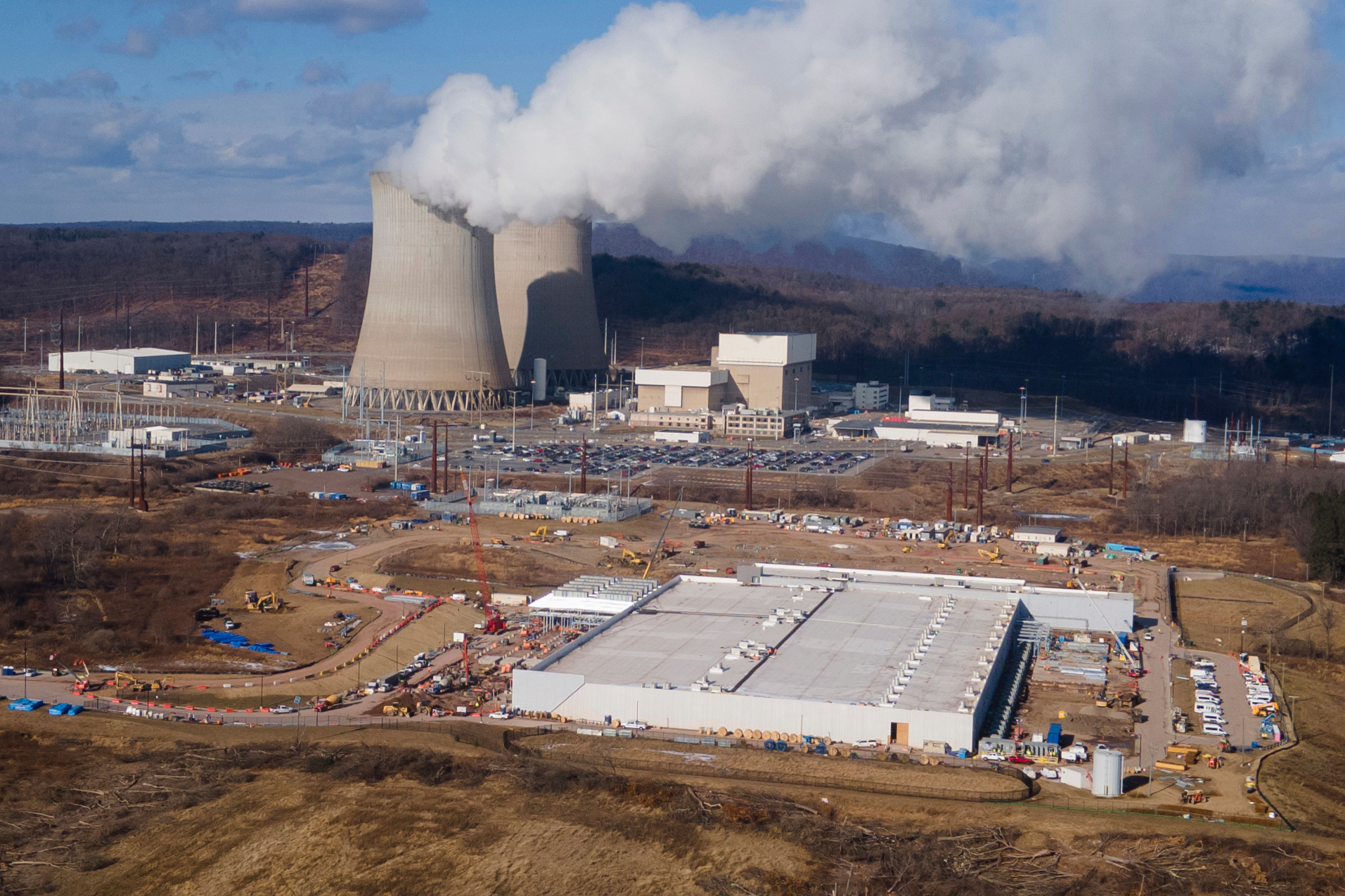
Image Credit: Associated Press
Key Points
- Backlash against AI data centers is accelerating nationwide, with communities blocking or overturning major projects despite government approval.
- Opposition is bipartisan and driven by local concerns, including rising energy and water usage, tax incentives, and limited economic benefits.
- Tensions are rising, with protests intensifying and isolated violent incidents signaling deeper unrest tied to AI infrastructure.
- Many fear AI will eliminate millions of jobs, increasing economic anxiety and fueling resistance to the rapid buildout of data centers.
- There is a growing disconnect between massive public subsidies for data centers and the relatively small number of permanent jobs they create.
- The trend could contribute to broader economic instability and social unrest as inequality rises and trust in institutions declines.
In a local election last week, residents of Festus, Missouri – a city of nearly 13,000 people 35 miles south of St. Louis – flocked to the polls to defeat four incumbent council members who had a week earlier approved a $6 billion data center, over the furious objections of many residents.
The scene at Festus High School’s gymnasium the week before had been raw. Hundreds of locals packed the bleachers. They jeered, they cursed, they pleaded. But the council voted to approve the project, anyway.
“I’d like to point out that every meeting I’ve attended there has been 80 to 90% opposition,” said Zach, a Festus resident. “The other 10% are mostly people who don’t live here.”
Following the shocking election results, the mayor of Festus now insists the project can’t be stopped because the contract has already been signed. The newly elected council members disagree. And residents have begun collecting signatures to recall the mayor and the four remaining council members who weren’t up for reelection.
The growing discontent with artificial intelligence (“AI”) and the rapid spread of new data centers goes well beyond Festus.
Bipartisan Data-Center Backlash Means a Bigger Problem
NPR reported in January that protests have shut down data center proposals in Virginia, Pennsylvania, North Carolina, and other states.
In Independence, Missouri, residents ousted two council members who had voted to hand a data center developer more than $6 billion in tax breaks. A leader of the anti-data center group said it was the only issue she’s seen unite folks across party lines.
“We had someone there in a Trump hat, and we had someone there with a Democratic Socialist shirt. We had young people, old people,” she said. “We were all there fighting for the same thing: for our community and for transparency. I think that is a huge reason that we’ve been successful in shifting this election.”
That tracks with what’s happening across the country. According to Data Center Watch, a research firm tracking the backlash, at least 142 activist groups across 24 states are now organizing to block data center construction.
Over the past two years, residents have blocked or delayed a staggering $64 billion worth of data-center projects. And roughly 55% of the elected officials who have spoken out against data centers are Republicans, not Democrats.
The backlash here isn’t along the usual political fault lines.
It’s widespread… made up of regular folks worried about their water, their electric bills, their property values, and whether their elected officials are cutting deals behind closed doors.
And we predict the data-center backlash will grow much more significant, much more volatile, and far more violent.
After all, it already is.
We’ve Already Seen 13 Bullet Holes and a Molotov Cocktail
Just after midnight Monday morning, Indianapolis councilman Ron Gibson and his eight-year-old son woke to gunshots.
Someone fired 13 bullets at his front door, leaving a handwritten note that read, “NO DATA CENTERS.”
“Just steps from where those bullets struck is our dining room table, where my son had been playing with his Legos the day before. That reality is deeply unsettling. This was not just an attack on my home, but endangered my child and disrupted the safety of our entire neighborhood,” Gibson said.
Gibson had voiced support for a data center in his district just days earlier.
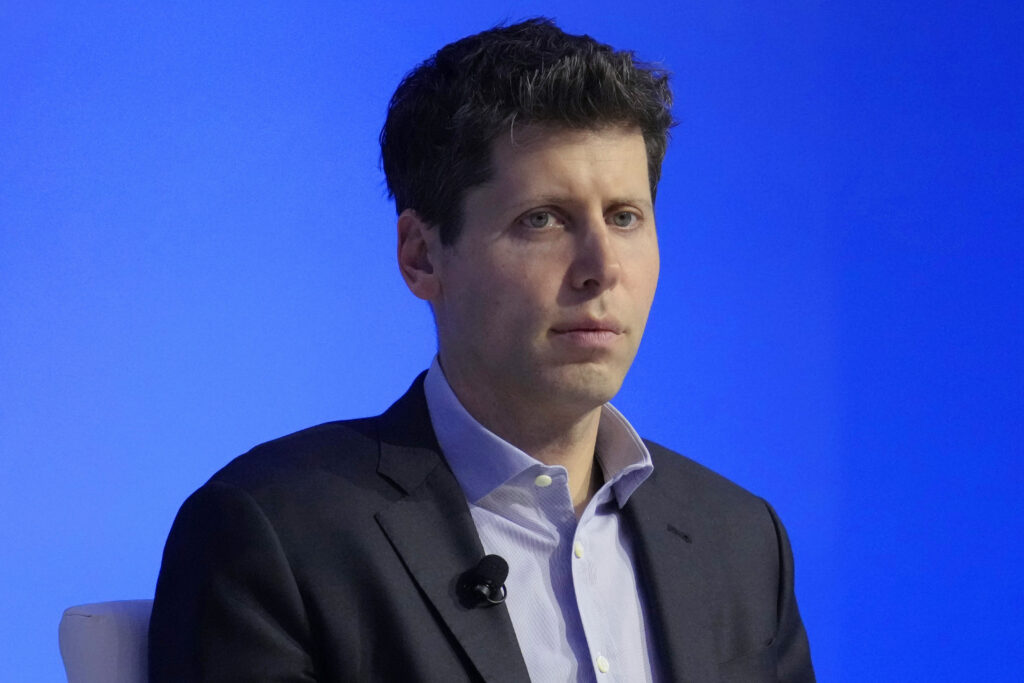
And on Friday, San Francisco police announced they had caught someone who threw a Molotov cocktail at the home of OpenAI CEO Sam Altman. As NBC News reported:
The officers learned that an unknown man had thrown “an incendiary destructive device at a home, causing a fire to an exterior gate,” police said. The suspect fled on foot, and his description was broadcast to all officers.
Then, around 5:07 a.m. [Pacific Time], San Francisco police officers responded to a business on the 1400 block of 3rd Street “regarding an unknown male subject threatening to burn down the building.” (OpenAI’s headquarters are at 1455 3rd Street.)
As if that wasn’t enough, Altman’s home was allegedly targeted by another person the following day, according to the San Francisco Standard.
This is exactly the kind of violence that I’m warning about today.
I’ve been writing about the AI revolution and its inevitable effect on American society for a while now.
Last fall, I covered Amazon’s plans to fire 30,000 white-collar workers:
There will be millions… and perhaps tens of millions… of jobs cut in America in the years ahead thanks to artificial intelligence (“AI”).
I’ve tracked the mass layoffs at Meta, Microsoft, and Oracle, writing,
“If you’re one of the 2.5 million to 3 million folks employed by a Big Tech company… your job is absolutely at risk, whether or not the company denies it today.”
I detailed why millions of white-collar jobs are at risk thanks to Elon Musk’s Macrohard AI, which is designed to watch your computer screen in real time, tracking your every keystroke and mouse movement, with an explicit goal of learning how to do your job.
“Hundreds of billions of dollars are being spent across America on building AI… with the ultimate goal of displacing millions of American workers.”
And in a recent thought experiment about how the AI bubble ultimately ends, I concluded the worst-case scenario is far more terrible than you probably imagine…
The nightmare scenario, where a true depression collides with rapid AI adoption, could push unemployment toward 20% to 30%.
At 25% unemployment, the Great Depression saw GDP contract by nearly 30%. Industrial production fell 47%. Consumer prices dropped 25%. Around 7,000 banks failed, wiping out a third of the banking system.
There’s a rule of thumb in economics called Okun’s Law. It says that every 1-percentage-point increase in cyclical unemployment corresponds to roughly 2 percentage points of GDP decline below potential.
The nightmare scenario, where a true depression collides with rapid AI adoption, could push unemployment toward 20% to 30%.
At 25% unemployment, the Great Depression saw GDP contract by nearly 30%. Industrial production fell 47%. Consumer prices dropped 25%. Around 7,000 banks failed, wiping out a third of the banking system.
There’s a rule of thumb in economics called Okun’s Law. It says that every 1-percentage-point increase in cyclical unemployment corresponds to roughly 2 percentage points of GDP decline below potential.
Moving from 4.3% to 25% unemployment would imply a GDP decline of roughly 40%. That tracks with what actually happened during the Depression.
On the road to 25% unemployment, consumer spending plummets. Not only would unemployed folks cut back, but still-employed workers would save every penny they could out of the justifiable fear that their job is next on the chopping block. Economists call this the “paradox of thrift.” When everyone saves at once, total spending collapses even further.
For comparison, the 2008 financial crisis produced a 4.2% GDP contraction.
This scenario would be nearly 10 times worse.
A few weeks later, that AI doom-loop article was excerpted at social-media forum Reddit. The top-voted comment was by user zqillini4, stating simply,
Don’t underestimate the human reaction to unemployment in the 10-20% range — I think those AI data centers start getting burned to the ground, or if nothing else, their infrastructure severely compromised, repeatedly.
We certainly don’t underestimate what will happen in America as unemployment soars. It should be your top concern as an investor right now.
Billions in Tax Giveaways vs. Millions of Good Jobs
On one side, tech giants are pouring hundreds of billions of dollars into data centers so they can run the AI models that will ultimately replace human workers.
On the other side, the communities where those data centers are being built aren’t convinced the benefits from AI are worth the higher electricity prices and tax-incentive giveaways.
Right now, roughly 3 in 4 states have some kind of incentive intended to attract a data center… mostly around sales tax exemptions. But few of those states publicly disclose the details or whether the tax breaks are worthwhile for residents.
Only Illinois, Nevada, Missouri, and Washington itemize how much companies are getting per recipient. For instance, CNBC found that one Microsoft data center in Illinois received more than $38 million in data center sales tax exemptions but created just 20 permanent jobs. In Washington, the tech giant secured $333 million in sales tax exemptions for its data centers between 2015 and 2023.
And in Northern Virginia, known today as the “data center capital of the world” with more than 600 data centers, the initial fiscal impact for a tax-incentive bill back in 2008 was expected to be just $1.5 million.
That is, the state would forgo some $1.5 million in annual data-center tax revenue, in return for more than 100 jobs.
Today, the cost of that tax incentive is more than 1,000 times higher, now estimated at $1.6 billion, according to a recent report from the state’s comptroller. And over the past decade, a majority of the state’s incentives went to data centers.
Should taxpayers fund the AI machine that will eventually take their jobs?
My colleague Whitney Tilson describes this moment as a “ripping point” for America. He sees one group of Americans racing toward new wealth while another slides into financial insecurity. And the gap between them is growing fast.
Federal Reserve data shows that the top 1% in America now controls nearly one-third of the nation’s wealth. The bottom half of the U.S. population, on the other hand, controls less than 3%. And white-collar employment has fallen for 17 straight months, according to the Bureau of Labor Statistics.
Social unrest is growing. Debt is ballooning. Political extremism is spreading.
For a wide swath of the population, the American dream is getting harder to even imagine, much less attain.
And to no one’s surprise, anger against AI is building across America.
For some, the AI boom has the potential to be one of the biggest creators of wealth in their lifetime. For everyone else, it will likely be a nightmare. This is how Elon Musk can simultaneously build the most powerful AI supercomputer on Earth in a Memphis warehouse while preparing for the largest technology IPO in history with SpaceX (you can learn more about how to get pre-IPO access here)
Two Similar Moments in History, Very Different Results
So, when will the first data center be burned?
This isn’t meant solely as a rhetorical, provocative question. America has been here before – with a massive capital buildout, sparked by transformative technology, and amid economic turmoil with huge job losses.
I don’t mean the dot-com bubble. Back then, some $5 trillion in wealth was destroyed, the Nasdaq index dropped roughly 80%, and more than 2 million Americans lost their jobs. But the public response was muted. No riots. No property destruction.
Why? Well, there wasn’t much to burn. You can’t set fire to a delisted stock ticker. You can’t take a sledgehammer to a website giving a “404 Page Not Found” error message.
The crash destroyed plenty of paper wealth and white-collar careers, but the cause was still abstract.
Not so with AI and data centers today – or with the Great Railroad Strike of 1877.
Railroads were the AI data centers of the Gilded Age… a transformative technology controlled by giant companies, subsidized by the seemingly captured government, and physically imposed on communities with little say in the matter.
So, when the Baltimore and Ohio (B&O) Railroad cut wages for the third time in a year during a brutal depression, workers didn’t just complain. They stopped every freight train on the line. And Pittsburgh woke to a scarlet sky in the summer of 1877.
Rioters had set the Pennsylvania Railroad’s vast yard on fire. Flames curled into the dawn while mobs overran the streets. All told, strikers and their supporters burned 39 buildings, 104 locomotives, and more than 552 freight and passenger cars.
From there, America’s first nationwide strike spread quickly.
First across Pennsylvania, where in Philadelphia, militia troops fired into a crowd and killed more than 20 people, including a woman and three small children. And in Reading, mobs tore up tracks, derailed cars, and set fires.
In Chicago, street battles between police and workers left upward of 20 dead and hundreds injured. In St. Louis, workers halted all freight traffic. In San Francisco, anger turned toward Chinese immigrants who had helped build the railroads.
Across the country, more than 100,000 workers walked off the job, and at least 100 people were killed before federal troops restored order.
Marxism as a political philosophy was rising in the U.S. at the time, but the riots were fueled by more than ideology – including workers’ economic desperation, a visible and vulnerable physical target, and a political system that seemed captured by the dominant “tech giants” of the time.
Sound familiar?
Those forces are again converging today.
The data centers going up across America are the new railroad depots – the AI systems training inside them are likely to destroy far more jobs in the short term than will be created for years, if not decades. And the tax-incentive packages that lure these projects often mean local residents see few direct benefits, if any.
NBC News recently found that a majority of Americans believe the risks of AI outweigh the upsides… and don’t believe either political party represents their interests.
As their poll found:
Just 26% of voters say they have positive feelings about AI, compared with 46% who hold negative views. In fact, the only topics with a lower net positive rating than AI in the NBC News survey were the Democratic Party and Iran.
So, what happens when the dam breaks?
What American Investors Should Do Today
You can’t stop the flow of cash. More than half a trillion dollars this year alone are flooding into AI infrastructure.
And no CEO is going to choose to keep your job if an AI tool can do it better, for less. That’s cynical, sure, but it’s also the ruthless efficiency that has made America the wealthiest economy on Earth.
The only question is whether you’ll profit from it.
Our advice is simple: Pay off debt. Save rather than spend. And invest in strong businesses and assets that can survive a crisis.
Because the crisis will come…
In the coming years, we will see a rise of incendiary populist leaders who won’t rule out violence to accomplish their goals. We will see sabotage of the AI systems replacing workers. And we will see data centers burned.
As an investor, you should prepare for it.
I mentioned my colleague Whitney Tilson earlier. He’s an investor once dubbed “The Prophet” by CNBC for his string of eerily accurate market calls. And he’s now warning about the coming economic and societal catastrophe brought about by AI.
As he wrote a few days ago when talking about his “ripping point” prediction:
I’m concerned that our whole way of life is being swept away in front of our eyes…
Hundreds of thousands of people are losing their jobs. Violent swings are battering the stock market. Entire industries are collapsing around us.
I’m not only worried for older folks like me. I have three beautiful daughters. And it feels like their future gets more unstable with every passing day.
It’s not just because of the extreme political division or violent protests that seem to be a regular part of our lives now. I mean the deeper change that we can all feel.
We’re living through a permanent reset in our economy. It’s making the world – the one our children are going to inherit – deeply unstable.
But buried in that chaos is an opportunity to do incredible things with your money.
That’s why Whitney has gone public with his warning today in an exclusive, free documentary.
He and his research team have built an AI-driven, fully allocated model-investment portfolio… one that has beaten stocks, gold, bonds, real estate – and even the great Warren Buffett over an extensive eight-year back test.
And keep in mind: AI is only going to get stronger (and smarter) from here. So, even if you don’t see a threat from AI right now, that doesn’t mean it won’t be here tomorrow.