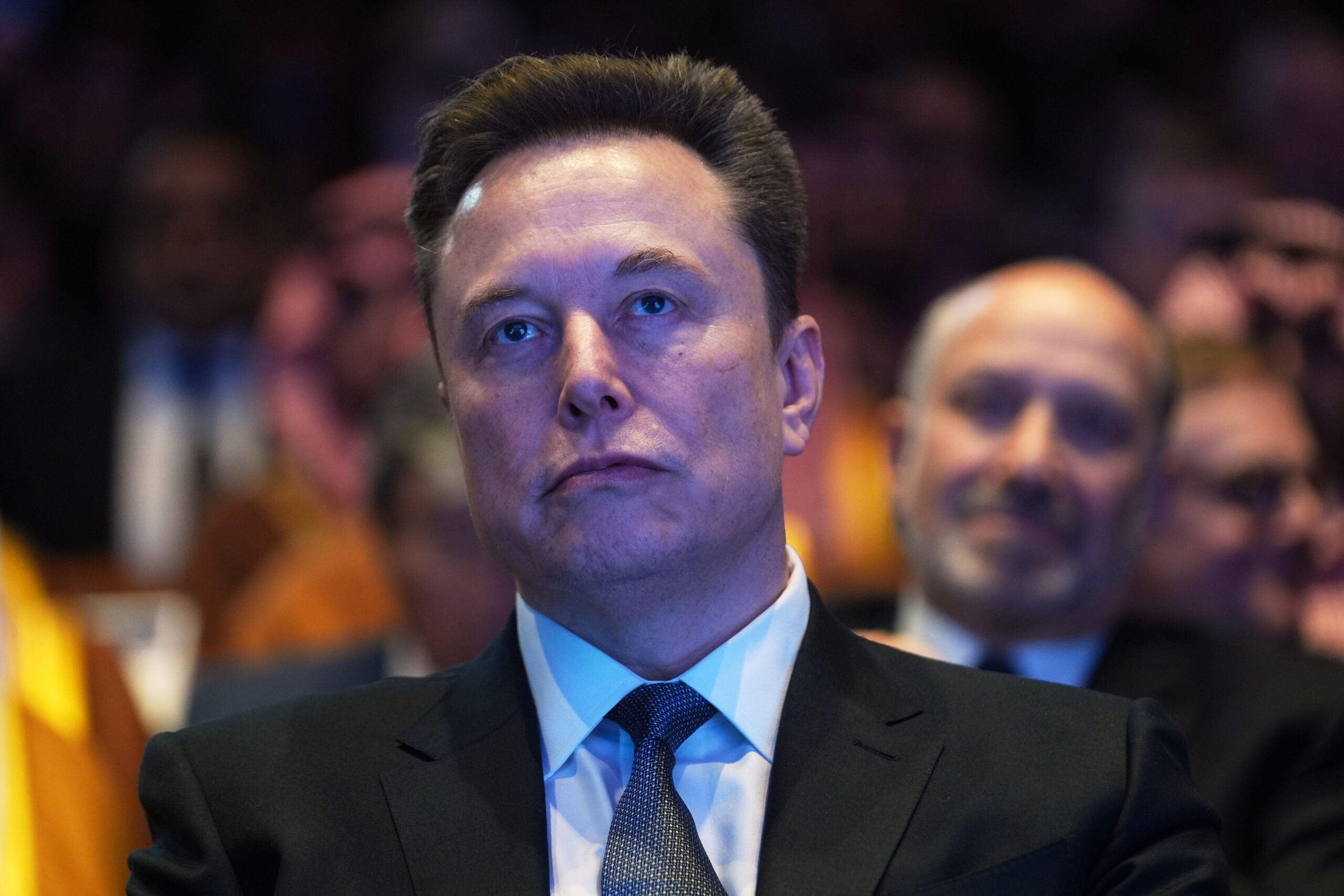
Image Credit: Associated Press
Key Points
- Tesla is planning significantly higher capital investment than previously indicated, with an estimated $25 billion spending plan focused on AI and robotics initiatives.
- At the same time, timelines for several of Tesla’s major projects are being pushed back.
- Whether these ambitious bets will translate into sustained profits remains uncertain, though the current stock price suggests investors expect near-perfect execution.
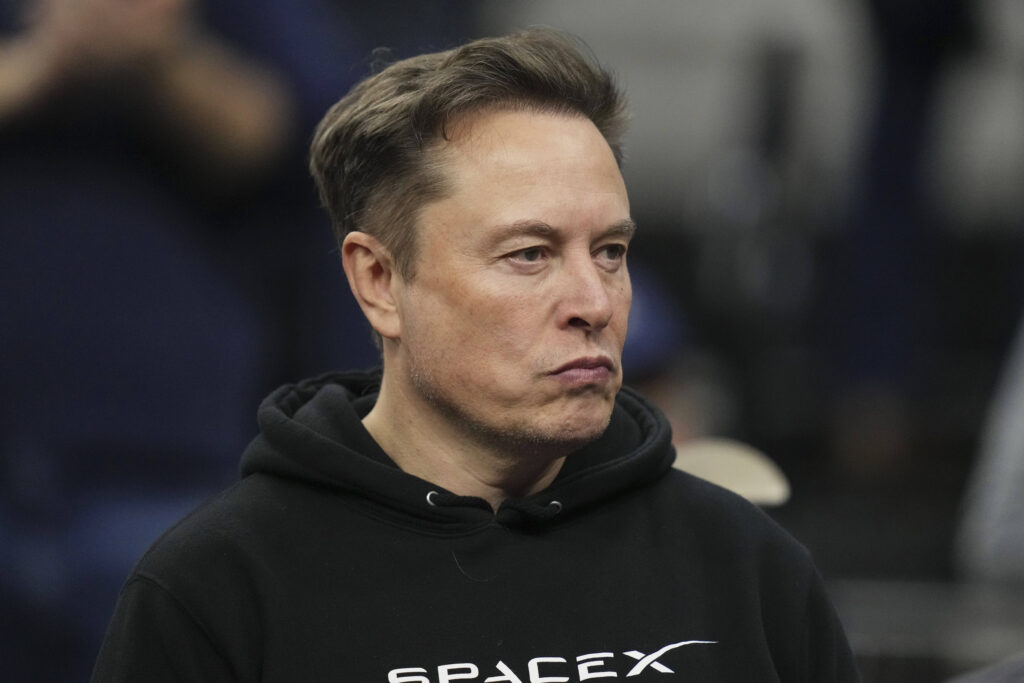
Tesla still sells cars, right? It can be easy to forget that the Elon Musk-helmed company is in the automotive business as it quickly pivots to artificial intelligence (“AI”) and robotics products. Those growth initiatives are the big, bold, and expensive bets that Musk is keeping investors’ eyes focused on.
The major themes from Tesla’s first quarter of 2026 are big spending and delayed timelines. “Just wait until next year” has been a refrain in Tesla’s earnings updates in some form for more than a decade, as CEO Elon Musk keeps promising big things that always seem just around the bend.
And so it was with Tesla in its latest quarterly earnings presentation:
- Optimus robots: Musk says that Tesla may “probably [be] able to have Optimus be useful outside of Tesla sometime next year.” Musk calls it “not just Tesla’s biggest product ever, but probably the biggest product ever” and says, “We’ll ramp up to significant numbers next year.”
- Full Self-Driving (“FSD”): Musk touts a pipeline of improvements to FSD that “we believe will lead to unsupervised Full Self-Driving being available anywhere in the world that it is legal to do so.” He promises the next iteration (V15) will be available “hopefully by the end of this year, but certainly by early next year.”
- Robo-taxis: Musk commented,”I think it’s not going to make sense for us to deploy unsupervised FSD or Robo-taxi at large scale when we know that there are major architectural improvements to the software that can improve safety.”
And that’s not getting into Tesla’s forays into AI chips, its massive investment in Terafab chip factory with SpaceX, and a host of other smaller potential developments along the way.
But this huge pivot that Musk announced in Tesla’s prior earnings call needs to be paid for first. It means incurring huge costs today and ramping up spending in 2026 – management expects more than $25 billion in capital spending – for the expected boom next year and beyond.
This projected spending is even higher – a full $5 billion more – than management estimated just months ago when it reported its 2025 numbers. That’s a steep step-up, and it appears to be unnerving investors, especially since the prior estimate was already huge.
It’s a serious lineup of initiatives, but they all require significant investments and intense focus to get them right. And Tesla must keep customers buying its cars, the conventional way – at least for now – so that it keeps cash coming in the door to help fund these other big bets.
Tesla’s Car Sales Rise Despite Musk Political Backlash
It was just a year ago that Tesla faced blowback over Musk’s involvement in the Trump administration. Customers defaced Tesla vehicles and protested against the company and its chief executive. Last year’s annual revenue for the auto unit was lower than in 2022.
But this year’s first quarter saw sales climb 20%, from $12.9 billion to nearly $15.5 billion. Higher car prices and a refreshed lineup helped, as did a sagging U.S. dollar when translating foreign sales back to domestic currency.
It’s not just a higher dollar value. Tesla actually delivered more vehicles year over year, about 358,000 consumer vehicles in this year’s first quarter compared with nearly 337,000 last year.
Meanwhile, gross margin in the auto unit rose from 16.2% to 21.1%. The improvement suggests that Tesla didn’t resort to offering discounts to move its cars, either.
An uptick in auto revenue would be a welcome improvement, as the automotive unit peaked in 2023:
- 2022: $71.5 billion
- 2023: $82.4 billion
- 2024: $77.1 billion
- 2025: $69.5 billion
That’s a miserable record for a firm touted as a growth company. While Tesla is pivoting from its focus on cars, it still needs the cash flow from the unit to feed into its big investments, slowing the burn of its cash hoard.
How Much Cash Will Tesla Burn in 2026?
With Tesla going on a $25 billion spending binge this year alone, just how much money does it have to fund this rapid build-out across multiple fronts?
For the moment, Tesla is sitting on a pile of spendable assets. At the end of the first quarter, Tesla had cash and short-term investments of about $44.7 billion, up from $44.1 billion at year-end.
But Tesla has barely begun to approach its target spending for the year. Tesla’s capital expenditures (“capex”) in the first quarter amounted to just $2.5 billion. That means spending will need to ramp up quickly if management expects to deploy a further $22.5 billion during the rest of the year.
Of course, that’s not the only factor at play, since Tesla generates operating cash flow. However, this operating cash flow has not grown significantly over the past few years, as car sales stalled. Still, over the past three years, the company has averaged about $14.3 billion in cash flow.
Using that figure as an estimate of 2026’s operating cash flow, Tesla may end up using about $11 billion or so in net cash flow as it invests in capex. But Tesla’s build-out of various products will also require working capital as it ramps up operations there, even if slowly.
A back-of-the-envelope estimate suggests Tesla will burn more than $11 billion in cash in 2026. That’s likely enough to fund at least a few years of capex at this level without needing to tap capital markets as long as operating cash flow remains at similar levels.
MORE: What Is Terafab? Musk’s Plan to Build at a Planetary Scale
Is Tesla Stock Overvalued?
Viewed on conventional metrics such as the price-earnings (P/E) ratio, Tesla looks incredibly expensive. Tesla earned about $3.8 billion in 2025, compared with a current market capitalization of about $1.4 trillion, good for a P/E ratio of a whopping 368 times.
That’s just one reason The Big Short investor Michael Burry says Tesla is “ridiculously overvalued.” Burry points to excessive stock compensation and negative sales growth, too.
Look at how (in)efficiently Tesla uses its assets, though. With average assets of about $130 billion in 2025, Tesla earned a meager 2.9% return on assets. It turns a huge pile of assets into just a little profit.
Notably, Tesla’s market capitalization of $1.4 trillion is nearly 10 times the value of its quarter-end assets of $143.7 billion. In other words, the stock market is saying that every $1 inside of Tesla is worth almost 10 times its value while Tesla earns a return below short-term U.S. Treasurys.
Whether Tesla’s big bets really do deliver sustained profits will emerge in time, but investors are paying big money today for results that only have a chance of arriving “next year.”
Without question, Tesla has a serious lineup of projects, but each one requires significant funding and intense focus to get right. With Tesla’s cash and Musk’s focus spread across so many projects (including a SpaceX initial public offering), it could go painfully wrong.
Meanwhile, investors seem to be betting that everything will go perfectly.
Regards,
James Royal, PhD
Editor’s note: Elon Musk reinvented the auto industry, sparked a new era of space exploration, and built the world’s largest satellite network. But his new initiative – “Project Apex” – could become the crown jewel of his career. And, like Tesla, it could make early investors incredibly wealthy. Click here for the details.