Image Credit: Associated Press
Key Points
- SpaceX is renting unused Grok data-center capacity to Anthropic.
- The deal could bring in major AI revenue, but either side can exit with 90 days’ notice.
- The IPO story now depends partly on SpaceX becoming an AI infrastructure business.
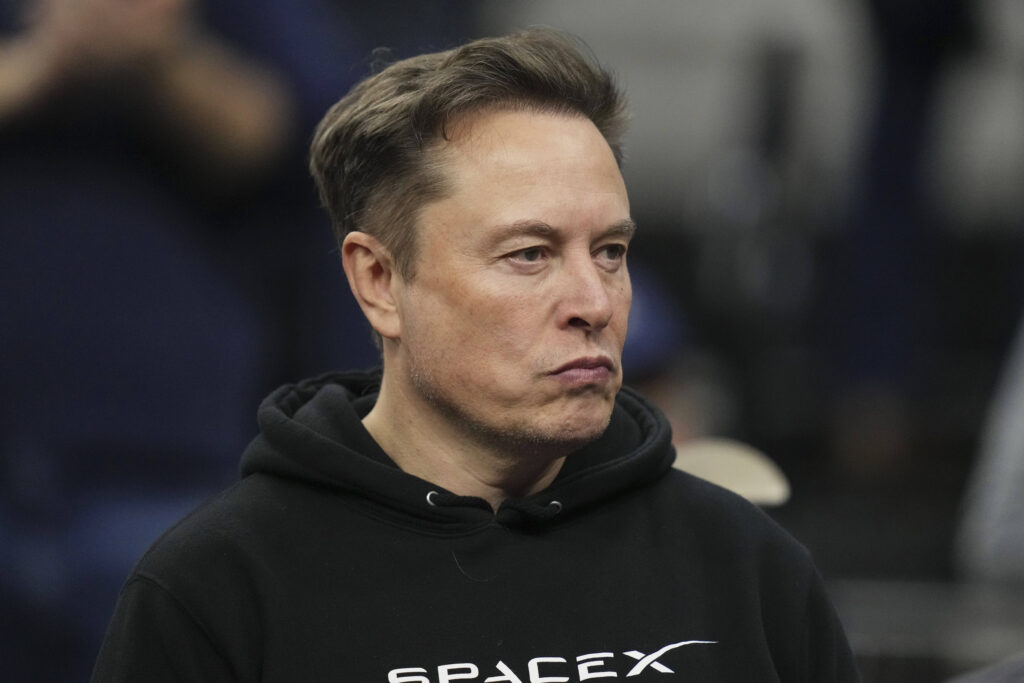
In March, Elon Musk posted “Missanthropic” to his 240 million X followers. This pun was his verdict on Anthropic – what he called the “most hypocritical company” in artificial intelligence.
“Winning was never in the set of possible outcomes [for Anthropic],” posted Musk. Several weeks later, SpaceX (SPCX) was taking $1.25 billion a month from the Claude makers.
That invoice surfaced May 20, deep in the S-1 that SpaceX filed ahead of the largest initial public offering (IPO) in stock market history. Anthropic had agreed to pay Musk’s company $15 billion a year for access to a data center complex in Memphis, Tennessee… a complex built for Grok.
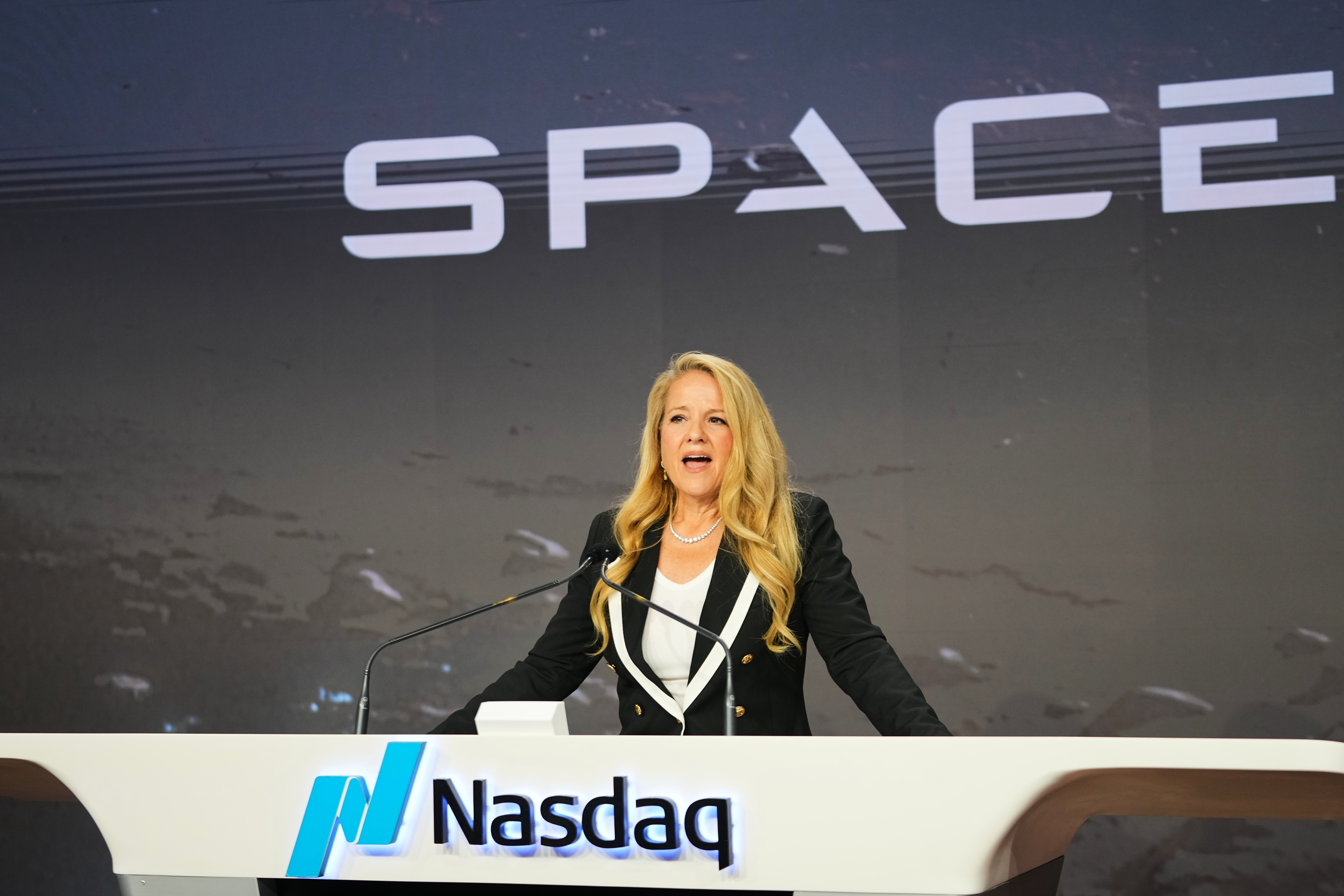
SPCX opened on the Nasdaq at $150 Friday, 11% above the $135 offer price, in a debut that pushed the company’s valuation above $2 trillion and made Musk the world’s first trillionaire. Investors bidding up the stock are buying rockets, Starlink satellites… and contracted AI revenue built on the wreckage of Grok.
How this plays out for both SpaceX and Anthropic depends entirely on what Elon Musk does next.
Anthropic-SpaceX Deal: How Grok’s Flop Made it Happen
Over in Boxtown, a neighborhood in south Memphis, xAI filled a former Electrolux factory with racks of Nvidia GPUs to train its Grok AI. The company called it “Colossus.” In January 2026, a second and larger campus (Colossus 2, spanning Memphis and Southaven, Mississippi) came online as part of a complex designed for 555,000 GPUs drawing roughly 2 gigawatts of power.
Then the customer disappeared…
Grok’s monthly app downloads fell from more than 20 million in January to about 8.3 million by April, a 60% drop in three months, according to AppMagic data.
Then came more problems, as the app suffered outages in January, March and April, some lasting hours. In March, xAI ended free access to its Grok Imagine image generator and moved it behind a $30-a-month paywall. By May, tech writers were running obituaries under headlines like “xAI Is Dying.” The xAI unit, which includes X, lost $2.5 billion in the first quarter alone.
The Information reported that flops utilization across the Colossus complex (a measure of how much of the chips’ computing power actually gets used) was running near 11%, far below the 40% rival labs achieve. Nine of every 10 cycles on some of the most sought-after hardware on Earth were going to waste.
The SpaceX S-1 frames the Anthropic agreement in precisely those terms: monetizing “unused compute capacity.”
Anthropic pays SpaceX $1.25 billion a month (a discounted rate during the May-June ramp period) for access to compute capacity “across COLOSSUS and COLOSSUS II,” as the S-1 puts it.
The contract runs through May 2029 and could be worth up to $45 billion to SpaceX over its full term. Either side can walk away with 90 days’ notice. Anthropic keeps ownership of its models and its data. SpaceX keeps the right to claw back capacity “for our own internal initiatives if needed.”
Grok 5 now trains at Colossus 2, the filing notes, while Anthropic’s workloads spread across both campuses. Just weeks from pricing its IPO, SpaceX found a paying tenant for the wreckage – its own AI rival.
Musk has been candid about who wanted what.
“The short deal length was our request, not theirs, as I thought we might need the compute back at some point,” he wrote after the terms became public.
He later warned that SpaceX could pull capacity back if supply gets “super tight.”
In short, SpaceX handed over the keys because the building was sitting empty, and it reserved the right to evict. A company negotiating from strength does not insist on a shorter contract for $45 billion of revenue. A company hedging against its own product’s recovery does.
SpaceX AI Revenue: Google’s $920/Month Deal and What It Means for SPCX
On June 5, a week before the IPO, Google parent Alphabet (GOOGL) signed its own agreement: $920 million a month for comparable compute access through June 2029, roughly $30 billion in total.
Combined with Anthropic’s contract, SpaceX now books $2.17 billion a month, about $26 billion a year, in contracted AI compute revenue. That figure exceeds everything SpaceX earned in 2025, every launch and every Starlink subscription combined: $18.7 billion.
SpaceX’s compute prices reportedly surged 50% in the two weeks after the Google announcement. The S-1 also discloses a separate April agreement with Anysphere, the company behind AI coding tool Cursor. It includes an $8.5 billion deferred services fee, a signal that SpaceX intends to be a neocloud landlord with more than two tenants.
The revenue story is real and large, but trusting it to hold requires trusting Musk’s steadiness… and that is where some analysts go quiet.
After the S-1 was filed, Musk posted on X that the Anthropic deal was a “180 day lease with 90 day notice mutual cancellation thereafter”… a characterization the prospectus does not support, as the S-1 describes the agreement as running through May 2029.
Ann Lipton, a University of Colorado law professor, said SpaceX should, ahead of its IPO, essentially file the tweet as an official amendment with an explanation.
Some analysts are skeptical about the long-term prospects for SpaceX’s neocloud strategy in a market already saturated with competitors. One industry analyst noted plainly that becoming a data center landlord “was not the plan” for a company that built Colossus to train its own models.
Yet, Musk is known for switching to southpaw mid-fight. From firing three-quarters of Twitter’s staff in a single week to dissolving xAI as a standalone entity and rolling it into SpaceX’s balance sheet, he has demonstrated a consistent willingness to restructure around whatever the current constraint is.
The current constraint is idle compute. Whether it stays idle long enough to justify $26 billion in annual projections is the question the 90-day clause leaves open.
SPCX IPO Valuation: What $26B in AI Contracts Means for the Stock
As of this writing, SpaceX sold 556.6 million shares at ~$135, raising about $75 billion at an initial valuation of $1.77 trillion. The 2025 financials include $18.7 billion in revenue, up 33%, and a $4.94 billion net loss driven by Starship spending. Starlink generated $3.26 billion in first-quarter revenue, 69% of the total, against full-year 2025 sales of $11.4 billion, $4.4 billion in operating profit and more than 10 million subscribers. The AI unit lost $2.5 billion in the quarter.
Goldman Sachs’ roadshow pitch — not S-1 guidance — projected SpaceX AI revenue reaching $100 billion annually by 2030, as part of projected total company revenue of $474 billion.
Those projections rest on a foundation of signed contracts with two of the most creditworthy counterparties in technology. They also rest on two assumptions the prospectus cannot guarantee. Namely, that Grok stays underutilized enough that the capacity remains for rent. And Musk, who has already mused about taking the compute back, keeps choosing $15 billion a year over his own chatbot’s revival.
Anthropic’s Compute Dependency: What Investors Should Watch
The other side of the ledger belongs to Anthropic, which just closed a $65 billion Series H round May 28 at a $965 billion post-money valuation, with $15 billion of the round coming from previously committed hyperscaler investments, including $5 billion from Amazon (AMZN).
Annualized revenue crossed $47 billion in late May, and The Wall Street Journal has reported the company expects a 130% revenue surge and its first operating profit. Anthropic is now the most valuable AI startup in the world, ahead of OpenAI, which was valued at $852 billion in its most recent funding round.
The SpaceX deal relieves Anthropic’s most binding constraint at staggering cost, and it threads a dependency through a rival’s infrastructure. Every dollar Anthropic pays for Memphis compute goes to Musk’s empire, and the 90-day exit clause cuts both ways. For a company that confidentially filed for its own IPO on June 1, that is a concentration risk worth a paragraph or two in any future prospectus.
Grok’s failure produced one of the most unusual business relationships in the history of technology: the maker of Claude paying the maker of Grok to train the model that is beating Grok. Call it irony, or call it capitalism. In Boxtown, the machines will continue humming, but the name on the invoice could change at a moment’s notice.
SpaceX IPO FAQ: SPCX Stock, the Anthropic Deal and Key Investor Takeaways
When does SPCX start trading? SpaceX began trading on the Nasdaq under the ticker SPCX on Friday, June 12, 2026. Shares opened at $150.
What is the SpaceX IPO price? The IPO priced at $135 per share after Thursday’s close, with 556.6 million shares offered, raising about $75 billion, making it the largest IPO on record by proceeds raised.
Why is Anthropic paying SpaceX? Anthropic needs more compute than its own infrastructure can supply, and Grok’s decline left SpaceX’s Colossus data centers running near 11% utilization. The deal pairs Anthropic’s demand with SpaceX’s idle capacity.
How much is the Anthropic-SpaceX deal worth? $1.25 billion a month, which is equivalent to $15 billion a year, through May 2029: as much as $45 billion over the full term. Either party can exit on 90 days’ notice.
Is the SpaceX IPO a good investment? That depends on an investor’s risk tolerance and time horizon, and nothing here is investment advice. The contracted AI revenue is real and large. So are the risks: customer concentration, a reallocation clause that lets SpaceX reclaim the capacity, and a $1.77 trillion valuation set against $18.7 billion in 2025 revenue.
Editor’s Note: While everyone is focused on the SpaceX IPO, one America’s best stock pickers, Luke Lango says the real money is in something Elon has working on for decades. The world’s richest man is about to disrupt the $480 trillion global financial system in a way that few people see coming, and Luke is giving away his No. 1 way to play it, free, in this presentation.