Image Credit: Associated Press
Listen to the audio version of this article (generated by AI).
Sometimes, you just need to take a better approach…
In the 1870s, wildcatters across Pennsylvania and Ohio gambled on finding crude oil. They sank everything they had into the ground. And they lost fortunes as fast as they made them.
John D. Rockefeller took a different path…
He wasn’t interested in the gamble. He was interested in the “toll” instead.
By that, I mean that Rockefeller realized that the real money came from moving oil from place to place.
He built pipelines. He bought railroads and refineries. And he cut deals with other railroads that gave his company, Standard Oil, a cost edge that no rival could touch.
By 1882, Standard Oil controlled 90% of U.S. refining. And the company ran most of the country’s pipelines.
That didn’t happen because it found oil. Rather, it happened because the company owned the system that everyone else needed to reach the market.
The wildcatters needed Rockefeller more than he needed any one of them.
The Supreme Court broke Standard Oil apart in 1911. But the underlying logic of its model never died. And more than a century later, this premise still carries on through the U.S. energy sector…
The idea that the toll beats the commodity has shaped how the world’s biggest investors think. The experts still realize that owning the pipes is a safe way to profit over the long run.
Three of the world’s largest investment firms recently made the same bet once again. But this time, they did it in Kuwait…
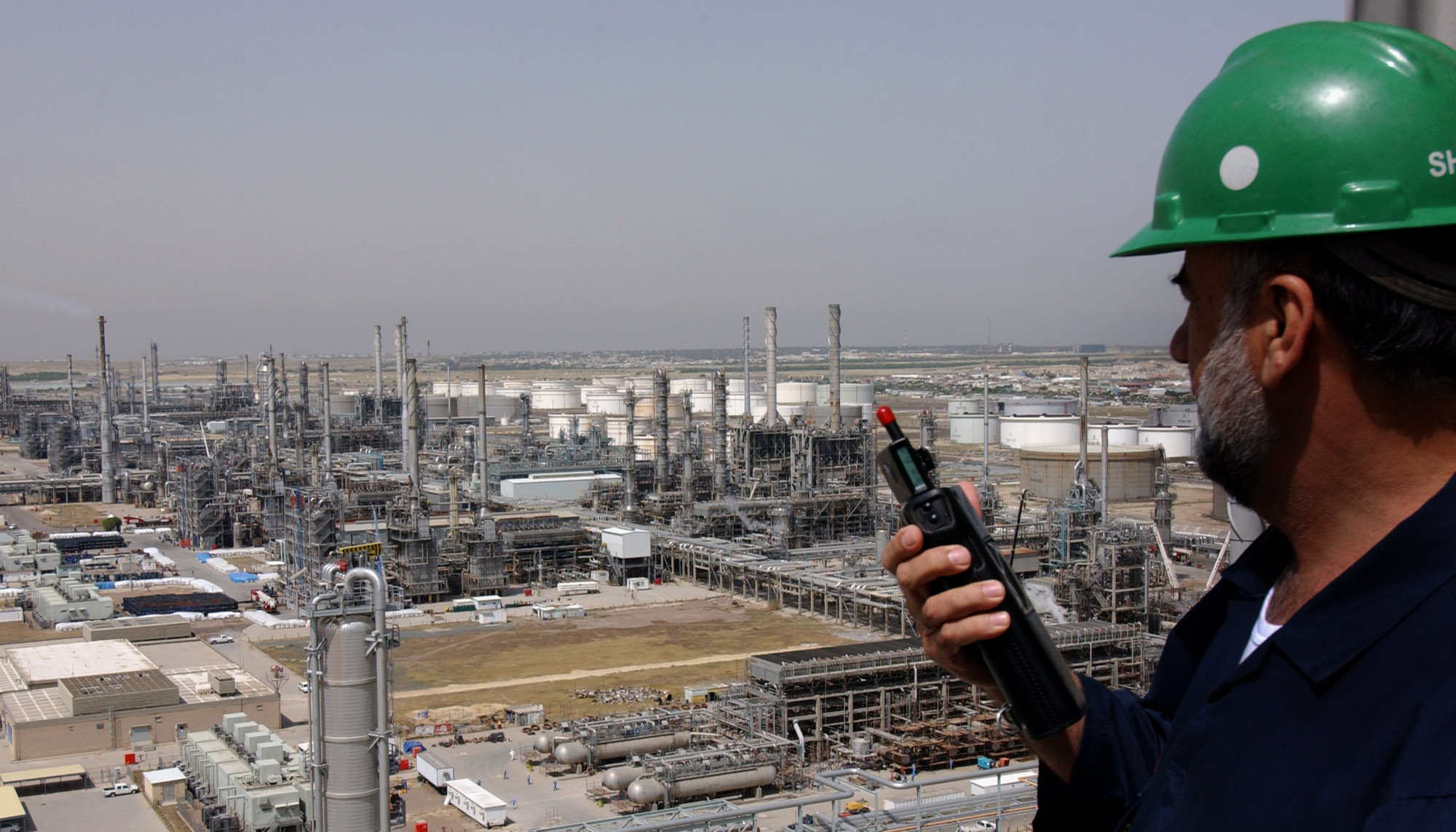
Inside Kuwait’s $16 Billion ‘Project Peregrine’ Pipeline Deal
Blackstone (BX), KKR (KKR), and Brookfield Asset Management (BAM) established a joint venture within Kuwait’s oil sector…
The group agreed to pay $7.85 billion up front for a 49% stake in Kuwait’s crude-oil pipelines. The full deal totals $16 billion over the next 20.5 years. Kuwait’s state oil company will keep the other 51% and run day-to-day operations.
The deal goes by the name “Project Peregrine.” It’s currently the largest outside investment Kuwait has ever received.
Kuwait didn’t sell its pipelines. Instead, Kuwait Petroleum Corporation (“KPC”) used a structure called a “lease and leaseback.” It’s a way for the government of Kuwait to raise cash from the asset without giving the asset up…
Kuwait Oil Company (“KOC”), a unit within KPC, will lease the rights to its 13 pipelines to the joint venture. The joint venture will then lease them back to KOC for 20.5 years. KOC will pay a tariff based on how much crude oil moves through the pipes.
For Kuwait, the deal raised $7.85 billion up front to fund a production push…
The country hopes to produce 4 million barrels per day by 2035. Project Peregrine gave the government the cash to get there without selling a single pipe.
For the three investment firms, the deal is clean…
They’re taking the “risk” of oil prices and the costs to run drilling rigs out of the equation. And they hold the right to collect a tariff on every barrel of crude oil that moves through the roughly 200 miles of pipelines in one of the world’s biggest oil states.
Why KKR, Blackstone, and Brookfield Bet on Kuwait Now
This deal is notable because of the timing…
These three investment firms signed the deal while Iran was attacking Kuwait.
Just a week before, Iran had struck a power and water plant in Kuwait – starting a fire. The whole Persian Gulf region is under pressure right now.
And yet, Blackstone, KKR, and Brookfield – which collectively oversee more than $2.6 trillion in assets – signed the deal anyway.
That says something about where big money is going right now…
The stock markets are shaky. AI spending is high. Plus, the path of interest rates is unclear – and tech valuations keep getting cut.
Against all of that, a 20.5-year tariff on oil pipelines backed by a government looks “boring.”
That’s the point…
A fixed payment backed by a sovereign state is exactly what the world’s biggest funds are looking for.
Brookfield passed $1 trillion in assets under management in 2024 by building exactly this kind of position. And KKR has put nearly $5 billion into the Middle East over the past 18 months – including a deal with Saudi Arabia’s ACWA Power last December.
KKR co-CEOs Joe Bae and Scott Nuttall said Kuwait has built one of the world’s leading energy businesses through years of sound decisions. This deal reflects their confidence in that track record.
What the Kuwait Oil Pipeline Deal Means for Investors
The Kuwait deal isn’t a trade…
Instead, it’s a 20.5-year commitment made in the middle of a geopolitical conflict. And three firms that oversee a combined $2.6 trillion are behind the deal.
That combination of scale, duration, and timing tells you something about how the world’s smartest investors see the current environment.
When markets become uncertain, the money doesn’t disappear. Rather, it moves toward things that pay regardless of what happens next.
Pipelines in Kuwait qualify.
That’s why this deal went through.
For investors holding Blackstone, KKR, or Brookfield, deals like this are the growth engine beneath these stocks. Infrastructure positions generate fee income over the long term. This revenue doesn’t depend on a good quarter or a favorable rate environment.
A 20-year tariff agreement in Kuwait will still be paying out in 2045.
That’s the kind of duration these businesses build around.
More broadly, this deal is one data point of a much larger shift…
Private capital has been moving into infrastructure at a pace not seen in decades. The firms leading that shift are public companies – and their stocks reflect it over time.
Good investing,
John Evelius
Editor’s Note: God mode. It’s a controversial idea. Irreverent, even. But, according to 60-year market legend, Marc Chaikin, there’s no better way to brace yourself for what’s coming next for AI. Forget fake videos. The new AI emerging from Silicon Valley labs is a digital entity that thinks for itself – without human input. A year ago, that might have sounded like science fiction, but consider this a warning: Marc says we’ll hit that day this summer. And when we do, you need to be ready for AI with its own free will. Because it will change how you work, how we live, and — of course — how you invest. That’s why he’s giving away a list of stocks to buy and sell absolutely FREE to help you position your money for a virtually unrecognizable world driven by this new “godlike” technology. Get Marc’s Frontier AI Hotlist of stocks right here…