Image Credit:Associated Press
Listen to the audio version of this article (generated by AI).
Key Points
- Memory-chip prices are surging, putting pressure on hardware companies such as Apple.
- Apple and other computer makers have turned to foreign memory suppliers to help ease the shortage.
- Commerce Secretary Howard Lutnick has urged Apple not to use Chinese chips, helping fuel a rally in U.S. memory-chip stocks.
Memory stocks jumped this week after the White House told Apple (AAPL) to stop buying memory chips from China.
The request puts the iPhone maker in a tight spot…
AI-fueled demand has upended the memory-chip market. Prices for memory chips have surged 500% over the past year as AI hyperscalers have snapped up random-access memory (“RAM”) capacity for data centers. (RAM is basically your computer’s short-term memory. It juggles between the data and programs actively being used.)
The shortage has driven massive gains in memory stocks. American memory chipmakers like Sandisk (SNDK) and Micron Technology (MU) have soared hundreds of percent this year.
However, it has been a significant headwind for PC and smartphone makers. These companies need RAM just as much as data centers. And they’re forced to make do with what memory chips they can find, so they don’t get left behind in the AI race.
So far, this memory shortage has provoked Apple to make two unpopular moves:
- It hiked its hardware prices by hundreds of dollars.
- And it has explored buying chips from foreign memory suppliers – which is how it got into hot water with Uncle Sam.
In June, Apple asked the White House to allow RAM purchases from China’s top RAM manufacturer, ChangXin Memory Technologies (“CXMT”).
CXMT has a controversial profile. It currently lands on the Chinese Military Company Blacklist, a list of companies the Pentagon regards as national-security risks.
The blacklist designation doesn’t prevent Apple from doing business with CXMT. It does, however, make it politically delicate – hence Apple’s appeal to the White House.
President Donald Trump’s administration gave Apple a clear answer to its appeal last Friday…
You better not.
The Negotiation Over Chinese Memory Isn’t Over Yet
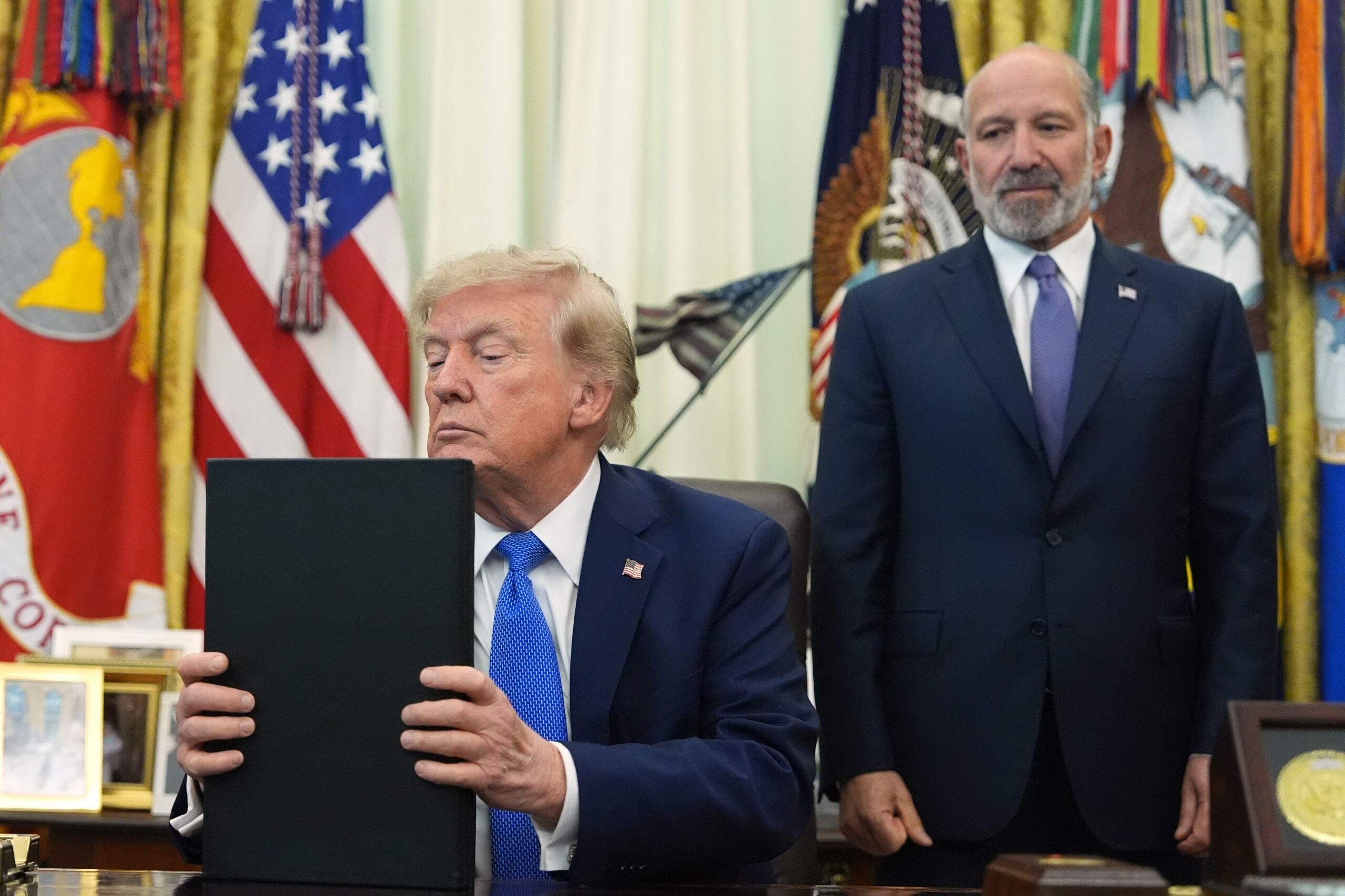
Commerce Secretary Howard Lutnick gave Apple the message one day after touring the company’s new manufacturing campus in Houston.
He told the Wall Street Journal that Apple must find “other solutions to the memory issue, but it’s not great American companies using Chinese memory.”
Whether Apple complies with this directive or not remains to be seen. Lutnick wasn’t clear how the directive would be enforced. At the same time, Apple competitors HP (HPQ), Asus, and Acer have all been using CXMT chips.
But if Apple circumvents the directive, the White House has other tricks up its sleeve…
For instance, it can move CXMT from the Chinese Military Company Blacklist to the Entity List, a more binding list of threats to national security. Such a move would effectively force Apple to do business elsewhere.
We’ll see how the game of chicken plays out.
But so far, the market has been quick to support the White House’s decision. U.S. memory stocks like Sandisk, Micron, Western Digital (WDC), and Seagate Technology (STX) all jumped in concert Monday after the news broke.
The U.S. government has shown it’s willing to enforce artificial scarcity to prop up domestic chipmakers. It’s a tailwind for those companies, though it means RAM prices will stay higher for longer.
A Memory Cycle Unlike Any Other
Lutnick’s directive comes on the heels of a wild time in the memory-chip industry.
Just take a look at the past 10 months…
- October 2025 –OpenAI reveals letters of intent with memory businesses Samsung Electronics and SK Hynix to supply memory for the Stargate Project. The contract represents about 40% of global DRAM output (DRAM being the specific kind of RAM that powers computer memory).
- November 2025 – The price of memory-wafer contracts jumps by more than 60% month over month. Dell Technologies’ (DELL) Chief Operating Officer Jeff Clarke stated that his company had “never witnessed costs escalating at the current pace.”
- December 2025 – The media dubs the memory shortage the “RAMpocalypse.”
- February 2026 – Computer makerHP says memory now accounts for 35% of PC build materials (up from 15% to 18% one quarter prior).
- June 2026 – Apple announces price hikes for its Macs and iPads.
- August 2026 – Memory prices post a nearly 500% year-over-year increase.
All of this has led to increased volatility in memory stocks…
We can get a glimpse of this using the recently launched Roundhill Memory ETF (DRAM). This exchange-traded fund (“ETF”) tracks a basket of memory stocks like Micron, Sandisk, Samsung, and SK Hynix.
Roundhill’s ETF launched in April and already boasts about $27 billion in assets under management.
That’s a huge pool of cash. And yet, the fund has swung wildly since its initial listing. Take a look…
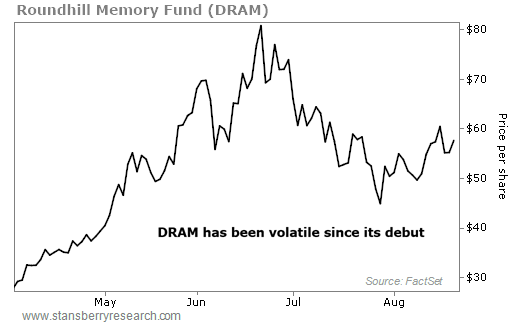
DRAM nearly tripled from its April listing to its June peak. Then, it plunged more than 40% to its bottom in July. The fund has since surged back more than 25% higher in a little more than three weeks.
In short, the forces behind the memory market today are much larger than the White House’s bully pulpit. Supply, demand, and investor sentiment will continue to be the biggest drivers in this market as the data-center build-out continues.
Whether Apple ignores the White House’s wishes or not, the memory shortage is real. And the problem is likely to get worse before it gets better.
Right now, the memory and data-center trades are closely linked. That means the hardware makers and RAM buyers will keep getting squeezed until there’s enough memory to go around.
Good investing,
Sean Michael Cummings
Editor’s Note: The three most successful tech billionaires in history are now backing a new use for AI that could dwarf anything we’ve seen before. And Nature says this tech is so revolutionary, it could add $367 trillion to the economy – the equivalent of $1 million per American. Click here to see the stocks that could soar as this new type of AI goes online nationwide.