Image Credit: Associated Press
Cerebras went public last Thursday — the opening act in an AI IPO season headlined by SpaceX. The IPO priced at $185 — above the marketed range. The stock opened at $350. It traded as high as $385 intraday, triggering a circuit breaker on the way up. It closed at $311, up 68% on day one, with a market cap around $95 billion.
The financial press called the Cerebras IPO the start of the 2026 AI IPO boom.
I called it something else. The Figma playbook, executed perfectly, with retail standing right where it always stands at the open.
In line. Behind every institutional desk that got an allocation. Buying at $300-plus from sellers who got in at $185.
The next day, Cerebras dropped 10%. That should tell you something.
SpaceX is next. Anthropic after that. OpenAI behind both. Together these three offerings represent more than $3 trillion in combined valuation — the most concentrated AI IPO pipeline in history. Every one of them is going to use a version of the same structural setup that took Figma from $33 to $143 to $22 in eight months.
This isn’t a warning that the SpaceX IPO or other AI IPOs will fail. Some of them will succeed. This is a warning that the IPO machinery is designed — deliberately and within the bounds of securities law — to transfer wealth from late-stage buyers to early-stage holders. Insiders. Institutions. The funds that got their allocation at the offering price.
If you don’t understand the lockup architecture, the float restrictions, and the performance-based release triggers embedded in these deals, you’re going to be on the wrong side of the trade.
Twenty-eight years on a trading desk taught me one rule. Nothing is expensive. Nothing is cheap. Everything is relative. And the trade is almost always the name in the family that forgot to move. Right now, the IPO family is moving. Cerebras just printed. The question is whether you understand the structure before the SpaceX IPO prints.
Follow the money.
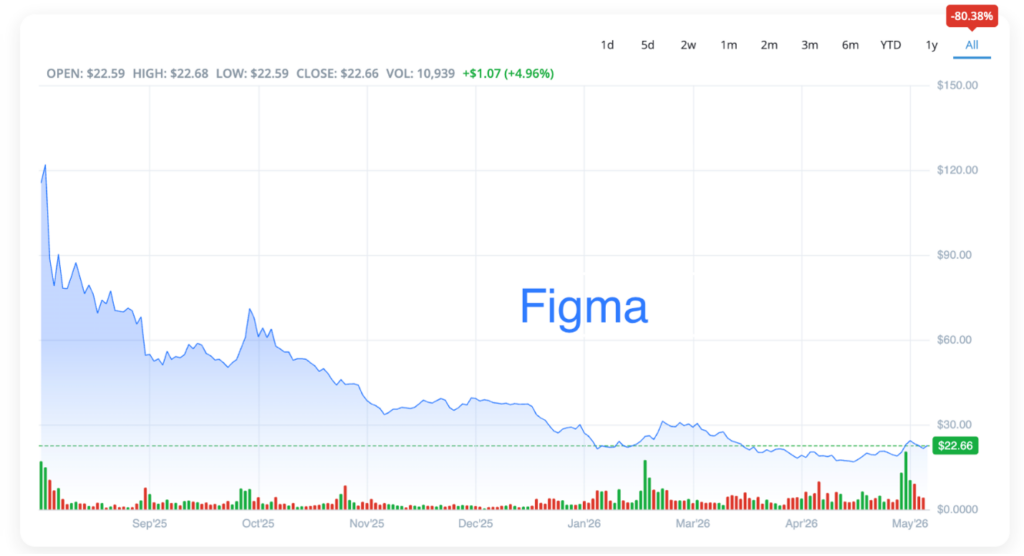
The Figma IPO Crash: How a 250% Pop Became an 81% Collapse
On July 31, 2025, Figma priced its IPO at $33. The deal was 40 times oversubscribed. Institutional demand was overwhelming.
By the close of the first trading day, the stock hit $115.50 — a 250% gain. Six months later, it traded at $22. Down 81% from peak. Down 33% from the IPO price.
The financial press blamed slowing revenue growth and competition from AI-powered design tools. Both real. Neither the actual story.
The actual story is in the structure of the deal. Four interlocking pieces that worked together to produce a predictable outcome.
Piece one: pricing below market. Figma priced at $33 despite demand that would have cleared at $85-plus. That decision left roughly $3 billion of primary capital on the table — capital that should have flowed to the company — and handed it instead to institutional investors who got allocations at $33 and sold into the secondary market at $85 to $115 the same day.
Piece two: a tiny float. Only 7-9% of shares were offered. Typical IPO floats are 10-15%. Restricting supply artificially amplified the first-day move.
Piece three: restricted pre-IPO price discovery. Figma suppressed secondary market trading in the months before the IPO. That eliminated the objective transaction-based price signals that would have told the underwriters what the stock was actually worth before opening bell.
Piece four — the one almost nobody noticed. Figma’s lockup agreement included a performance-based early release condition. If the stock traded 25% above IPO price for five consecutive days, 25% of locked shares would release after 36 days instead of the standard 180.
Read that again. The lockup was designed to release early if the underpricing was severe enough to produce a 25% pop.
The stock opened 158% above the threshold. The early release triggered on the first trading day. By day 36, employees who understood the lockup architecture sold at $80. The stock would decline another 72% from there.
In 28 years of trading and analyzing IPOs, I had not previously seen a performance-based early lockup actually trigger and close. Those provisions appear in deal documents constantly. They almost never activate because rational pricing prevents activation. Figma’s activated because the pricing was deliberately set far enough below market demand to guarantee the trigger.
By November, executives sold $35 million more at $43-48. Q3 earnings showed revenue deceleration from 41% to 33%. The market caught up. By February, the stock was at $22.
That’s the playbook. And right now, every AI IPO in the pipeline is being structured by the same banks, with the same incentives, using the same tools.
SpaceX, Anthropic, and OpenAI: The $3 Trillion AI IPO Pipeline Ahead Look at what’s about to hit the public market.
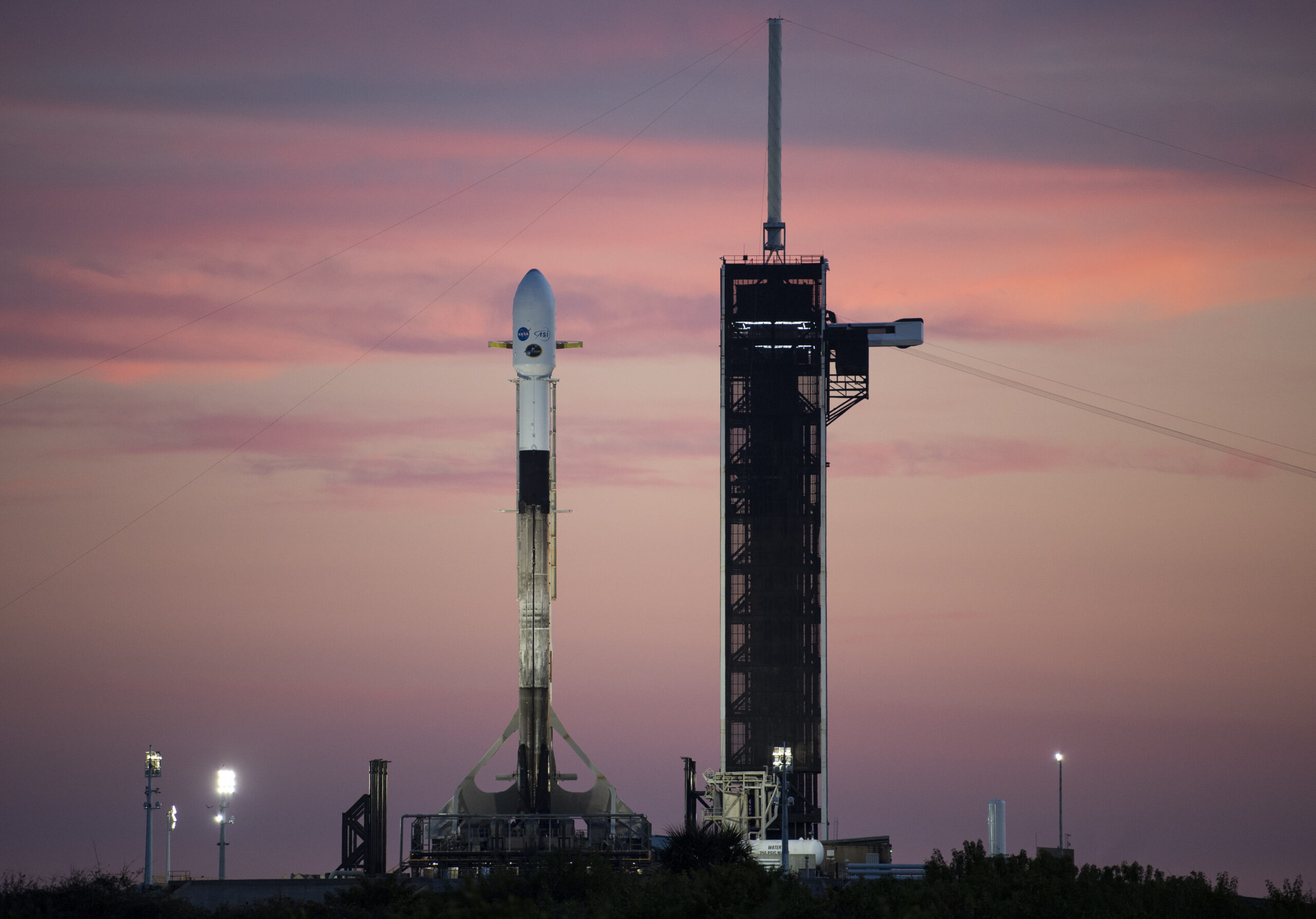
SpaceX. Confidential S-1 filed April 1. Public S-1 expected this week. Target valuation $1.75 trillion. Target raise $50-75 billion. Roadshow targeted for the week of June 8. If priced anywhere near target, this would be the largest IPO in history, surpassing Saudi Aramco’s $29.4 billion record.
Anthropic. Currently in talks to raise $50 billion at a $900 billion valuation. The Anthropic IPO 2026 target is as early as October with Goldman, JPMorgan, and Morgan Stanley as underwriters. Annualized revenue hit $30 billion in April 2026 — up from $9 billion at the end of 2025. That’s 1,400% growth in 15 months. The Anthropic-SpaceX Colossus deal signed two weeks ago locks in the AI compute story.
OpenAI. The OpenAI IPO date is targeting Q4 2026 at an $852 billion to $1 trillion valuation. Target raise above $60 billion. Annualized revenue around $25 billion. CFO Sarah Friar has publicly downplayed near-term IPO plans, but the filings are reportedly moving.
Databricks. $5.4 billion in annualized revenue. Profitable. 65% growth. H2 2026 filing expected.
Together with Cerebras at a $95 billion close, the combined valuation of this pipeline is over $3 trillion. AI and AI-adjacent companies account for roughly 92% of the 2026 IPO calendar.
Every one of these companies has the same set of structural decisions to make. How much to price below clearing demand. How much float to offer. How tight to restrict pre-IPO secondary trading. Which performance-based release triggers to embed in the lockup.
The decisions on those four levers will determine whether you end up buying SpaceX at $1.75 trillion and watching it ride higher — or buying it at the IPO pop and watching it drift sideways for two years until the founders’ shares unlock.
The 5 Warning Signs That an IPO Is Built for Insiders, Not You
Twenty-eight years of watching this game taught me to read these signals before I touch an IPO. If you see all five, the deal is structured for someone else’s benefit.
Warning sign one: the float is below 10% of shares outstanding. Small floats create artificial scarcity. They amplify the first-day pop. They give insiders more shares to sell into the secondary lockup expirations. Figma offered 7-9%. Watch the SpaceX prospectus for this number specifically. With a $1.75 trillion target valuation, even a 10% float means $175 billion of stock to absorb — and the lower they go, the bigger the pop and the bigger the trap.
Warning sign two: the deal is “oversubscribed by 20x or more” and the company brags about it. Bill Gurley said it best on Figma’s IPO day: “They refuse to match supply and demand. They brag about the mismatch.” A massively oversubscribed deal that prices below where it should clear is a deal that’s been deliberately underpriced to produce a pop. That pop is the gift to the institutions that got allocations. Retail buys after the gift has been delivered.
Warning sign three: pre-IPO secondary trading has been restricted. Companies that allow structured secondary trading before an IPO produce more accurate pricing because there’s transaction-based price discovery. Rubrik did this in 2025 and had a modest first-day move. Figma did not. Cerebras did not. When the company suppresses pre-IPO trading, the IPO opens without a real reference price — which is exactly when the supply-demand imbalance hits hardest.
Warning sign four: the IPO lockup period includes a performance-based early release trigger. This is the one almost nobody reads. Search the S-1 for “Early Release Condition” or “performance-based release.” If the lockup releases additional shares at a price 25% above IPO, and the company prices low enough to guarantee the trigger, you’re looking at the Figma structure.
Warning sign five: insiders file Rule 10b5-1 plans within days of the IPO. A 10b5-1 plan is a predetermined sales schedule that gives executives legal cover to sell during periods when they hold material non-public information. When a CEO files a 10b5-1 four days after the IPO authorizing the sale of 3 million shares — as Dylan Field did at Figma — that’s not a vote of confidence. That’s a scheduled exit.
You don’t need to find all five to be cautious. You need two or three. When you see them, you wait.
How to Actually Invest in AI IPO Stocks Without Getting Trapped
The discipline that works on every IPO is the same discipline I use on every trade. Notice. Map. Ask who forgot to move. Structure the risk.
For the SpaceX IPO and the rest of the AI IPO pipeline, that translates into three specific moves.
Move one: do not buy at the open. The opening price on an IPO is set by the supply-demand imbalance produced by intentional underpricing. The pop is the gift to insiders. By the time you click buy, the gift’s already been given. If you want exposure to the company, wait. The price you see on day one is almost never the price you’ll see in 12 months.
Cerebras opened at $350. Day two it closed down 10%. That’s the structural reality at work in real time.
Move two: buy the family, not the headline. Every AI IPO in the pipeline has public-market proxies you can buy today. SpaceX has Alphabet (owns 6.11% of SpaceX), EchoStar (holds an $11.1 billion SpaceX equity stake from the spectrum-for-equity deal), Rocket Lab (the closest pure-play competitor), and AST SpaceMobile (the Starlink alternative). Anthropic has Amazon and Microsoft as major investors and Nvidia as the chip supplier. OpenAI has Microsoft as the cloud and equity partner. These proxies trade today. No lockup risk. No allocation problem. No premium to NAV.
Move three: watch the lockup calendar. Once a company IPOs, the most important dates on the calendar aren’t earnings dates. They’re the lockup expirations. Figma had four — days 36, 107, 180, and 397. The biggest declines happened around those windows. If you decide to buy a recent IPO, do it after the 180-day standard lockup, not before. The structural selling pressure that hits at lockup expiration is the moment when the stock often trades at its actual fundamental value rather than its scarcity-supported price.
That’s how you play this. Buy the family before the IPO. Wait through the pop. Re-evaluate at the lockup expirations. The IPO mechanics are designed to extract maximum price from retail at the open. You opt out of the extraction by buying the proxies first and the company later.
The Real Risks of Sitting Out the SpaceX IPO (and Others)
This isn’t a guarantee.
The IPO could be the rare exception. Not every IPO follows the Figma pattern. Some companies — Rubrik in 2025, for instance — price near market clearing levels and trade reasonably from day one. If SpaceX, Anthropic, or OpenAI prices fairly and respects retail demand, the framework above leaves you on the sidelines while the stock rises. That’s a real cost.
The proxies have their own risks. Alphabet’s SpaceX exposure is a small fraction of its total enterprise value. Microsoft’s OpenAI exposure is similarly diluted by the rest of the cloud business. The proxies will move on their own fundamentals primarily, with the IPO exposure as a kicker. Don’t expect 1:1 correlation.
The wait can be uncomfortable. Watching a stock pop 68% in one day after you passed on the IPO is psychologically painful. The discipline to sit out is the hardest part. The data on six-to-twelve-month post-IPO performance is what makes the discipline worth it.
A reasonable approach is partial allocation. Take a small starter position if you must participate at the open — knowing that position is a learning fee. Reserve the larger position for after the first major lockup expiration. The structure of the deal is doing most of your work for you. You just have to wait for it.
How to Opt Out of the SpaceX — and Other AI IPO Traps — and Still Win
Cerebras was the dress rehearsal. SpaceX, Anthropic, and OpenAI are the main event.
Three companies. Over $3 trillion in combined target valuation. Each one structured by the same investment banks, using the same underpricing playbook, with the same lockup mechanics that took Figma from $143 to $22.
The institutions know what’s coming. They got their allocations. They’ll be the sellers on day one. You are the structurally designated buyer of those shares — at whatever price the supply-demand imbalance produces.
You can opt out. Buy Alphabet for the SpaceX exposure. Buy Microsoft for the OpenAI exposure. Buy Amazon and Nvidia for the Anthropic exposure. Wait through the pop. Re-evaluate at the 180-day mark.
Notice. Map. Ask who forgot to move. Structure the risk.
That’s the whole job. I run that checklist on camera every weekday at 11 ET on Masters in Trading Live, on this and dozens of other setups. You don’t need a service to do it yourself. You need to know what to look for.
The biggest IPOs in history are weeks and months away. The family is already trading. The trade isn’t waiting for the bell.
Follow the money.
Frequently Asked Questions
When is the SpaceX IPO date? SpaceX’s public S-1 is expected this week with a roadshow targeting the week of June 8, 2026. If priced near its $1.75 trillion target valuation, it would be the largest IPO in history, surpassing Saudi Aramco’s $29.4 billion record.
When is the OpenAI IPO date? OpenAI is targeting a Q4 2026 listing at an $852 billion to $1 trillion valuation with a target raise above $60 billion.
How does an IPO lockup period work? An IPO lockup period restricts insiders and early investors from selling shares for a set time after the IPO — typically 180 days. Some deals include performance-based early release triggers that can unlock shares sooner if the stock hits a price threshold, as happened with Figma.
Should I buy the SpaceX IPO at the open? The opening price on any IPO reflects intentional underpricing designed to benefit institutional allocations, not retail investors. Waiting until after the 180-day lockup expiration gives retail investors a cleaner entry point at closer to fundamental value.
To watch Jonathan map out institutional money flows and break down these market setups live on camera every weekday morning, you can register for his daily livestream here: Masters in Trading Live
Jonathan Rose is a former CBOE market maker and the founder of Masters in Trading at InvestorPlace. He hosts Masters in Trading Live every weekday at 11 AM ET. Follow him on X at @JRoseTrades. This article is for educational purposes only and is not investment advice.
Editor’s Note: What happens when a 50-year Wall Street legend and a 14-year floor trader combine their absolute best indicators? You get a double-confirmation “Super-Signal” that eliminates the guesswork and tracks institutional capital in real time. This exact mechanism has already pinpointed massive, short-term spikes up to 833% during recent market chaos. Tomorrow night, Marc Chaikin and Jonathan Rose are revealing the entire strategy for free—and naming 10 stocks that could double your money over the next 12 months. Lock in your free ticket before registration closes.
Recent Articles
Meta’s ‘Clean Energy’ Exit Signals These AI-Power Stocks Could Surge on Demand Boom
Apple Is the World’s Most Valuable Company Again. Here’s Why It’s Sitting Out the AI Spending War