Image Credit: Associated Press
Listen to the audio version of this article (generated by AI).
Key Points
- Apple has reclaimed the title of the world’s most valuable company, overtaking Nvidia as investors reward companies that are taking a more disciplined approach to AI spending.
- Apple plans to spend only a fraction of what Microsoft, Alphabet, and Amazon are investing in AI infrastructure, with projected capital expenditures totaling less than 10% of those hyperscalers’ combined spending.
- Rather than dramatically increasing AI investment, Apple continues to prioritize shareholder returns through a higher dividend and ongoing stock repurchase program.
Apple (AAPL) just retook the title of the world’s most valuable company, knocking Nvidia (NVDA) from the top spot and proving that you don’t need to make massive investments in artificial intelligence (“AI”) to be highly valued. In fact, Apple may be demonstrating the reverse – that it’s more beneficial to avoid the hundreds of billions of dollars that hyperscalers, such as Alphabet (GOOGL), are investing in AI.
After being the world’s most valuable company for big parts of the past decade, Apple reclaimed the title from chipmaker Nvidia, which has been dealing with significant investor concerns about how it’s helping to finance the build-out of AI data centers.
Most recently, Nvidia’s reportedly looking to guarantee a $250 billion data-center build-out on OpenAI’s behalf, while also financing OpenAI’s purchase of $350 billion in Nvidia chips. These potential moves and other similar “circular financing” are turning Nvidia into a “central bank of AI.”
Apple has largely steered clear of such extreme investments in AI tech, leaving the pressing question of AI’s economics to the large companies that are plowing hundreds of billions into it.
Not surprisingly, Apple’s discipline is showing up in its year-to-date stock returns, while the stocks of many other hyperscalers have performed modestly at best and a disaster at worst.
| Company | YTD Return |
| Apple (AAPL) | 25.4% |
| Alphabet (GOOGL) | 6.4% |
| Microsoft (MSFT) | -18.6% |
| Meta Platforms (META) | -10.8% |
| Amazon (AMZN) | -1.4% |
| Oracle (ORCL) | -39.7% |
The other names on the list are all big-spending hyperscalers, with the Big Four – Amazon, Alphabet, Meta Platforms, and Microsoft – being joined by Oracle, which is having some of its own self-inflicted problems with AI spending that could see it potentially losing up to 50% of its value.
Now look at the capital expenditures (“capex”) of these companies for 2025 and the projected figures for 2026.
| Company | 2025 capex | Estimated 2026 capex |
| Apple (AAPL) | $12.7 billion | $14.3 billion |
| Alphabet (GOOGL) | $91.4 billion | $195 billion ñ $205 billion |
| Microsoft (MSFT) | $64.6 billion | $190 billion |
| Meta Platforms (META) | $69.7 billion | $130 billion ñ $145 billion |
| Amazon (AMZN) | $131.8 billion | $200 billion |
| Oracle (ORCL) | $55.7 billion | $95 billion |
Quick note: The fiscal years here don’t overlap, so it’s not a pure apples-to-apples comparison. Oracle’s year ends in May, Microsoft’s in June, Apple’s in September, and others’ wrap up in December.
Still, it’s easy to spot the major outlier here and the not-so-subtle difference in stock returns. Apple is planning to spend just a small fraction of what every other player is dumping into capex in the year ahead.
Instead, it has taken a much more disciplined approach to AI and stuck with a capital allocation policy that returns tons of cash to investors through stock repurchases and dividends.
Apple Outsources AI, Returns Cash to Investors Instead
As other large tech companies are pouring hundreds of billions of dollars into a range of AI data centers, Apple has mostly shunned those investments. It’s taking a much more capital-efficient path and then continues to pay out huge portions of its earnings back to shareholders.
Instead, Apple is opting to license tech from other players, such as with its multiyear agreement with Alphabet’s Google in January to use Google Gemini to power its Siri assistant. The cost amounts to a reported $1 billion a year.
Without the same investments in AI infrastructure, Apple can pivot to the best deals as they come along. The emergence of powerful, low-cost Chinese models may drive down the price of using AI, potentially causing a massive ripping point in the AI rollout.
That doesn’t mean that Apple remains unaffected by the AI build-out, however. Like every other company that uses memory and storage chips, it’s being hit by rising prices, as AI data centers gobble up supplies. That’s led the company to boost prices on its Macs and iPads, and it will likely hike prices on its next-generation iPhone when it announces them in September.
After Apple reclaimed its spot as the world’s most valuable company, it seems like the strategy is working just fine.
The company set various records for its quarter ending in March, including sales of $111.2 billion, a gain of 17% year over year. Sales of the iPhone grew 22% to a March quarter record, while earnings per share set a March record at $2.01, climbing a robust 22%.
While hyperscalers are running up significant debts to fund their AI ambitions and even issuing new shares of stock, Apple continues to buy back its own shares using cash that it’s not plowing into AI infrastructure.
In the quarter, $15 billion went to shareholders, including $3.8 billion in dividends and the remainder in repurchases. These payouts followed $32 billion that went back to investors in the sequentially prior quarter.
Apple plans to return even more gobs of cash to shareholders. The company authorized an additional $100 billion for share repurchases and boosted its dividend by 4%, to $0.27 per share.
Apple’s cash return has been almost unfathomable, having returned more than $1 trillion to investors since it began its program. That includes more than $850 billion in stock repurchases, which means the “Apple pie” is cut into fewer shares, helping to boost earnings per share.
Apple’s financial strength and priorities also mean that it’s unlikely to be stretched if and when the AI bubble bursts. So, it may be able to use this strength opportunistically later on.
Apple Shows That Measured Investing in AI Can Be Rewarding
One of the key takeaways for investors here is that companies can still deliver excellent returns by avoiding the reckless spending that’s driving the AI bubble. By staying focused on its tried-and-true investment discipline, Apple’s management has delivered for shareholders.
But there’s another big takeaway for investors: The difference in Apple’s return and that of other Big Tech firms shows something that AI boosters may find troubling. If investors are rewarding Apple’s discipline and arguably punishing hyperscalers’ massive spending, it’s only a matter of time before hyperscalers discover they too need to slash spending to boost their stock prices.
So, investors should carefully read the message that the market is sending here. While AI may have supercharged stock returns in 2025 as investors piled into anything AI-related, the market has become more selective in what it’s rewarding – and at least for now, that’s capital discipline.
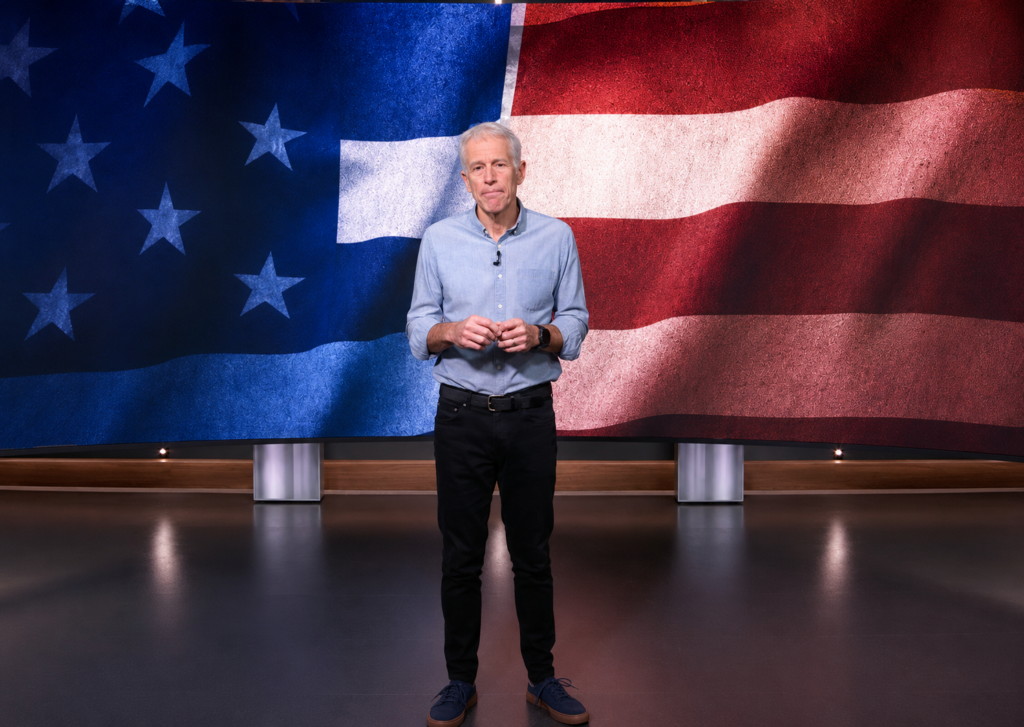
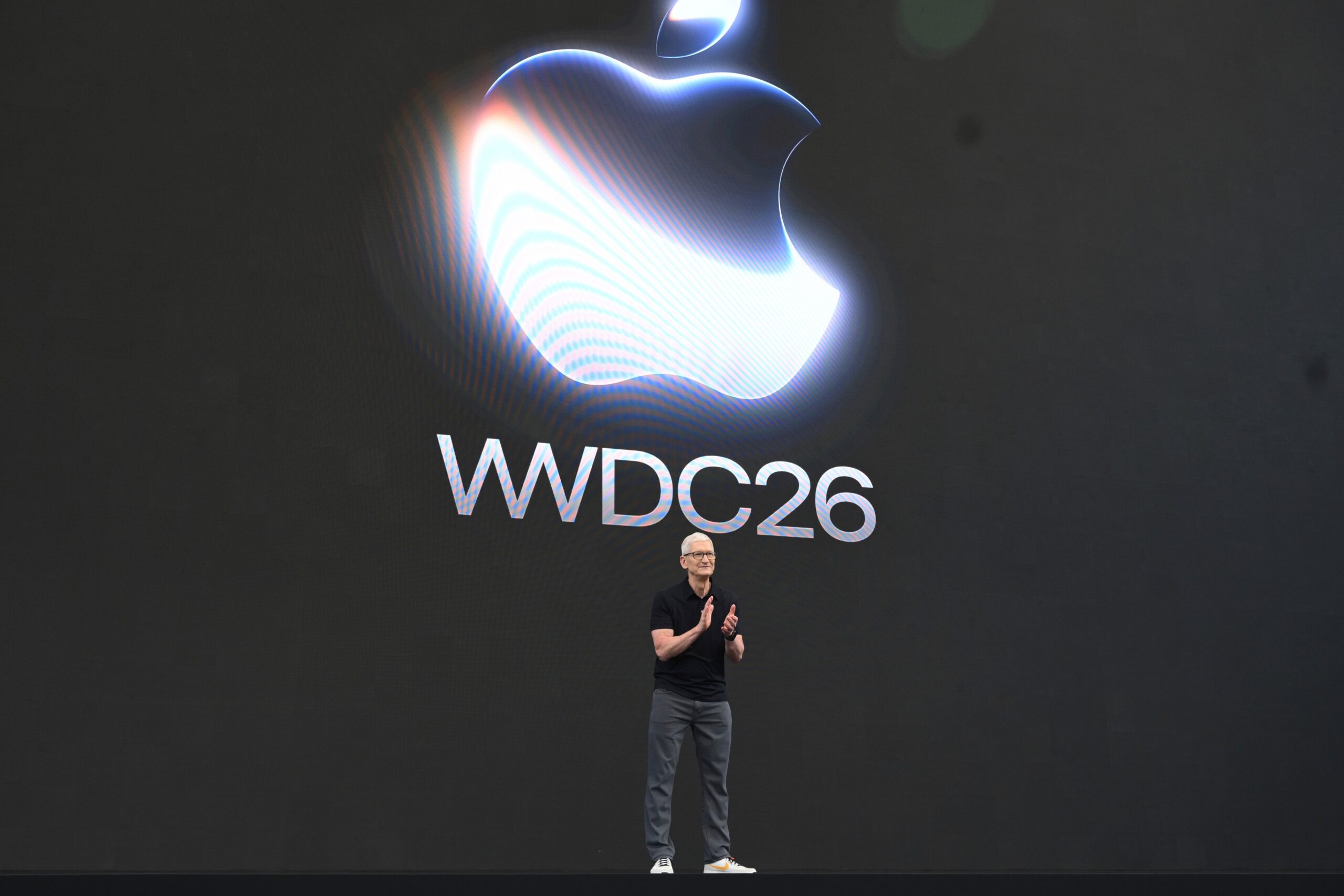
Of course, investors will want to pay close attention as a new CEO takes the reins at Apple. With Tim Cook shifting from the role of CEO to executive chairman in September, will new CEO John Ternus keep the same focus on capital allocation when he takes over?
While investors may be asking for the big hyperscalers to rein in their capital spending, such a move will likely be the pin that pricks the AI bubble, sending investors running for cover.
Regards,
James Royal, PhD
Editor’s Note: Whitney Tilson called the rise of Apple, Amazon, and Netflix… as well as the collapse of dozens of companies that went bankrupt. Now the former $200M hedge fund firm manager is stepping forward with what he calls the most important financial warning of his 30-year career. He’s sharing two free stock recommendations (one to buy, one to sell immediately) along with details of a new proprietary system fueling his predictions. See it all in his free presentation.