Image Credit: Associated Press
Key Points
- X-Energy develops nuclear reactors designed to generate low-carbon electricity, benefiting from growing AI-related energy demand and interest in climate-friendly power sources.
- The company focuses on small modular nuclear reactors and the nuclear fuels required to power them.
- X-Energy appears richly valued based on its current financials and an estimated market capitalization of roughly $12 billion.
Artificial intelligence (“AI”) data centers are increasing electricity demand, pushing up prices and the incentive to rapidly expand power capacity. That’s where a company called X-Energy (XE) comes in. X-Energy builds nuclear reactors to produce low-carbon electricity, capitalizing on the AI boom.
X-Energy recently held its initial public offering (“IPO”), raising $1.0 billion on April 24. The company’s shares priced at $23, above the IPO offer range of $16 to $19, suggesting strong investor demand. The stock saw a first-day close of $29.20, good for a 27% pop.
While the stock has risen as high as $37.10, it’s back around $31 a share. But the trend the company is riding – rising energy demands from AI – looks set to play out for years.
Hyperscalers such as Amazon (AMZN), Microsoft (MSFT), and Alphabet (GOOGL) are plowing hundreds of billions into AI infrastructure, such as data centers, each year. Those centers use massive amounts of electricity to power AI applications from OpenAI, Anthropic, and others. Amazon is also an investor in X-Energy, having put up about $500 million in 2024.
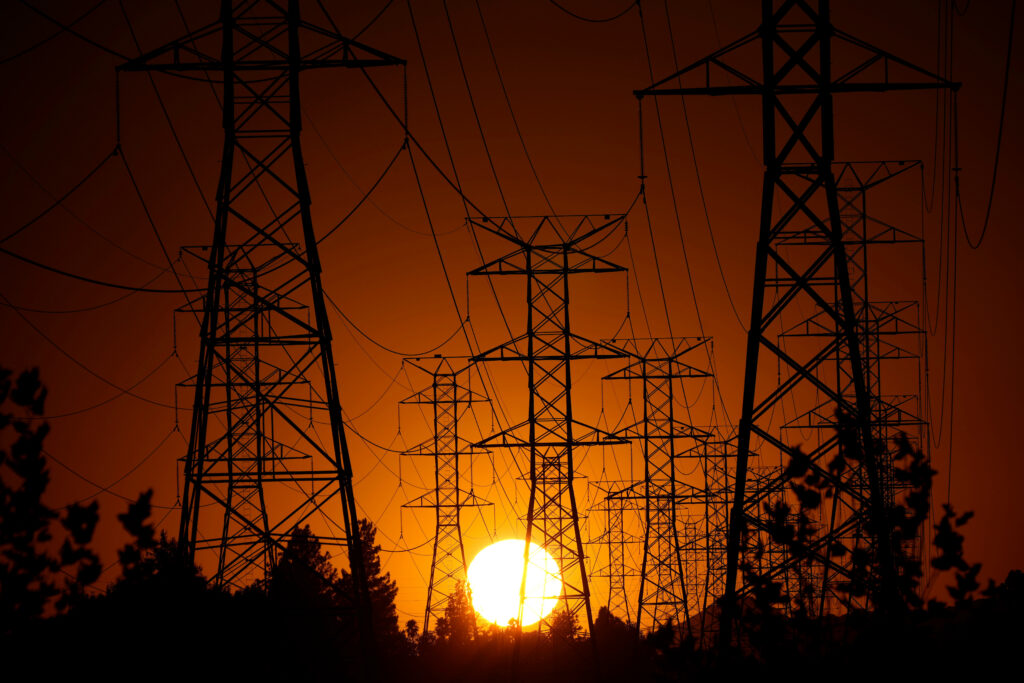
Electricity consumption for data centers overall (not just AI data centers) is set to expand at a breakneck pace.
In September 2025, Corey McLaughlin, editor of the Stansberry Digest newsletter, delved into just how much power data centers will need in the next few years:
The Environmental and Energy Study Institute estimates that U.S. data centers could require as much as 130 gigawatts of power every year by 2030.
That’s enough to power, on average, about 114 million homes for a year. And that’s the equivalent of a huge chunk of all of the housing (148 million units) in the U.S.
Not only would this new demand be a huge draw on utilities, but it would also mean data centers accounting for 12% of all electricity used in the U.S. (versus about 4.4% at the end of 2023).
That’s providing an investment opportunity for X-Energy and other power companies, particularly those that can offer energy solutions that minimize carbon output.
One of the key criticisms of AI is its significant energy consumption, particularly when power plants burn fossil fuels. These high-carbon fuels are said to be the largest contributor to climate change. So, low-carbon solutions such as nuclear reactors are one potential way to reduce AI’s carbon footprint.
Here’s how X-Energy expects to fill the demand created by surging AI investment.
X-Energy: Nuclear Power for Rising AI Energy Demand
X-Energy designs small modular reactors (“SMRs”) and manufactures advanced nuclear fuels. SMRs are an advanced nuclear reactor technology, and X-Energy’s flagship is the Xe-100.
The Xe-100 is a high-temperature, gas-cooled reactor that produces 80 megawatts of electric power or 200 megawatts of heat, or some combination of the two.
The Xe-100 has a variety of advantages, according to X-Energy:
- Almost no greenhouse gas emissions during operation (i.e., low carbon footprint)
- Simple design that reduces supply-chain complexity and construction labor
- Lower cost and faster deployment, compared to traditional nuclear reactors
- Expandability into four independent reactors in a four-reactor format
- Advanced safety features
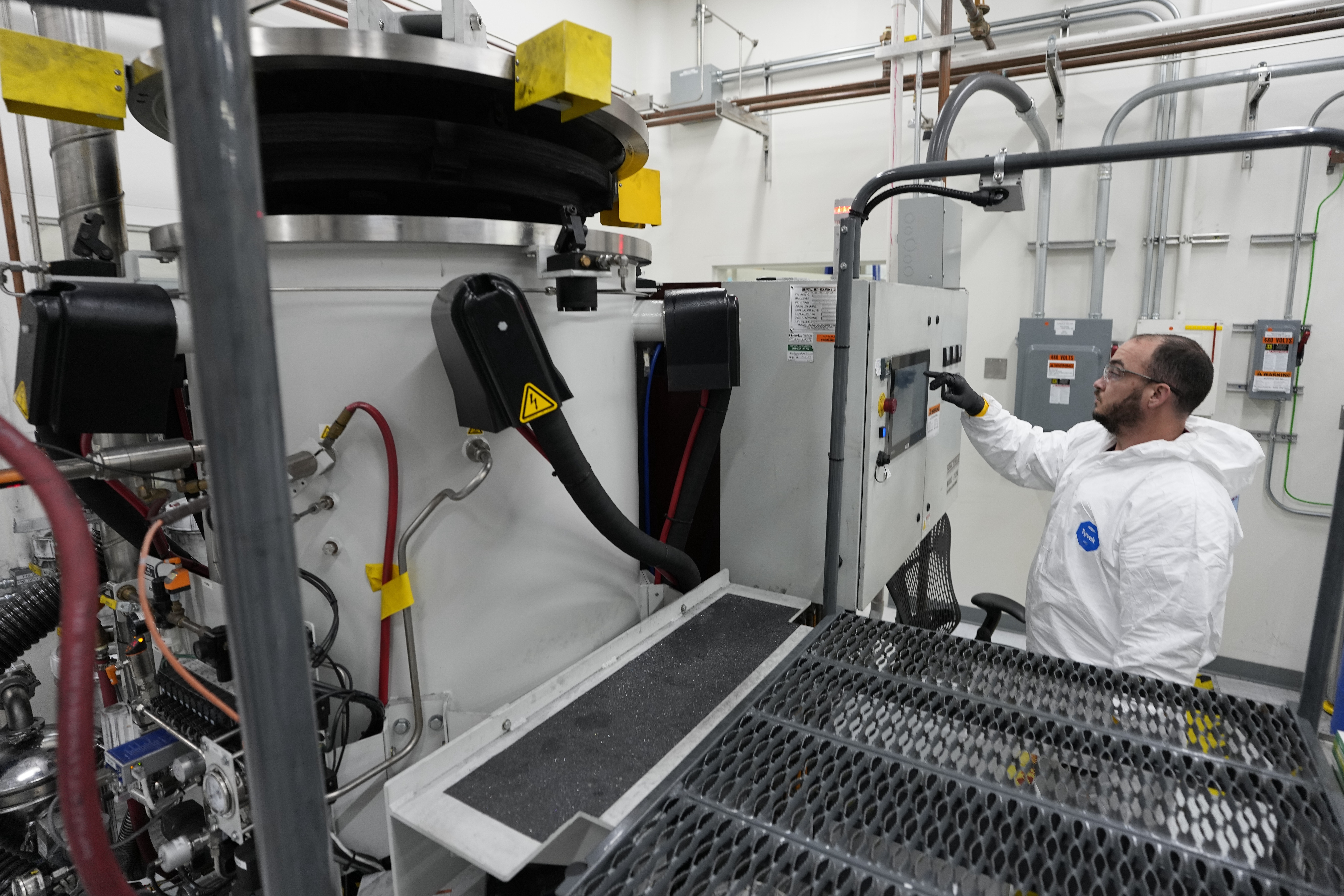
The company’s reactors use its pebble-like particle fuel called TRISO-X, which the company will make in its fuel manufacturing facility in Oak Ridge, Tennessee. The company began construction of the facility in October 2024, and it’s slated for completion in the first half of 2028. This facility will support the first 11 Xe-100 reactors operating at a steady state.
X-Energy has already lined up a few early customers, including a couple of names you may know. Dow (DOW), Centrica, and Amazon are set to take up the initial wave of reactors. If they use their options to purchase reactors in full, the companies would buy 144 SMRs.
Development is already ongoing at Dow’s Seadrift Operations facility in Texas and Amazon’s project in conjunction with Energy Northwest.
X-Energy has another major backer: the U.S. Department of Energy. In December 2020, the department awarded X-Energy $1.2 billion as part of the Advanced Reactor Demonstration Program, which aims to aid the deployment of advanced nuclear technology. The funding offers a 50-50 share on up to $2.4 billion in qualified costs through 2027, so a net award of $1.2 billion.
The company has been reimbursed about $438 million as of year-end 2025.
Here’s Why X-Energy Looks Overvalued
While it seems like there’s no question that electricity use is set to rise in the future, what are investors paying for X-Energy to play that trend? X-Energy looks decidedly expensive, given its trailing financials and an estimated market capitalization of $12 billion.
With sales of around $109 million in 2025, X-Energy stock looks like it’s trading about 110 times sales. Those sales translate into a $217.4 million operating loss on a pro forma basis (i.e., as if the events described in the prospectus had already occurred). Neither looks attractive.
X-Energy had just $1.2 billion in assets before the IPO. So, the current market cap of about $12 billion prices those assets at about 10 times their value. And while the company has $1.45 billion in cash on its balance sheet, $1 billion of that thanks to the IPO, management expects to spend it all.
Even all that cash won’t be enough, according to management. X-Energy will need to raise even more funding to ultimately achieve its strategic goals.
From the IPO prospectus:
While we currently expect that we have sufficient sources of liquidity, taking into account our current cash on hand and the expected net proceeds from this offering, to continue working on our reactor and fuel projects with our key customers and partners, we will need additional sources of funding and financing to support our ongoing operations and to execute on our business plan.
We have had, and expect that we will continue to have, an ongoing need to raise additional capital from outside sources to fund our operations and expand our business.
In other words, investors should expect more stock offerings in the future, and as management explains, the company doesn’t forecast profitability any time soon:
In addition, management expects that future operating losses and negative operating cash flows may increase from historical levels because of additional costs and expenses related to the development of our technology and the development of market and strategic relationships with other businesses.
Investors should stop reading right there. More losses, more spending, more capital raising. It’s a recipe for underperformance. Sure, anything’s possible in the short term, but investors have plenty of better options if they’re looking for favorable risk-reward setups.
Regards,
James Royal, Ph.D.
Editor’s Note: A highly secure site in West Texas now houses an emerging potential $10 trillion technology backed by Elon Musk and Sam Altman. This breakthrough could completely replace our need for foreign oil – and send one small group of stocks soaring in the process. Click here to learn how you can invest in Elon’s next $10 trillion move.