
Today’s issue in preview:
-
Five stocks to invest in an industry set to soar in value
-
The most important stocks you don’t follow are booming. That’s bullish for America.
-
The bears and pessimists get trampled: New highs for shopping malls, steelmaking, and hotels.
Five stocks to invest in an industry set to soar in value

Credit: gorodenkoff
Heart attacks are typically thought of as the result of years of obvious warning signs: high cholesterol, chest pain, or high blood pressure.
However, a study by Mount Sinai Hospital showed that around 50% of adults under 65 who experienced heart attacks would have been classified as “low” or “borderline” risk by conventional measures shortly before their heart attack. Many people don’t realize they are at risk until it is too late.
A similar story frequently plays out in cancer. All too often, people don’t find out they have cancer until it is in advanced stages… and very difficult or impossible to treat.
Thanks to incredible progress in medical technology, however, these kinds of stories are becoming less common… and perhaps soon, will be very rare. This is all bullish for the Preventative Diagnostics subtheme inside the Boomer health care megatrend.
Avid M&M readers know the bull case behind Boomer health care. More than 10,000 Americans reach retirement age every day. The U.S. population aged 80 and older is projected to roughly double, from 14.7 million in 2025 to 29.4 million by 2045.
This is the enormous Baby Boom generation entering the phase of life where health care and longevity spending skyrockets. For many boomers, a typical month involves going to see at least one doctor to have something looked at, removed, or treated.
This means many health care businesses are experiencing huge demand now – and will for at least the next decade. It means boom times ahead for many “ology” businesses, stocks, and careers. Dermatology. Cardiology. Radiology. Oncology. Anesthesiology. Ophthalmology. The list goes on. Investing in many health care businesses over the next decade will be investing with a gale-force tailwind at your back.
A growing force inside this trend is bleeding-edge preventative diagnostics.
Over the past 20 years, preventive healthcare diagnostics have improved dramatically due to advances in genomics, imaging technology, and data analytics. Genetic testing has become faster and less expensive, allowing earlier identification of disease risks. High-resolution imaging and improved laboratory testing can detect conditions such as cancer, heart disease, and diabetes at much earlier stages.
Wearable devices and remote monitoring tools continuously track vital signs and health trends, enabling early intervention. Electronic health records and artificial intelligence help clinicians identify risk patterns and personalize screening recommendations.
Together, these innovations are shifting healthcare from reactive illness care to predictive, preventive, and proactive disease management before serious symptoms develop. The shift from reactive treatment to early detection is still early, but the numbers already reflect its momentum.
The U.S. health care diagnostics market was valued at $35.7 billion in 2024 and is projected to reach nearly $60 billion by 2030, growing at an annual rate of over 9%. Globally, clinical diagnostics is on track to hit $170 billion by the end of the decade. North America commands nearly half of that market.
But those figures don’t fully account for how AI is about to revolutionize health care diagnostics, such as
-
AI-powered imaging that detects inflammation in coronary arteries before a heart attack happens.
-
Liquid biopsies that identify cancer DNA in a blood draw years before a tumor becomes visible.
-
Genetic testing that recommends food and supplement changes to treat illness before it even takes root.
The diagnostics market isn’t just growing. It’s being rebuilt from the ground up around a new clinical philosophy powered by blazing technological progress: detect early, intervene early, prevent the crisis entirely. This industry’s potential to drive growth, deliver societal benefits, and produce big stock market winners is massive.
Given all this, we believe knowing “who’s who” in health care diagnostics – and often owning them – will prove to be very beneficial over the coming years. Companies poised to benefit from the Preventative Diagnostics theme include:
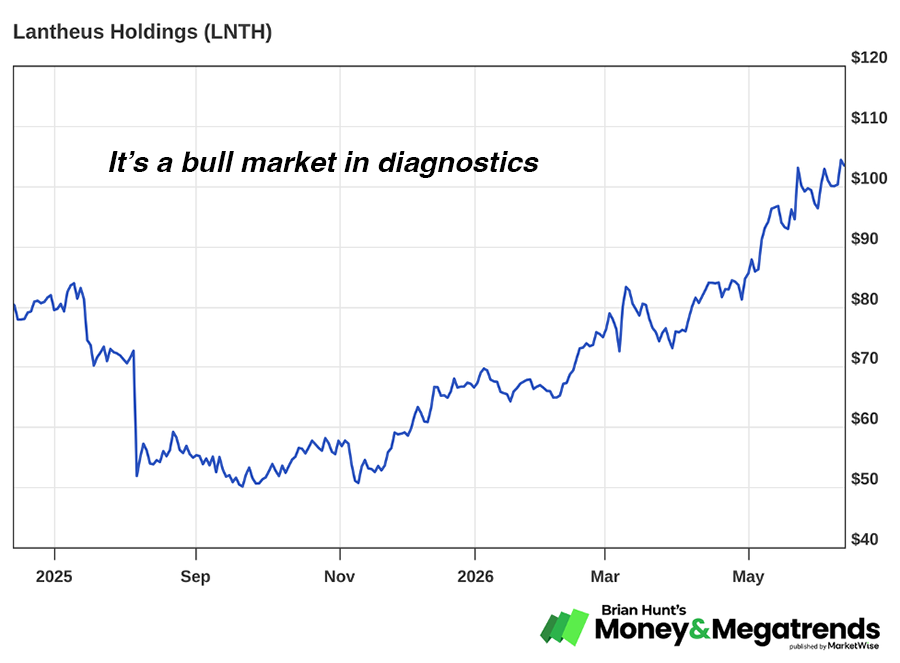
Lantheus Holdings (LNTH) is a $6.5 billion company, and the leading radiopharmaceutical diagnostics company in the U.S. It’s one of the purest plays on the early-detection revolution. Its PYLARIFY PET scan has become the gold standard for detecting prostate cancer, and the company is now pushing aggressively into Alzheimer’s diagnostics, which is a disease where early identification is everything. Revenue hit $1.54 billion in 2025, with precision diagnostics growing at double digits year over year.
Guardant Health (GH) is a $17.5 billion company. Its technology detects circulating tumor DNA in the bloodstream (cancer’s fingerprint) long before a mass is large enough to be found any other way. It’s done through a simple blood draw. No surgery. No tissue sample. Its flagship Guardant360 platform profiles over 70 cancer-related genes, and its next-generation Guardant360 Liquid test just won FDA approval, for lung, colorectal, and breast cancers. Revenue hit $982 million in 2025, which is up 33% year over year.
Natera (NTRA) is a $32 billion company building one of the most compelling early-detection franchises in healthcare across prenatal genetic screening, organ transplant monitoring, and cancer surveillance. Its Signatera test detects residual cancer at a molecular level after treatment, telling oncologists whether the disease is truly gone or quietly regrouping before it’s visible on any scan. Revenue surged 36% in 2025 to $2.3 billion, with forecasts at 21% growth in 2026.
GRAIL (GRAL) is a $2.5 billion diagnostics firm focused on detecting cancer through advanced blood tests. Its flagship product, Galleri, is a multi-cancer early detection test that analyzes DNA fragments in a blood sample to identify cancer signals and predict where the cancer originated, potentially detecting more than 50 types of cancer, many of which lack routine screening methods.
Abbott Laboratories (ABT) is a $160 billion blue-chip anchor of this theme. It’s involved in glucose monitoring, blood sampling, rapid diagnostics, molecular diagnostics, and transfusion medicine, making it a very broad play. For investors who want the stability of a dividend-paying giant alongside the early-detection growth story, Abbott is probably the most trusted name in the industry.
Health care is in the middle of a historic revolution. For generations, the system was built to treat the sick. It is now being rebuilt to detect and treat disease before it makes people sick.
The companies above are building the tools and equipment at the center of what may be the most durable growth theme in healthcare investing over the next decade. Expect many more research notes and actionable ideas in Preventative Diagnostics soon.
Recommended Link:
15X Bigger Than SpaceX: Elon’s New Launch

While the rest of the market goes crazy for “the mother of all IPOs”, a new Elon Musk innovation is quietly being rolled out nationwide. It’s been 27 years in the making, and it could have a radical impact on how millions of people manage their money… and even collect Social Security. Here’s everything you need to know.
The most important stocks you don’t follow are booming. That’s bullish for America.
Credit: real444
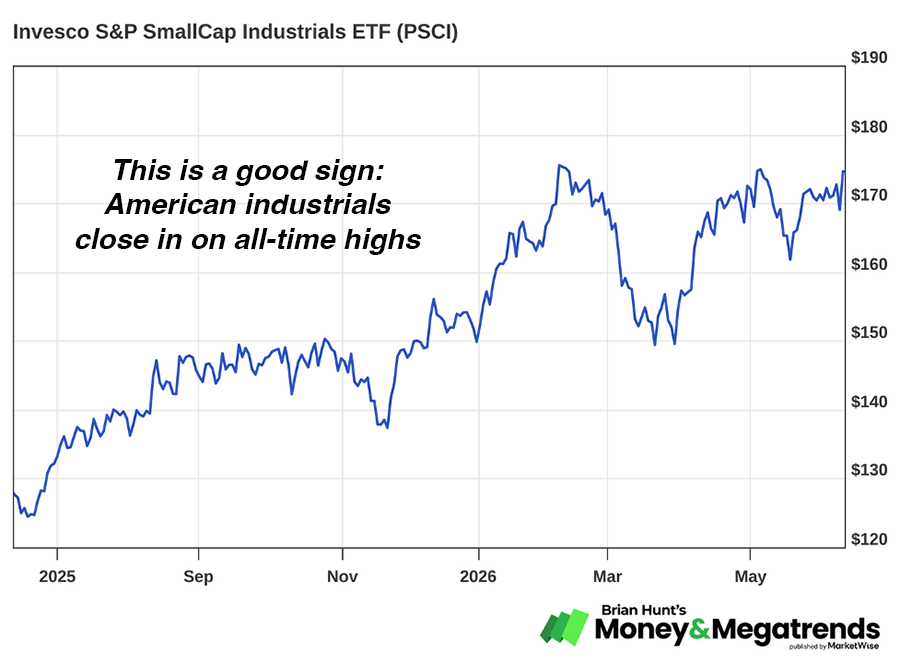
This week, as the financial world fixated on the SpaceX IPO, some of America’s most important stocks sent us a powerful signal. The Invesco S&P SmallCap Industrials ETF (PSCI) climbed to within pennies of its all-time high. It’s a bullish economic signal from the some of the most important companies you probably don’t pay attention to.
Over the past two months, we have published over a half a dozen research notes saying that key “real world” economic data suggest the economy is doing much better than most people think.
We’ve detailed how transportation stocks, shopping mall stocks, hotel chain stocks, advertising stocks, diesel engine giant Cummins (CMI), and construction equipment maker Caterpillar (CAT) have reached new one-year highs.
These companies are highly economically sensitive. Their fortunes rise and fall with America’s economic health. And right now, their stocks are soaring. This exceptional price strength means the economy is doing very well. Industries involved in making things, transporting things, and buying things are booming.
The stock market is one of the world’s greatest forecasting mechanisms. It tends to look ahead 6-12 months. When an industry is in a recession, its stock prices will rise before the news media says it is recovering. When an industry seems to be doing well, its stock prices will decline before the news covers its downturn. This is often called “discounting the future.”
With this in mind, let’s study the PSCI price action.
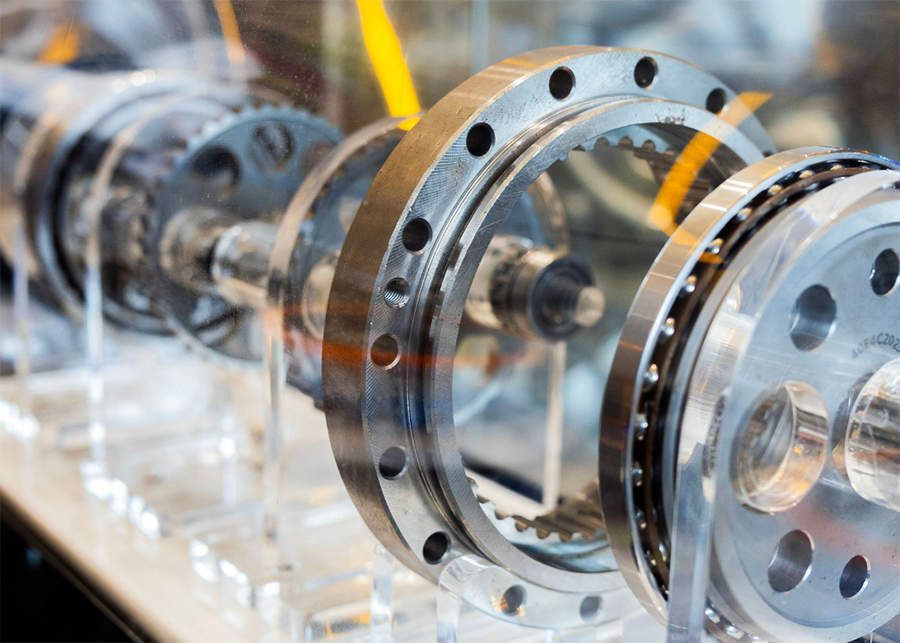
PSCI is one of the most important ETFs you’re probably not following. It holds a diversified basket of U.S. manufacturing firms. These companies typically don’t make the front page. There are no “rock star” CEOs like Elon Musk.
These firms operate with little fanfare, providing critical equipment and services the U.S. economy cannot function without. Our factories, vehicles, homes, and cities cannot function without their specialized pumps, motors, filters, fans, valves, gaskets, wiring, bearings, and switches. And their businesses are doing well.
In late 2025 and early 2026, we frequently highlighted how many critical, yet unrecognized U.S. manufacturers were reporting excellent business results and enjoying rising stock prices. At the time, PSCI was regularly registering new all-time highs.
However, PSCI suffered an Epic Fury-induced selloff alongside the broader market. Shares dropped 14% in six weeks. But as you can see in the one-year chart below, PSCI has rallied back to its highs and resumed its uptrend. This morning, the fund jumped 3% to trade within pennies of its all-time high.
Yet another “real world” indicator says the economy is doing well. Conduct your financial affairs accordingly!
Market Notes
-
U.S. steelmaking giant Nucor (NUE) reached a new all-time high today. This is a bullish economic signal.
-
Shopping mall giants Simon Property Group (SPG) and Macerich (MAC) reached new all-time highs today. These are more bullish economic signals.
-
Hotel & hospitality REITs Ryman Hospitality Properties (RHP), DiamondRock Hospitality (DRH), Park Hotels & Resorts (PK), RLJ Lodging Trust (RLJ), Pebblebrook Hotel Trust (PEB), and Apple Hospitality REIT (APLE) reached new all-time highs today. Yet more bullish economic signals.
-
Clothing giant Ralph Lauren (RL) – which sells to a broad swath of American consumers – reached a new all-time high today. You guessed it. Another bullish economic signal.
-
The supersonic tsunami that is AI continues to crash into the software sector. Software giants Salesforce (CRM), Adobe Systems (ADBE), Intuit (INTU), and Procore Technologies (PCOR) reached new one-year lows today.
Top Themes to Buy Now
🧬 An ignored market theme with huge upside quietly hits new highs
💊 These under-the-radar AI stocks are soaring… and have room to run higher
🤖 The robotics megatrend is powering key players to new highs. Are you positioned to benefit?
Regards,


Brian Hunt
Editor, Money & Megatrends
An urgent message from our colleagues:
Starting June 16, This AI Lab Could Take Off Dramatically

Time magazine recently named this lab “the most disruptive company in the world.” It’s not SpaceX or OpenAI. In fact, its annualized revenues have already surpassed both of these firms. And this 60-year Wall Street legend believes it’s gearing up for a watershed product launch that could send its sales soaring even higher starting June 16.