A new fund on Wall Street is trading some 1,900% higher than the assets it holds…
The Fundrise Innovation Fund (VCX) hit the New York Stock Exchange last week.
Its underlying holdings are worth about $19 a share. But as I write, VCX shares are currently trading for more than $380.
That’s about 20 times the fund’s last reported net asset value (“NAV”) per share. In other words, buyers are paying almost $20 for every $1 of actual assets inside the fund.
So, what exactly is VCX? And why are retail investors tripping over each other to buy it at prices that should make them cringe instead?
VCX Is a Venture-Capital Fund Available to Everyday Investors
Fundrise launched the Innovation Fund in July 2022. The Washington, D.C.-based company had spent a decade building a reputation in private real estate investing. But CEO Ben Miller wanted to push into venture capital – buying stakes in private technology companies before they went public.
The timing was exceptional. Private tech valuations had slowed down after the 2020 to 2021 frenzy, and Fundrise was able to buy stakes in some of the most sought-after private companies in the world.
Today, VCX owns shares in artificial-intelligence (“AI”) giants Anthropic and OpenAI, AI platform Databricks, autonomous weapon-system maker Anduril Industries, Elon Musk’s rocket and AI company SpaceX, and more…
Clearly, Fundrise management has done a great job of picking companies. It has performed well, returning about 85% from 2022 up to its public listing. Fundrise charges an annual management fee of just 1.85%, which is reasonable compared with traditional venture-capital funds that charge 2% plus 20% of profits.
So why does the VCX fund spell so much danger for unwary investors?
You Could Lose 90% or More Buying VCX Even if Its Holdings Succeed
The problem is that VCX is a closed-end fund. Unlike mutual funds and exchange-traded funds, there’s no creation-and-redemption mechanism to keep the share price tethered near its NAV.
Essentially, that means VCX has a certain amount of capital to invest and a fixed share count. That’s it.
This means that things can get crazy. And they could get crazier still.
Fundrise’s Innovation Fund went public via a direct listing. And the vast majority of its existing shareholders are under a lockup agreement for the next six months. That means the float, or number of shares for investors to actively buy and sell, is exceptionally low.
Put limited supply together with enormous retail demand for AI exposure, and you get a price chart that looks less like an investment fund and more like a meme stock.
But that doesn’t mean the good times will last. Bloomberg noted that two comparable funds are currently trading far below their peaks…
Earlier this month, Robinhood Markets Inc. raised $658.4 million for a closed-end fund that has Databricks and Ramp shares, below its $1 billion target. It has mostly traded below its debut price of $25.
Destiny Tech100 Inc., a venture-focused closed-end fund whose largest holding is in SpaceX – accounting for 16% of its portfolio – sparked a frenzy when it debuted in 2024. Shares closed at $26.52 on Tuesday, down nearly three quarters from their peak.
If you’re a trader and you buy VCX at upward of $380 today, perhaps you’ll be able to flip your stock at higher prices to a greater fool.
But if you’re an investor buying VCX today for the long haul, you’re paying a premium that will be impossible to maintain for long. You can expect to lose money… as much as 90% or more if it trades down to its NAV.
The six-month lockup means a wave of new shares could hit the market in September 2026. When that happens, supply increases, and the premium could compress fast.
In addition, if Anthropic, OpenAI, or SpaceX go public this year – and all three are expected to – investors will be able to buy those companies directly. The scarcity value of owning them through VCX will evaporate. Why pay a massive markup for indirect access when you can buy the real thing?
This dynamic explains why most closed-end funds that hold publicly traded stocks trade at a discount to NAV, not a premium.
None of that means VCX is a bad fund. It has an outstanding underlying portfolio. But it’s terribly overvalued right now.
Don’t Buy VCX Right Now
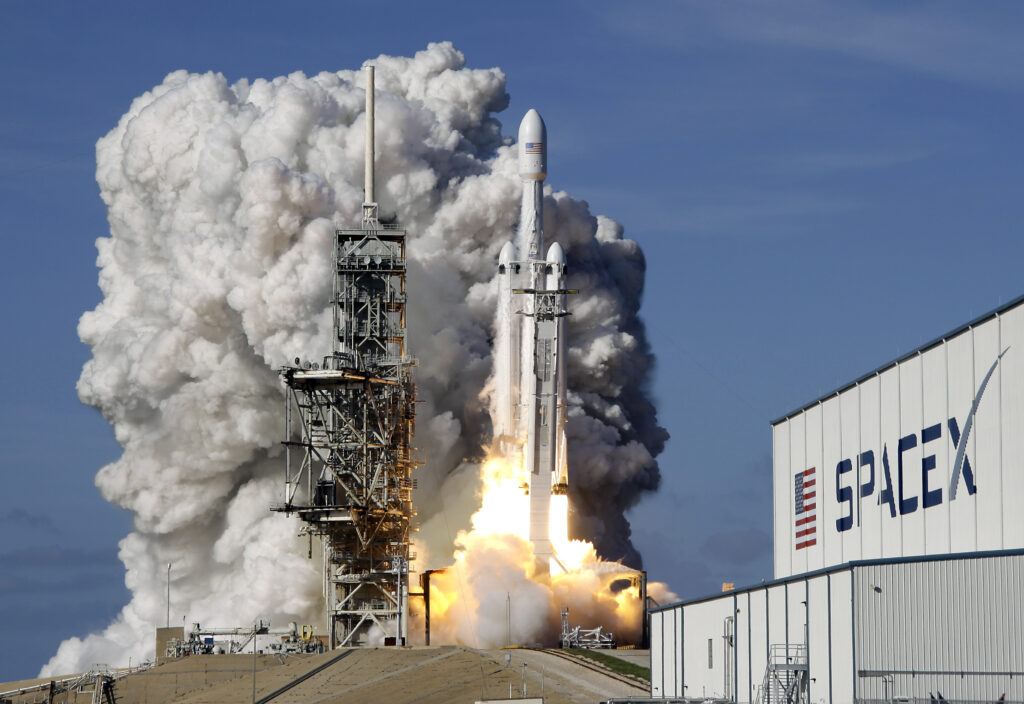
Of VCX’s top holdings, the one generating the most investor excitement right now is SpaceX.
Elon Musk’s rocket company is reportedly preparing for what could be the largest American IPO in history.
The Financial Times reported in January that SpaceX was eyeing a June 2026 debut. The company has tapped Bank of America, Goldman Sachs, JPMorgan Chase, and Morgan Stanley to lead the deal at a target valuation of $1.5 trillion or higher.
SpaceX’s numbers are staggering. Its satellite Internet division Starlink generated $10 billion in 2025 – or roughly two-thirds of SpaceX’s $15 billion total revenue. Some analysts project Starlink revenue could reach $18.7 billion in 2026.
The Starlink network now covers more than 150 countries with more than 10 million subscribers. SpaceX launched 165 orbital missions in 2025 alone, accounting for roughly 85% of all U.S. orbital launches that year, according to Space.com.
And in February, SpaceX completed a $1.25 trillion merger with xAI, Musk’s AI startup behind the Grok chatbot. And as we’ve discussed, xAI built one of the most powerful supercomputers on Earth, in a fraction of the time anyone thought possible.
The combined company now spans rockets, satellite internet, AI, and the social media platform X. It’s even building an AI system that may soon replace millions of white-collar jobs.
As we noted last week:
The companies will remain “operationally separate” for regulatory reasons, with xAI functioning as a subsidiary. But the deal stitches together two very different businesses under one roof: SpaceX’s rocket fleet, Starlink satellite network, and government contracts on one side… and xAI’s Grok chatbot, AI research labs, and data centers on the other.
Musk justified the merger with a blunt argument… Earth isn’t enough for AI’s appetite for electricity. He told employees that space-based computing, powered by solar energy, could eventually provide 100 gigawatts of AI compute capacity per year.
SpaceX makes up about 5% of VCX’s portfolio.
So if you buy VCX for $380, you’re getting about $0.95 worth of SpaceX. That’s a big mistake.
As I wrote earlier this month, there’s a better way for everyday investors to claim a stake in SpaceX for as little as a few hundred dollars, thanks to financial vehicles that didn’t exist even five years ago.
VCX is a fascinating fund… It takes the venture-capital model and makes it far more accessible to Main Street investors. And it does so with a reasonable fee structure.
But price matters. And right now, the current prices will ultimately end in disaster.
My suggestion: Keep VCX on your watch list. Check back in after the September lockup expires. But ‘steer clear of the fund today.
What to Buy Instead for Pre-IPO SpaceX Shares
For SpaceX specifically, the smarter play right now is to look at the routes I outlined earlier this month.
As I mentioned, Alphabet (GOOGL) owns about a 7.5% stake in SpaceX. That’s worth about $130 billion today, but it’s less than 4% of Alphabet’s market cap. So even if SpaceX goes bonkers, your upside is relatively limited… but you will be diversified and won’t overpay.
In addition, Boost Mobile operator EchoStar (SATS) will eventually own an $11 billion SpaceX stake after it finalizes its wireless spectrum sale to the company. But it doesn’t have those shares yet, as the CEO noted on its latest earnings call.
That’s one reason why Jeff Brown, my colleague at Brownstone Research, has a different special investment vehicle (not VCX) that he’s personally vetted and explained in an exclusive interview here.
Jeff spent more than 25 years as a high-technology executive. Today, he’s an active angel investor who has backed hundreds of private deals over the years, with four- and even five-figure percentage returns. He also shares many of his findings with the public through his Brownstone Research firm.
The opportunity and potential upside in some of these private technology companies is massive. But what you pay still determines what returns you’ll ultimately get.
So if you’re interested in the easiest way to get access to SpaceX today, I’d encourage you to start reading Jeff Brown’s research service, called The Near Future Report.
Each issue highlights an investment idea along with the tech trend driving it. And Jeff is currently offering his SpaceX report for free with your subscription… including the specific vehicles he recommends, with step-by-step instructions for getting in.
And of course, Jeff offers a guaranteed refund if his Near Future Report isn’t what you expected. Learn how to claim your SpaceX stake and go directly to an order page without watching a long video by clicking here.