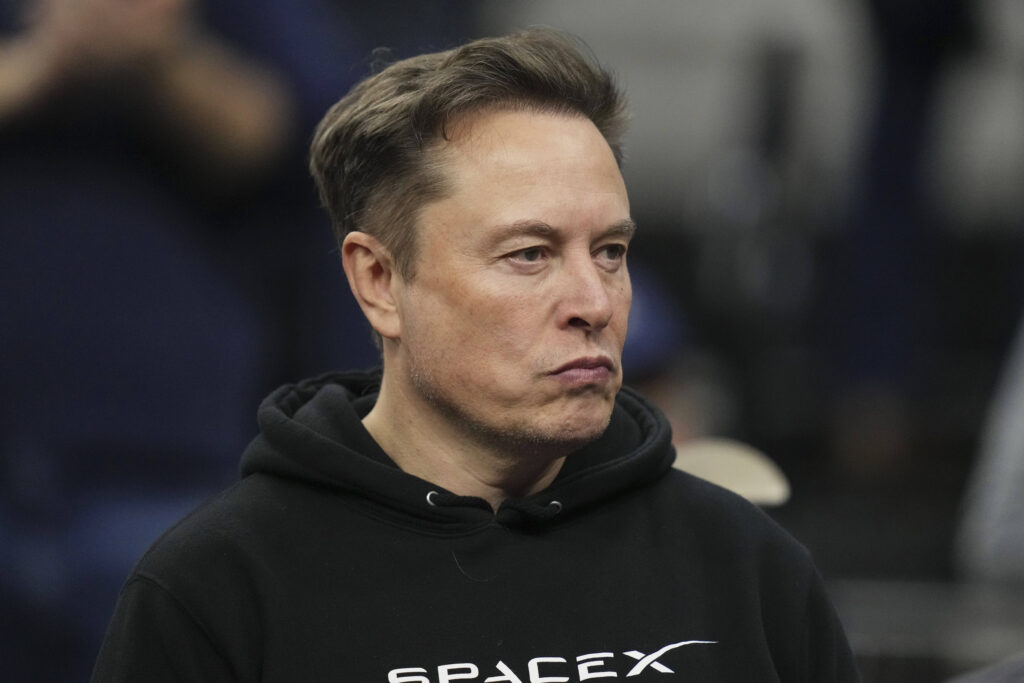
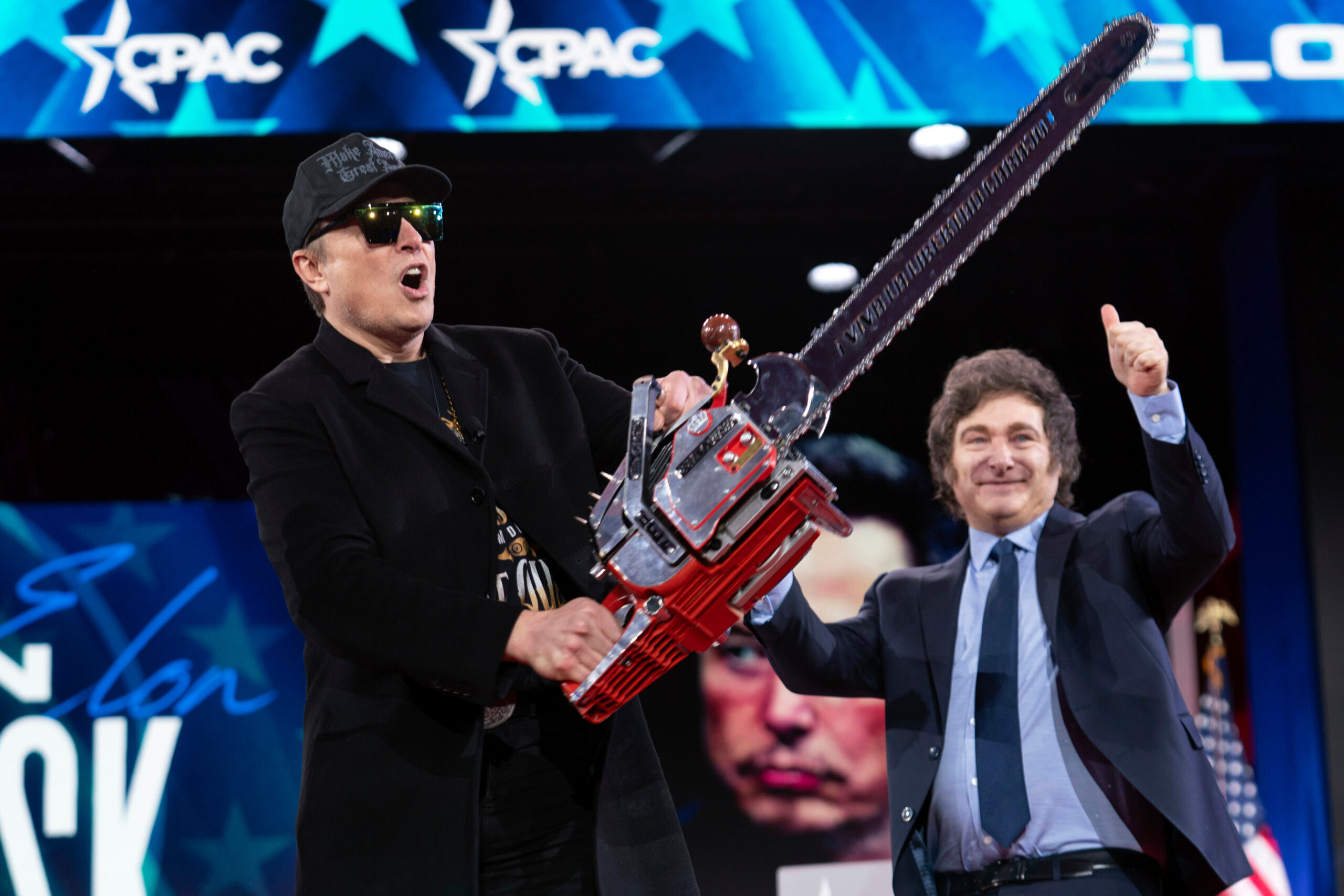
Image Credit: Associated Press
Key Points
- SpaceX’s IPO is generating significant investor interest, but Denmark’s AkademikerPension fund has said it will not invest because of concerns about the company’s corporate governance.
- Elon Musk is expected to serve as chief executive officer, chief technical officer, and chairman, while his super-voting shares give him effective control over the company.
- AkademikerPension also cited SpaceX’s valuation as a concern, arguing that the stock appears significantly overvalued.
SpaceX (SPCX) may be the most hotly anticipated initial public offering (“IPO”) in 2026, but that doesn’t mean all investors are planning to buy it. At least one – Denmark’s AkademikerPension – has blacklisted Elon Musk’s firm, citing its “catastrophic governance structure,” according to Bloomberg. Other big American investment funds are not too keen on Musk’s governance structure either.
The $25 billion Danish pension fund also called the stock “grossly overvalued,” but said that even if it were valued acceptably, the fund would still blacklist it due to governance issues.
The governance issues are not minor. Musk serves simultaneously as SpaceX’s chief executive officer and chief technology officer, while also overseeing himself as chairman of the board. The board’s function is to oversee management, so the dual roles create a conflict of interest.
But it’s much more than that, given Musk’s voting rights in SpaceX. SpaceX has a dual share class structure, with Musk owning Class B super-voting shares, that give him about 85% of the voting power of the entire company. This setup means that Musk can “elect all the members of [the] board,” according to the company’s IPO prospectus.
But perhaps more strikingly, this setup means that only Elon Musk can fire Elon Musk as CEO.
Because of this governance structure, public shareholders, such as this Danish pension fund, pension funds across America, and other investors, have almost no say in how SpaceX is run. This kind of governance means that SpaceX is structured for epic mismanagement.
But getting shareholders off Musk’s back is the key reason why SpaceX is likely to acquire Tesla (TSLA), where Musk’s performance is not insulated by any super-voting stock.
The Danish fund said that several U.S. pension funds are also concerned about SpaceX’s governance and its massive overvaluation. Marcie Frost, CEO of California Public Employees’ Retirement System – the largest U.S. public pension fund – joined New York City Comptroller Mark Levine and the State of New York Comptroller Thomas DiNapoli to issue a letter in mid-May to Musk about the “extreme governance structure” at the space company.
Here’s why the upcoming IPO is massively overvalued and why many American investors will be forced to own it anyway.
SpaceX’s Valuation: How Expensive Is the Stock?
SpaceX is set to go public this month, in what’s expected to be the largest IPO of all time. Musk is targeting a $1.75 trillion valuation for the company, though he’s also teased a $2 trillion figure.
But at any IPO price in that range, the stock looks unfathomably expensive by any reasonable valuation ratios – price to earnings, price-to-book value, price to sales, for example.
- The price-to-earnings ratio is negative because SpaceX reported a $2.6 billion loss in 2025.
- At an IPO price of $1.75 trillion, investors would be paying 50 times the company’s book value, excluding the cash raised from the offering, which will be spent anyway soon.
- On a price-to-sales basis, the stock, at a $1.75 trillion valuation, would trade at 91 times its trailing four-quarter sales of $19.3 billion.
Despite its reservations about SpaceX, AkademikerPension would otherwise like to invest in the stock. But it can’t justify paying this much “from an investment return perspective,” since it figures SpaceX’s valuation should not exceed $1 trillion, leaving it no upside from the IPO price. The fund says the stock is propelled more by Musk’s “narratives than by economic realities.”
“Our decision not to invest is therefore not a reflection of the quality of its technology or engineering expertise,” the fund stated. But that doesn’t make its conclusion any less damning.
Through a series of financial maneuvers and buybacks, Musk has deftly pushed SpaceX’s valuation to the stratosphere, especially over the past year or so.
- July 2024: $210 billion
- December 2024: $350 billion
- July 2025: $400 billion
- December 2025: Approximately $800 billion
- February 2026: $1.25 trillion
Musk has also talked up the stock for many months, highlighting his goal of (first) a $1.5 trillion valuation for the company in an upcoming IPO, and (later) a $1.75 trillion valuation and even a $2 trillion price tag.
But another change just weeks ago may make the stock especially volatile in its first months of public life, possibly pushing it even higher, despite its outrageous valuation.
American Investors May Be Forced to Own SpaceX
Recent changes to how Nasdaq structures its stock indexes mean that millions of investors may be forced to own SpaceX stock at these very high prices. The changes are highly favorable to a company like SpaceX that is selling stock at nosebleed prices, creating indiscriminate buyers.
In late March, Nasdaq made two large adjustments to how stocks are included in the Nasdaq 100 Index, which includes the 100 largest non-financial stocks on that exchange:
- Nasdaq cut the waiting period for inclusion from at least three months to just 15 trading days for newly listed stocks whose market capitalization sits among the top 40 of the Nasdaq 100 Index.
- Stocks will not need to have at least 10% of their shares trading on the exchange to be eligible for index inclusion.
The rules went into effect May 1, and they seem tailor-made for SpaceX, which is set to IPO in a few weeks. It also plans to sell less than 5% of its stock in the IPO and will rank among the largest stocks on the exchange. The rules will likely also help fast-track potential IPOs such as OpenAI and Anthropic into the index when those companies go public.
Standard & Poor’s is also considering updating its inclusion criteria to fast-track SpaceX into its indexes, reducing the seasoning period from 12 months to just six months. That may have a limited effect on SpaceX but could affect other big upcoming IPOs.
Normally, these “seasoning” rules let the market find a fair trading price for the stock before it joins an index. But the accelerated timeline means that everyone knows the stock will quickly enter the index. In the case of SpaceX, the supply of stock is expected to be less than 5% of the total shares outstanding, making the available share count very tight.
The effect of Nasdaq’s rule changes will be that every fund tracking the Nasdaq 100 Index (and those that are closet indexers) will be “stuffed” with SpaceX stock at whatever price they can get in the weeks after its index inclusion. It could create a stew of volatility for investors.
The changes may mean SpaceX stock could soar in the weeks after the IPO (or not), but it creates a serious disruption all the same. Millions of investors, many of them saving for retirement, may simply have no choice but to own an overpriced stock.
Investors looking to profit from SpaceX’s IPO may be better served by turning to smaller space stocks that could ride the surging interest in space exploration instead.
Regards,
James Royal, Ph.D.
Editor’s Note: Elon Musk has spent 27 years waiting for this moment. Now, it’s rolling out across America… and has the potential to be 15X-bigget than Space X. Luke Lango, who called Palantir, AMD, and Nvidia before they soared, says Musk’s latest rollout is the biggest wealth-building opportunity of his career. He’s giving away one free stock pick in this presentation.