Capital investment from leading big tech companies such as Amazon (AMZN), Microsoft (MSFT), and Alphabet (GOOG) (GOOGL) is set to soar 71% this year as they rush to build out their artificial-intelligence (“AI”) capabilities in advance of demand.
Capital expenditures (“capex”) are projected to rise from about $380 billion in 2025 to an estimated $650 billion this year, according to Bloomberg.
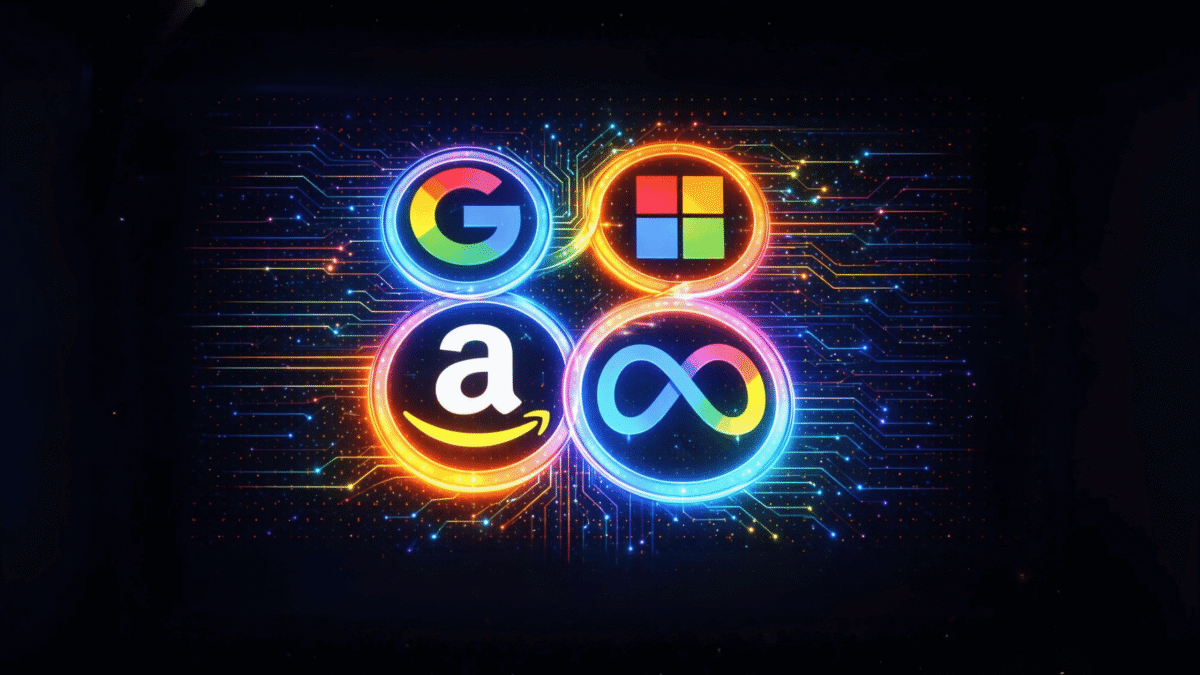
This figure includes capital spending from just four hyperscalers: Amazon, Microsoft, Alphabet, and Meta Platforms (META). Hyperscalers are companies that build massive data centers for cloud computing and AI. They’re the largest of the large.
This figure doesn’t include other AI-related capital spending from some of the world’s largest companies, such as Apple (AAPL), or chipmakers like Nvidia (NVDA) and Broadcom (AVGO). Spending from these businesses and many smaller players will add hundreds of billions more still.
Hyperscalers have announced a massive expected capex for 2026 in recent weeks:
- Amazon: An estimated $200 billion
- Meta Platforms: Up to $135 billion
- Alphabet: As much as $185 billion
Microsoft may announce its spending for the second half as it approaches its year-end in June.
These four hyperscalers are increasingly locked in an AI arms race… a race that perhaps only one or two can ultimately win.
While some investors cheered the rising capex – after all, it’s a signal of strong user demand – the market jeered these hyperscaler stocks when they announced their spending plans in early 2026.
Among the AI bulls, however, some are keeping a careful eye on whether these massive investments are actually paying off. Here’s one key thing investors are watching.
Investors Focused on Returns From AI Spending
At the core of investors’ concerns is whether the hyperscalers’ investments will prove to be worthwhile. It’s not just this year’s $600 billion-plus in capex. It’s next year’s, and the year after that’s, and so on…
The economics of the AI build-out have many analysts sharpening their pencils. That’s because a sizable portion of hyperscalers’ investments become useless surprisingly fast.
You can divide data-center investments into two big buckets:
- Short-lived assets: Assets such as graphics processing units (“GPUs”) and central processing units (“CPUs”)
- Long-lived assets: Assets such as buildings and other physical infrastructure that can last 15 years or longer
The processing-heavy nature of AI data centers means that GPUs can be functionally depleted after just two and a half to three years on average. These workhorse GPUs are running constantly until they become ineffective, and then they must be replaced.
Now, there’s nothing wrong with having short-lived assets. The concern is that these short-lived assets comprise such a huge portion of a company’s total investment in an AI data center.
For example, in the case of Microsoft’s data centers, about two-thirds of the cost goes to short-lived assets, with the remainder to the building and other similar infrastructure.
Think about what this means…
Every three years or so, Microsoft will need to replace about two-thirds of its initial capex for each data center just to keep it operational. Again, there’s no significant refitting with the buildings. All that incremental spending is merely maintenance capex to keep the GPUs functional.
So, say a Microsoft AI data center costs $4.5 billion to put into operation. On average, Microsoft has to invest an incremental $3 billion every three years just to keep the wheels turning. That’s about $1 billion per year per location. Now multiply that by the full network of AI data centers…
Over time, a collection of dozens of data centers could cost tens of billions of dollars annually… not for growth but just for maintenance.
And suddenly, what were once capex-light software and services businesses become asset- and investment-heavy businesses.
So, investors are carefully analyzing whether it can make economic sense for hyperscalers such as Microsoft and Meta Platforms to maintain this level of expense.
AI Capex Is Eating Big Tech’s Cash Flow
All this investment spending comes at another cost, too – specifically, cash flow that can be used on investors for things such as a growing stream of dividends and stock repurchases.
While we often think that big tech has limitless resources, the money they’re ponying up is significant even for these trillion-dollar juggernauts, both in absolute and relative terms.
Hyperscalers are digging deep to fund this build-out, and it’s cutting severely into their cash flow.
Key players – Microsoft, Amazon, Alphabet, Meta Platforms, and Oracle (ORCL) – are expected to spend in aggregate about 90% of their operating cash flow on capex in 2026, according to Bank of America. That’s up from 65% in 2025.
With so much operating cash flow consumed by capex, less is left to return to shareholders in the form of dividends and stock repurchases, or even to invest in other non-AI growth projects.
Big tech players have gotten around this conundrum in an age-old way – by borrowing money. Investment bank Morgan Stanley expects borrowing from hyperscalers to top $400 billion this year, more than double 2025’s $165 billion.
But investors are already becoming skeptical of this approach, even if plenty of them are still lining up to participate in debt offerings.
Oracle’s stock has been hard-hit since September, falling more than 50% from its all-time high. Investors’ concerns about its use of debt have weighed on the shares, and some investors have taken steps to insure Oracle’s debt against default.
Still, those worries haven’t stopped investors from standing in line to buy a huge new bond offering of $25 billion from the company in an early February deal.
For its part, Oracle said that it pledged to keep its investment-grade credit rating by holding its debt load at manageable levels. As part of the fundraising effort, Oracle also issued $25 billion in stock, helping to balance its higher spending between debt and equity.
Alphabet has also lined up long-term financing… ultra-long-term financing.
The company is inking up to $11 billion in various maturities in Europe, including a rare 100-year bond.
Previously, Alphabet had raised $17.5 billion in financing in November, including a 50-year bond.
AI Investments Need to Pay Off
With these firms’ ramping capex and increased borrowing, hyperscalers and their investors need these AI investments to pay off. Expectations for many AI-focused companies are running high.
But what we’ve seen so far are significant losses from key AI companies such as Anthropic and OpenAI… and not a lot of certainty about when the bleeding will slow. Perhaps Anthropic’s potential IPO in 2026 can help provide further clarity on when that might be.
What we can see for sure is that the market’s strongest companies are increasing their financial leverage. That borrowing will continue in 2026, putting further pressure on hyperscalers to be successful… and raising the costs for the companies – and the broader economy – if they’re not.
Regards,
James Royal
Editor’s Note: It’s no secret that artificial intelligence is gobbling up energy at an unprecedented rate… straining America’s already vulnerable power grid.
All the big players are racing to find a new way to meet AI’s power-hungry daily demands, pouring in billions of dollars for alternative energy sources.
Regular folks can still get in on this tech, too – but time is running out.
Because Amazon (AMZN) may have just cracked the code.
This breakthrough technology is being hailed as “the Holy Grail of Power,” and Amazon just went all-in on it…
Get the details right here, including how to prepare and what to buy.