Image Credit: Associated Press
Listen to the audio version of this article (generated by AI).
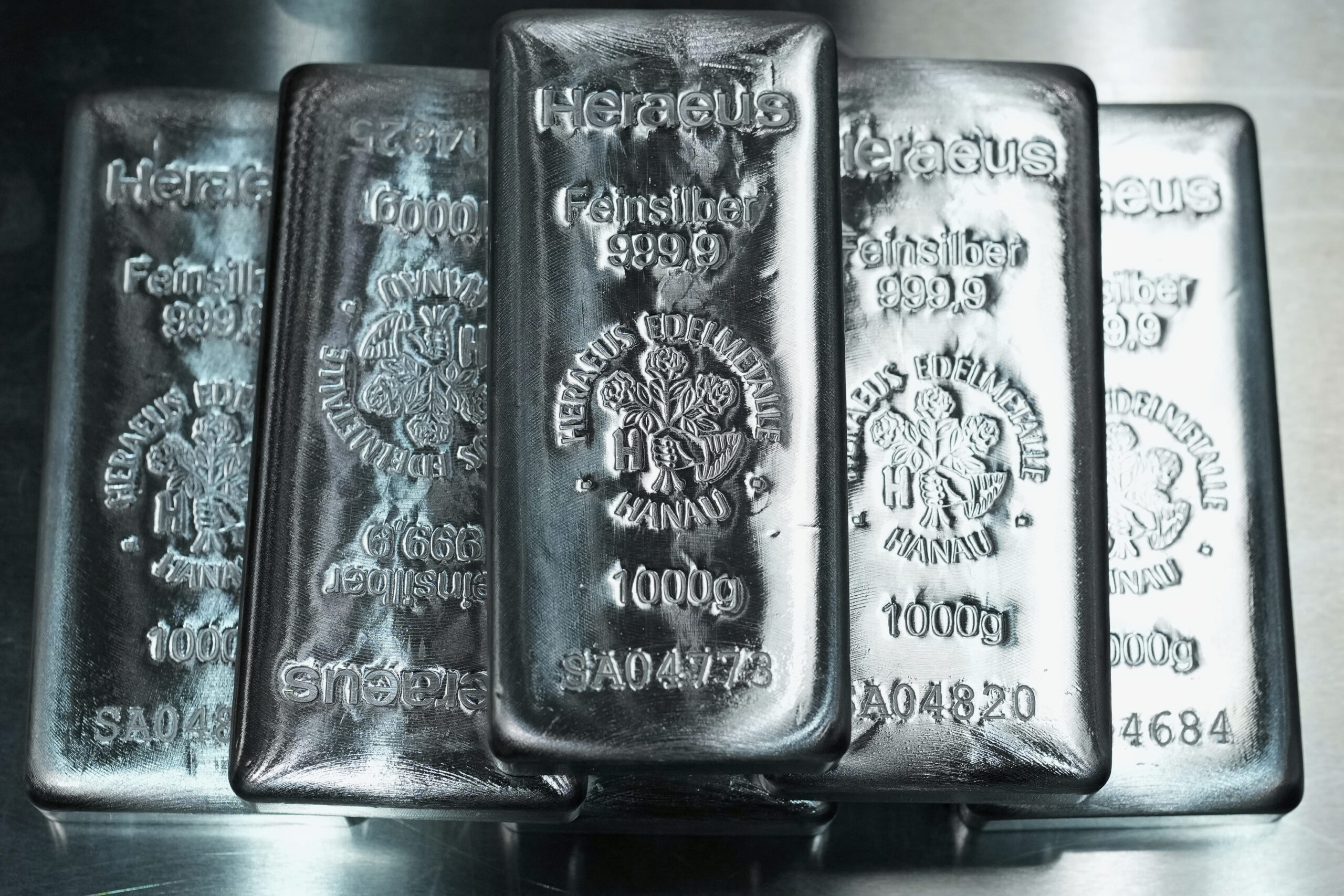
Silver investors have had a rough time in 2026 after a strong couple of years, but those who like the metal as a long-term investment may see the pullback as a buying opportunity. Investors have a variety of ways to play a rebound through the best silver exchange-traded funds (“ETFs”).
Silver ETFs may be an attractive investment for those who are becoming increasingly nervous about the economy or inflation. U.S. debt levels continue to mount, raising the prospect of further inflation and eroding the purchasing power of the dollar.
Precious metals such as silver and gold have served as defensive stores of value over long periods, and investors have turned to them during periods of anxiety. Even after silver’s recent decline, it’s still returned about 9.1% annually on average over the last 20 years, to June 2026.
Silver ETFs offer an easy and convenient way to invest in the metal or in silver miners and can even help diversify a stock-heavy portfolio. ETFs are a great pick for investors of all levels looking to quickly establish a position without the heavy analysis required to select individual silver stocks or the downsides of investing directly in physical silver.
Here are some of the top silver ETFs and the many benefits they offer investors. (Investors looking to invest in gold will find all the details on the best gold ETFs here.)
Types of Silver ETFs
Some investors like to collect silver coins or bullion, but others prefer to invest in silver through ETFs, which offer several advantages.
Those looking for the best silver ETFs have access to funds that offer a variety of exposure:
- Physical silver: These ETFs own silver bullion safeguarded in a vault. The fund’s performance closely mirrors the performance of silver prices minus the fund’s expense ratio. It’s a good alternative to owning silver bullion or coins yourself.
- Established miners: These funds own the stocks of companies that mine silver as well as other metals, such as gold. These funds tend to fluctuate more than funds backed by physical silver, so they move both up and down faster than silver prices.
- Junior miners: These funds own more speculative miners that may not even have dug a hole in the ground, let alone have a working mine.
Because of these differences, it’s important to understand exactly what your ETF invests in and the type of exposure you’re seeking. These funds respond differently to silver price fluctuations. Silver may be moving for a variety of reasons, including the Federal Reserve’s interest rate decisions.
The performance differences are clear in the table below. Physical silver funds have seen similar price changes, while the miner ETFs have moved higher. When the price of silver changes, miner ETFs can move up and down even more.
6 Top Silver ETFs: Historical Performance and Fund Details
MarketWise chose the silver ETFs below based on a few characteristics:
- U.S. funds classified as silver or materials funds
- Low cost, with expense ratios less than 0.75%
- Assets under management of at least $500 million
| Fund | 1-year performance | 5-year performance (annualized) |
| iShares Silver Trust (SLV) | 59.8% | 17.1% |
| abrdn Physical Silver Shares ETF (SIVR) | 60.1% | 17.4% |
| Global X Silver Miners ETF (SIL) | 63.7% | 14.0% |
| iShares MSCI Global Silver and Metals Miners ETF (SLVP) | 77.4% | 16.3% |
| Sprott Silver Miners & Physical Silver ETF (SLVR) | 74.4% | N/A |
| Amplify Junior Silver Miners ETF (SILJ) | 78.7% | 13.4% |
Source: Morningstar, as of June 29, 2026
1. iShares Silver Trust (SLV)
This fund is the largest publicly traded physical silver fund, and it charges a reasonable expense ratio. This fund closely tracks the price performance of silver minus the fund’s expense ratio.
- Expense ratio: 0.50%
- Assets under management: $28.0 billion
2. abrdn Physical Silver Shares ETF (SIVR)
While smaller, this physical bullion fund has a lower expense ratio than the iShares fund above, meaning more of your money stays in your pocket. Like that fund, this abrdn fund closely mirrors the performance of silver’s spot price, less its low expense ratio.
- Expense ratio: 0.30%
- Assets under management: $3.9 billion
3. Global X Silver Miners ETF (SIL)
Global X Silver Miners ETF holds silver-miner stocks and has shown stronger returns than the physical bullion funds over the last year.
Key holdings include Wheaton Precious Metals (WPM), Pan American Silver (PAAS), Coeur Mining (CDE), and Hecla Mining (HL).
- Expense ratio: 0.65%
- Assets under management: $4.3 billion
4. iShares MSCI Global Silver and Metals Miners ETF (SLVP)
This iShares fund invests in miners of silver and other metals, and has shown stronger returns than bullion-only funds over the past year.
Key positions include Hecla Mining, First Majestic Silver (AG), Aya Gold & Silver (AYA), and Agnico Eagle Mines (AEM)
- Expense ratio: 0.39%
- Assets under management: $833.8 billion
5. Sprott Silver Miners & Physical Silver ETF (SLVR)
Sprott is often associated with metals and commodities, and this fund of miners and physical silver has shown strong returns over the past year. This fund was founded in early 2025, so it does not have a long-term track record.
Key holdings include First Majestic Silver, Aya Gold & Silver, Wheaton Precious Metals, and Silvercorp Metals (SVM).
- Expense ratio: 0.65%
- Assets under management: $650.4 million
6. Amplify Junior Silver Miners ETF (SILJ)
This ETF invests in junior miners, though it also has a significant portion of its assets in some of the stocks found in the other funds above.
Key positions include Hecla Mining, First Majestic Silver, Compañía de Minas Buenaventura (BVN), and Wheaton Precious Metals.
- Expense ratio: 0.69%
- Assets under management: $3.4 billion
Pros and Cons of Buying Silver ETFs
Here are the advantages and disadvantages of investing in a silver ETF.
Advantages of Silver ETFs
- Defensive store of value and inflation hedge: Silver has long been a defensive store of value, with investors turning to it during harder economic times. Investors may also use silver as an inflation hedge to safeguard against high inflation. If investors are concerned about rising inflation, they may choose silver to protect their portfolios.
- Diversification: Precious metals such as silver can help diversify a portfolio heavy in more traditional assets like stocks and bonds, lowering its overall risk.
- Easier to invest in silver: A silver ETF makes it quite easy to invest in the precious metal, compared with buying physical silver. In addition, Investors can buy a portfolio of silver miners and play the trend without having to analyze individual mining stocks.
- Trades at fair market value: A physical silver ETF is a better buy than owning bullion directly. The fund trades at fair market value, meaning you’ll avoid the huge spread markups from metals dealers when you buy and sell bullion directly from them. You could easily lose 15% of your investment through dealer spreads.
- Miner stocks have leveraged upside to silver prices: Miners tend to move up faster than silver itself. That is, if silver rises, a miner’s profits tend to rise even faster. That benefit translates into ETFs that hold these miner stocks.
- No safeguarding needed: Physical silver ETFs let you avoid all the worry of keeping your silver secure. That’s part of what you’re paying for with the fund’s expense ratio.
Disadvantages of Silver ETFs
- Silver pricing can be highly speculative: Silver can move wildly at times. So, the fair price of silver can be difficult to determine compared with cash-flowing assets such as stocks, which can be priced more accurately. Physical silver ETFs are subject to higher tax rates: Profit from ETFs holding physical silver, which the Internal Revenue Service classifies as a collectible, are subject to tax rates up to 28% – higher than long-term capital gains rates for stock ETFs, for example. That’s no worse than what you’d owe from owning bullion directly, however.
- Silver doesn’t generate cash flow: Silver is only a metal – not a business – so it does not produce cash flow or pay dividends to investors. So, the only way to make money with physical bullion – or the ETF version of it – is if the price of silver rises over time. In contrast, ETFs invested in miners can grow their profits over time and pay dividends.
- Long-term returns are lower than stocks: Despite silver’s bull run over the past couple of years, its long-term returns are lower than those of the S&P 500 Index, which has averaged about 10% annually over time. In the twenty years to March 11, 2026, silver has averaged about 9.1% annual gains.
- Miner ETFs are not pure silver plays: In their normal course of business, miners dig up more than just silver, often including gold and other precious metals. Miners ETFs won’t provide pure exposure to silver.
How to Buy Silver ETFs
The silver ETFs above, along with others, are available at any brokerage that lets you trade on public exchanges. But the key for investors is understanding the returns and exposure you can expect from the fund, and whether it matches your financial objectives and needs.
1. Understand your financial goals
What is your expectation of investing in silver? Are you trying to earn the return of silver spot prices, or do you want better returns? Do you want portfolio diversification and relative safety or to focus on higher potential long-term returns with added risk?
2. Analyze the fund’s holdings
The silver ETFs above perform differently from one another because they own different types of silver investments. Funds with physical silver track the metal’s spot price closely, while miner ETFs fluctuate a lot more. So, miner funds may deliver higher returns, though they’re more risky, since they’ll likely sink faster than the price of silver, too. Match your financial goals to the fund’s positions.
3. Don’t forget the expense ratio
Be sure to check the expense ratio of any fund you’re investing in. If two funds are tracking the spot price of a metal – so they’re giving you literally the same exposure – there’s no reason to pay a higher fee.
Going with a miner ETF, given its potentially higher returns, may not be necessary. Just adding silver exposure helps diversify and hedge out some risk from an otherwise stock-heavy portfolio.
Are Silver ETFs Better Than Silver Coins or Bullion?
Silver ETFs are a great alternative to owning coins or bullion. If your goal is to gain exposure to the spot price of silver, you can do so with funds that hold physical silver. These funds hold bullion, so their price performance closely tracks silver’s price, less the fund’s expense ratio. But these funds offer a vital advantage over holding coins or bullion directly yourself.
If you own physical silver, a dealer will always buy or sell at a spread to the fair market value of silver. This spread is the dealer’s profit. So, you’ll pay more than silver’s spot price when you buy, and you’ll sell for less than the fair value when you close a position. You’ll never get fair market value, and you may give up as much as 15% of the total value just from the spread.
In contrast, with physical silver ETFs, you’ll always transact at fair market value since there’s far more liquidity on the exchange. These funds deliver the same price performance as silver minus the fund’s expense ratio. You can sell any time the market is open without a problem.
In addition, with ETFs, you don’t need to worry about the security of your silver holdings.
Do Silver ETFs Outperform Physical Silver?
A silver ETF’s performance depends on what it’s invested in. So, a fund’s performance may differ markedly from the performance of silver prices, both positively and negatively.
For instance, a physical silver ETF holds real bullion in a secure vault. This kind of fund will track the spot price of silver over time, minus the fund’s expense ratio.
On the other hand, a fund investing in miners will usually be more volatile than silver prices. Mining stocks will usually rise faster than the price of silver and decline faster than silver falls.
Therefore, it’s vital to understand a fund’s investments to gauge how it’s likely to perform in response to changes in silver prices.
Regards,
James Royal, PhD
Editor’s Note: Since the start of 2025, more than 700 stocks have doubled. That’s incredible. And yet, says True Wealth senior analyst Brett Eversole, we’re not done yet. His latest research shows a new pattern forming that could send today’s record-high market soaring even higher.
He calls this pattern the Melt Up Tsunami. And he’s identified at least six stocks that could benefit, including one stock he says could not just double, but triple. He names that stock in his new presentation, found here.