Image Credit: Associated Press
Listen to the audio version of this article (generated by AI).
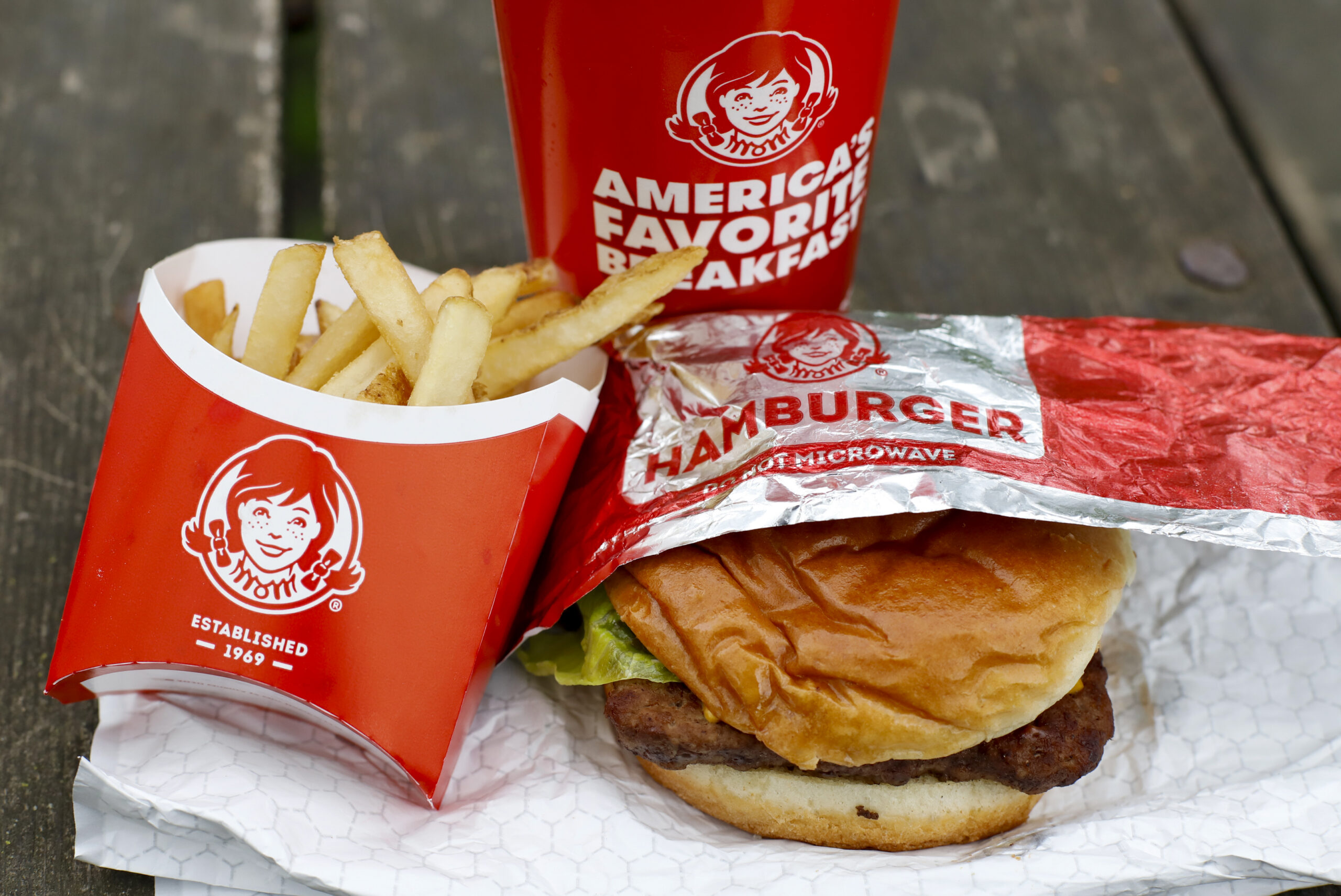
On Tuesday, shares of Wendy’s Co (WEN) ripped 30% higher to close around $8, lighting up trading forums and breathing new life into a stock that had spent most of the past year melting like an ice cube. With roughly a third of the float sold short, retail traders smelled a squeeze. And for a day, they got one.
But the meme crowd could be onto something. The burger chain recently brought back its former chief operating officer who oversaw the creation of the “4 for $4 deals” and the spiciest account on social media. Could Wendy’s stock have a second act?
There’s a good chance the answer is: yes.
And so, I’d like to outline my WEN stock price prediction — $15 per share — and highlight the one specific thing that needs to happen for the company to fundamentally justify that price.
WEN Stock: Why Bob Wright’s Return Changes Everything
On May 21, Wendy’s named Bob Wright president and CEO. If you only know Wright from the headlines, he’s “the former Potbelly guy.” If you know Wendy’s history, he’s something more interesting: he was the chief operating officer who helped run the brand’s last real turnaround from 2013 to 2019.
That era is worth remembering. In addition to a massive franchising push, Wright oversaw the Image Activation remodel program that physically modernized the fleet. He was also in the operating seat when Wendy’s launched the 4 for $4 value deal in late 2015, one of the most successful value bundles of the decade that spawned countless imitators. (Remember the McPick 2 for $2?) And let’s not forget the moment Wendy’s turned its social media accounts into a viral sensation in 2017 after entering the “frozen-beef burn” game and clapping back at competitors.
“How much does a Big Mac cost?” one tweet went. “Your dignity.”
Wright knows this brand’s playbook because he helped write it.
He then went to run Potbelly between 2020 and 2025, bringing the near-distressed sandwich chain back from the brink. Shares went from $2 at the 2020 Covid low to $17, when they were sold to private equity in 2025.
Now, it’s fair to say that Bob Wright is no Ron Shaich – the restaurant maestro who not only founded Au Bon Pain, but Panera too. Much of Wendy’s 300%-plus return between 2013 to 2019 came from converting an asset-heavy company into a slimmer franchising company. Wright also got lucky with timing at Potbelly – he joined right as the company was hitting its Covid-19 trough.
Yet, it’s hard to argue about his effectiveness at turning stodgy restaurant chains into something more appetizing. Wendy’s in the early 2010s had lost its focus after getting bought by the struggling Arby’s chain. The hostile takeover sapped resources at both firms, and the two split back up in 2011. By the time Wright left in 2019, Wendy’s had re-achieved a sense of normalcy.
Meanwhile, Potbelly overexpanded in the years leading up to the Covid-19 pandemic, owning too many underperforming stores and struggling to compete against a more competitive digital market. Wright, too, exited this firm in far better shape than he found it.
This “getting back to normal” is exactly what Wendy’s now needs. Here’s why…
Wendy’s Financial Setup: Why WEN Could Move Violently
Much of Wendy’s success during Wright’s first tour wasn’t operational magic. It was financial engineering. Under pressure from Nelson Peltz’s Trian Partners, the company refranchised aggressively, selling company stores to franchisees and becoming “asset-light”. Then it did what asset-light franchisors do: levered up the royalty stream and bought back stock.
That same playbook is now part of its problem. Wendy’s exited 2025 at 4.8x net leverage, and management expects to stay near the top of its 3.5x to 5.0x target range through 2026. The model is beautiful when comps are flat to positive. High-margin royalties and predictable cashflows are used to shrink share counts, driving stock prices higher. It bites hard when traffic turns negative and buybacks disappear.
And traffic is negative right now.
In the most recent quarter, same-store sales growth shrank 6.8% globally, led by a 7.8% deceleration in the U.S. This is only marginally better than the 10.1% decline seen in 2025. WEN stock has understandably fallen 58% since 2024.
However, that also means Wendy’s is a coiled spring if the restaurant chain can flip comparable sales from negative to positive. Not only is WEN financially leveraged — a general recipe for volatility — it also sits on a complex financial machine that relies on consistent growth to drive stock prices higher.
So, if the company’s sales inflect from negative to positive, the equity won’t move linearly. It will move violently higher.
Wright’s whole job is to flip that one variable.
My $15 WEN Stock Price Prediction Explained
In the short term, Wendy’s stock movements are anyone’s guess. Some retail-driven short squeezes are wildly successful. Think of meme legends like GameStop (GME) and AMC Entertainment (AMC). Others fall flat on their face – think GEO Group (GEO) or Wendy’s itself back in 2021. My guess about price moves tomorrow is about as accurate as a Magic 8 Ball.
I’m far more confident about my longer-term prediction. That’s because Wendy’s doesn’t need to show +20% comparable sales growth… or 10%… or even 5%. Just 2% to 3% in this market will do.
Wendy’s remains a cash-generative enterprise, even in its diminished state. It can easily sustain a $0.50-per-share annual dividend (roughly a 7% dividend yield), and all that really needs to happen is for investors to feel comfortable that the cash flows will continue into perpetuity… or at least long enough for them to exit at a reasonable price. Positive comparable sales is usually the single metric that Wall Street looks for. So, if that happens, shares should reprice into the 22X forward earnings range typical of asset-light franchisors, a $15 target price.
Wendy’s Stock Risks: Dividend, Debt, and the Bear Case
As for the bear case, I can sum it up in a single sentence:
“When was the last time you ate at a Wendy’s?”
As much as retail investors are loving WEN (the stock), Wendy’s (the restaurant) is an entirely different matter. Its relevance has faded over time, and the three-star review of my local branch is typical of how many people feel about the restaurant.
I was disappointed with my sandwich, Asiago chicken bacon ranch. The size of the chicken on the sandwich was laughable. The chili was nice and hot, the chili saved my lunch.
So, if U.S. same-store sales stay negative through 2026 and into 2027, then WEN is a sell. No amount of financial engineering can save a company that makes products no one wants.
In addition, investors will need to keep an eye on Wendy’s balance sheet. Watch out for a significant dividend cut or a capital raise at these low prices. And if Wright leaves early, then all bets are off. Wendy’s has a lot of catching up to do in a brutally competitive market, and Wright will face a challenge even getting back to modest growth. This is a speculative buy for risk-tolerant investors. Yet, if the company regains normalcy as I expect, then the asset-light machine will work once again. The company will go back to buying up shares, shrinking its equity base, raising its stock back to $15, and cooking up square patties that I’m never quite sure which side to eat first.
Editor’s Note: Every generation or so, the way money moves gets a fundamental upgrade. The people who see it coming have the chance to get extraordinarily wealthy. Everyone else watches from the sidelines. Luke Lango says that moment is here again, and Elon Musk is behind the upgrade in an amazing way. He’s revealing exactly what to buy, including one free pick, in this presentation.
Frequently Asked Questions
Why is Wendy’s stock up today?
Wendy’s stock is surging on a combination of factors: a viral r/wallstreetbets thread calling on retail traders to buy, a short squeeze setup with roughly a third of the float sold short, and a returning CEO with a proven turnaround record at this exact company. Reports that Nelson Peltz’s Trian Partners is exploring a buyout have added fuel to the move.
Is Wendy’s a good stock to buy?
It depends on your risk tolerance. The bull case rests on a returning CEO who knows the brand’s playbook, a leveraged financial structure that moves violently when same-store sales inflect positive, and a $15 price target if the company returns to modest growth. The bear case is simpler: same-store sales are still deeply negative, the balance sheet is stretched, and the dividend could be at risk. This is a speculative buy for risk-tolerant investors.
What is Wendy’s stock price target?
The $15 price target is based on shares repricing into the 22x forward earnings range typical of asset-light franchisors, contingent on same-store sales flipping from negative to positive. Wendy’s doesn’t need dramatic growth to get there — just 2% to 3% comparable sales growth would do it.
Does Wendy’s pay a dividend?
Yes. Wendy’s currently supports a $0.50-per-share annual dividend, roughly a 7% yield at current prices. However, if same-store sales remain negative through 2026 and into 2027, a dividend cut is a real risk investors should watch for.
Why has Wendy’s stock fallen?
WEN has fallen roughly 58% since 2024, driven by deteriorating same-store sales. In the most recent quarter, global same-store sales declined 6.8%, with a 7.8% drop in the U.S. The company’s leveraged, asset-light model works beautifully when comps are positive — and bites hard when traffic turns negative.
Who is Bob Wright?
Bob Wright is Wendy’s newly named president and CEO, appointed May 21. He previously served as Wendy’s chief operating officer from 2013 to 2019, overseeing the 4 for $4 value deal, the Image Activation remodel program, and the brand’s viral social media moment. He then turned around Potbelly, taking shares from $2 to $17 before the chain was sold to private equity in 2025.
Is Wendy’s a meme stock?
Right now, yes — the rally has clear meme-stock characteristics, with retail traders coordinating on r/wallstreetbets and a high short interest setting up a squeeze. But unlike pure meme plays, there’s a fundamental thesis underneath: a returning turnaround CEO, a leveraged financial structure primed to move on any sales recovery, and buyout speculation from the company’s largest shareholder.