2026 could be the “Year of the Blockbuster”… and smart investors should be wary.
The top 10 largest American initial public offerings (“IPOs”) of all time consist of stocks that debuted with a total value of at least $54.5 billion. Some of these date back to the dot-com era of 1999 to 2000. A few others appeared in the go-go year of 2021.
The New York Stock Exchange and the Nasdaq have dozens of IPOs each year. But the blockbuster debuts that make headlines usually embody the popular trends. Today, that’s in sectors like artificial intelligence (“AI”), electric vehicles (“EVs”), and even space.
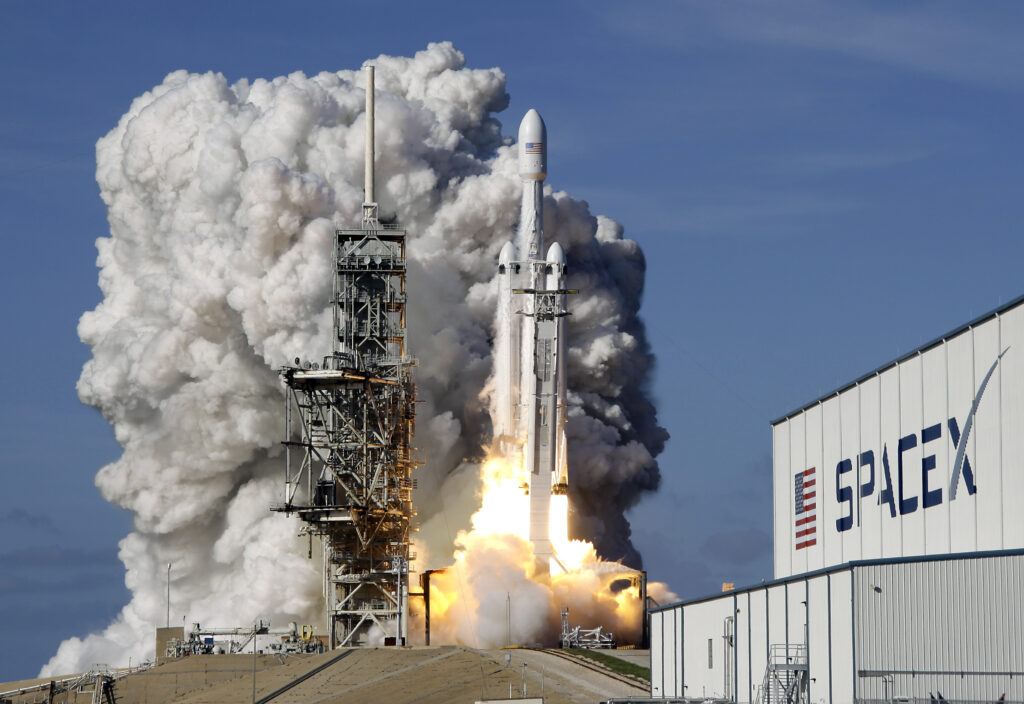
The IPO class of 2026 may reach into the hundreds of billions of dollars and push a few older names off the top 10 list. For example, the Anthropic IPO should make waves. And this time next year, we may have a new largest IPO ever at more than $1 trillion if CEO Elon Musk gets his way with the SpaceX IPO.
Here are the biggest American IPOs, as measured by their initial market capitalization of the total value of all their stock:
The Largest American IPOs of All Time by Market Cap
| Company | Initial valuation | IPO date |
| Alibaba (BABA) | $169.4 billion | Sept. 2014 |
| Meta Platforms (META) | $81.3 billion | May 2012 |
| Uber Technologies (UBER) | $75.5 billion | May 2019 |
| AT&T Wireless | $68.2 billion | April 2000 |
| Rivian Automotive (RIVN) | $66.5 billion | Nov. 2021 |
| DiDi Global (DIDIY) | $61.0 billion | June 2021 |
| United Parcel Service (UPS) | $60.2 billion | Nov. 1999 |
| Coupang (CPNG) | $60.0 billion | Mar. 2021 |
| Enel | $54.9 billion | Oct. 1999 |
| Arm Holdings (ARM) | $54.5 billion | Sept. 2023 |
Source: Reuters
This top 10 list includes companies at their initial valuation when they were marketed, rather than the amount of cash raised in the offering or the valuation at the end of their first day. Companies typically sell only a small fraction of their stock, so the amount of cash raised in the offering is much smaller than their total market cap.
Watch for several of the top 2026 IPOs to make this list. AI stocks, such as Anthropic and OpenAI, as well as SpaceX, are exploring their options for an IPO this year.
The Biggest IPOs in Detail
1. Alibaba (BABA)
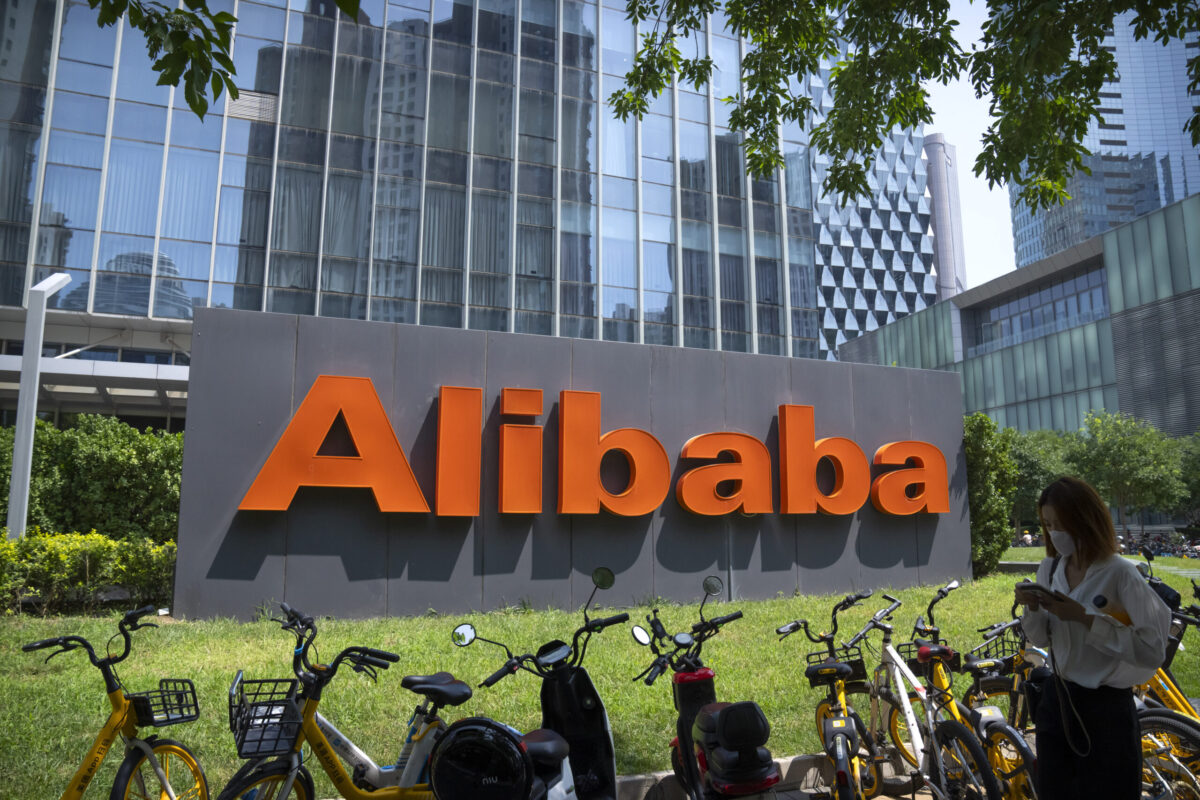
At Alibaba’s debut, investors in the Chinese e-commerce conglomerate were eager to capitalize on China’s massive economic expansion and vast consumer market.
- IPO market cap:$169.4 billion
- Current market cap:$423 billion
2. Meta Platforms (META)
Meta Platforms, then known as Facebook, was the hottest IPO of 2012, riding the wave of social media. Its first months of being public were rough, though, and the stock plummeted.
- IPO market cap: $81.3 billion
- Current market cap:$1.6 trillion
3. Uber Technologies (UBER)
Uber came to market in 2019, just after rival Lyft (LYFT). Uber was THE name in ride-hailing apps, even if it wasn’t profitable at the time.
- IPO market cap: $75.5 billion
- Current market cap: $172.2 billion
4. AT&T Wireless
The AT&T Wireless IPO is a throwback to the telecom boom of 1999 to 2000. It was the largest in U.S. history at that time. But it wasn’t public for long, as Cingular Wireless acquired it four years later.
- IPO market cap: $68.2 billion
- Current market cap:Bought for $41 billion in 2004
5. Rivian Automotive (RIVN)
EVs were a huge trend in 2020 and 2021. The market was soaring due to near-zero interest rates. Rivian just managed to get its IPO out before the bear market dominated in 2022.
- IPO market cap: $66.5 billion
- Current market cap: $20 billion
6. DiDi Global (DIDIY)
DiDi is a Chinese “Transportation as a Service” company, riding the wave of interest in that trend with a 2021 IPO. Low interest rates helped get this debut out the door.
- IPO market cap: $61 billion
- Current market cap: $24 billion
7. United Parcel Service (UPS)
UPS is known for its worldwide delivery of packages and mail. “Brown” – as its ads call the company – did plenty for investors in 1999, when it became the largest U.S. IPO ever.
- IPO market cap: $60.2 billion
- Current market cap: $92.8 billion
8. Coupang (CPNG)
This South Korean e-commerce company offered a way to play growing consumerism in Asia. It rode a surging stock market, courtesy of low interest rates, to make its debut in early 2021.
- IPO market cap:$60 billion
- Current market cap:$36.4 billion
9. Enel
Italy’s state-controlled electrical utility might not seem like an obvious candidate for one of the largest IPOs ever. But it was the world’s largest publicly traded utility in 1999’s scorching market.
- IPO market cap: $54.9 billion
- Current market cap:Delisted voluntarily in November 2007 due to low volume
10. Arm Holdings (ARM)
In the chilly IPO environment of 2023, chip designer Arm Holdings heated things up. The firm’s designs are used primarily in mobile phones, and it’s a way to capitalize on the smartphone market.
- IPO market cap: $54.5 billion
- Current market cap: $126.5 billion
How Do IPOs Perform?
Despite all the attention they get, IPOs tend to be poor performers – at least, for a while.
Some IPOs can be great short-term trades in the weeks and months immediately following a debut, as interest continues to swirl around the new issue. But research shows that overall IPOs tend to underperform for several years after their debut.
Research from Bain & Company found that around two-thirds of worldwide IPOs from 2010 to 2014 underperformed their publicly traded rivals over a five-year period. The median IPO underperformed that set of peers by 46 percentage points.
But this doesn’t mean you should never touch these IPO stocks. That’s because at some point, the new issue might become a great investment.
So, one solution for longer-term investors is to let the IPO cool off for a year or more – let the hype settle down – and then re-evaluate the company.
In other words, the key concern isn’t the company itself but rather timing and the overhyped pricing.
Why Do IPOs Underperform?
- IPOs are marketed: IPOs are marketed to drum up interest and excitement in the new issue. Investment banks that conduct IPOs want to sell shares to investors, who may be interested in selling them on to the next investor. In addition, the media helps hype the “next big thing.” A lot of players are working toward the goal of boosting an IPO’s profile.
- IPOs debut in bull markets: New issues emerge mostly when the market is already hot and investors’ “animal spirits” are high. Investment banks and new companies want to go public when the market is soaring. That’s when they get a better price and their stock is on everyone’s lips. So, companies rush to go public when the “IPO window” is open. Of course, if an overheated market falls later on, the new stock will likely fall, too.
- Offering prices may be lowballed for insiders: The legendary first-day “pop” is not evidence that an IPO has been successful. It’s evidence that the IPO is underpriced compared with the demand for it. When you see a stock really soar by 40%, 50%, even 100%, that means the company could have raised even more capital for itself with the same number of shares. That’s a loss for the firm. The real beneficiaries are the institutions and insiders that bought as part of the IPO. That high price often comes down later, but many beneficiaries have already sold by then.
- A low float leads to a high initial price: A newly public company might sell only 20% of its stock to the public, particularly an especially large company. So not everyone who wants stock in it will be able to buy it as part of the offering. That keeps the stock price higher than it might otherwise be, establishing an increased trading range early on.
So, IPOs tend to be overpriced for a variety of reasons.
You should also question why private investors want to cut the public in if their company is really such a great deal. Yes, the firm may need capital for expansion. But insiders – the people who know the company best – may simply see an IPO as their exit strategy. It could be a way to offload stock that they view as overvalued.
And with so much capital in private markets, many companies are staying private longer. That way, they can earn higher valuations before going public. This allows insiders and big investors such as venture capital firms to capture more of the value, while public investors receive less of it.
Again, the solution for many investors is to let the IPO cool off for a year or more. The hype may decline, and the stock price with it. You may end up with the same great business, but you bought it at a much lower price as Wall Street moves on to the next big thing.
Editor’s note: A former hedge-fund manager known for spotting early winners is sounding the alarm once again.
He called Netflix (NFLX) at $7.78 a share, Apple (AAPL) at $0.35 a share, and Amazon (AMZN) at a split-adjust $2.41 a share.
Now, this renowned investor just released a new list of his favorite AI stocks… and not a single Magnificent Seven name made the cut.
Instead, an AI stock you’ve likely never heard of was just flagged as “near perfect” in his new investment-scoring system.
Click here to watch his brand-new presentation, where he reveals the name, ticker symbol, and why this could be the smartest AI move of the year… especially if you’re over 50.