Image Credit: Associated Press
Key Points
- Former Treasury Secretary Henry Paulson is warning of a potential “doom loop” developing in the U.S. bond market.
- Paulson believes policymakers should prepare an emergency response plan for a possible collapse in demand for U.S. government debt.
- Investors may want to consider commodities, especially precious metals and energy, as potential protection against market instability.
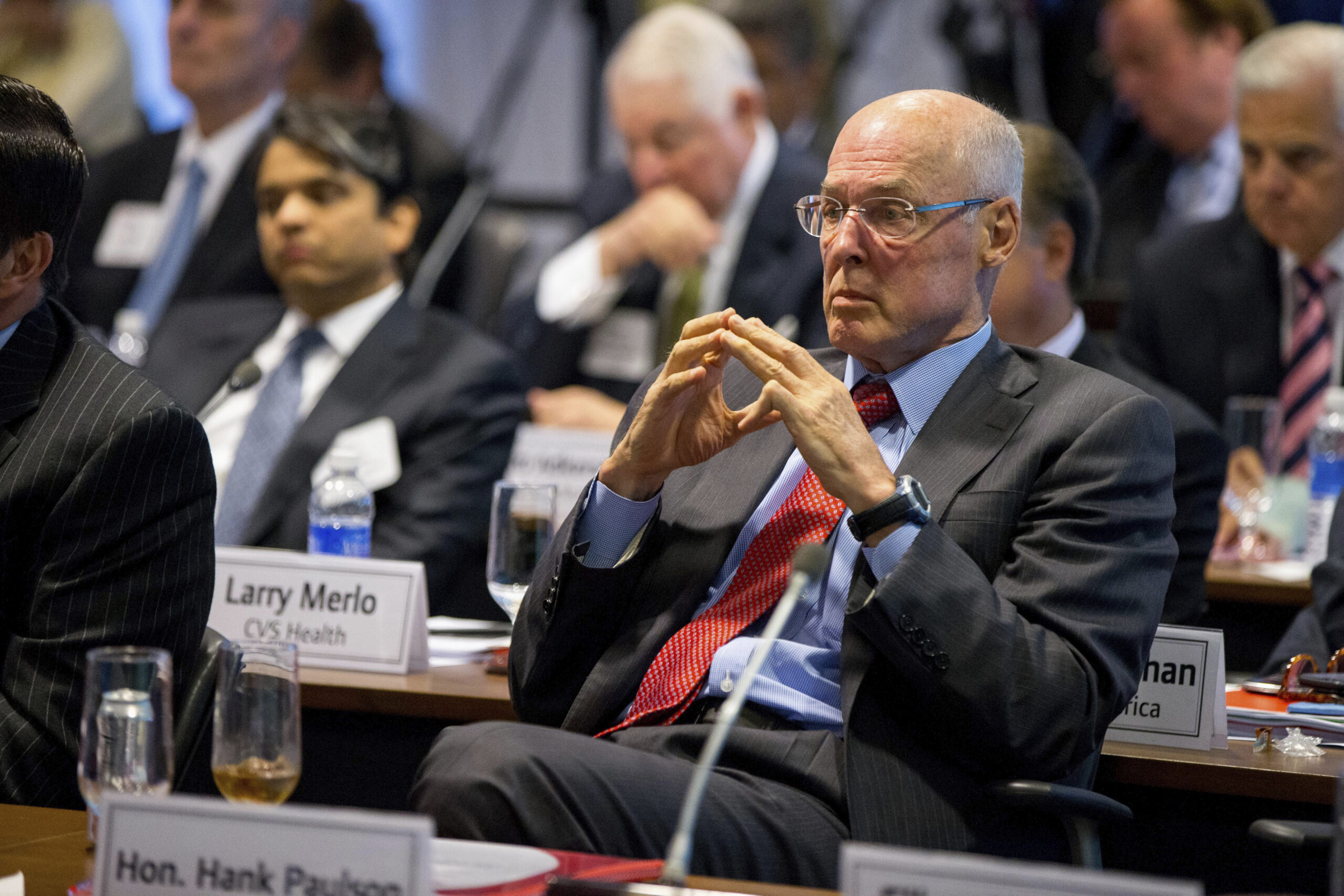
Former Treasury Secretary Henry Paulson issued a dire warning for the economy last month.
Paulson is best known for steering the U.S. through the 2008 financial crisis – a period when major banks were failing, and credit markets were freezing.
He helped arrange the government-backed sale of Bear Stearns and made the controversial call to allow Lehman Brothers to fail.
With the help of Ben Bernanke, Federal Reserve chairman at the time, Paulson proposed the Troubled Asset Relief Program (“TARP”), a $700 billion bailout authorized by Congress. The program ultimately went from buying toxic assets to directly injecting capital into major banks to keep them solvent.
In short, Paulson acted as the chief crisis manager – making fast decisions to stabilize banks, restore liquidity, and prevent a total collapse in the global financial system.
This time around, he’s not concerned about banks.
He’s worried about something much larger: the U.S. Treasury market.
Paulson’s Bond Warning
Paulson is concerned that demand for U.S. Treasurys could collapse, leaving the Federal Reserve as the only major buyer.
This could trigger a “doom loop” cycle of lower bond prices, higher yields, and rising inflation – which may add to already high debt levels.
He told Bloomberg Television on April 16:
[W]hen you hit the wall and you’re trying to issue Treasuries and the Fed is the only buyer and the prices of the Treasuries are going down and interest rates are up, that’s a dangerous thing.
Paulson warned that a breakdown in U.S. government debt markets would be far different than the 2008 financial crisis. And it would have far more “vicious” effects.
Treasurys underpin everything – from mortgage rates to corporate borrowing to equity valuations. If that foundation cracks, the shockwaves ripple everywhere.
In 2008, the government could absorb the damage in the private sector. Now, the risk sits on the government’s own balance sheet.
Today, Paulson is urging policymakers to prepare an emergency plan and to have it “on the shelf”… ready for when demand for U.S. government debt eventually falters.
America’s Out-of-Control Debt Problem
Paulson’s concern isn’t theoretical. The country is issuing unprecedented amounts of debt to finance persistent deficits. And by all measures, the numbers are now completely out of whack.
Currently, total public debt is $38.5 trillion and is rapidly moving higher.
Over the past three years, the U.S. budget deficit has averaged around 6% of GDP – a historically large shortfall rarely seen outside of wartime or recessions. The gap is expected to stay around those levels throughout the coming decade, according to the Congressional Budget Office.
Meanwhile, the U.S. debt-to-GDP ratio is now at 123%. By comparison, the long-term average debt-to-GDP ratio from 1940 until 2025 was 67%.
At the same time, the traditional buyers of that debt (foreign governments, global central banks, and institutional investors) are becoming less reliable.
For instance, China has been steadily reducing its Treasury holdings. Japan is constrained by its own yield-curve pressures. And global central banks are increasingly reallocating reserves – not into Treasurys, but into gold.
Even domestic demand is changing. Institutions are getting more cautious about holding long-duration Treasurys after suffering mark-to-market losses in recent years.
Paulson says that despite the strong, innovative, and diverse economy, the country must address the debt now. He suggested a solution could take the form of cutting expenses and entitlements or increasing taxes. Of course, such things are easier said than done, as Elon Musk found out trying to spearhead the Department of Government Efficiency Program in 2025.
Realistically, it means the government will “print” the money in one form or another.
The problem is that the Treasury market runs on trust. So, when debt levels climb to these extremes, trust begins to fray.
Investors start to worry that inflation will erode real returns and the money they are repaid will have reduced purchasing power.
What Investors Can Do to Protect Their Portfolios
When trust erodes, investors often seek higher yields to compensate for risk… or they turn to real, tangible assets with intrinsic value.
That includes commodities like precious and base metals, agricultural products, and oil and natural gas – all of which have historically served as great crisis and inflation hedges.
Take precious metals…
Precious metals like gold, silver, and platinum are reliable stores of value. They can’t be inflated away because their supply is finite. They’re often held as coins or bars and are stored in a vault as part of a physical trust.
Gold in particular has had a phenomenal year. It has quickly become the center of the global financial system.
Central banks around the world are accumulating gold at the fastest rate in decades, primarily for protection against instability and inflation rather than economic growth. They, like Paulson, see the writing on the wall… and are acting on it.
Silver shares monetary characteristics with gold, but it also has significant industrial demand tied to electrification, solar power, and advanced manufacturing.
That makes it uniquely positioned in a world where both inflation hedges and real-asset demand are rising simultaneously.
For every investor, the stocks of precious and base metal (like copper, zinc, and nickel) miners are also great ways to protect against inflation with leveraged upside. Mining companies own large amounts of metal in the ground. And even a small increase in the metal’s price can add tremendous value to the company.
There are also energy-related investments…
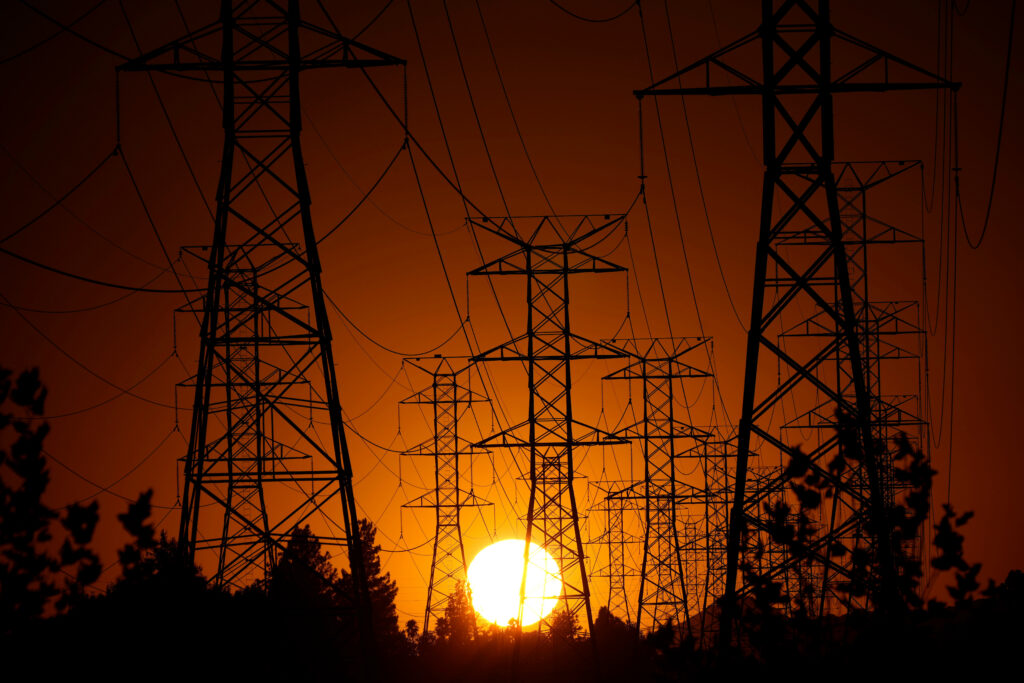
Everything depends on reliable energy sources. Nothing gets done without them.
Oil, for instance, sits at the center of the global economy. Every supply chain, every transportation network, and every industrial process depends on it.
And unlike Treasurys, oil doesn’t rely on confidence in policymakers. It relies on physical demand.
Exploration and production companies can be a good way to invest in energy.
Royalty companies can be, too – and are less risky, as they don’t drill or operate mines themselves.
Instead, they own the mineral rights to the underground resources. And when a company wants to drill on the land, the royalty company receives a percentage of the production revenue.
This creates a powerful business model: low overhead, high margins, consistent cash flow, and direct exposure to commodity prices.
In a world where investors are increasingly questioning the long-term value of financial assets, having exposure to commodities is crucial.
A Financial Reckoning Is Near
Paulson’s warning isn’t just about Treasury bonds. It’s about the repricing of trust.
The financial regime is changing. The era of unquestioned demand for Treasurys is coming to an end. And inflation is likely to spike.
And as worries about rising inflation, global economic stability, and even geopolitical stability continue to mount, you can expect higher commodity prices as investors and governments seek protection.
If Paulson is correct, that may happen faster – and more violently – than most expect.
Get prepared now and consider investing in commodities to protect your portfolio.
Good investing,
Bill McGilton
Editor’s Note: Whitney Tilson — the hedge fund manager CNBC called “The Prophet” — says America has reached its “Ripping Point.“ The old financial order is being torn apart, and he believes most investors have no idea what’s coming in the next six months. He’s named the stocks he thinks will be destroyed in the chaos — and the ones he believes will soar. Watch his free presentation while it’s still available.