Image Credit: Associated Press
Key Points
- The Federal Reserve held interest rates steady at 3.5% to 3.75% at its latest meeting as inflation remains above its 2% target.
- This marks the third consecutive meeting with no rate change, with the last rate cut in December 2025, and likely Jerome Powell’s final meeting as Fed chair before his term ends in May.
- Markets are watching closely for potential inflation pressures from rising oil prices tied to the war in Iran or signs of a broader economic slowdown.
The Federal Reserve announced that it is holding short-term interest rates steady at its April 28-29 meeting. This latest decision keeps the federal funds rate in a range of 3.5% to 3.75%.
It’s the third meeting in a row that the Fed decided to keep rates steady. The nation’s central bank last lowered rates at its December 2025 meeting, ending the year with three consecutive rate cuts.
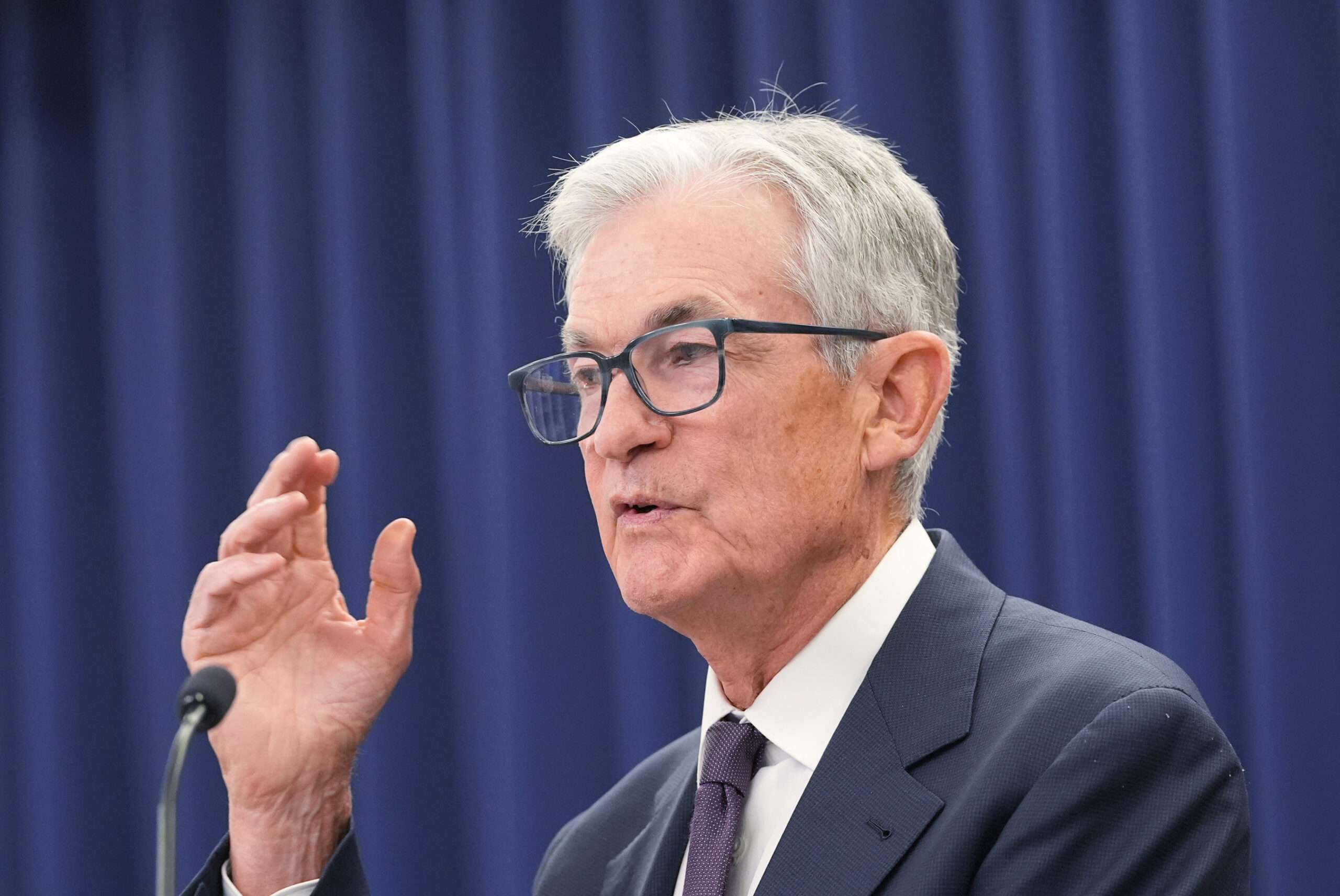
This also likely marks the last Fed meeting that Jerome Powell presides as chair over the Federal Open Market Committee. So, the market may be extra sensitive, as likely successor Kevin Warsh may soon take over as chairman.
The latest decision comes as Fed officials wrestle with how to balance the competing demands of rising unemployment and sticky inflation. Inflation hasn’t yet declined to the Fed’s long-term target of 2%, after soaring to multidecade highs during the COVID-19 pandemic.
“Inflation has ticked up and is above their 2% target, and while the most recent jobs numbers were better than expected, the labor market is still in a bit of a holding pattern,” says Sarah DerGarabedian, CFA, director of investment strategy at Modera Wealth Management.
The Fed’s dual mandate of maintaining low unemployment and low inflation has become more difficult in light of recent events, as well. President Donald Trump’s tariffs have been putting upward pressure on inflation over the past year. More recently, soaring oil prices due to the conflict with Iran have investors and consumers worried about growing inflationary pressures.
“The current rate gives them flexibility to move in either direction pending further developments in Iran, where the effect on oil prices could entice inflation higher, or in the labor market, where some tech firms are increasing the pace of layoffs,” says DerGarabedian.
So, the Fed opted to leave rates alone for now while it assesses these economic impacts.
The Fed Rate Decision: What’s Keeping Rates Steady
Tariffs and oil prices aren’t the only factors keeping the Fed on the sidelines. The current “low-hire, low-fire” economy is playing a role, too.
Unemployment has crept up from 4.2% in March 2025 to 4.3% in March 2026. While that’s a small uptick, the unemployment rate was last under 4.0% nearly two years ago, back in May 2024.
Inflation has also remained above the Fed’s long-term target. In January, it increased 2.4% year over year, but it made a huge jump in March, soaring 3.3% higher than the year before. And that’s before any sustained effects of rising oil prices had time to ripple through the economy. Inflation hasn’t been close to the Fed’s target since before the pandemic, though it had been trending lower over the past few years.
Several factors are affecting inflation. A red-hot market for artificial intelligence (“AI”) is keeping investment spending up. Meanwhile, President Trump’s recent tax cuts have boosted deficit spending – and therefore inflation. Now the effects of soaring oil prices are clouding the outlook for the Fed, too.
This data puts the Fed in a tough position. Its dual mandate is to keep inflation at an acceptable level and to keep unemployment low – two goals that are usually at odds with each other.
“I wouldn’t be surprised if we don’t see a lot of movement in rates for the remainder of the year,” says DerGarabedian. “With the geopolitical situation pressuring energy prices, I certainly wouldn’t count on cuts anytime soon.”
Even if geopolitical tensions cool and oil prices stabilize, the Fed is likely to remain on the sidelines to see how inflation percolates through the economy. If oil puts upward pressure on prices, it could flow through into labor inflation and potentially to more sustained price hikes.
On top of these issues, the Fed succession drama may be weighing on investors’ minds. Some are worried that President Trump’s Fed chair nominee, Kevin Warsh, may be too willing to lower rates to please Trump. That could be especially damaging if inflation continues to run hot.
But DerGarabedian sounds a more optimistic note on a Warsh chairmanship: “Kevin Warsh is a known quantity, with a tenure spanning the global financial crisis that shows he’s willing to support accommodative action in a crisis but is also leery of prolonged easing.” Markets may remain extra attentive to how a Warsh-led Federal Reserve determines monetary policy
How Interest Rates Affect Stocks, Bonds, and Gold Prices
Generally, lower interest rates are good for financial markets. Low rates make it easier for businesses to borrow and expand. They also encourage investors to put their money into the market, particularly in stocks and other riskier investments, such as cryptocurrency.
Bond prices move inversely to interest rates, so lower prevailing rates generally raise the price of bonds.
And as a defensive play, gold tends to do well with falling rates, too. It may do especially well when the economy hits a rough spot, making it a classic “safe haven” trade.
While the Fed has left rates alone so far in 2026, financial markets have already been looking ahead to the rest of the year.
The potential for ignited inflation from rising oil prices has pushed back when investors expect the Fed to lower rates again. As this timeline is extended, investors may become somewhat less bullish.
At the same time, analysts have been reducing their estimates for how many times the Fed may lower rates this year.
With Wall Street expecting corporate profits to continue to rise in 2026 and modestly lower interest rates on the way later in the year, the benchmark S&P 500 Index started the year strong.
But it has stumbled since then, as investors weigh the index’s high valuation and the potential for higher – even crippling – inflation due to what may prove to be a sustained conflict in Iran.
Markets will keep an eye on more extreme scenarios, such as the potential for much higher inflation due to rising oil prices, a dramatic slowdown in the AI build-out, or a broader economic decline.
How the Fed Rate Decision Should Impact Your Investing Strategy
Analyzing interest rates and unemployment may make for good conversation, but it’s not all that necessary to succeed at investing.
“While it’s important to understand the Fed’s moves within a broader economic context, an investor’s primary focus should remain on whether their portfolio is set up to help them reach their personal financial goals,” says DerGarabedian.
For buy-and-hold types, it’s probably best to stick to your long-term investing game plan. That may mean continuing to invest regularly in great individual stocks or even funds based on the S&P 500 Index and simply ignoring the noise.
But even a market decline can be welcome to forward-thinking investors. For example, for dividend investors, a decline means higher forward yields on any new money they add to their portfolio.
Either way, legendary investor Peter Lynch famously advised investors not to worry too much about the macro environment. “Far more money has been lost by investors preparing for corrections, or trying to anticipate corrections, than has been lost in corrections themselves,” said Lynch in a 1995 interview with Worth magazine.
The market offers many potentially lucrative investments, and they can be found in any environment. While investors may be fearing a downturn, a decline in stock prices can be a great time to find new winners or add to your existing positions at discounted prices.
So, the market’s volatility can offer significant advantages to nimble investors, setting up the next profitable run for those poised to act – whether in stocks, bonds, or gold.
MORE: 5 Stocks to Buy for 2026: Put These on Your Watchlist
Regards,
James Royal, Ph.D.
Editor’s Note: Elon Musk reinvented the auto industry, sparked a new era of space exploration, and built the world’s largest satellite network. But his new initiative — “Project Apex” — could become the crown jewel of his career. And, like Tesla, it could make early investors incredibly wealthy. See below for the details…