One name you’re not hearing a lot in the AI data-center arms race is Apple (AAPL). The Cupertino colossus is largely avoiding the $100-plus billion annual build-outs that hyperscalers like Microsoft (MSFT) and Amazon (AMZN) are plowing into artificial intelligence (“AI”).
Apple’s stock is also not getting hammered the way rivals are, either. In a frothy market, Apple is down just 5% from its 52-week high as of February 23, after reaching an all-time peak in December.
That is, Apple is outperforming its peers in the past few months… while spending way less cash.
Meanwhile, the other Magnificent Seven stocks have suffered more serious declines from their 52-week highs:
- Microsoft: -28%
- Amazon: -19%
- Alphabet (GOOGL): -10%
- Meta Platforms (META): -18%
- Tesla (TSLA): -16%
- Nvidia (NVDA): -8%
That’s not to say that Apple is fully avoiding AI, of course. But it’s picking its spots, and mostly steering clear of what some investors see as the dubious economics of AI data centers.
It has opted to go with a hybrid approach to developing AI: build and develop key elements in-house while outsourcing others to business partners. So, for example, it’s buying computing capacity from partners, while turning to its own chips when it builds some of its own servers.
You also see that approach in Apple’s January announcement of a strategic partnership with Alphabet’s Google. Google’s Gemini AI tech will undergird what the Cupertino company calls “Apple Intelligence,” its suite of AI tools on the iPhone and other products, and (hopefully) help bolster a new Siri.
This approach seems to have resulted in a stock that has been more resilient than hyperscaler peers such as Microsoft, Amazon, and Meta Platforms. But that hasn’t kept one of Apple’s largest shareholders – Berkshire Hathaway (BRK-B) – from continuing to sell the stock.
Apple’s Strategy: Outsource AI, Save Cash
Despite being one of the world’s most valuable companies – with a market cap of roughly $4 trillion – Apple has played the AI race a lot cooler than its hyperscaler rivals.
In 2025, Apple’s capital expenditures (“capex”) were just a small fraction of what rivals have spent on AI data centers and other investments in their businesses.
It’s the same story in 2026 when you look at estimated capex. Analysts are projecting the four hyperscalers (i.e., all but Apple) to spend $650 billion in capex this year.
| Company | 2025 capex | Estimated 2026 capex |
| Alphabet | $91.4 billion | Up to $185 billion |
| Amazon | $131.8 billion | $200 billion |
| Meta Platforms | $69.7 billion | Up to $135 billion |
| Microsoft | $64.6 billion | $145 billion |
| Apple | $12.7 billion | $14.3 billion |
While the time periods don’t overlap evenly – Microsoft’s fiscal year ends in June, Apple’s in September, and the others’ in December – you can still see the massive ramp-up in spending.
And Apple’s estimated capex in 2026? Somewhere less than $15 billion, according to analysts.
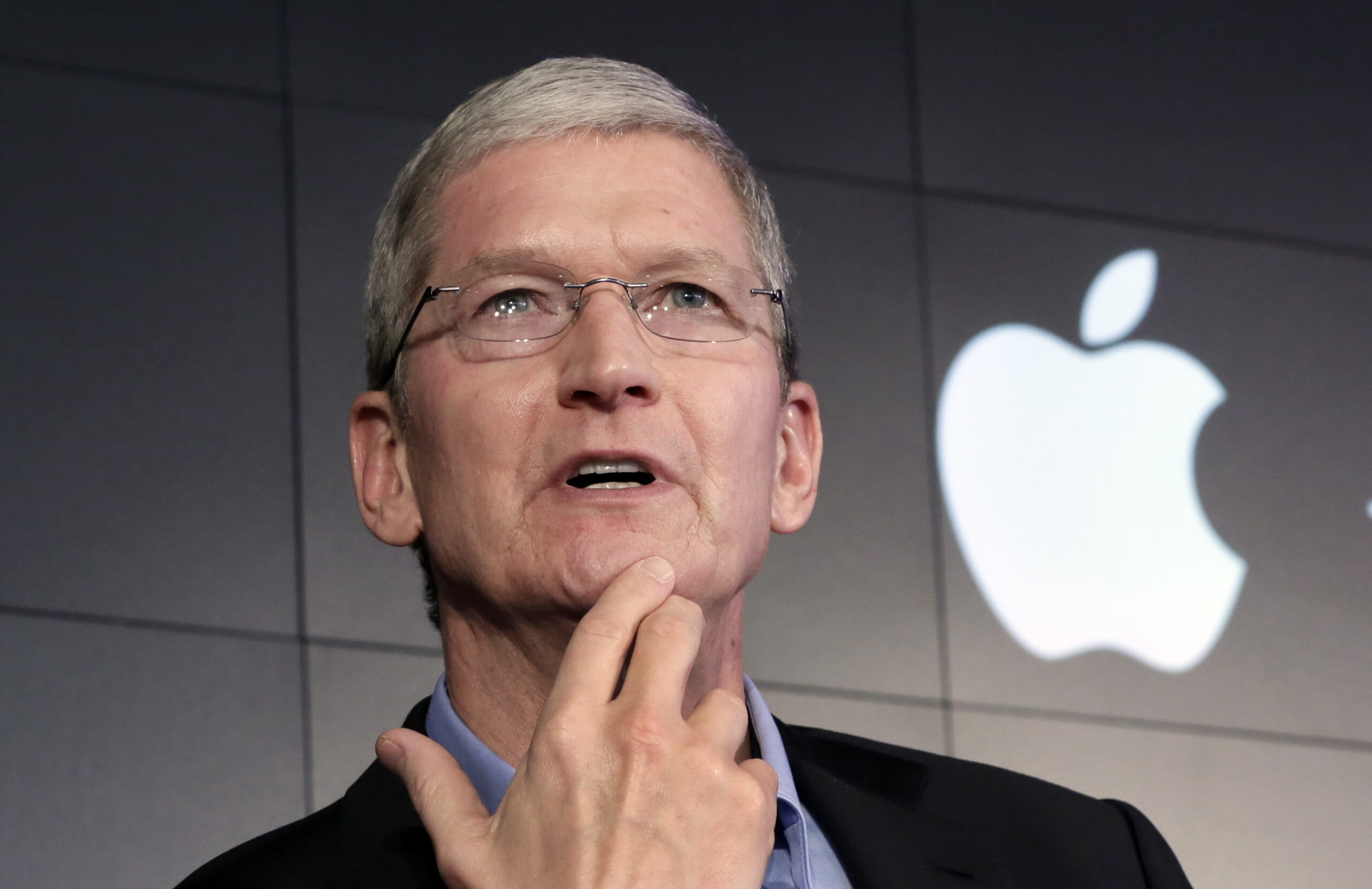
Doesn’t Apple CEO Tim Cook know there’s an AI arms race? Is he crazy, or crazy like a fox?
For now, Apple avoids the massive capital outlays to keep up with the Joneses while it becomes clearer how the AI sector shakes out:
- Will there ultimately be one or two major AI players, or will many players have their own models?
- How strong are the economics of AI? (Many investors are skeptical.)
- How will low-compute models (e.g., Chinese AI) affect the industry’s economics?
With a data center’s graphics processing units rapidly wearing out – lasting less than three years on average – AI data centers will need continual replenishment. So, a network of centers will require a sustained investment year after year to remain at full strength.
Apple sits out all of that, and pays partners like Google for their AI tech. If a better deal comes along, Apple could work out something beneficial.
In the meantime, it keeps its capex low… giving it plenty of room to return cash to shareholders in the form of dividends and stock repurchases.
For the moment, it doesn’t seem like Apple’s slow-roll on AI has hurt its performance.
The company’s sales in the quarter ending in December jumped 16% year over year to $143.8 billion. Earnings per share climbed 19%. Both were all-time records for the company.
And cash flow? A stunning $32 billion went back to investors in dividends and repurchases.
In contrast, hyperscalers are dedicating significant portions of their 2026 cash flow to capex. That means less for investors unless the companies are willing to borrow, and many are.
That’s not to say that Apple hasn’t had some operational challenges with the advent of AI.
Apple promised a significant AI upgrade with a 2024 rollout of features… that still hasn’t rolled out. Meanwhile, Android-based rivals Google and Samsung Electronics (005930.KS) continue pushing out AI tools.
And a long-awaited Siri upgrade won’t happen until sometime this year, according to Apple execs.
But all that hasn’t seemed to hurt iPhone sales much, if at all. In the most recent quarter, the flagship phone had its best quarterly sales ever, notching records in every geographic segment.
So, for now, Apple is keeping a close watch on its cash and maintaining its financial strength. As one of the largest tech players not aggressively building out a network of AI data centers, Apple may be able to later use this strength opportunistically.
Berkshire Hathaway Has Been Selling Apple
Despite Apple’s relatively strong performance, conglomerate Berkshire Hathaway continues to pare its stake in the company. Chaired by legendary investor Warren Buffett, Berkshire has been a longtime stockholder, earning tens of billions of dollars over its years of ownership.
Investors should pay attention to Buffett’s actions despite Apple’s strong competitive position.
In the fourth quarter of 2025, Berkshire trimmed 4.3% of its Apple position, leaving it with a still-hefty $61 billion stake at a price of $266. That means Apple is still Berkshire’s largest stock holding, ahead of American Express (AXP), another long-term holding, at $56 billion.
But the longer trend might concern Apple investors – and investors as a whole.
Berkshire has not purchased Apple stock since the first quarter of 2023. With Buffett at the helm, the company has sold Apple shares in seven quarters since the fourth quarter of 2023. In 2024, Berkshire slashed its stake in Apple by about two-thirds, leaving some scratching their heads.
Why has Berkshire taken so long to sell down its Apple stake? A large, well-regarded investor such as Berkshire can’t dump a bunch of stock on the market. First, the company would need to take a huge discount to sell huge chunks of stock at a time. It needs time to work down its stake.
Second, it’s important that the market as a whole gets psychologically used to Buffett slowly unloading his position. The market can then begin to disregard Buffett’s actions, and he can sell without the negative effect of headlines such as “Buffett is selling” that routinely move markets.
After all its selling over the past two years, Berkshire now owns just a 1.6% stake in the tech company, a position that it could close easily and relatively quickly.
Why Is Berkshire Hathaway Selling Apple?
Buffett has a long track record of exiting stocks while excitement is high and investors are willing to pay a hefty price for the stocks he’s selling. And it’s likely this time is not different.
Why is Berkshire selling Apple? For Buffett, investment is about valuation. Often, it’s not just the valuation of the individual business but also the market as a whole.
With Apple trading for about 31 times this year’s estimated earnings, the stock is not the bargain it was a decade or so ago when Berkshire was loading up… investing at a price-to-earnings (P/E) ratio in the low teens.
But it may not just be about Apple itself. Buffett may have spotted some significant headwinds for the economy that make him less willing to hold the stock at such a high valuation.
Will Buffett again be holding a wad of cash at Berkshire just as the market turns lower? You never know, but they don’t call him the Oracle of Omaha for nothing.
Regards,
James Royal
Editor’s Note: It’s no secret that artificial intelligence is gobbling up energy at an unprecedented rate… straining America’s already vulnerable power grid.
All the big players are racing to find a new way to meet AI’s power-hungry daily demands, pouring in billions of dollars for alternative energy sources.
Regular folks can still get in on this tech, too – but time is running out.
Because Amazon (AMZN) may have just cracked the code.
This breakthrough technology is being hailed as “the holy grail of power,” and Amazon just went all-in on it…
Get the details right here, including how to prepare and what to buy.