Image Credit: Associated Press
Listen to the audio version of this article (generated by AI).
Last year, inside a small Massachusetts Institute of Technology (“MIT”) lab, a research team took aim at one of medicine’s biggest open problems…
They wanted to figure out how to invent antibiotics from scratch.
You probably know antibiotics are used to kill dangerous bacteria.
You get sick… You take the antibiotics… and the infection clears up within a few days. The discovery of antibiotics was a major turning point in human history. Suddenly, very serious illnesses were treatable with a simple pill.
But over time, as we’ve used these drugs, the bacteria they’re fighting have actually evolved to resist them.
The drugs have stopped working on many types of bacteria. These are “drug resistant” bacteria.
If nothing changes, the World Health Organization says drug-resistant bacteria will spiral out of control… and kill 10 million people per year by 2050.
For decades, the antibiotic pipeline has been running on fumes…
Over the past 45 years, only a few dozen new antibiotics have managed to get approval from the U.S. Food and Drug Administration (“FDA”). And most of those were variants of existing antibiotics.
But there’s good news, thanks to artificial intelligence (“AI”).
Last year, this MIT team was able to use AI to find new antibiotics that can wipe out both a drug-resistant form of gonorrhea and methicillin-resistant Staphylococcus aureus (“MRSA”).
And that specific MIT project is one small corner of a much bigger story. According to technology analyst Josh Baylin, it points straight at what he calls “Sam Altman’s Next Venture“…
- Consulting firm McKinsey says this opportunity could be 500 times bigger than ChatGPT.
- AI chipmaker heavyweight Nvidia (NVDA) CEO Jensen Huang says the technology behind it will reshape our lives more than anything else in tech, ahead of general AI and quantum computing.
- And Boston Consulting Group pegs the disruption potential to the global economy at $30 trillion.
Read on as I break down Josh’s prediction… look at how the medical field is already using AI… and detail how ordinary Main Street investors can take advantage of this opportunity using a regular brokerage or retirement account.
Table of Contents
Drug Discovery Is Broken
Humans aren’t all that great at discovering drugs… And for a long time, it seemed like we were getting worse.
You see, finding a drug the traditional way is like throwing spaghetti against the wall…
A research team picks a protein that it thinks matters in a disease. Then it throws molecules at that protein… hundreds of thousands, sometimes millions of them… all in an effort to find one that can move on to safety trials – first in cells, then animals, then people.
Scientists describe the problem in stark terms…
Jonathan O’Connell, who spent 25 years researching drugs at GSK and Bristol-Myers Squibb, has called one of the field’s most common methods “basically a random search. And the idea is to throw as many molecules as you can at it and see what sticks essentially.”
In 2012, a group of researchers gave the problem a name – “Eroom’s law.”
They found that drug discovery had grown vastly more expensive and time-consuming… the opposite of Moore’s Law, which states that chips double in computing power every few years.
As the team published in the medical journal Nature Reviews Drug Discovery…
The past 60 years have seen huge advances in many of the scientific, technological and managerial factors that should tend to raise the efficiency of commercial drug research and development (R&D). Yet the number of new drugs approved per billion US dollars spent on R&D has halved roughly every 9 years since 1950, falling around 80-fold in inflation-adjusted terms.
The chart is terrifying…
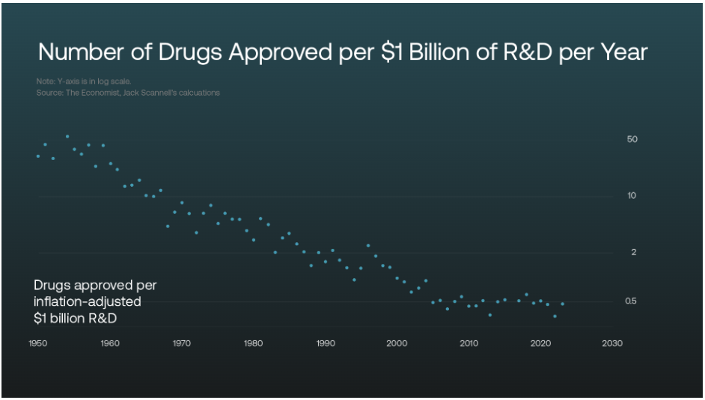
Today, one new drug takes 10 to 15 years of trials and testing… and it costs north of $2 billion.
One guess as to who pays for it…
Healthcare spending hit $5.3 trillion in 2024, about 18% of the whole U.S. economy. And federal number crunchers expect it to keep climbing…
But throwing more money at the problem won’t fix it.
Every new drug has to beat the best drug that already exists. And each safety scandal for a drug with an unforeseen side effect tightens already harsh regulations… meaning bigger, more expensive trials before a drug can be sold.
It’s no surprise that funding for biotech companies has also plummeted. As Josh put it in his recent interview:
New old-school biotech IPOs have collapsed nearly 90%.
More than 200 public biotech companies have vanished from the market in the past four years alone.
And the venture funds that finance new biotech startups are raising 92% less money than at their peak.
PitchBook now says: “VCs have almost completely abandoned biotech investing.”
And because the money has fled… we’ve entered a spiral to the bottom, much like we saw with antibiotics.
A new antibiotic might be the worst drug to attempt to find the traditional way. You spend a decade on research and a fortune on salaries and trials… Then, to make sure that the bugs don’t develop a resistance to it, doctors only prescribe it sparingly. It’s unlikely the antibiotic can pay for itself before its patent protections expire and it goes generic…
That’s why we’ve only seen a handful of legitimately new antibiotics in the past 45 years. But as we said at the beginning, AI is changing this… and the stakes are massive.
Medical AI Already Works
AI-discovered drugs are no longer a “someday” theory.
They’re undergoing trials right now, all around the world. And they’re growing rapidly…
In 2016, just three AI-designed drug programs were in clinical development. By 2023, there were 67. As of early 2026, industry trackers put the count above 173 programs.
Rentosertib is the first-ever drug discovered entirely with AI. Biotech company Insilico Medicine found it with an AI-driven discovery engine it developed… and did so incredibly quickly. As the company noted:
Compared to the typical 2.5-4 years required in traditional drug discovery, Insilico’s 22 nominated candidate drugs from 2021 to 2024 took only 12-18 months on average to progress from project initiation to nomination of preclinical candidates (PCCs), with each project requiring synthesis and testing of only about 60-200 molecules. The success rate from PCC to IND-enabling stage reached 100%.
To find a success, they only needed to test a few hundred molecules instead of a few hundred thousand… and it took just half or even a quarter of the time.
“Faster and cheaper” is exactly what we need to escape the downward spiral of doom in traditional drug discovery.
And so far, the human data looks good… Phase II results showed a strong improvement in lung function. We’ll have to wait and see Phase III results before knowing if this drug is likely to win approval from the FDA, but so far it’s an incredible showing for the first AI-discovered drug.
Medical-AI models are discovering new antivenoms… antiaging and longevity drugs… and new protein structures that could solve more common diseases too.
As my colleague Jonathan Rose noted earlier this summer, “between 15 and 20 [AI-discovered drugs] are expected to enter pivotal Phase III trials in 2026 – the cohort that will decide whether the entire decade-long AI-drug-discovery thesis was real or fashion.”
The time to act on this opportunity is now… before the rest of the world catches on.
Watch the Supply Chain
So how does an investor profit from Medical AI?
It’s still tough to know which drug is going to work… no matter whether AI or traditional drug researchers discovered them. For every 10 drug candidates that enter Phase I clinical trials, only one ends up getting FDA approval to come to market. And only about 20% of those approved drugs wind up being profitable enough to pay back the cost of research and testing.
If you’re an investor, that means you have a roughly 2% shot of picking a drug good enough to enter a trial that will make it through testing and actually make you money. If you’re looking at all drug candidates, then those odds get even slimmer.
Those are rough odds. But Josh’s answer is refreshingly simple…
You don’t need to even care about which drugs or biotech startups will win or lose. You just need to back the base technology – and the suppliers and partner companies that make it possible.
Backing the foundation of a technology can often be the most profitable way to invest.
So what does the Medical AI drug-discovery supply chain look like?
We won’t touch on the whole thing, but here are a few key considerations…
First, consider the most basic layer: computing power. Every AI model that designs a molecule or folds a protein runs on specialized AI chips.
Next, while a model can propose a molecule, scientists still have to build it and test it on living cells.
The more drug candidates that AI can identify, and the higher the success rate, the more testing researchers will be doing in a lab. That means Medical AI will require more tools and suppliers… from test kits and lab gear to the building blocks needed to make antibodies and proteins.
And of course, the manufacturing of these drugs is still complex…
As AI increases the number of potential medicines entering development, it creates downstream effects on production facilities. Increasingly, biotech companies don’t build those factories themselves. They turn to specialty contract manufacturers that already have the facilities, equipment, and expertise.
And no matter whether these drugs succeed or fail, the underlying suppliers still get paid. As Jonathan noted in his recent article:
AI and machine-learning-related biopharma deals approached $10 billion in 2024 alone. In March 2026, Eli Lilly signed a collaboration with Insilico Medicine worth up to $2.75 billion – the largest AI-era pharma deal in history. Lilly also signed a $1.75 billion pact with Isomorphic Labs. Novartis signed with Generate: Biomedicines. Roche signed with Dyno Therapeutics for up to $1.05 billion. These are not pilot programs. These are full-scale R&D commitments by the largest drug companies on earth.
When pharmaceutical companies that spend $5-6 billion annually on R&D start writing checks this size to AI platforms, they are not experimenting. They are reorganizing their entire drug-discovery infrastructure around a new paradigm.
This doesn’t mean risk magically stops existing. There aren’t many “free lunches” while investing… Though admittedly, I’ve called diversification exactly that before in my Ultimate Beginner’s Guide to Investing in Stocks.
Suppliers are often cyclical… So when biotech funding dries up, as it has been for the past several years, then their revenue often falls too.
In 2026, biotech is starting to turn the corner. And many of the companies that suffered the worst are now recovering the fastest.
Partnership activity, licensing deals, and mergers and acquisitions (“M&A”) have all begun to rebound after several quiet years, according to industry data.
That tells us something crucial… Capital is flowing again. Most importantly, it’s flowing directly into companies that improve efficiency, reduce risk, and accelerate discovery.
At the same time, healthcare valuations across the board are sitting near the low end of their historical price-to-earnings (P/E) ranges…
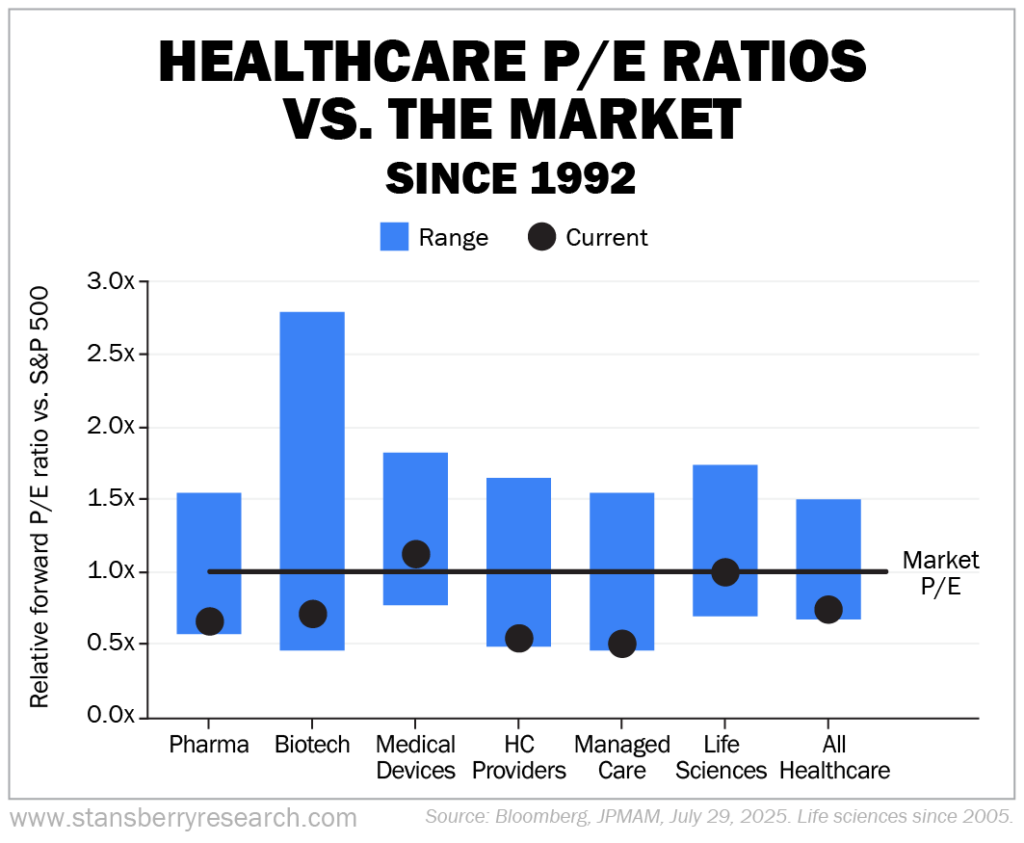
When an entire sector trades at a P/E discount and its funding environment begins to normalize, this can be an early sign that the sector is recovering.
And as capital trickles back in, the first dollars will go to the platforms everyone can depend on to make up for lost time.
They’ll go to technologies that work the fastest, most efficiently, and most consistently. They’ll go to the companies that have the highest-quality data, most innovative manufacturing systems, and the ability to scale reliably.
That makes right now a prime time to buy these opportunities before the Medical-AI story really starts to hit headlines. As Josh noted in his latest interview:
Today, you have the chance to use the same blueprint that would have turned $1,000 into $3 million… and even $5.8 million in the past.
When you own the key suppliers that control the bottlenecks surrounding a tech or a new medicine, it’s an incredible chance to grow your wealth.
I’ve seen this same story play out over and over throughout my career – going back to my start as a reporter at Bloomberg.
Today is your chance to repeat the same blueprint that has made so many investors wealthy over the decades.
I hope you’ll take the time to hear Josh out to tell this full story in his own words. But if you’d rather skip straight to how to get access to his work and recommendations, then click right here to go directly to an order form. (This link does not go to a long video.)
Why Are Suppliers So Powerful?
Back when Josh worked for SAC Capital Advisors, most of Wall Street thought the Apple (AAPL) iPhone would be a flop. As Josh put it:
I was pushing Apple relentlessly…
“Do you have any other ideas?” they’d ask.
“No,” I said. “Apple is my only idea.”
I walked into a meeting and said Apple wouldn’t sell 1 million iPhones, but 1 billion. I was laughed out of the room.
In hindsight, while Apple was the obvious trade… it wasn’t the best trade.
The best trades were the kinds of companies that few folks could have named at the time…
Take Lam Research (LRCX). It builds a specific component that goes inside every iPhone. As brilliant as Steve Jobs and Apple were, without Lam Research, there would be no iPhone in the first place. The market eventually worked that out, and the stock climbed as much as 393,352%.
That is enough to turn every $1,000 into $3 million, without ever owning a single share of Apple.
The AI boom followed a similar script…
Instead of trying to bet on whether Anthropic or OpenAI might end up with the most powerful AI model, an investor could have simply bought Nvidia. It supplies the entire AI race, so it cashes in no matter who wins.
And sure enough, an early $1,000 stake in Nvidia could have grown into $5.8 million. You didn’t need to understand the details of AI to make that trade. You only needed to know it was going to get big.
And Medical AI is going to get big.
I detailed the same pattern in my Dark Energy guide for the infrastructure required to power AI’s massive energy requirements…
Each time, the obscure suppliers earned the biggest gains. Their products were necessary to make the technology work. But most folks didn’t hear about them until after the boom was well underway.
And there are plenty of historical examples in medicine…
Look at a medicine called Amtagvi, created by Iovance Biotherapeutics (IOVA) about a decade ago. Today, the company’s stock is barely up from where it traded at the time.
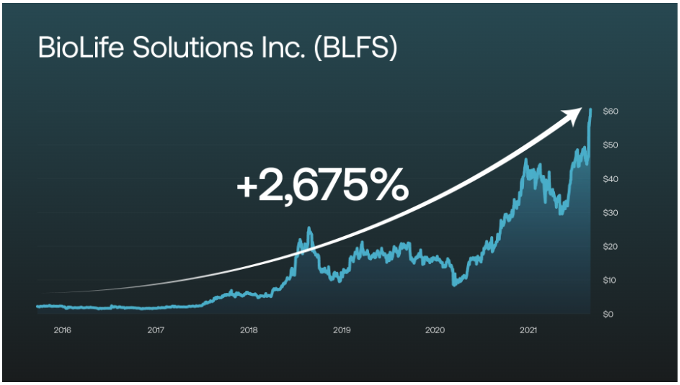
A company called BioLife Solutions (BLFS) helped freeze and store the medication.
And if you owned the stock… you made more than 27 times your money once the trials went live.
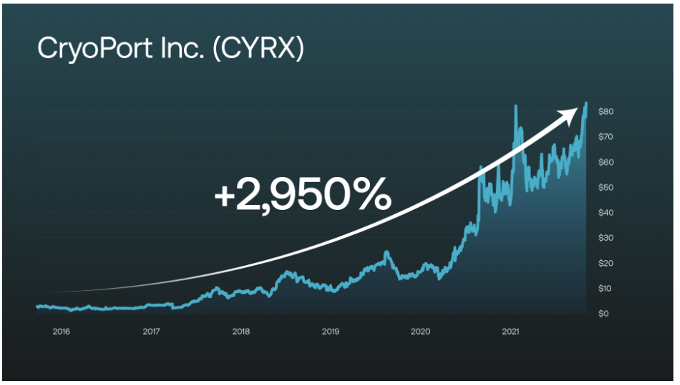
Another company called Cryoport (CYRX) helped ship that same medication in special, temperature-controlled containers.
You could have made 30 times your money on that stock.
Of course, you still have to buy the right suppliers. And right now is the perfect opportunity to do exactly that.
Who Is Josh Baylin?
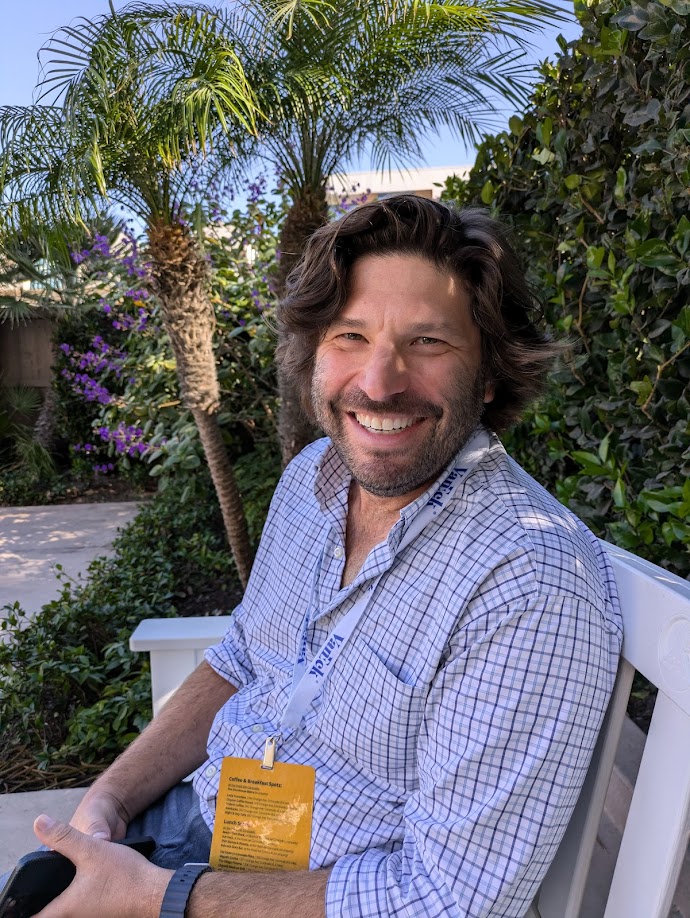
Josh Baylin got his start as a tech reporter at Bloomberg News in the Washington, D.C. bureau. There, he covered what he calls the “clash between innovation and regulation.”
He was among the first reporters in the world on major tech trends like wireless Internet… cloud computing… and the move toward a cashless, digital society…
And as one of Bloomberg’s Capitol Hill correspondents, he got “behind the scenes” inside places like Congress and the White House. In fact, his name still turns up in the official Congressional Directory…
That’s where he presented one of his biggest predictions – testifying before Congress in 2004.
He told sitting members of Congress that the world was about to see a new technology… One that would combine our telephones, cameras, and music into one mobile device that we’d carry around in our pockets.
Just three years later, Josh was proven exactly right when Steve Jobs went onstage to announce the iPhone.
If you listened to Josh back in 2004, the decades that followed served up gains like 65,308% in Apple stock.
And much like where Josh’s focus is today, Apple’s suppliers did even better…
- ASML (ASML), an iPhone supplier, climbed 10,800%.
- Taiwan Semiconductor Manufacturing (TSM), which fabricates the phones’ chips, ran up 12,972% – enough to turn every $10,000 into $1.3 million across 25 years.
- Broadcom (AVGO) rose 33,719%, turning every $10,000 into $3 million in 17 years.
No surprise that Josh got recruited from the newsroom floor to Wall Street… first as a trader for Steve Cohen’s hedge fund, SAC Capital Advisors, and then as a sell-side researcher for asset-management firm Legg Mason. He also bought a pair of $60,000 supercomputers running on Nvidia chips and spun up his own quantitative fund.
More recently, Josh helped grow a small robotics startup into an industry leader that now powers more than 50,000 robots across six continents for companies like Walmart and Sam’s Club. It’s now the world’s largest supplier of inventory-scanning robots.
Today, Josh is the editor of the True Innovations Report, a technology-focused research service looking for the best opportunities in the biggest tech trends. It has been early to every major tech trend you can think of… like robotics, AI, cybersecurity, 5G, self-driving cars, cloud computing, and digital payments.
He works alongside John Engel, the publication’s senior analyst. John spent years as a drug researcher at Eli Lilly (LLY) and holds an advanced degree from Johns Hopkins.
To learn how to get access to the True Innovations Report without having to watch a long video, click here to go straight to its subscription page and claim your first-time subscriber discount.
Frequently Asked Questions
Question: What exactly is ‘Sam Altman’s Next Venture’?
This is Josh Baylin’s shorthand name for Medical AI. More precisely, it’s AI systems built to discover new drugs.
OpenAI CEO Sam Altman is very interested in medical developments… secretly funding Retro Biosciences with $180 million of his own money and has said publicly that OpenAI may invest in or subsidize drug-discovery firms and take royalties on what they find.
Question: Are these drugs actually in human patients?
They sure are… For example, Rentosertib from Insilico Medicine finished a Phase II trial and moved to a Phase III trial this summer. Right now, industry trackers count more than 173 AI-designed programs in various phases of clinical development.
Question: Do I need to be an accredited investor for the opportunities that Josh recommends?
Nope – every company and stock that Josh recommends to take advantage of this opportunity trades on public markets. You can buy his recommendations from a regular brokerage account, with no minimum net worth and no extra paperwork to sign.
That is unusual for a trend this early… Most of the time, getting exposure to something at this stage means going through venture funds that stay closed to ordinary Main Street investors.
Question: Why can’t drug companies just spend more money?
That’s what they’ve been doing… and it hasn’t been working. The number of new drugs approved per billion dollars spent on research and development has halved about every nine years since 1950, an 80-fold drop in real terms.
Two of the main causes we talked about have only worsened over time… Every new drug has to beat the best existing drug, and regulatory caution ratchets tighter after each safety failure.
For decades, finding new drugs has been getting harder and harder. AI is our best hope of changing that.
Question: How big could Medical AI really get?
The estimates are staggering…
McKinsey puts it at 500 times bigger than ChatGPT, which, at the time of its debut, was the fastest app in history to reach 100 million users. BCG figures the technology could disrupt $30 trillion of the global economy, an amount roughly twice the combined size of Nvidia, SpaceX (SPCX), OpenAI, Anthropic, and Amazon (AMZN).
Question: What is the biggest risk to Josh’s Medical AI thesis?
Fantastic question… One big risk to AI drug discovery is late-stage trial failure… as it is with all drug development.
AI has clearly helped early discovery of drug candidates. But still, the vast majority of drugs that start testing never actually reach regulatory approval. That’s the part that’s still unknown… and it’s also why Josh is steering toward the supply chain instead of solely focusing on drugmakers.
Question: How much does the True Innovations Report cost?
Retail access normally runs $499 a year. First-time subscribers get a steep discount, which shows up on the order page right here.
In addition, every new subscriber gets 30 days to kick the tires on the research. If it’s not for you, no problem… just call in and you’ll get a refund.
What Investors Should Do Next
Medical AI is a brand-new technology… like nothing humanity has seen before. And as we’ve discussed, the stakes are massive.
And today, you have the rare chance to invest in this new technology, alongside Sam Altman, before the average person hears about it. (Click here to learn how to get access to the exact highest-potential stocks that Josh recommends.)
For years now, without most people knowing, Sam Altman has been the early investor behind many of the tech world’s biggest successes… including unicorns and decacorns like Airbnb (ABNB), Reddit (RDDT), Uber Technologies (UBER), Pinterest (PINS), Neuralink, Asana (ASAN), Instacart (CART), and DoorDash (DASH).
In total, the ventures backed by Sam Altman over the years are worth more than $1 trillion today.
There may be no better way to grow your wealth – fast – than finding where Sam Altman is moving next… and getting your money in position.
So if you’ve missed some or all of the AI boom… it doesn’t matter now. You have a second chance.
Sam Altman’s next major venture is now live across multiple U.S. states.
And it’s set to be far bigger than anything he has ever launched in the past.
Of course, Altman isn’t doing a lot of talking about this new venture. He’s actually kept his name a secret… for years. The billionaires – and the one trillionaire – who are supporting this industry with their own money aren’t talking much either.
If you simply follow where the capital is flowing… and get yourself in position to profit from it… this could be the most profitable moment of your life.
Josh says this is the most important call of his career. Learn the details and how to get access to this opportunity by clicking here.