Image Credit: Associated Press
Brent crude – the international oil standard – hit $109 per barrel on April 2, 2026. Jet fuel in some markets touched $197 per barrel.
Both prices have now nearly doubled since late last year due to the Iran war.
And somewhere inside entertainment conglomerate Hybe Label’s finance department, someone is doing very uncomfortable math about what it costs to move the biggest K-pop tour in history across five continents with the Strait of Hormuz closed.
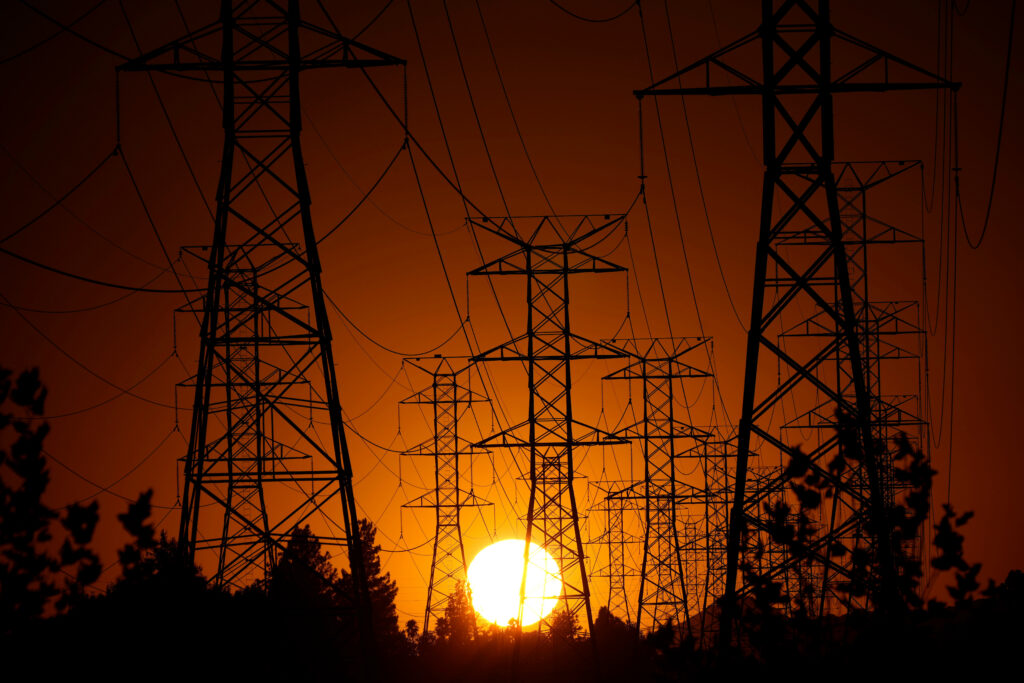
Oil prices aren’t just an energy story anymore. They’re the hidden variable inside every global enterprise that moves people and equipment around the planet. And today, they’re moving fast and in the wrong direction.
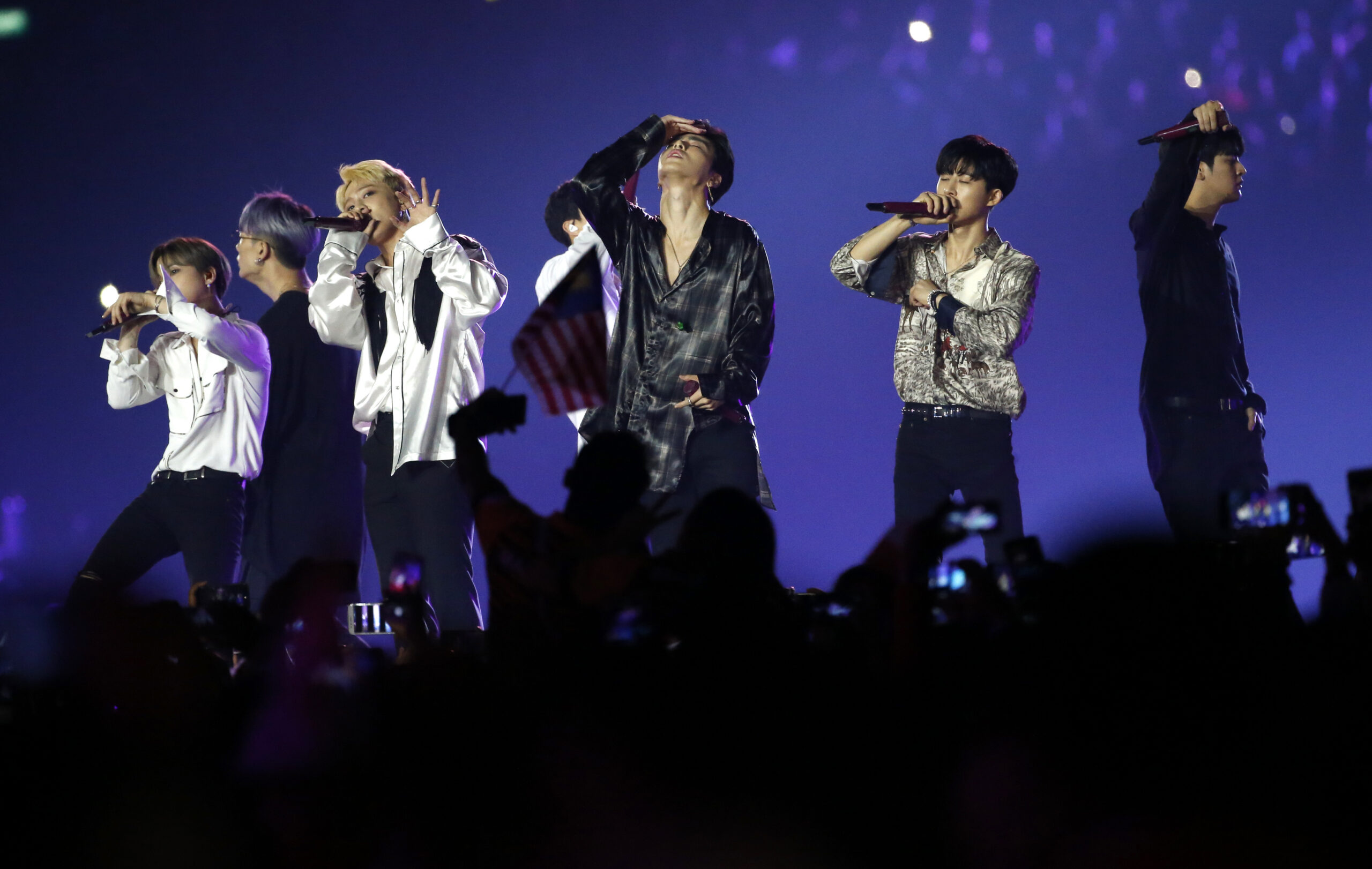
The price of oil is now crucial to the success of major global projects and events… such as Korean boy band BTS’s massive “Arirang” world tour, set to kick off later this week.
But as I’ll explain, businesses (and traders) who prepared for this by hedging fuel-price risk are sitting on massive profits…
Why Oil Prices Spiked This Hard, This Fast
The Strait of Hormuz is a critical chokepoint between Iran and Oman. About 20 million barrels of oil per day flow through it – roughly one-fifth of the world’s seaborne-traded oil.
When U.S. and Israeli strikes on Iran began on February 28, commercial tanker traffic through the strait effectively stopped. Brent futures traded within a whisker of $112 per barrel before pulling back to around $109 today.
The current level reflects a market that’s scared but not yet panicking… even though President Donald Trump’s April 1 address to the nation did little to indicate we’d be getting cheaper oil anytime soon.
But the gap between scared and panicking is exactly the kind of situation that rewards preparation and punishes whoever assumed things would continue as they are.
Many folks seem to have forgotten that the global oil supply was facing a surplus prior to the war.
J.P. Morgan Global Research’s Natasha Kaneva put the bear case plainly in February…
Oil surplus was visible in January data and is likely to persist… suggesting that voluntary and involuntary production cuts will be needed to prevent excessive inventory accumulation. This would help stabilize Brent prices at around $60/bbl.
That forecast looks optimistic, but it’s a real possibility. If the conflict overseas de-escalates and the Strait of Hormuz reopens, we may see an oil surplus once again. The market has a history of overshooting (in both directions).
The practical consequence for aviation is severe and specific. Jet fuel prices have roughly doubled since the conflict began, rising far faster than the price of crude itself.
Skift Research estimates the war adds $24 billion in fuel costs to U.S. airlines alone, requiring at least an 11% fare increase just to break even. Globally, the figure runs toward $100 billion.
That’s not an abstraction. That’s a line item that crushes anyone who flies equipment, crew, and cargo internationally.
What Does This Mean for an 82-Show World Tour?
BTS announced its “Arirang” world tour in January. It features 82 shows across 34 cities and 23 countries. It will kick off later this week in Seoul, South Korea and continue through 2027.
The band released their fifth studio album “Arirang” on March 20, with the lead single “Swim” debuting at No. 1 on the Billboard Hot 100 – their seventh song to do so.
It’s an extraordinary cultural moment. It’s also, from a logistics perspective, a moving city.
Large touring jets burn 300 to 500 gallons of fuel per hour. Add in cargo aircraft for stage production, freight for equipment, ground transportation between venues, and the jump from Seoul to Los Angeles to London to São Paulo, Brazil starts to look less like a tour schedule and more like a refueling nightmare.
Concert prices have already climbed 75% over the past decade because production costs for major tours have exploded. Fuel, freight, venue rates, security, lighting rigs, staff – all of it has gotten more expensive.
Oil at $109 per barrel puts significant pressure on top of an already strained cost structure.
If prices get much higher, BTS may have to swim to their gigs.
Fuel Hedging: How Smart Operators Handle an Energy Crisis
The answer, for organizations with the financial sophistication to use it, is fuel hedging.
Futures contracts, swaps, options, forward purchases… these tools exist precisely for this problem. Their purpose isn’t to reduce costs, but to convert a volatile variable cost into a predictable fixed one so that planning is possible.
As former United Airlines (UAL) Chief Financial Officer Gerry Laderman described it: “[Fuel hedging is] really viewed as insurance to protect the financials against a sudden spike in jet fuel.”
But here’s the catch… If you lock in fuel at $100, and prices fall to $60, you’re paying a 67% premium over competitors buying at the spot price.
Take Southwest Airlines (LUV) during the 2000s…
It ran one of the most celebrated hedging programs in aviation history, saving hundreds of millions of dollars when oil prices spiked due to industrialization, supply constraints, and geopolitical instability, among other reasons.
Many U.S. carriers did the same, but they pulled back from derivatives after painful losses during the 2008 oil-price collapse. Even Southwest Airlines abandoned the decades-long program last year. This year, with oil prices surging, that probably looks like a mistake.
In any hedging decision, the question isn’t whether prices go up or down. The question is whether, given the size of your exposure, it’s worth paying for certainty.
On March 20, the day BTS announced their new album, oil was trading for $112 per barrel. Of course, Hybe Labels likely locked down the tour months prior. In mid-November, oil closed around $65 a barrel.
If Hybe had locked in fuel costs for the tour the day it knew it needed fuel… they’d have saved themselves millions of dollars.
For Hybe, the calculus is real. Route optimization reduces total flight hours. Getting staging equipment regionally rather than flying it overseas cuts cargo costs. And booking fuel in advance, or entering forward contracts for later legs of the tour, converts the unknown into the known.
The “homesteader” instinct I wrote about a few weeks ago applies here as it does anywhere. Those who priced the volatility and realized their exposure early aren’t rattled when the market moves. Those who didn’t are sitting on losses (and likely having to raise ticket prices).
The oil market has one reliable characteristic across 30 years of observation: It overshoots, corrects, and overshoots again. Oil prices will ease, or they won’t. Either way, the question for every large-scale global operation in 2026 is the same one BTS’s finance team is answering right now…
How much volatility did you price in before locking in your plans?
Good investing,
Eric Wade
Editor’s Note: What should you invest in right now?
A renowned former hedge fund founder and his research team have found what they believe is the next big tech trend that could make investors rich.
It’s a breakthrough they’re calling “Helios” – and if you haven’t yet heard of it, you soon will.
Over the next few years, it could impact the food you eat… the water you drink… the places you live and work… and even the prices you pay for airfare, gas, electricity, and household goods.
“Helios” is going to cause a lot of people to lose money, too. Dozens of well-known businesses could go bankrupt.
But if you own a stake in this new tech, the positive effects will far outweigh the negatives. Get the facts for yourself. Make sure you’re not on the wrong side of this trend. Click here to see this new analysis…