
Image Credit: Associated Press
The artificial intelligence (“AI”) platform space is getting more crowded with the addition of a new Nvidia (NVDA) model. It’s an open-source AI agent platform called NemoClaw, specifically designed for businesses.
The new rollout has important implications for Nvidia investors, as well as the agentic platform space in general. By helping set standards, Nvidia is betting that more people will use AI tools safely and see their value – and ultimately drive the use of its own hardware.
NemoClaw lets employees set up AI agents that can undertake tasks on their behalf. Ideally, the agents can increase human productivity by handling lower-value or routine tasks, leaving human employees to perform the high-value, executive tasks.
Nvidia is already working to get large enterprise software companies on board, according to reports. These include major names such as Adobe (ADBE), Google/Alphabet (GOOG), Salesforce (CRM), and CrowdStrike (CRWD), among others.
Such a move helps mitigate security issues by understanding potential users’ needs upfront.
Nvidia’s rollout of NemoClaw comes on the heels of a disastrous deployment of OpenClaw, a self-executing AI agent platform that has been a security headache for users. OpenClaw was developed independently and saw rapid adoption by users in late 2025 and early 2026.
After OpenClaw’s quick uptake, leading player OpenAI acquired OpenClaw in February.
Due to security concerns, some companies, including Meta Platforms (META), have prevented employees from installing OpenClaw on work devices. China has also warned agencies and state-owned enterprises about the safety issues in the AI agent, following rapid adoption in that country.
NemoClaw Goes Open Source
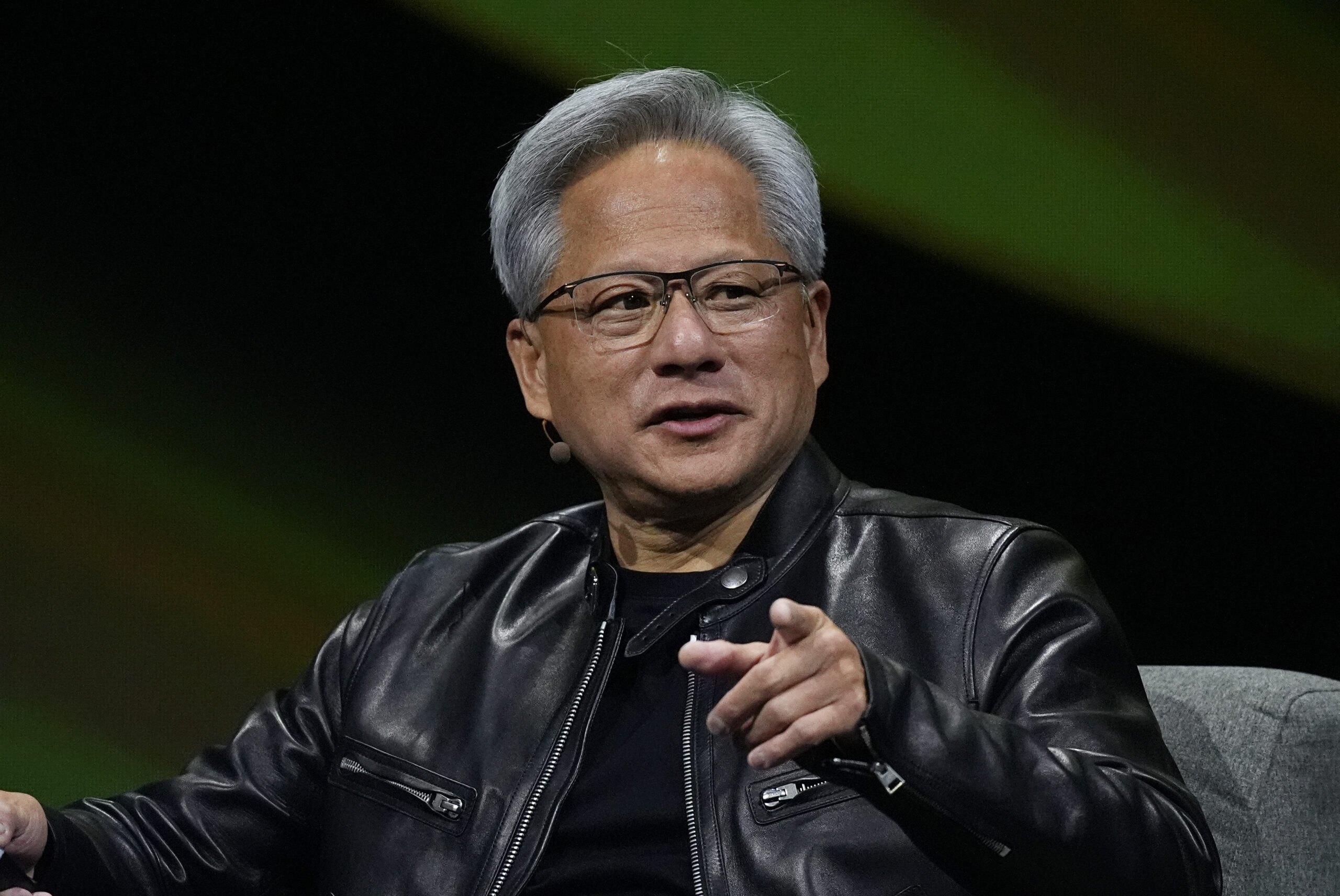
Nvidia seems to view the AI agent platform as an important place to position itself. Nvidia CEO Jensen Huang has called OpenClaw “the most important software release probably ever.”
Nvidia’s NemoClaw won’t require Nvidia’s hardware to function and it’s open source – both of which may help the platform become more widely adopted.
That’s a big switch from Nvidia’s “walled garden” approach with its hardware. There Nvidia uses its CUDA computing platform to lock in coders to its graphics processing unit ecosystem.
In addition, the open-source approach may help Nvidia negotiate standards in the AI agent platform space.
The open-source strategy may help companies establish a secure operating environment – again, one key defect of early OpenClaw deployments. So, it could merge the capabilities of an agentic platform with the security needed in an enterprise environment.
This could position Nvidia as the leader that enterprise software firms want to work with.
Nvidia’s Platform Joins Growing AI Agent Field
Nvidia’s platform is joining the field as investors have been fretting that AI models would erode the competitive position of enterprise software firms. In just a few weeks to start 2026, software stocks tumbled 20% to 50%, depending on how exposed to disruption the company seemed to be.
However, existing software incumbents have downplayed the potential disruption from AI models. The sector downturn left many bargains in the industry… as well as potential losers.
Like Nvidia, AI companies such as OpenAI and Anthropic have been working to get their agents into existing software, with plug-ins that increase worker productivity.
Anthropic is rolling out a project with Microsoft using its Claude Cowork model paired with the Windows maker’s Copilot tool… called Copilot Cowork. The tool can help employees prioritize meetings and propose calendar changes, prepare presentations, and research companies.
That’s just one of many plug-ins that Anthropic is rolling out to software firms. It’s also touted a legal plug-in that can review documents and track compliance tasks, Claude Code Security that can scan for security-related concerns, and Claude’s ability to modernize old software code.
Of course, OpenAI and Anthropic are just two companies deploying AI models. Google is working on Gemini, Meta Platforms is working on Avocado, and Elon Musk’s xAI – now part of SpaceX – has Grok. It’s an increasingly crowded field of bots.
So, in rolling out a new open-source platform, Nvidia is going up against many of its own hardware customers – companies that buy its chips for AI data centers.
But the point for Nvidia is to get more people, whoever they are, using more AI tools and therefore the Nvidia hardware powering those tools. We’ll see how that plays out…
Regards,
James Royal
Editor’s Note: Elon Musk reinvented the auto industry, sparked a new era of space exploration, and built the world’s largest satellite network. But his new initiative – “Project Apex” – could become the crown jewel of his career. And, like Tesla, it could make early investors incredibly wealthy. See below for the details…