Image Credit: Associated Press
Listen to the audio version of this article (generated by AI).
Key Points
- Bitcoin miners are becoming valuable players in AI infrastructure because their existing power, land, and cooling assets can be repurposed for lucrative data centers.
- AI’s surging electricity demand is creating a tailwind for some miners, while flat mining difficulty and higher bitcoin prices could further boost profitability.
- The AI data-center backlash creates both opportunity and risk: slower development could limit mining competition but also delay miners’ own AI infrastructure projects.
It seems like just about everyone is mad about AI data centers right now.
They’re thought of as big, loud nuisances… and it’s hard to find people who actually want them where they live.
At the same time, we’re using artificial intelligence (“AI”) more than ever for searches, coding, writing, problem-solving, and even just chatting. So, demand for data centers is real.
Nonetheless, the AI data-center backlash we’re seeing has become big enough to matter to investors. Towns are pushing back over water, power bills, tax breaks, noise, diesel generators, and the simple reality that nobody wants a windowless server farm dropped into their neighborhood.
That’s a problem for the AI trade because Nvidia (NVDA) stock may be a proxy for AI growth, but chips still need to be installed in hardware which needs to be deployed into buildings, powered by transformers, and receive municipal permits before they become revenue. Nvidia is the top bellwether for AI, but it still relies on data centers for a majority of its chip sales.
It’s also creating a strange side effect in bitcoin mining…
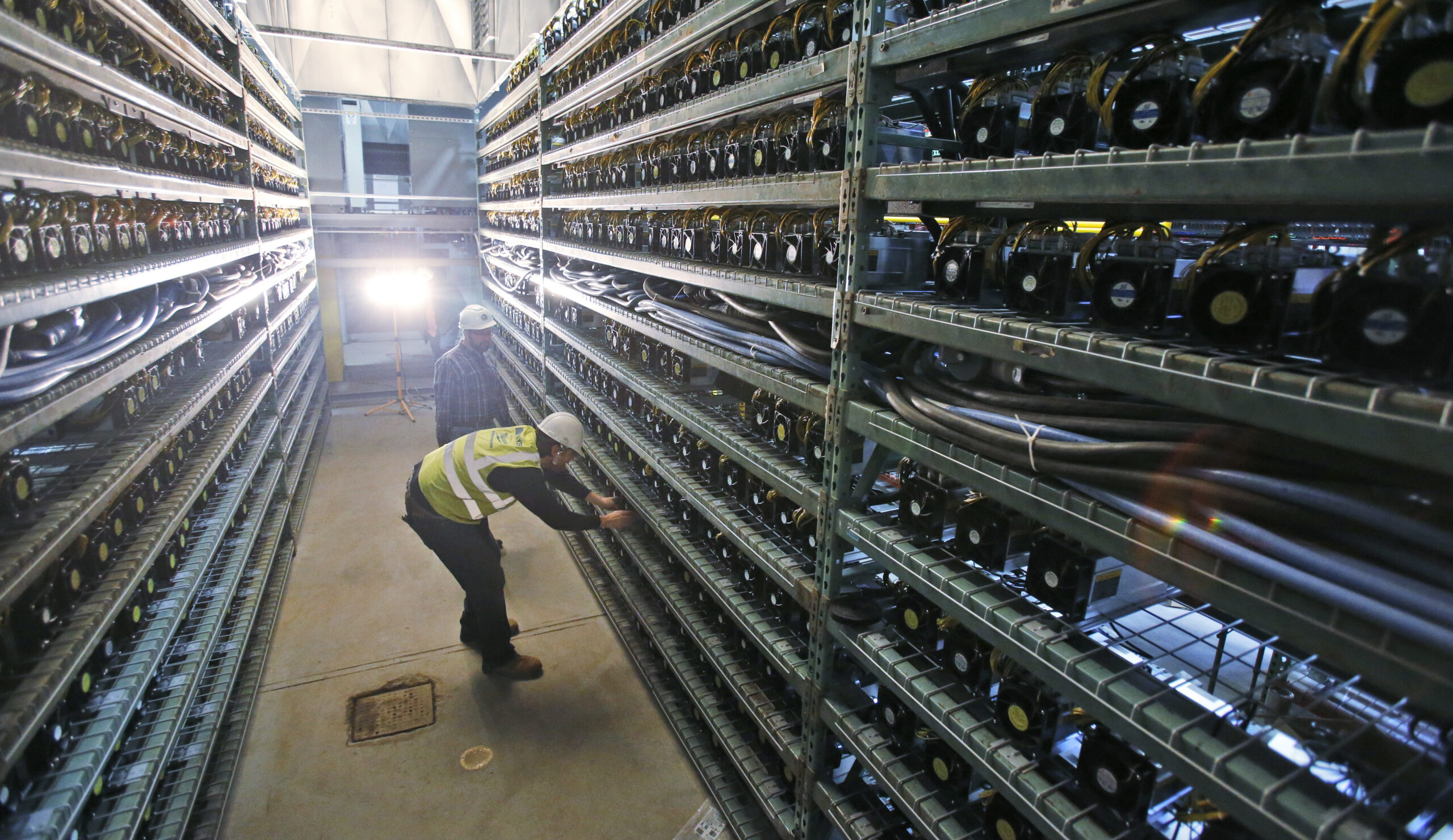
See, while investors have been staring at Nvidia, the bitcoin mining network has been doing something odd.
Crypto-tracking site CoinWarz put bitcoin difficulty at 125.81 trillion today. About a year ago, on August 24, 2025, according to Hashrate Index, the difficulty was at 129.70 trillion… then an all-time high.
In plain English, the work required to mine a block today is roughly the same as it was last summer. That gives miners more time to make a return on their hardware investments without having to upgrade.
So thank you, AI data centers. And thank you to everyone saying they don’t want one in their neighborhood. It’s helping make certain miners a lot of money.
Today, we’ll look further at how the AI-infrastructure build-out and rising bitcoin prices are setting up a profitable scenario in the mining space.
Why Steady Mining Difficulty Is Favorable in a Bitcoin Rally
Bitcoin mining difficulty is the network’s thermostat.
Every two weeks, bitcoin adjusts how hard miners must work to keep blocks arriving about every 10 minutes. When more machines mine for the same reward, bitcoin difficulty rises. Fewer machines, or machines pointed somewhere else, means difficulty stabilizes or falls.
For a miner, that math is brutal and simple. Revenue comes from the bitcoin price, block rewards, and transaction fees. Costs come from power, machines, debt, and maintenance. If bitcoin jumps while difficulty stays flat, the same machines earn more dollars without facing the usual penalty of a harder network.
That’s exactly why the recent bitcoin rally matters. Bitcoin gained 23% in a week– its biggest move since last year’s sell-off – after Treasury-bond buybacks pushed long yields lower, the dollar weakened, and a short squeeze forced buyers back into the market. ETF inflows are the next test, because forced buying burns out quickly, while institutional flows can keep a rally alive.
If bitcoin holds even part of that move higher, miners get operating leverage when the selling price rises, and the production hurdle does not.
AI Pivots Are the New Way Miners Capitulate
In previous bitcoin cycles, miner capitulation looked familiar. The price fell, inefficient miners shut off, mining rigs hit the secondary market, and the network waited for difficulty to adjust down.
This cycle has a different escape hatch. Miners don’t have to disappear. Some have become AI-infrastructure companies.
That sounds like a branding trick until you remember what miners can offer to the AI space: power access, land, cooling, substations, operating teams, and a tolerance for absurd capital intensity. Those are the main things that data-center developers are fighting to secure.
CoinDesk reported in March that public miners had announced more than $70 billion in AI and high-performance-computing (“HPC”) contracts. S&P Global listed Iren, Riot Platforms, Core Scientific, Hive Digital Technologies, Cipher Digital, and TeraWulf among the miners shifting capacity away from pure bitcoin mining, with analysts expecting HPC and AI to drive much of their growth in 2026.
That matters because every megawatt chasing AI is a megawatt that’s not automatically chasing the next bitcoin block. While the machines and customers are different, the scarce input is the same: energized infrastructure.
The result is a softer version of miner capitulation. Instead of “we shut off because bitcoin mining stopped being profitable,” the message becomes “we found a better-paying customer for this power.”
AI Data-Center Backlash Cuts Both Ways
Now for the catch…
The same local revolt slowing the data-center land rush and helping bitcoin miners also threatens the miners trying to become AI landlords.
Governors and lawmakers are moving to force data centers to pay for their own electricity supply, limit water use, disclose more about operations, and win local support, according to the Associated Press.
Microsoft (MSFT) is already working to unwind multimillion-dollar tax breaks on several Atlanta data-center projects as the politics get hotter.
So, the trade is not “buy every miner with AI in the press release.” Please don’t do that. That’s how people end up owning a construction project with a bitcoin ticker.
Look for mining stocks that already control power, have credible tenants, and can survive construction delays while still making money mining bitcoin if their AI customer takes longer than promised to come online.
Global asset manager VanEck has already warned that miners chasing AI face a roughly $50 billion near-term funding gap and that only about a quarter of leased AI and HPC capacity has been delivered so far.
That means there’s still a long way to go.
What Investors Should Watch Next
Chips are no longer the bottleneck in the AI trade. Power is. Permits are. Local sentiment is. The boring parts are now in charge.
For bitcoin miners, that means three numbers are worth watching…
- Bitcoin difficulty: If difficulty stays near last year’s level while bitcoin holds its rally, miner margins improve without any miracle.
- ETF inflows: A short squeeze can light the match (and it really, really did last week), but sustained inflows tell you whether serious capital is returning to bitcoin. They’ve been positive since August 17, which is good, but previous rallies have run for as long as seven months, so time will tell.
- AI data-center approvals: Every delayed hyperscale project makes energized power more valuable. Some miners will monetize that value through AI contracts. Others will benefit because competitors will stop adding hash rate as aggressively.
That’s one thing many bitcoin investors are missing. While the AI data-center backlash is a risk to the AI build-out, it’s also putting a ceiling on one of bitcoin mining’s worst enemies: endless hash-rate growth.
If bitcoin’s price keeps firming while mining difficulty stays flat, it presents a solid opportunity for bitcoin mining stocks to profit from.
For once, the local zoning board is indirectly doing bitcoin miners a favor.
Good investing,
Eric Wade
Editor’s Note: Trillions of dollars — the largest flood of spending in U.S. history — are pouring into AI and energy. And one little-known company sits right in the path of it, collecting a toll on every dollar that flows past. It doesn’t make a single chip or pump a drop of oil. Whitney Tilson calls it “America’s Greatest Retirement Stock” right now — and today, it’s trading at a rare discount. He’s giving away the name for free. Click here…