
Listen to the audio version of this article (generated by AI).
Today’s issue in preview:
-
How the AI boom can pay you steady streams of income
-
The case for a booming U.S. economy gets stronger. That’s good for your 401(k)
-
This chart shows the bull market’s foundation is getting stronger
-
Learn our Top Themes to buy now
How the AI boom can pay you steady streams of income
Credit: stanley45
Everyone knows artificial intelligence is the transformational technology of our time.
Everyone knows it’s creating enormous stock market winners.
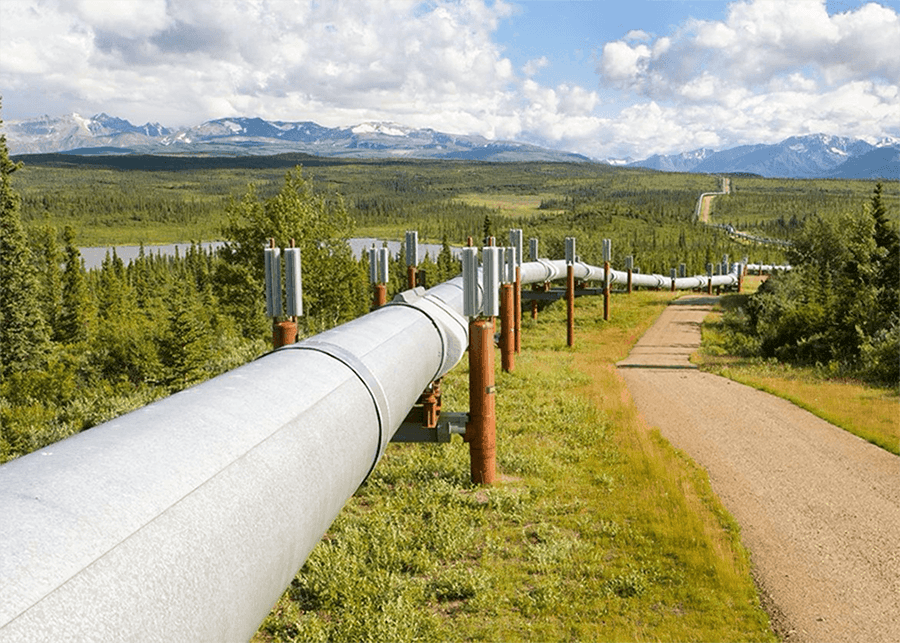
But relatively few people know about the old-fashioned fuel that powers much of this revolution… and why our recommendation to own oil and gas pipelines has become a huge winner.
The latest evidence: This week, major oil and gas pipeline players Kinetik Holdings (KNTK), Targa Resources (TRGP), and Plains All American Pipeline (PAA) reached new all-time highs. Additionally, industry giant Kinder Morgan (KMI) has climbed to within pennies of its all-time high.
In other words, the business of transporting oil and gas across America is booming.
If you’re a dedicated Money & Megatrends reader, this comes as no surprise. You might even be sick to death of reading about this bull market. It is one of our highest conviction themes… and we’ve written over a dozen research notes on it. I hope you’ve made good money on it.
In early 2024, I began to see the oil and gas pipeline industry as the best way to generate substantial passive income from the AI boom.
Given AI’s enormous promise, big tech firms like Meta (META) and Microsoft (MSFT) are racing to build the world’s best AI models and infrastructure. They’ve already spent more than a trillion dollars. This year, they are on pace to spend over $700 billion on AI infrastructure, with more than $3 trillion expected to follow.
All that AI infrastructure is poised to consume vast amounts of electricity. S&P Global estimates that global electricity demand will increase by nearly 50% by 2040.
I’ve frequently mentioned that AI’s growing power demands are a bullish driver for natural gas usage, as it is the preferred clean-burning fuel for power plants that support AI data centers. This is why I believe natural gas producers such as EQT (EQT), Antero Resources (AR), Expand Energy Corp. (EXE), and Range Resources (RRC) are compelling long-term stock ideas.
However, all the natural gas in the world isn’t worth much if you can’t transport it to customers.
This is where America’s vast natural gas transportation, processing, and storage industry comes in. An extensive network of pipes crisscrosses America to allow energy companies to transport natural gas from the wellhead to power plants. If we get an AI-driven boom in natural gas consumption, we get a boom in natural gas transportation by default.
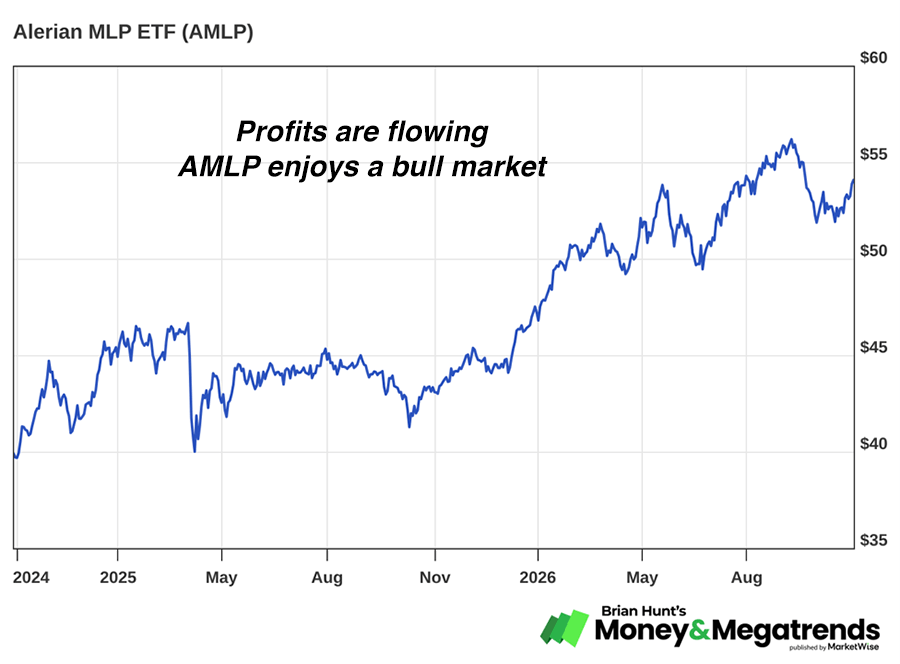
This year, the market has enthusiastically supported our thesis. Blue chip pipeline operator Enterprise Products (EPD) has returned 33% this year. Fellow blue-chip operator Energy Transfer (ET) has returned 32%.
These individual stock gains have driven the Alerian MLP ETF (AMLP) to a 24% year-to-date gain. Despite AMLP’s big run and shares being near all-time highs, it still yields around 7.6%.
The typical pipeline operator is not your conventional “high-risk, high-reward” AI play. Instead, it’s a boring, predictable business that generates steady cash flows and shareholder distributions.
But the AI megatrend is giving natural gas a boost that will last for years. Plus, the Iran War and its constriction of Middle Eastern energy flows have made U.S. natural gas exports increasingly more valuable to customers in Europe and Asia. The Russia/Ukraine war is doing the same with its constriction of Russian natural gas exports.
Generating stable cash flows by transporting oil and gas isn’t as exciting as some high-tech industries, but business is booming… the trade is working wonderfully… and will most likely do so for years.
Recommended Link:
Major Buy Alert Issued for October 31st

Keith Kaplan’s firm has invested $17 million into their own AI research and tools. He’s built a platform that 180,000 people worldwide use in the stock market. Now he says there’s a handful of stocks you need to buy before October 31st, to set yourself up for 1,000% potential returns in the near future. Here are the stocks you need to buy for the chance to profit.
The case for a booming U.S. economy gets stronger. That’s good for your 401(k)

Credit: SWKrullImaging
If your schedule allows, fire up the motorcycle this weekend, head down to Cracker Barrel, and treat you and the spouse to a country fried steak. Afterwards, perhaps buy a new $2,000 sofa.
After all, we have plenty of good new economic news to celebrate.
This week, three key “American consumer spending” stocks surged to new one-year highs. They are:
Harley-Davidson (HOG), a $3.2 billion manufacturer of iconic American motorcycles. The company also sells motorcycle parts, accessories, apparel, and financing services.
Cracker Barrel (CBRL), a $1.6 billion operator of Southern-style casual dining restaurants featuring homestyle meals and attached country stores selling gifts, apparel, and home décor.
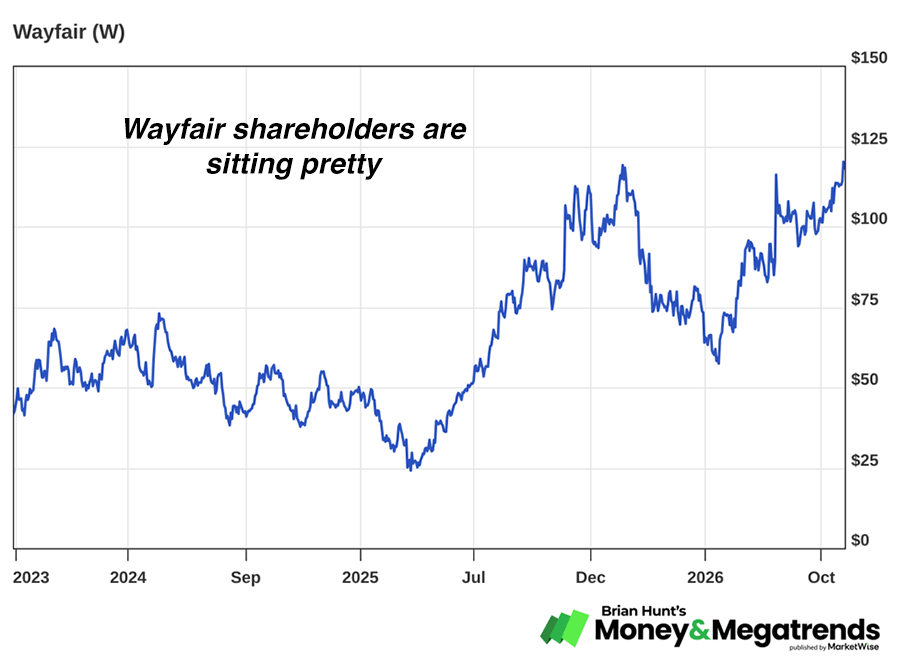
Wayfair (W), a $16.5 billion online retailer of home furniture, décor, lighting, appliances, and household goods, operating several brands across different price points.
In other words, the motorcycle business is good. The furniture business is good. And lots of people – most of them salt-of-the-earth, middle-class America – are dropping money at Cracker Barrel.
Over the past month, we have published a series of research notes on bull markets in Visa (V), Mastercard (MA), premium-retailer Williams-Sonoma (WSM), electronics retailer Best Buy (BBY) and hotel operators such as Marriott International (MAR).
In each one, we concluded that the American consumer and the economy it powers is not in the dumps as the mainstream media tries to make us believe, but is actually doing quite well.
The companies above are sensitive to the health of the American consumer. Their fortunes rise and fall with America’s ability to spend money on vacations, clothes, furniture, household goods, and entertainment. They don’t soar to new highs in a weak economy.
Thanks to this week’s trading, we can add Harley-Davidson, Wayfair, and Cracker Barrell to this growing list of “real world” indicators saying the American consumer is doing well.
This impressive market action is in stark contrast to mainstream media reports citing the popular but flawed Michigan Consumer Sentiment Survey and its dismal consumer sentiment readings.
I’ve been investing and reading financial research for 28 years. During all that time, I’ve heard many famous pessimists forecast the death of the American consumer. Well, not even the dot-com crash or the 2008 financial crisis could knock it out.
This is why I say that in the event of global thermonuclear war, two things will survive. Cockroaches and the American consumer.
Many investment professionals fixate on government data such as unemployment figures, job hirings, and the Consumer Price Index. I like to know that data as everyone else does. However, when I want a read on what’s really happening in the economy, I place far greater focus on what’s happening in the real world.
I look at stock prices. In doing this, I listen to the judge, jury, and executioner of any thesis, any trend, and any claim: The market.
You can read a thousand differing opinions and forecasts related to the economy, the consumer, interest rates, or the status of the AI boom. However, there’s only one source of objective truth: Market prices.
Market prices are the sum total and final expression of all knowledge held by industry insiders, connected money managers, government officials, and bankers who quietly control huge swaths of the economy. These people know 50 times as much about their industries of focus as you or I do.
Their knowledge manifests itself through action… and that action sets market prices. Market prices are not always perfect, but much of the time, they know a hell of a lot more than any economist or investment guru.
If you ever get brain overload from listening to or reading lots of “experts” espousing lots of conflicting opinions about a war, a technology, or the health of the economy, you can easily tune them out and focus on signals that contain more distilled insider knowledge in them than all those experts combined: Market prices.
Does the U.S. economy have imbalances, distortions, and risks? Absolutely. It always does. But making money in stocks is never the result of a problem-free economic environment. It’s always about being in an environment where the big problems are overwhelmed by the even bigger positives.
Right now, the market is telling us that the positives are currently much stronger than the negatives. The market prices of key cogs in the economic machine are very strong. This does not happen when the economy is weak. Manage your financial affairs accordingly!
This chart shows the bull market’s foundation is getting stronger

Credit: roman_slavik
Is bad breadth the latest Big Worry that should terrify us and cause us to dump our stocks?
Are the professional stock market bears – the ones that have called 40 of the past 2 bear markets – finally right?
Right now, the market is saying “No way.”
No matter how strong corporate earnings are… or how strong broad market averages like the S&P 500 are, two or three “Big Worries” are always circulating around the investment community.
There are always potential risks and concerns held by investment professionals that keep them light on stocks or out of them completely.
This fall, one of the Big Worries is “weak market breadth.”
“Breadth” is Wall Street’s preferred term for how widely a stock market’s gains or losses are spread across individual stocks.
Rather than focusing solely on the movement of a major index like the S&P 500, breadth reveals how many stocks are participating in the trend. The general idea is that if you’re bullish, you want to see strong breadth, which shows many stocks are in uptrends.
Common breadth indicators include the percentage of stocks above their 50- or 200-day moving averages, the percentage of advancing versus declining stocks, and the percentage of new highs versus new lows.
Strong breadth suggests widespread participation, while weak breadth indicates that relatively few stocks are driving the market.
At times over the past two months, stock market breadth has been weak. Rising interest rates and several smaller market forces have hammered many key market sectors, including real estate, utilities, defense, and financials.
Meanwhile, the strength in big technology stocks has supported the broad market averages. The S&P 500 is less than 2% off its all-time high.
Many investment professionals have cited recent weak breadth readings as cause to sell stocks.
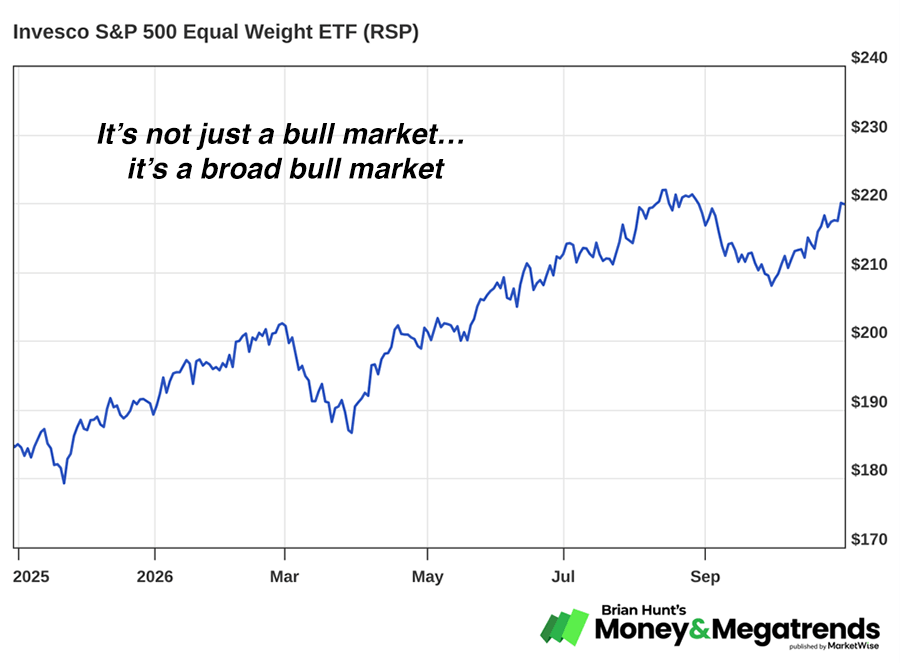
But before you do that, have a look at the Invesco S&P 500 Equal Weight ETF (RSP).
The popular S&P 500 Index is a “market-cap weighted” index. This means the biggest companies, such as Nvidia (NVDA) and Apple (AAPL), have a greater impact on the index’s value than smaller companies. A big rally in a $5 trillion giant like Apple can overwhelm losses in 30 smaller companies.
An “equal weight” index nullifies market-value-related impacts – assigning equal weight to each stock in the index regardless of company size. With an equal-weight index, a massive 100% annual gain in a giant like Nvidia cannot mask or overwhelm weakness in hundreds of smaller stocks.
An equal-weight index does a much better job of showing how the market is doing broadly than how the 10 largest companies are doing.
RSP is by far the largest ETF that tracks the S&P 500 Equal Weight Index. As you can see in the one-year chart below, this fund is comfortably within the confines of an uptrend. And while it isn’t trading near its all-time high, it’s not far from it (less than 2%).
RSP’s uptrend shows that all the hype and hoopla over “weak market breadth” and the supposed horrible market conditions it reflects is ignorant and misplaced. This is not a market with a small handful of leaders and a collapsing interior.
Having said this, keep an eye on RSP’s September low of $209 per share. If we hold above this line, I’m not worried at all about weak breadth. But a break below $209 is cause for concern. We will keep you updated on this Big Worry that is getting so much attention.
Market Notes
-
Our September 2025 recommendation to own oil and gas stocks continues to pay off. Oil giants ExxonMobil (XOM), Chevron (CVX), Shell (SHEL), Canadian Natural Resources (CNQ), and Permian Resources (PR) reached new all-time highs today.
-
Our 2025 recommendation to own biotech stocks continues to pay off. Biotech giants Amgen (AMGN) and Gilead Sciences (GILD) reached new all-time highs today.
-
Our recommendation to own GLP-1 giant Eli Lilly (LLY) continues to pay off. The stock surged 3.8% this morning to reach a new all-time high.
-
Credit card giant Visa (V) reached a new all-time high today. This is a bullish economic signal.
-
Cigarette giants Philip Morris International (PM) and Altria (MO) reached new all-time highs today.
Top Themes to Buy Now
💊 An important “tell” from the market
Regards,


Brian Hunt
Editor, Money & Megatrends
An urgent message from our colleagues:
Why this Strange “Golden Tablet” Could Mint Millionaires

It produces intelligence up to 1,000 times FASTER than regular AI. And Jeff Brown believes the little-known company behind this patented new AI technology… Could be the only stock you need to retire.