Image Credit: Associated Press
Listen to the audio version of this article (generated by AI).
The tides of war are shifting beneath the ocean…
Aerial drones fill the news from Ukraine to the Strait of Hormuz. But beneath the surface, a different fight is already underway.
It’s quieter and harder to see. But it’s closer than most people realize.
China has sent 42 research ships into the Pacific, Indian, and Arctic oceans. They’re collecting data by mapping seabeds, noting acoustic conditions, and tracking thermal layers in key waters.
To some folks, it appears to be climate research. But the U.S. Navy sees a different picture…
The $3.5 Billion Deal That Just Reshaped Undersea Warfare
In March 2026, Rear Admiral Mike Brookes warned Congress…
China wants to rule the undersea domain.
By 2040, the country’s naval forces could challenge U.S. dominance at sea.
China already has more than 60 submarines. And by 2035, it plans to increase its fleet to 80.
Meanwhile, Russia has launched a stealth, nuclear-armed drone called Poseidon. It can reportedly cross ocean basins without detection.
That’s the world Lockheed Martin (LMT) is betting on…
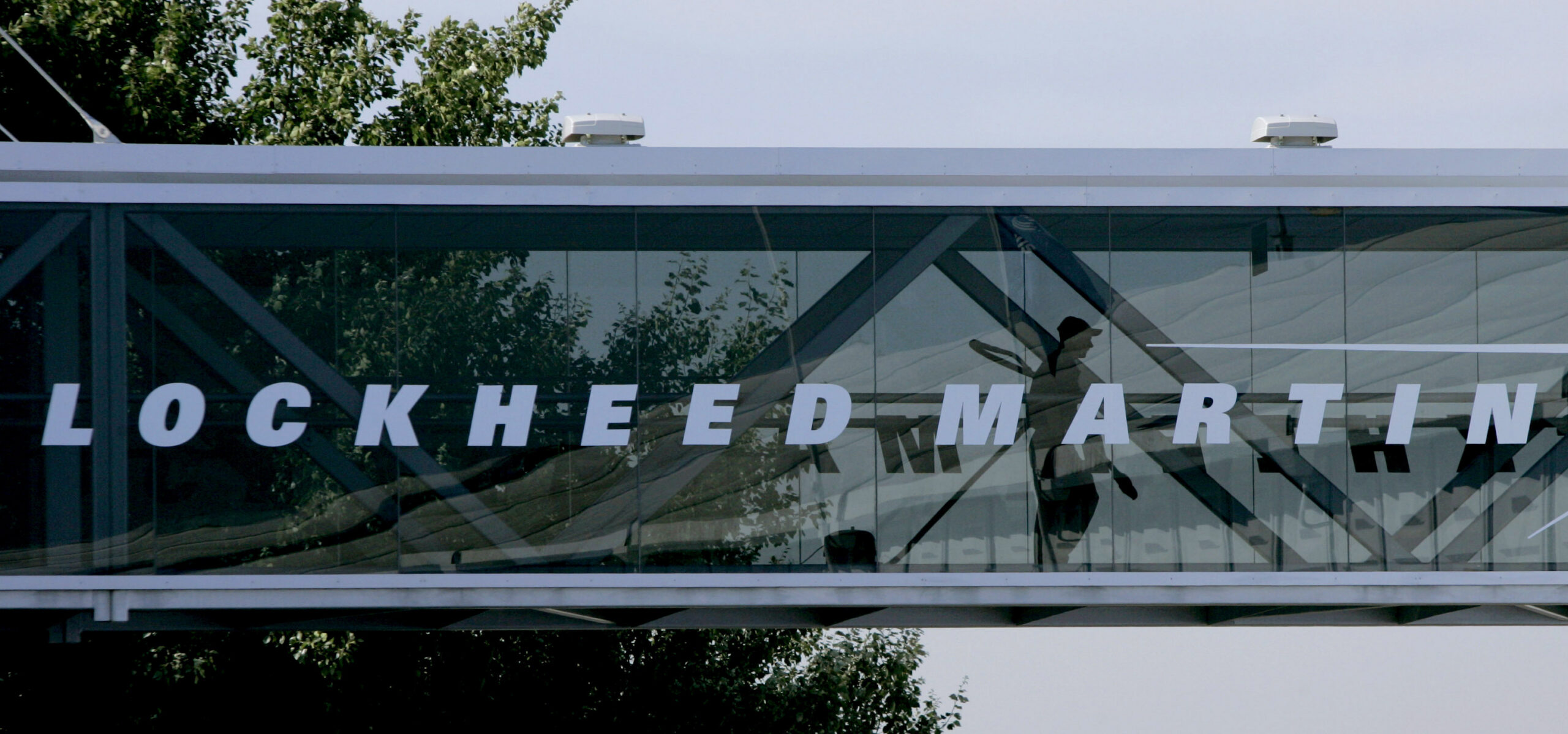
On Monday, the U.S. defense giant agreed to buy Ultra Maritime for nearly $3.5 billion.
Ultra Maritime makes the tools of the antisubmarine war (“ASW”). It makes sonar systems, sonobuoys, torpedo defenses, and maritime sensors.
The company’s clients include the U.S., the U.K., Canada, and Australia. In other words, it already serves the customers that matter most in the ASW.
That day, French defense giant Thales also announced a deal to acquire Exail Technologies. It paid roughly €3.9 billion for the submarine-drone maker.
That’s right…
Two defense giants wrote multibillion-dollar checks for undersea warfare on the same morning.
As Axios noted, “Aerial drones had – and are still having – a moment. Surface and subsurface seem to be next.”
What Makes Ultra Maritime Worth About $3.5 Billion?
Sonobuoys are at the heart of this deal…
Dropped from aircraft, they’re like floating listening posts. They detect submarine sounds and transmit the data control centers.
But once they’re deployed, they’re gone. So the U.S. Navy always needs more.
This isn’t just a one-time contract. It’s a steady revenue source for however long the ASW missions continue.
Lockheed’s operating profit for its Rotary and Mission Systems segment dropped 19% in the first quarter of 2026. So this kind of recurring, predictable revenue is exactly what it needs.
Most investors are also missing the international aspect of this deal…
Ultra Maritime’s sonobuoy and towed-sonar-array product lines are exportable.
That means Lockheed can now sell ASW capabilities to U.S. allies. Japan, South Korea, and India are all building their own programs to combat China’s submarine expansion.
It’s an entirely new commercial market that Lockheed didn’t have access to before Monday.
“Undersea superiority belongs to those who move fastest and work together best,” said Stephanie Hill, president of Lockheed Martin Rotary and Mission Systems.
That’s not a slogan. That’s a doctrine statement.
Lockheed posted roughly $75 billion in revenue for 2025. And it has a record $194 billion backlog.
So the company enters this deal from a position of strength.
Still, the first quarter of 2026 brought challenges…
Lockheed’s revenue remained flat at $18 billion. Its earnings per share fell from $7.28 to $6.44. And its free cash flow (“FCF”) dropped, too.
Lockheed blames timing issues and a new enterprise-software system. The company expects to produce annual revenue between $77.5 billion and $80 billion this year. And it projects FCF between $6.5 billion and $6.8 billion.
We’ll learn how things are going in less than two weeks…
Lockheed is scheduled to report its second-quarter 2026 earnings on July 23.
That will be our first real read on whether the underlying business has stabilized or not.
But the Ultra Maritime deal isn’t just for this quarter. It’s a strategy for the coming decade…
NATO’s Spending Pledge Changes the Defense Market
Global defense spending reached nearly $2.9 trillion in 2025. And NATO’s 5% GDP commitment will keep defense budgets increasing until 2035.
Put simply, the market for what Ultra Maritime makes isn’t shrinking. It’s being written into treaties and legislation that won’t expire for a generation.
Think about what the next decade looks like…
An agreement requires the U.S. and U.K. to deliver nuclear-powered submarines to their ally, Australia, by the early 2030s. Each one will need a sonar system. And each sonar system will need integration, upgrades, and, eventually, replacement.
That’s a decade-long service contract embedded in a treaty obligation.
You don’t win that business after the fact. You win it by being the company that already knows how to build the systems those submarines depend on.
Ultra Maritime is that company. And as of Monday, so is Lockheed Martin.
The undersea-warfare market isn’t emerging. It’s already here.
China mapped the ocean floor outside Japan’s naval bases. Russia is already deploying underwater nuclear drones.
The U.S. Navy is racing to close a gap it publicly admits is real.
Lockheed made the first move on Monday. Whether the market rewards that move or not will become clearer on July 23.
Good investing,
John Evelius
Editor’s Note: Marc Chaikin, the founder of Chaikin Analytics, built an award-winning system that flagged Nvidia as a BUY before it soared as high as 45,000%. It also turned “bearish” on software stocks two months before they crashed this year. Now, Marc’s warning that a “jump to lightspeed” has taken place behind the doors of a Silicon Valley AI lab – and says the repercussions are about to cleave the market in half this summer. This 60-year Wall Street legend has a FREE Hotlist of stocks to buy and an urgent Hitlist of stocks to sell now. Click for the full story, including stock names and tickers here…