Image Credit: Associated Press
Listen to the audio version of this article (generated by AI).
Key Points
- The Federal Reserve is expected to raise short-term interest rates at least once this year, increasing pressure on the credit markets that help finance the AI boom.
- Even before any rate hikes, companies such as Amazon and Oracle are facing investor scrutiny over their rising AI spending and growing debt levels.
- Low-cost financing remains critical for cash-burning AI companies like OpenAI and Anthropic, which continue to rely heavily on outside capital to fund their growth.
Soaring prices for computer memory chips, skyrocketing debt at hyperscalers, and price wars have been worrisome for investors in the artificial intelligence (“AI”) trade. You can add the Federal Reserve to that growing list of concerns, as the U.S. central bank may raise interest rates at its next meeting in September.
The Fed is looking to reduce inflation, which has risen significantly from the bank’s long-term target of 2% in recent months. From a recent low of 2.4% in February, inflation rose to 4.2% in May but then dipped back down to 3.5%. Fed policymakers are waiting to see if inflation cools further or whether soaring energy prices will become more embedded in the economy.
The soaring inflation is due to President Trump’s tariffs as well as the effects of the Iran War, which has drastically cut the supply of oil coming from the Persian Gulf. Rising oil prices affect almost all sectors of the economy, which then raise their own prices to offset the impact.
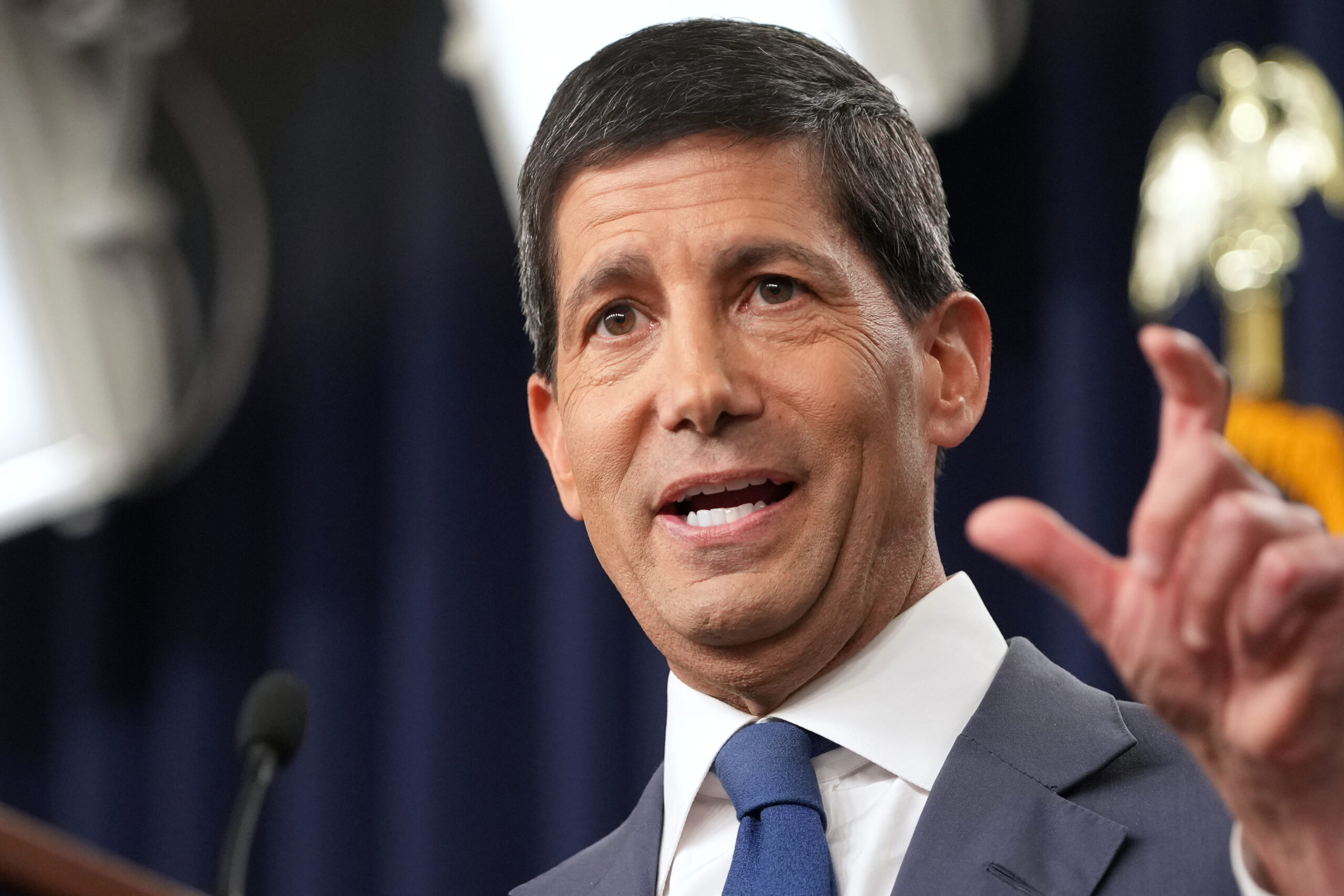
Newly appointed Fed chair Kevin Warsh has talked a good game about getting inflation under control. But his reputation – a key reason that President Donald Trump appointed him – is as someone who would be more interested in keeping interest rates low.
Currently, there’s about a 60% chance that the Fed raises rates by 0.25 percentage points at its September meeting, according to the CME Group’s FedWatch. It also estimates the odds at more than 33% that the Fed will raise rates by 0.50 percentage points or more in total by its December meeting.
If the Fed raises short-term rates, it could put significant pressure on an increasingly tenuous funding environment for the AI industry. Rising rates would reduce the affordability of credit for funding the AI build-out. Higher rates translate into less money flowing through the industry, while AI firms desperately need adequate access to capital to continue.
But if the Fed sees inflation staying low, AI stocks may rebound hard from a ripping point. That’s why it’s important to keep a close eye on inflation and the Fed’s response to it.
AI Requires Massive Debt Financing
The AI build-out – the massive spending going into AI data centers, costly memory chips, and AI model training – can continue at its breakneck pace only as long as firms can borrow cheaply.
The biggest AI investors, including Amazon (AMZN), Microsoft (MSFT), Alphabet (GOOGL), Oracle (ORCL), and Meta Platforms (META), are borrowing hundreds of billions of dollars so that they can keep building the capabilities that they say will be needed in future years.
In total, the big four hyperscalers – everyone above but Oracle – are expected to spend some $725 billion this year. Many analysts expect this figure to top more than $1 trillion in 2027. They simply don’t have the cash flow to pay for this level of build-out without borrowing heavily.
In fact, the borrowing has already become so intense that investors are beginning to pull back somewhat. They’re requiring incrementally higher yields on debt being issued by even top-tier borrowers, such as the hyperscalers above, and showing less overall interest in buying bonds.
For example, last month, Amazon marketed $25 billion in bonds and had to raise the rates on its longest-duration notes. Plus, demand was not as robust as it had been. Orders came in at just 2.5 times the bonds being offered, compared with 3.2 times in a March debt offering.
In the case of Oracle, investors are becoming even more skittish about the company’s debt. The cost to insure the company’s bonds against default over the next five years, through derivatives known as credit default swaps, has risen aggressively since mid-2025 and keeps rising.
Oracle is already substantially indebted and will likely have to sell even more bonds to meet its investing commitments. S&P Global Ratings recently downgraded Oracle’s debt to one notch above “junk” status, and a further downgrade could raise its future cost of borrowing. This setup means that Oracle stock could fall another 50% after already being cut in half earlier this year.
Meanwhile, less well-heeled AI players such as CoreWeave (CRWV) are being forced to cough up junk bond-like yields for much more modest borrowings. It’s negotiating a bond at a rate 5.5 percentage points above the benchmark, or up to 1.25 percentage points above its initial talks. Already, that amounts to a yield of more than 9%. Firms needing to raise money could see their benchmark rate rise and therefore their actual rate, if the Fed decides to raise short-term rates.
So, if the Federal Reserve raises interest rates, it could rapidly put a damper on the fundraising that’s so critical to the AI build-out, even as investors are already questioning AI’s economics.
OpenAI, Anthropic Must Raise Money to Survive
The necessity of even the largest companies to raise money shows how much the AI build-out relies on affordable credit. This is something that will be felt the most by financially weaker players, names such as OpenAI and Anthropic, that need financing to survive. These companies are burning cash furiously – OpenAI recorded an operating loss of $20.9 billion in 2025 alone.
These AI modelers are effectively no longer being funded by the usual Silicon Valley venture capital investors. The same companies above that are funding them must raise money and so are subject to the same dynamics in the credit market as everyone else.
For example, in its March funding round, OpenAI raised $122 billion, but almost all of it ($110 billion) came from three investors:
- Amazon: $50 billion
- Nvidia (NVDA): $30 billion
- SoftBank (SFTBY): $30 billion
If the Fed raises interest rates, it will reduce the capacity of large investors such as these and the hyperscalers to raise incremental capital, hurting their ability to fund OpenAI and Anthropic.
Perpetual money burners such as OpenAI MUST raise money to survive, since it cannot make money on its own. Given its estimated $1.4 trillion in spending commitments – money that’s spent all over the AI industry – OpenAI is essential to propping up the AI sector.
If companies find it increasingly less affordable to raise money – perhaps due to the Fed raising short-term rates – it has the potential to spiral out of control, popping the AI bubble. The road to bursting the AI bubble may run right through the Federal Reserve.
Regards,
James Royal, PhD
Editor’s Note: Whitney Tilson — the hedge fund manager CNBC called “The Prophet” — says America has reached its “Ripping Point.” The old financial order is being torn apart, and he believes most investors have no idea what’s coming in the next six months. He’s named the stocks he thinks will be destroyed in the chaos — and the ones he believes will soar. Watch his free presentation while it’s still available.