You probably didn’t buy Amazon (AMZN) when it went public… or Nvidia (NVDA) before the artificial intelligence (“AI”) boom… or Tesla (TSLA) a decade ago when everyone on Wall Street was laughing at it…
But you can own what’s expected to be the largest technology initial public offering (“IPO”) in history.
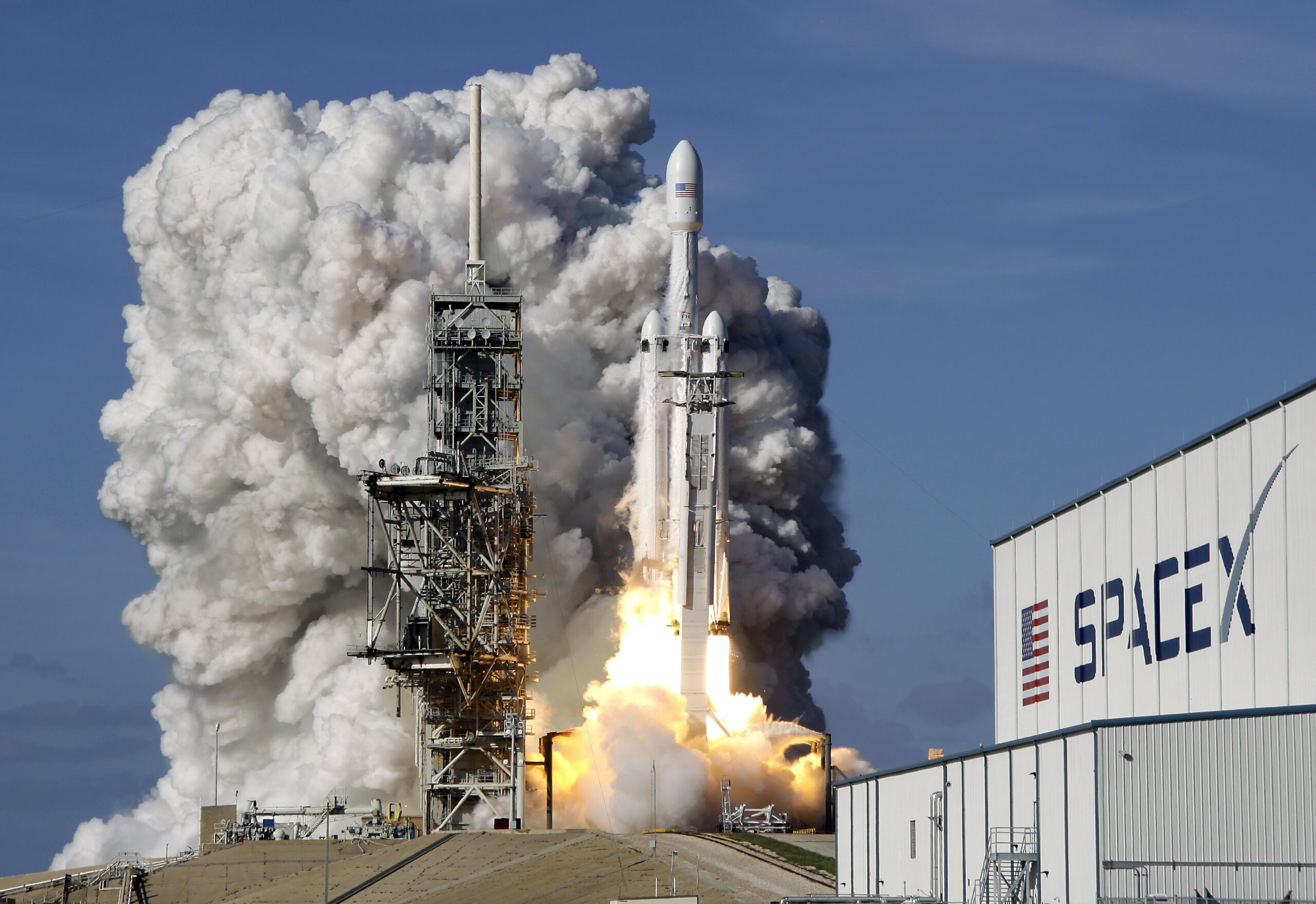
Right now, Elon Musk’s space venture SpaceX is reportedly preparing to go public. It’s said to be targeting a $1.5 trillion valuation – or even higher – as it plans to raise some $30 billion to $50 billion from public investors.
CNBC has called it “the big market event of 2026.”
And here’s what most folks don’t realize yet…
You don’t have to be a Silicon Valley insider or a hedge fund manager to get early access.
Thanks to some creative financial vehicles that didn’t exist even five years ago, everyday investors can claim a stake in SpaceX for as little as a few hundred dollars.
We’ll break down everything you need to know, right here…
We’ll cover why Starlink, SpaceX’s satellite internet division, could become Musk’s next trillion-dollar public company. We’ll look at its jaw-dropping growth numbers and virtual monopoly over the space industry. We’ll even walk through the specific “backdoor” routes that let regular people like you invest before its IPO day.
And most importantly, we’ll introduce you to Brownstone Research and its founder, Jeff Brown, the tech executive turned investment analyst who has been tracking this story for years.
He says the parallels between Starlink and the biggest winners in stock market history are hard to ignore…
Table of Contents
Three Reasons Why Investors Should Consider Elon’s Next Trillion-Dollar IPO
Elon Musk has founded, built, and reinvented companies that reshaped entire industries…
Tesla proved electric vehicles could be desirable. SpaceX proved private companies could reach orbit. And PayPal (PYPL) lets anyone send money over the internet.
But his biggest opportunity might still be ahead of him.
Tucked inside SpaceX is a division called Starlink. It’s a satellite internet network delivering high-speed internet from a swarm of small satellites orbiting just a few hundred miles up. It works in Montana farmhouses. On cargo ships in the Pacific. On commercial airliners at 35,000 feet. Areas in Africa that have never had a broadband connection.
The network already covers more than 150 countries. SpaceX has more than 9,000 satellites in orbit and adds roughly 60 more with every mission. It manufactures 15,000 user terminals per day at its factory in Bastrop, Texas. And because SpaceX reuses its own rockets, launch costs have plummeted more than 90% compared with the old model of building a rocket, firing it once, and letting it sink into the ocean.
That’s helping it grow at a pace that makes even Musk’s other ventures look plodding by comparison.
That’s our first big reason investors should look at this opportunity… Starlink’s growth is off the charts. One estimate puts Starlink’s 2024 revenue at $8.2 billion, almost double the estimated $4.2 billion the year before. And its subscriber base has exploded past 10 million users across more than 150 countries.
And SpaceX has hinted at its plans to take the company public.
In December 2025, SpaceX’s CFO sent a letter to insiders stating plainly that the company is “preparing for a possible IPO in 2026.” And the company has reportedly tapped all the heavy financial hitters – Bank of America (BAC), Goldman Sachs (GS), JPMorgan Chase (JPM), and Morgan Stanley (MS) – to lead the deal.
They’re all competing for their share of fees on a potential $1.5 trillion-plus valuation at IPO… the largest American IPO in history by a massive margin.
Jeff Brown, tech investor and founder of Brownstone Research, has been following SpaceX for years. He wrote last year that “SpaceX is easily one of the most exciting growth stories in history, and the most exciting aerospace company the industry has ever seen.”
He went further…
SpaceX has the potential to become the world’s second $10 trillion company. The first, of course, will be NVIDIA.
However, once SpaceX commercializes the Starship, which will happen in the first half of next year, and begins to launch several Starships every month, all bets are off.
SpaceX is the single infrastructure company for the entire space economy, which will become a multi-trillion-dollar industry.
History tells us that catching a company during a period of triple-digit revenue growth can produce returns that change the trajectory of your financial life…
That’s because SpaceX has built a monopoly nobody can catch.
As Space.com reports, SpaceX has shattered its launch record six years in a row:
[T]he numbers are getting pretty silly. The record has risen from 25 orbital liftoffs in 2020 to 31 (2021) to 61 (2022) to 96 (2023) to 134 (2024) and, now, to a whopping 165. And that’s not including five non-orbital Starship test flights by SpaceX.
That’s a launch almost every other day, a staggering cadence that leaves other companies – and entire nations – in the dust. Indeed, SpaceX launched nearly twice as many orbital missions as China did this year [2025], and the company’s 2025 output represented about 85% of the United States’ total tally.
Its competitors are years behind and spending billions just trying to close the gap.
Companies that lock down new markets this completely – think Alphabet’s (GOOGL) Google search engine or Microsoft’s (MSFT) Windows operating systems – have delivered some of the largest investment gains in stock market history.
And SpaceX and Starlink are potentially poised to do that same thing right now.
But up until recently, investing in SpaceX or Starlink was almost impossible for regular people. SpaceX is private. Its shares have only traded in exclusive secondary offerings, largely aimed at institutions and accredited investors. Most folks assumed they’d have to wait for the IPO, by which time the price tag would already be sky-high.
That assumption is wrong.
Today, there’s a way in for everyday investors to access this opportunity. You don’t need to be a venture capitalist or have a million-dollar net worth.
Thanks to publicly traded companies that hold SpaceX stock, retail-accessible venture funds, and new pre-IPO marketplaces, there are now real paths for any investor to get exposure before the IPO hype hits full force.
Warp-Speed Growth Demands Your Attention
There’s a pattern that shows up again and again in stock market history.
A big company introduces something truly new. Something that changes what’s possible. And when that product catches fire… sales soar.
Jeff Brown describes those companies as “growing at warp speed.” And when he spots it, he drops everything to pay attention… Because the returns that follow can be extraordinary.
Starlink’s numbers fit this pattern perfectly. As my colleague James Royal reported late last year:
SpaceX is actually profitable today, according to analysts’ estimates…
Starlink is a huge driver of revenue, and has been growing strongly. Starlink revenues are estimated to have nearly doubled to $8.2 billion in 2024, with customers up 100%, per Payload Space.
And Payload says the company has generated operating profits, estimated at $4.5 billion in 2024.
That number is estimated to have topped $10 billion in 2025 – or roughly two-thirds of SpaceX’s $15 billion total revenue. Some analysts project Starlink revenue could reach $18.7 billion in 2026.
Very few companies of this size manage to double their sales in 12 months. And when it does happen, it almost always means a genuinely disruptive technology has caught fire.
How do we know? Because we’ve seen it before, time and time again…
- Nvidia was a small semiconductor company in early 2001. It had just released the world’s first graphics processing unit, the GeForce 256 chip, and sales jumped nearly 100%. That technological leap set Nvidia on a course to dominate gaming, then data centers, then artificial intelligence.
- Amazon was just an online bookstore when it introduced one-click ordering in 1997. That small innovation removed enough friction from online shopping to blow the doors off the business. Sales soared.
- Netflix (NFLX) was still mailing DVDs in the early 2000s… then it overhauled its recommendation engine and engagement soared. Sales nearly doubled.
- Tesla launched the Model S in 2012 to show electric vehicles could be cool. And even as most folks on Wall Street laughed, often shorting the stock, its car sales more than doubled.
The lesson is the same every time. This sort of sales growth means the company has a product that is fundamentally and measurably better than everything that came before it. It’s essentially a signal of early mass adoption.
And when sales growth goes exponential, so can the stock price.
Now look at Starlink through that lens…
What is it selling? Affordable high-speed internet that works anywhere on Earth. For a rancher in Wyoming, a fishing boat off the coast of Indonesia, or a passenger on a transatlantic flight, it’s the difference between being connected and being cut off. As Jeff Brown put it:
I’ve experienced the service myself on several flights. The performance is just incredible. Basically indiscernible from a broadband service to the home, all from an altitude of 550 kilometers.
That’s the kind of value proposition that bends growth curves upward.
Musk celebrated Starlink hitting 9 million users in December last year by posting on X that “[r]ebuilding the whole Internet in space is not easy.” Then, Starlink crossed 10 million users less than two months later… confirming its massive acceleration.
Financially, Starlink has become SpaceX’s main engine. As we mentioned earlier, it now accounts for nearly 70% of SpaceX’s total revenue… putting the company’s profit margin upward of 50%, according to CNBC’s reporting.
Not bad for a company that most people still think of as “the rocket company.”
Looking ahead, some forecasts see Starlink revenue reaching as high as $24 billion within five years.
That would still represent a small fraction of the global broadband market. So as SpaceX expands from 10 million subscribers to 50 million… and ultimately hundreds of millions… its revenue growth can continue to soar for some time.
All the right ingredients are on the table…
A product unlike anything else. A market of billions who still lack reliable internet. And a team that has already proven it can execute at scale.
The critical question for investors is timing. If you wait until Starlink is the top story on every financial news show, the easiest gains will already have been captured. Right now, most people either haven’t heard of Starlink or think of it as a niche rural internet service.
That gap between reality and perception is where Jeff Brown sees opportunity…
Owning a Global Space Monopoly
One thing really separates Starlink from just about any other investment you could make right now.
It’s not just that Starlink is growing fast. It’s that Starlink is growing fast while facing almost no competition at all.
- The American Enterprise Institute called SpaceX’s Falcon 9 rocket “the GOAT of space launch.”
- MIT Technology Review described the company as having achieved “near-monopoly status.”
- The Progressive Policy Institute went even further, reporting that SpaceX accounted for more than 95% of U.S. launches and warning that the market is “heading toward a monopoly.”
Think about that for a moment. One company is responsible for nearly all of the satellites going into orbit around Earth.
How did we get here?
It started with Musk’s bet on reusable rockets…
Before SpaceX, the economics of space were absurd. You’d spend hundreds of millions of dollars building a rocket, fire it once, and let it crash into the ocean. Think of it as building a brand-new 747 for every single flight and then scraping it after landing.
That was how the entire industry worked for half a century.
Musk’s team figured out how to land boosters and fly them again. That single innovation cut the cost of reaching orbit by more than 90%. And it was devastating for the competition.
Jeff Bezos’s Blue Origin spent years trying to develop a reusable orbital rocket called New Glenn. Its first flight in January 2025 reached orbit successfully… and the booster failed to land. The Federal Aviation Administration investigation found that the first stage couldn’t restart its engines for reentry. It took Blue Origin nearly 10 months to attempt a second flight.
SpaceX, meanwhile, was launching Falcon 9s on a weekly basis.
Europe’s Arianespace or Russia’s Roscosmos? They can’t compete on cost or launch frequency.
This rocket monopoly gave SpaceX what The New York Times called “an express train to constantly deliver satellites to space.”
And Musk has indeed filled the sky with Starlink satellites… launching some 11,000 in just a few years. On a clear night, you can sometimes spot a chain of Starlink satellites moving across the sky. People mistake them for shooting stars.
Amazon has a major competing effort, Project Kuiper, recently rebranded as “Amazon Leo.” As my colleague David Engle notes…
Amazon launched its first two prototype satellites in October 2023. Full-scale deployment was scheduled to begin with the launch of 27 satellites in April. By February of this year [2025], Amazon will have a total of 212 satellites in LEO.
All told, Project Leo’s initial satellite constellation (basically its group of satellites working together in sync) will include 3,232 satellites.
To meet its Federal Communications Commission (“FCC”) license requirements, Amazon must launch half of its satellites by July 30, 2026.
That deadline is going to be tight… in fact, Amazon filed for a two-year extension with the FCC in January this year.
And of course, the savings are massive. David continues:
Because SpaceX is already in the business of space, it costs the company far less to launch satellites with its own, reusable Falcon 9 rocket.
For example, for SpaceX Falcon 9 to launch 20 to 25 of its own Starlink satellites, it costs the company about $20 million. That’s between $300,000 and $1 million per satellite, depending on the launch.
Amazon, meanwhile, relies on commercial launchers – including SpaceX. As such, the cost difference is significant.
On average, Amazon pays around $150 million per launch of 25 to 27 satellites. That breaks down to roughly $5.5 million to $6 million per satellite… a huge price tag compared with Starlink’s launches with SpaceX.
Good luck competing with that kind of 6 times to 18 times cost differential.
Jeff Brown didn’t mince words on The Bleeding Edge:
Simply put, Musk once again did what the industry thought couldn’t be done. Now competitors are starting to realize just how valuable SpaceX and its Starlink constellation are. And they want a piece of the action.
But here’s the thing – SpaceX is already years ahead of the competition. And it is launching new satellites almost every single month now, sometimes twice a month. From my perspective, it’s going to be impossible for these other companies to catch up.
So, why should investors care so much about monopolies?
Because history tells us that companies with monopoly-like market positions have produced some of the largest returns the stock market has ever seen.
- Google owned the biggest share of global search when it went public in 2004. The stock has climbed some 11,000% since.
- Microsoft held more than 90% of the PC operating system market in the early 1990s. A $1,000 investment at its 1986 IPO would be worth millions today.
- Nvidia now commands about 90% of the market for AI-focused chips. The stock is up more than 22,000% over the past decade.
The pattern is consistent. When a company locks down a new market, the payoff for shareholders can be massive.
From an investing standpoint, perhaps you can think of it as today’s equivalent of owning AT&T (T) in the early 1900s or Google in the early 2000s. Monopolies tend to have pricing power, fat margins, and strong defenses against newcomers. They also tend to command higher valuations because their earnings are more secure.
Starlink’s competitive advantage is providing a service nobody else on Earth can match. No other internet provider covers the entire planet… fiber and cable networks don’t reach mountaintops or ships in the middle of the Pacific. Cell towers have dead zones.
But Starlink satellites blanket nearly every square mile. Its addressable market is, potentially, everyone – and likely across a much larger “space economy” than simply rocket launches and internet service.
SpaceX is even exploring the use of next-generation Starlink satellites for data processing and potentially building data centers in space.
Jeff believes the opportunity here is massive. And indeed, he believes it’s the reason behind the SpaceX acquisition of Elon Musk’s AI company, xAI. As he wrote on The Bleeding Edge:
This orbital data center system has become so foundational to SpaceX as a company that it prompted the acquisition of Musk’s artificial intelligence company, xAI, which was just announced [February 3].
What does an aerospace engineering company have to do with an artificial intelligence company developing the most advanced frontier AI model, and soon the world’s first artificial general intelligence (“AGI”)?
On the surface, not much.
But if we look at xAI through the lens of AI data center infrastructure, these businesses are closely aligned.
After all, Starlink’s space-based internet service is responsible for most of SpaceX’s revenues and almost all its profit.
Starlink will generate more than $18 billion in revenue in 2026.
The Starlink business literally funds the research and development of SpaceX’s Starship.
And Starship is the key to enabling SpaceX/xAI to deploy a 1 million AI satellite constellation.
SpaceX is the only company that could possibly achieve this.
Jeff went on to note: “Not only would xAI have control over its own compute needed for running its [AGI] it would have enough to pursue artificial super intelligence (ASI).”
So the question is, how can you get access?
How Everyday Investors Can Access This Opportunity
Normally, investing in a company like SpaceX while it’s still private typically requires status as an “accredited investor”… meaning either a net worth above $1 million or annual income above $200,000.
Of course, that shuts out most everyday investors until IPO day, by which time much of the early gain has already been captured by insiders.
But times have changed. And the doors are more open than you might think.
Jeff Brown’s Predictions
Jeff Brown’s research highlights several ways that anyone, even someone without an accredited status and with just a few hundred dollars, can claim a stake in Musk’s venture before it goes public.
One potential route is buying shares of publicly traded companies that already own a piece of SpaceX.
One of the most direct proxies right now is EchoStar (SATS). In 2025, EchoStar sold wireless spectrum licenses to SpaceX in exchange for SpaceX stock. As Jeff wrote last year…
On the surface, EchoStar is netting $9.5 billion from AT&T and $14.225 billion from SpaceX for a total of $23.725 billion. How’s that for a plan that began 13 years ago?
But that’s not the most interesting part of the story…
The structure of the SpaceX deal is the most interesting.
SpaceX will “pay”:
- $8.5 billion in cash
- Agree to pay $2 billion in cash towards interest payments on EchoStar debt through November 2027
- Up to $8.5 billion in SpaceX stock
That last bit is where it got interesting. At one point, EchoStar’s SpaceX holdings were worth more than EchoStar’s entire market capitalization. Buying EchoStar was effectively buying SpaceX at a discount.
EchoStar Chairman Charlie Ergen saw this coming. As Deadline reported, Ergen said bluntly that SpaceX is “going to be the leader for the foreseeable future.”
Jeff agreed, writing that Ergen “will easily make 10X on his ‘investment’ – all it will take is patience.”
For an everyday investor, buying a few shares of EchoStar is as simple as any stock trade. And it gives you real, measurable exposure to SpaceX’s rising valuation.
There’s also Alphabet, which invested in SpaceX years ago and reportedly holds about 7.5% of the company.
Alphabet is a tech giant with many revenue streams, so SpaceX is a much smaller piece of its total business. But if SpaceX’s valuation climbs toward that reported $1.5 trillion to $1.75 trillion IPO target, Alphabet’s stake could be worth somewhere between $50 billion and $100 billion. Owning Alphabet means you indirectly own a slice of SpaceX, too.
But these two options aren’t what Jeff recommends you do today.
And his research service, called The Near Future Report, provides specific details on which vehicles he recommends and step-by-step instructions for getting in. The gist is simple enough: Go to a specific website, fill out a form, fund your account, and buy into SpaceX pre-IPO shares much the way you’d buy any stock.
But if you wait until CNBC is running the official “SpaceX Files for IPO” as a banner headline, the price you’ll pay will likely be steeper… and much of the easy upside will already be gone.
The current secondary market valuation sits around $750 billion to $800 billion. If the IPO prices at $1.5 trillion, that’s roughly a 100% potential gain for anyone who got in at the secondary level. If the stock pops another 30% to 50% on the first day of trading… and that kind of pop is not unusual for hot tech listings… early investors could make even more.
And if Starlink keeps growing for a decade and reaches several trillion in value… well, the math only gets better the earlier your entry point.
Of course, these are pre-IPO investments. That means limited liquidity. You probably can’t sell your position easily until the IPO or after. Only invest money you can afford to have tied up for months or even years. And diversification is still wise.
But Jeff’s argument is that the upside potential here dwarfs the risks for investors who size their bets responsibly.
Here’s the practical checklist:
- Do your homework. Make sure you understand what you’re buying. And remember that Jeff has put together a full special report explaining exactly what and how to buy. You can learn how to get access here.
- Size your bet carefully. Only invest money you can afford to have locked up. Jeff suggests $500 is enough to get started.
- Be patient. Private investments don’t have daily price updates. But patience has a track record of paying off handsomely in cases like these.
This is a moment where a breakthrough technology and new financial tools are lining up to let ordinary investors participate in a way that simply wasn’t possible five years ago.
What Is Brownstone Research?
Brownstone Research is the independent financial research firm that has been following the SpaceX and Starlink story for years… long before most folks on Wall Street thought Musk had a chance at launching a reusable rocket.
It’s worth understanding who they are, because their track record on tech investing is what gives this whole thesis its credibility.
Brownstone’s mission is to empower subscribers “to thrive amid this era of profound, exponential change driven by today’s tech breakthroughs.” Whether it’s artificial intelligence, quantum computing, the space economy, or autonomous robotics, Brownstone links today’s investment opportunities to what’s coming next.
They were covering AI enablers before the acronym became a cocktail party buzzword. They were writing about the private space economy before it was fashionable. And they’ve built a reputation on accurate calls: Jeff Brown’s 2015 recommendation of bitcoin when it was $240, his 2016 call on Nvidia as an AI play, and his early, contrarian bet on Tesla when most of Wall Street was shorting it.
One thing that sets Brownstone apart is its business model. It’s 100% subscription-funded.
The company doesn’t take fees from the stocks it recommends. It’s not a brokerage. Revenue comes entirely from readers, like you, when they subscribe to newsletters and research services.
When a firm’s only customer is its subscribers, it has a strong incentive to be right.
Brownstone publishes several different types of offerings…
- The Bleeding Edge is a free daily e-letter with tech insights and a reader Q&A every Friday. That’s where many of the Jeff Brown quotes in this article originally appeared.
- The Near Future Report is its paid monthly flagship letter, covering large-cap tech investments riding trends about to hit mass adoption. That’s where the Starlink special report sits.
- They also run Exponential Tech Investor for smaller, early-stage tech picks, and a few more specialized services.
And each service the publisher puts out is written and edited by its founder, Jeff Brown…
Who Is Jeff Brown?
Jeff Brown is the founder and chief investment analyst at Brownstone Research. He’s the person whose analysis drives the Starlink thesis, and his background is unusual for someone in the newsletter business.
Most financial writers come up through Wall Street or journalism. Brown came up through the tech industry.
He spent more than 25 years as a high-technology executive. He held senior roles at Qualcomm (QCOM), the wireless chip giant… NXP Semiconductors (NXPI), a major player in automotive and Internet of Things (“IoT”) chips… and Juniper Networks, one of the biggest names in networking equipment, which was acquired by Hewlett Packard Enterprise (HPE) last summer.
Jeff was in the rooms where technology decisions were made, where new products were evaluated, and where revenue targets were set.
That means when Jeff Brown evaluates a tech company, he’s not just reading reports and guessing. He’s drawing on decades of firsthand experience watching technologies go from lab experiments to mass-market products. He knows what a real breakthrough looks like… he has watched them happen from behind the scenes, time and time again.
Brown is also an active angel investor. He has backed hundreds of private deals over the years, and some of them produced returns that would sound made-up if they weren’t documented. He has talked publicly about 5,000% and even 11,000% gains on certain venture investments.
More to the point, he has made some big public calls that turned out to be right…
He recommended bitcoin in 2015 when it was $240 per coin. He highlighted Nvidia as an AI play in early 2016, well before the mainstream financial press connected those dots. He made a controversial call on Tesla when most of Wall Street was betting against it.
All three of those calls produced extraordinary returns for anyone who listened.
His educational background supports the practitioner experience. He studied literal rocket science – aeronautical and astronautical engineering – at Purdue University. He earned a master’s in management from London Business School and completed executive programs at the Yale School of Management, MIT, Stanford, and UC Berkeley’s School of Law.
Engineering plus business plus legal training is an ideal combination for analyzing a company like SpaceX, which sits at the intersection of rocket engineering, telecom economics, and government regulation.
Brown also spent more than two decades living and working in international markets, including a long stretch in Tokyo. For something like Starlink, which is a worldwide business, that global perspective matters.
In 2015, he shifted from being a tech insider to sharing what he knew with the public. He saw that most people only learned about transformative tech trends after the biggest gains had already been made. Mainstream media, by nature, reports on what’s happening. Not what’s about to happen. Brown wanted to change that.
His Near Future Report has built a following of tens of thousands of subscribers. And he has also advised multiple government agencies… including the Department of Commerce, the National Institute of Standards and Technology, and the Defense Intelligence Agency.
And right now, he says the Starlink opportunity is the most exciting thing he has seen in his career.
Historical Case Study: When One Innovation Changed Everything
To feel the full weight of what Starlink could mean for investors, it helps to step back and look at a parallel from history.
Think back to 1994.
The internet existed, but it was clunky and academic. Most people had never been online. Then Netscape Navigator came along. It was the first graphical web browser that ordinary people could actually use.
It wasn’t complicated technology. But it was the match that lit the internet fuse.
Internet usage exploded. Websites multiplied. Businesses scrambled to get online. And it resulted in a wave of companies that would go on to produce some of the greatest investment returns in history.
And they all happened because a single innovation – the web browser – suddenly made a brand-new technology accessible to the masses.
That’s what Starlink is doing right now, across the world…
About 2.6 billion people worldwide still lack internet access entirely. Hundreds of millions more have connections so unreliable they might as well not exist.
If Starlink succeeds in blanketing the planet with broadband, it will be the infrastructure layer for a new era of global connectivity. Telemedicine in rural Alaska. Online education in Southeast Asia. Mobile banking for the unbanked. Real-time IoT networks connecting everything from autonomous vehicles to agricultural sensors.
And SpaceX isn’t stopping at dishes and routers. The company has plans for direct-to-cellphone satellite service, meaning your regular smartphone could eventually connect to Starlink when you’re outside of cell tower range. As Jeff noted, with next-generation satellites, “SpaceX will have the ability to launch a mobile service that could now be an alternative to the big three wireless operators.”
That would expand Starlink’s addressable market from the millions of people willing to buy a satellite dish to the billions who already carry phones in their pockets.
To learn how to gain immediate access to Jeff’s full special SpaceX and Starlink report, click here.
Frequently Asked Questions
Question: What exactly is the “device” Jeff Brown shows in his special presentation, and why does it matter?
Answer: It’s a Starlink satellite internet terminal, nicknamed “Dishy” because of its round shape. It’s a portable satellite dish and Wi-Fi router in one unit.
You plug it in, point it at the sky, and you’re online. It works in farmhouses, on yachts, and in an airplane at 35,000 feet.
Question: Is Starlink the same as SpaceX? Will the IPO be for SpaceX or just Starlink?
Answer: Starlink is a division of SpaceX. Musk has long hinted that Starlink could be spun off as a separate public company. And Starlink now generates the majority of SpaceX’s revenue and profit.
However, in February 2026, SpaceX merged with Musk’s AI company xAI in what CNBC called “the biggest merger of all time,” valued at $1.25 trillion. Bloomberg reports that the combined entity may go public using a dual-class share structure that preserves Musk’s control.
The bottom line for investors: However the IPO is structured, Starlink’s satellite internet business is the revenue engine behind it. If you hold SpaceX shares, you’ll have exposure to Starlink no matter what.
Question: How do I actually invest before the potential IPO? I’m not an accredited investor.
Answer: You have several options… we mentioned EchoStar and Alphabet both hold small stakes in SpaceX. And Jeff’s Near Future Report also provides another specific vehicle recommendation with bigger exposure to SpaceX, along with step-by-step instructions. You can click here to go directly to The Near Future Report subscription form, without watching a long video.
Question: What are the risks?
Answer: Every investment has risks, and this one is no exception…
- The IPO could be delayed. Musk controls the timing. If markets turn sour, he could wait. Your capital would be tied up longer than expected.
- The valuation is steep. At more than 60 times current sales, as my colleague James Royal noted, a $1.5 trillion or even higher IPO prices in a lot of future growth. If the stock comes out too hot, it could drop, as many overhyped listings have done.
- Competition exists. Other satellite internet companies are years behind, but that doesn’t mean they’ll stay there. Amazon hasn’t given up on its Project Leo. And governments could encourage or subsidize alternatives for strategic balance.
- Broader market risk is always present. If tech stocks fall out of favor, even strong companies can see their valuations drop. The IPO window got slammed shut in 2022 and 2023 before reopening.
Jeff doesn’t pretend these risks don’t exist. He argues that the upside potential outweighs them for investors who size their bets responsibly and don’t put in money they can’t afford to lock up. But there are no guarantees.
Question: What is The Near Future Report? Do I need to subscribe?
Answer: The Near Future Report is Jeff Brown’s monthly flagship newsletter at Brownstone Research. Each issue highlights one investment idea and the tech trend driving it. He’s currently offering his Starlink special report free with a subscription.
Do you need to subscribe to act? Of course not – we’ve given two ways of getting access to SpaceX shares in this guide. But Brown’s report does focus on a specific investment vehicle that he has personally vetted, as well as his exact timeline for key events. He also sends alerts when conditions change, which could be valuable around the potential IPO itself. And of course, Jeff offers a refund guarantee if you’re not satisfied after you subscribe.
Question: When is the IPO expected?
Answer: Based on all available reporting, mid-2026 is the most likely window. Bloomberg reported that Musk may target mid-June 2026. Sources say four major banks have been hired to lead the deal. And SpaceX’s CFO explicitly stated the company is preparing for a potential 2026 IPO.
Watch updates via SEC filings or S-1 prospectus, Elon’s commentary on X, or changes to SpaceX’s internal secondary share sales.
Key Terms Defined
Accredited Investor: A person the SEC considers financially sophisticated enough to participate in private investments.
Qualifications include annual income of more than $200,000 for two consecutive years (or $300,000 with a spouse), or a net worth exceeding $1 million excluding your primary home. The methods Jeff describes in his special presentation are specifically designed for people who don’t meet these thresholds.
Direct-to-Cell: A planned capability where Starlink satellites connect directly to standard smartphones without a special dish.
SpaceX is testing this with T-Mobile (TMUS). If it works, your phone would have satellite coverage anywhere on Earth when you’re beyond cell tower range. This could make SpaceX an alternative to the big three wireless operators, potentially expanding Starlink’s addressable market from dish owners to the billions of people carrying phones.
Free Cash Flow: The cash a company generates from operations after subtracting capital expenditures.
Starlink reached free cash flow breakeven at the end of 2023… a milestone that makes the company far more attractive to IPO investors because it proves the business can sustain itself.
Initial Public Offering (“IPO”): When a private company sells shares to the public for the first time and lists on a stock exchange.
For SpaceX/Starlink, an IPO would create a new publicly traded entity, letting anyone with a brokerage account buy shares. Pre-IPO investors typically benefit from having entered at a lower valuation, but of course there’s no guarantee on an IPO’s valuation.
Latency: The delay between sending data and receiving a response.
Starlink’s LEO satellites deliver latency of about 20 to 40 milliseconds, comparable with ground-based fiber. Traditional satellites at 36,000 kilometers have a latency of around 600 milliseconds, far too slow for video calls or gaming. Low latency is one of Starlink’s biggest selling points.
Low Earth Orbit (“LEO”): An orbital zone between roughly 160 kilometers and 2,000 kilometers above the Earth’s surface. Starlink satellites orbit at about 550 kilometers.
LEO is critical for internet service because the short distance means low latency, meaning data gets to you fast. Traditional communications satellites sit at 36,000 kilometers, creating noticeable delay. The trade-off is that LEO satellites each cover a smaller area, so you need thousands of them for global coverage.
Market Capitalization: The total value of a company’s outstanding shares.
For a public company, you calculate it by multiplying the share price by the number of shares. For a private company like SpaceX, the valuation is based on the most recent funding round or secondary sale. When Bloomberg reported SpaceX’s valuation at $800 billion, that figure came from insiders trading at $421 per share.
Recurring Revenue: Income that repeats on a regular schedule, like monthly or annual subscriptions.
Starlink charges between $50 and $120 per month for service. About 80% of its revenue is recurring, which investors prize because it’s predictable. Companies with high recurring revenue get higher valuations for exactly that reason. It’s the same model that has previously made Netflix and software companies popular with Wall Street.
Reusable Rocket: A rocket designed to fly more than once.
SpaceX’s Falcon 9 boosters land themselves and fly again, cutting costs dramatically because fuel is cheap compared to the hardware. Traditional rockets were used once and discarded. SpaceX’s upcoming Starship aims to be fully reusable, with both the booster and spacecraft returning intact.
Satellite Constellation: A group of satellites working together as a coordinated system.
Starlink’s constellation consists of thousands of small satellites in multiple orbital planes, all networked to provide continuous coverage. As individual satellites fly overhead, they hand off connections seamlessly. Starlink is the largest constellation ever built by a wide margin.
Spectrum: The range of radio frequencies that satellites use to communicate.
Operating a satellite network requires licenses from regulators like the FCC and coordination through the International Telecommunication Union. Spectrum is a finite resource, and securing the right frequencies is a barrier to entry for competitors.
What Investors Should Do Now
As we said at the onset of this guide, SpaceX and Starlink will likely be the biggest IPO in American history…
And right now, you can claim your stake with as little as a few hundred dollars… without having to be an accredited investor or a technology insider.
Jeff has explained his full thesis in his special presentation… but he’s reserving the specific vehicle that he recommends as the best way to play this opportunity for his subscribers.
Click here to watch his exclusive presentation.
Or if you’re ready to subscribe now and want to skip the video, you can click here to go directly to a subscription order form.