Image Credit: Associated Press
Listen to the audio version of this article (generated by AI).
Key Points
- X Money has expanded from an invite-only beta to all U.S. Premium and Premium+ subscribers on Elon Musk’s X platform.
- The “Bank of Elon” offers free peer-to-peer payments, a metal Visa debit card, yields of up to 6%, and FDIC insurance coverage of up to $10 million per account.
- The nationwide launch comes just ahead of PayPal’s (PYPL) closely watched earnings report, intensifying competition in the digital payments market.
Elon Musk has taken one more step closer to building, as he puts it, “the central source of all monetary transactions.”
Yesterday, social-media site X began rolling out X Money to its U.S. Premium and Premium+ subscribers… It comes a month after the product’s initial invite-only release, when we noted:
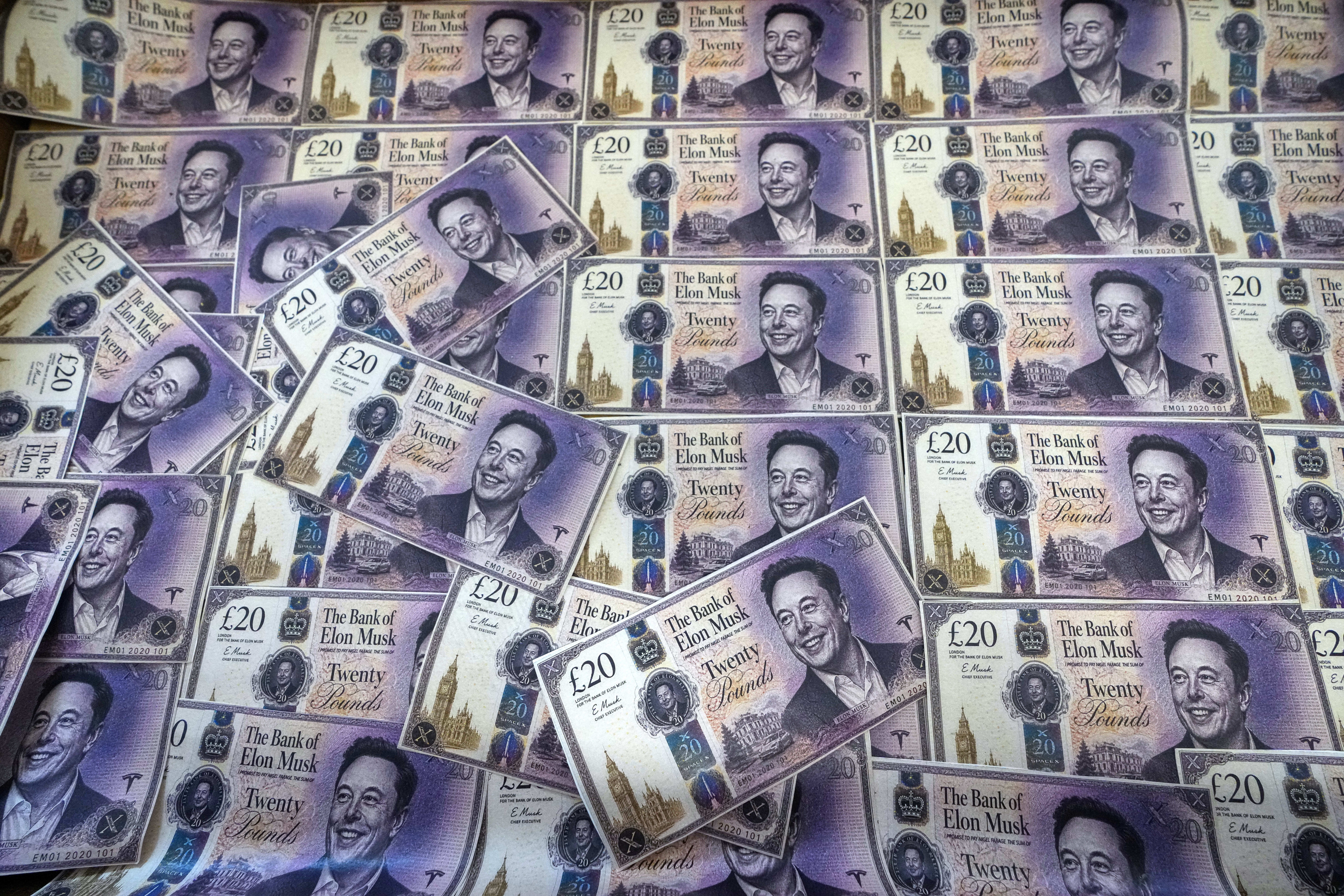
Now comes the real test… Will what Luke Lango, the lead technology analyst at InvestorPlace, calls the “Bank of Elon” be able to turn into the “everything app” that Musk has been building toward for decades?
Eligible X subscribers can now hold a balance inside the app, send money to any X handle with no fees or limits, pay bills, send wires, and even mail a physical check.
Each X Money account comes with a virtual X Card that can be immediately added to Apple Pay, plus an optional metal Visa (V) card. Deposits sit at Cross River Bank, a Federal Deposit Insurance Corporation (“FDIC”) member, and a cash-sweep program spreads account balances across partner banks… with total FDIC insurance coverage of up to $10 million per user.
And the best part… the Bank of Elon is paying up to a 6% yield on balances.
Premium+ subscribers can get the full rate automatically, while standard Premium members unlock it by setting up direct deposit.
The Math Behind X Money’s 6% Yield
How can X afford to pay 6% when the national average savings account rate sits at 0.38%?
As my colleague John Kilhefner noted last week:
That’s a gap of more than 15-to-1. A saver parking $10,000 earns about $38 a year at the national average and roughly $600 inside X Money.
And it’s nearly twice the yield offered by major online banks like Ally (3%), Marcus (3.4%), and SoFi (3.1%), which have traditionally been known for paying the highest consistent annual yields in the U.S.
One reason may be that X Money currently sits behind a subscription… $8 a month or $84 a year for Premium, and $40 a month or $395 a year for Premium+. At 6%, a balance of just $1,400 covers an annual Premium subscription in interest, without counting any cash back on purchases.
Essentially, Musk is charging admission to his bank.
And with an estimated 500 million to 600 million monthly active users, Tech Times argued that this built-in distribution makes X Money’s yield plausible, at least for now and likely for longer than its competitors would like…
The most credible explanation is that the 6% APY functions as a customer acquisition cost — an above-market rate that X can absorb because it already has hundreds of millions of users inside the platform, meaning it incurs near-zero marketing expense to attract deposits. Traditional fintech apps spend heavily on advertising to build a depositor base. X’s embedded distribution eliminates that cost, making a subsidized yield economically plausible at least in the short term.
As John went on:
[A]s a customer-acquisition weapon, 6% is devastating. And PayPal, which built its empire on frictionless money movement, suddenly finds itself on the wrong side of the friction.
Which brings us to the timing of X’s announcement…
Ramping Up the Pressure for PayPal
X Money went live nationwide right before PayPal (PYPL)… a company that pushed Musk out nearly three decades ago… reported one of its most consequential earnings announcements, coming days after its board rejected a $53 billion buyout offer.
As Barron’s summarized:
Recent turbulence at the company—marked by executive turnover and a sluggish first quarter—has only deepened Wall Street’s concerns. In fact, Evercore analyst Adam Fritsch characterized first-quarter earnings, released in May, as merely a “placeholder” until PayPal’s board outlines a clearer path forward.
[CEO Enrique] Lores told analysts on Tuesday that the company was targeting untapped customer segments and expanding Venmo beyond peer-to-peer payments into a “money-management platform.”
We doubt the timing of X Money’s announcement was a coincidence.
And as John laid out last week, that acquisition bid only existed because PayPal is wounded.
Mizuho downgraded PayPal stock a few months back and named X Money as the most direct substitution threat to PayPal and Venmo. PayPal itself filed for a Utah bank charter to build interest-bearing, insured accounts… the very product X Money shipped this week.
This is the first real-world test for Luke Lango’s “Bank of Elon” thesis…
The SpaceX Bank of Elon Call Option Is Now On Sale
Now, the question our readers care most about… What does the launch of X Money mean for SpaceX (SPCX) investors?
Back in June, we pointed out that SpaceX’s initial public offering (“IPO”) paperwork had buried X Money under the vague label “Money Product”… while mentioning xAI 400 times. Our take then:
[I]f you buy the SpaceX IPO, you should think of X Money as a “call option” of sorts.
A call option gives you the upside exposure to an asset without paying full price for it today. Buy SPCX, and you own a share of Falcon 9, Starlink, Grok, and the rest. You’ll also own a sliver of X Money, valued at essentially nothing by the vast majority of Wall Street.
Now… we also warned that SpaceX was trading at an exceptionally steep valuation.
And we noted that Luke’s “How to Make 1,000% From the Bank of Elon” report focused on 19 public companies that were most crucial to X Money’s rollout… beyond SpaceX.
Since then, SpaceX has plunged.
After nearing a $3 trillion valuation shortly after its IPO, it now trades nearly 50% below its all-time high. Our colleagues have chronicled the slide, from the bear case for another 50% drop to the argument that its AI unit hides real value.
But for the Bank of Elon story, none of that matters…
At the IPO, investors paid a record price and got the bank as a free extra of sorts, barely mentioned in the go-public paperwork.
Today, the shares cost much less… and the free extra is now an official product with hundreds of millions of potential users.
What Investors Should Do Today
We’ll see if Musk can succeed in his monetary dreams.
But Luke has argued for months now that this launch, not the SpaceX IPO, is the biggest overlooked story in the market. His favorite comparison remains WeChat, the Chinese app that added banking in 2013 and helped hand Tencent investors a roughly 20-fold return. As he wrote at InvestorPlace:
X Money is the American version of [the WeChat] story. Except Elon Musk has significantly more users, significantly more political tailwind, and significantly more audacity.
The difference, in Luke’s telling, is scale. Musk starts with a bigger audience than WeChat did, plus executive orders that have pushed federal payments digital, and a target he sizes at $480 trillion… the full sweep of global financial services.
It has been some 27 years in the making… But as of today, the Bank of Elon is open for business.