Image Credit: Associated Press
Listen to the audio version of this article (generated by AI).
Key Points
- Although SpaceX’s aborted Starship V3 launch weighed on the stock, investors may want to look beyond the headlines to the company’s AI business, where its biggest long-term growth opportunity could lie.
- Chinese AI models are becoming significantly cheaper while rapidly narrowing the performance gap with U.S. competitors, potentially challenging the economics of massive AI infrastructure spending.
- SpaceX also offers additional upside through Elon Musk’s vision for the “Bank of Elon,” transforming X into an all-in-one platform for payments and financial services.
The scrubbed test flight of SpaceX’s (SPCX) Starship V3 may have pushed the stock down in the short term, but savvy investors should look beyond that to find even bigger concerns. SpaceX remains way overvalued as hyper-efficient, low-cost Chinese artificial intelligence (“AI”) models threaten America’s surging investment in costly AI data centers.
That leaves SpaceX – which, despite its misleading name, is an AI company – in a precarious position.
While having a flight called off might get investors feeling a little antsy, the Space unit is effectively the least financially important of all three of SpaceX’s business units – Space, Connectivity, and AI.
Instead, SpaceX investors need to focus on the AI unit, both due to the potential disruption of Chinese AI and the potential for the “Bank of Elon,” a new project that turns the X social-media site into “the everything store for financial needs.”
Chinese AI Models Threaten American AI Data Center Build-Out
Chinese AI model companies such as DeepSeek, which is now planning an initial public offering (“IPO”) in the next six months or so, are making the case that American AI infrastructure is vastly overbuilt. And that’s a huge problem for companies like SpaceX, which have invested heavily in AI data centers and similar infrastructure as part of America’s “compute-maxxing” business strategy.
Chinese AI is rapidly capturing market share from American AI companies such as OpenAI, Anthropic, and SpaceX’s Grok. DeepSeek became the most-used AI model company in June, according to AI model brokerage platform OpenRouter. But it’s not just DeepSeek: Chinese AI models processed 48% of tokens, compared with 20% for U.S. models during the last week of June.
The key reason for the switch? Chinese AI models perform “well enough” at a small fraction of the price. But increasingly Chinese AI models are fully competitive with some top models, too.
For example, on a standardized intelligence task, DeepSeek’s V4 Flash model costs just $0.02, compared with $0.14 for Grok 4.3 and Claude Fable 5’s $2.75, a high-end Anthropic model.
Now, a just-released model from China’s Moonshot AI called Kimi K3 is said to outperform all rivals except Claude Fable 5 and OpenAI’s GPT-5.6 on overall ability, according to the company.
So now Chinese models can offer low-cost models as well as high-end models. But the key point for investors is that Chinese AI companies are doing all this without advanced processors, thanks to U.S. export controls. They’ve had to take a different approach from the “brute-force” or “compute-maxxing” strategy used by American AI firms, but suddenly it has become a strength.
But if high-powered models can be run at low cost without needing the highest-end chips, how does that affect the trillions of dollars of investment in American AI data centers?
Frankly, it seems to spell disaster. If Chinese models can do it cheaper and at least as well, how much can American model companies, including SpaceX, charge for their models? And how much can those companies then pay for the compute resources at AI data centers?
If OpenAI and Anthropic can’t generate enough revenue growth as more volume shifts to Chinese models, how do they pay companies such as SpaceX and Oracle (ORCL) that are leasing them data centers? Tons of debt is piled on top of an AI business strategy that looks increasingly fragile, and if OpenAI can’t pay its bills, the lack of cash flow could quickly spiral out across the industry.
And that’s a key part of the argument of Big Short investor Michael Burry, who has said the “end is nigh” for AI and has taken short positions in various AI-related stocks. Burry criticizes the AI industry for focusing on large language models rather than reasoning models. This focus made it appear that the AI’s problems could be solved with ever more AI resources.
In other words, American companies placed a big bet that if hardware were scaled up enough, then AI would be perfected. That has led to the huge expansion of AI investment, much of it with borrowed money, as American firms focus on compute-maxxing above all else.
All this matters for SpaceX because it pitches itself – again, despite the name and all the “travel to Mars” come-ons – as an AI company. In its prospectus, the company says, “We believe we have identified the largest actionable total addressable market in human history.” The filing says the company’s market is $28.5 trillion, with more than 90% of that in the AI sector specifically.
In other words, if you’re buying SpaceX stock, you have to fully believe in the promise of AI, or shares are likely worth substantially less than it currently trades for, especially as Chinese AI makes inroads.
SpaceX’s “Bank of Elon” Offers Upside Optionality
Despite these concerns, SpaceX does offer further optionality in the form of what SpaceX coyly called its “Money Product” in its IPO prospectus. The company was playing its cards close to its chest when it described the potential of this unit on its X social-media site (formerly Twitter):
We plan to publicly launch the Money Product, which will offer payment, banking and other financial services functionalities, including enabling our users to purchase tangible, virtual, and digital goods from merchants and send money to other users, among other activities.
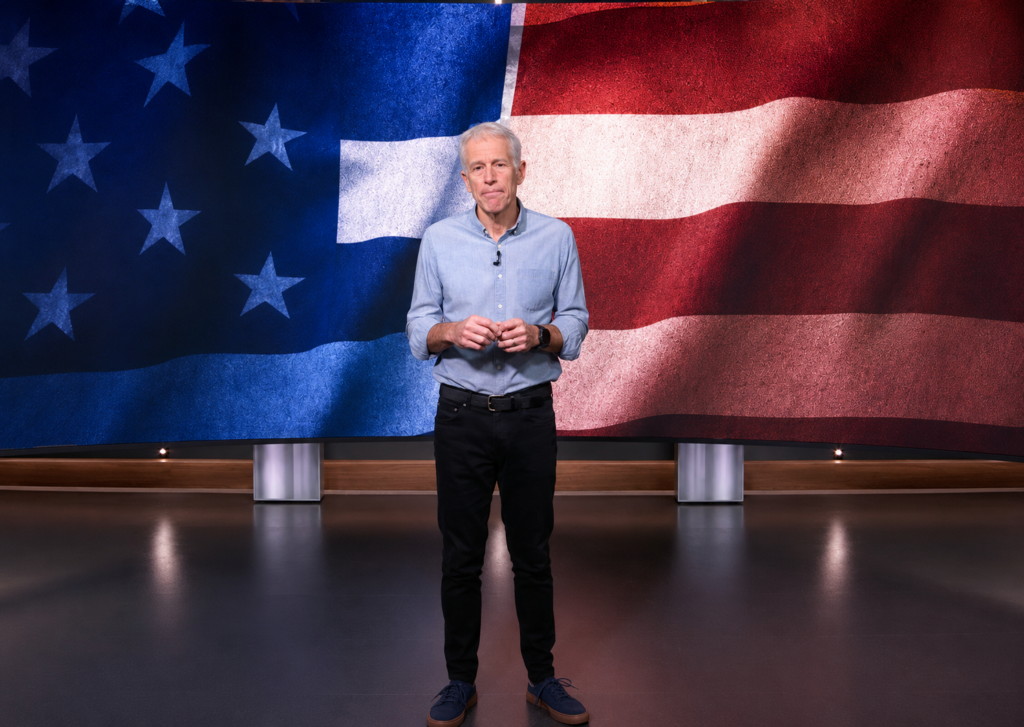
It’s this element of SpaceX that is going unwatched while the occasional rocket failure or the AI drama takes center stage. But the unit is what Luke Lango, lead technology analyst at InvestorPlace, has predicted in this exclusive interview (transcript here) could ultimately overshadow the profits at SpaceX CEO Elon Musk’s Tesla (TSLA).
Lango calls it the “Bank of Elon,” and while it’s flying under the radar now, Musk has said that his goal for X Money is to be “the place where all the money is – the central source of all monetary transactions.” As my colleague Steven Longenecker notes, “That points at a potential $480 trillion market and the biggest change to American banking in more than 50 years.”
Musk has already been working on the project, securing money-transmitter licenses in most states, signing a partnership with Visa (V) to power peer-to-peer transfers, and launching FDIC-insured checking accounts – all accessible through the X social-media site.
So, investors need to carefully weigh the upside of this new initiative against the threats of Chinese AI, while carefully considering the hefty price they’re paying for SpaceX’s stock.
Regards,
James Royal, PhD