Listen to the audio version of this article (generated by AI).
Today’s issue in preview:
-
When the market turns higher, you’ll want to own these stocks
-
Spending on this new health treatment is exploding. How to invest in it
-
Mega retailer Target just reached a new one-year high. Here’s what that means for your portfolio
-
Learn our Top Themes to buy now
When the market turns higher, you’ll want to own these stocks

Credit: janiecbros
In last Thursday’s issue, we analyzed the widely followed Dow Jones Industrial Average and noted this key stock gauge is trading below its 200-day moving average.
This new development indicates we are in an unpleasant climate for stock market investors.
If the Dow continues to trade below the 200-day moving average, we can say that the rising tide of money flowing into our capital markets, which has kept stock prices buoyant, is receding. In that situation, the investor is swimming against the current rather than with it.
On the other hand, the Dow could rally right back above it next week, restoring health to the trend. It has done so several times in the past three years.
If the latter happens – and health is restored to the stock market’s primary trend – the Pharmaceutical Infrastructure theme is something you’ll want to watch. This theme is demonstrating extraordinary “relative strength” right now.
During stock market corrections, it’s a good idea to review what stocks are holding up better than the overall market. When a company’s stock price holds steady during a broad market decline, it’s a sign that the company likely has very strong fundamentals, a reasonable valuation, and thus strong buying support from large money managers.
For example, if the market drops 10%, you want to see what drops just 2%. Or even rises 2%. If the market drops 5%, you want to see what climbs 5%. That sort of thing.
This is often called “relative strength.” It allows you to spot the safer, sturdier stocks and megatrends for investment. These stocks often are outstanding performers when the broad market environment improves.
It’s like looking at a beachfront neighborhood after a hurricane. Some homes lost their roofs, and some homes were blown away. But some homes were unbothered by the storm. Those are safe, well-built homes.
Over the past three months, I’ve highlighted the bull market in Pharmaceutical Infrastructure firms such as Waters (WAT), Agilent Technologies (A), Azenta (AZTA), Cryoport (CYRX), Thermo Fisher Scientific (TMO), and Revvity (RVTY).
The Pharmaceutical Infrastructure industry group supplies the essential tools, technologies, equipment, and services that large drug companies need to discover, test, and manufacture new medicines.
These businesses produce everything from sophisticated laboratory instruments and diagnostic systems to drug-testing equipment, specialized chemicals, and advanced manufacturing equipment.
Back in September, we highlighted this group’s emerging uptrend and bright long-term outlook… which is being powered by the larger Boomer healthcare megatrend.
The fortunes of the Pharmaceutical Infrastructure group above are closely tied to the R&D and capital spending cycles of drug firms such as Pfizer (PFE), Eli Lilly (LLY), and Gilead Sciences (GILD).
When drugmakers expand laboratory research, genomic analysis, testing programs, and manufacturing capacity, they require more analytical instruments, services, consumables, and bioprocessing equipment – the “picks and shovels” supplied by companies like Waters and Azenta.
We believe the bull market in Pharmaceutical Infrastructure firms is indicative of a healthcare megatrend that will generate large returns over the coming years…
That thanks to advanced genomic sequencing, AI-powered data analytics, and other bleeding-edge innovations, the healthcare industry will move away from blunt “one-size-fits-all” treatments and move to more “personalized” treatments that are tailored to an individual’s genetic makeup.
This megatrend will drive strong drugmaker R&D spending and strong revenue growth for the well-positioned “picks and shovels” firms above.
Also, consider that U.S. healthcare leaders and the U.S. government are very keen on increasing domestic drug manufacturing to reduce our reliance on foreign manufacturing.
The FDA says more than half of pharmaceuticals distributed in the U.S. are manufactured overseas, and only about 11% of active pharmaceutical ingredient (API) manufacturers are U.S.-based.
Since 2025, pharmaceutical companies have announced hundreds of billions of dollars of U.S. manufacturing and R&D investment.
Commercial real estate investment firm CBRE tracked approximately $350 billion in announcements, although it estimates that roughly half of these were projects already planned or underway – an important caveat when interpreting the headline.
Combine these two trends – the personalized treatment revolution and the domestic drug manufacturing boom – and you get serious fundamental tailwinds that should drive the bull market in many areas of healthcare, especially the “picks and shovels” providers of drug development and manufacturing.
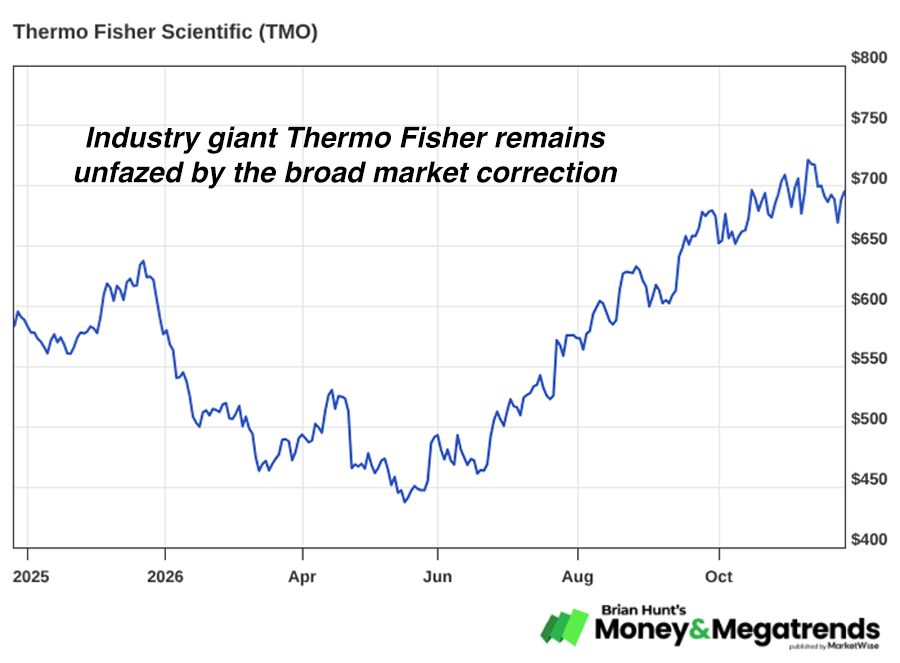
Despite the broad market’s weakness over the past two months, Pharma Infrastructure leaders Thermo Fisher Scientific and Waters are well within the confines of their uptrends and are trading less than 4% from their all-time highs.
Sector leader Agilent is one of the few large-cap stocks to reach a new one-year high today.
These developments make it so the Pharmaceutical Infrastructure group is displaying some of the market’s highest “relative strength.”
The legendary growth stock trader William O’Neil taught us that leading growth stocks that hold up well during corrections are often some of the market’s strongest performers when the market eventually regains its health. This lesson taught by one of the all-time greats has Pharmaceutical Infrastructure high on our watch list.
Recommended Link:
Billionaire: “Gold will significantly outperform the Nasdaq”

Tech stocks are rattled. And hedge-fund manager David Einhorn now expects gold to post even bigger gains in the next 3-5 years. But you don’t need to own gold itself. One little-known gold strategy gained 50%+ in 2008, when the market crashed. And you can get in today for under $40. Full details right here.
Spending on this new health treatment is exploding. How to invest in it

Credit: svetikd
Speaking of relative strength and market leading stocks…
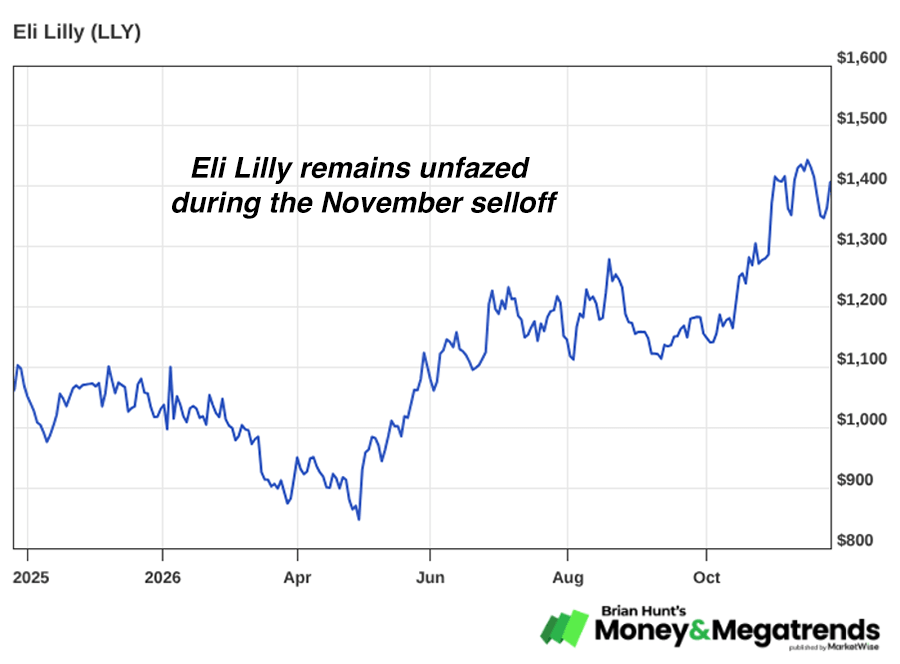
It’s worth noting today that this style of analysis is producing a ringing endorsement of GLP-1 giant Eli Lilly (LLY).
While many high-profile stocks and stock indexes are down more than 10% from their highs and are trading below their 200-day moving averages, Eli Lilly is well above its 200-day moving average and is a chip shot away from a new all-time high.
Lilly is the world’s largest maker of GLP-1 drugs… and business is booming.
In Lilly’s third-quarter earnings report, the company reported that revenue surged 39%, which is extraordinary for an already large company. Lilly’s remarkable growth was powered by booming demand for its GLP-1 treatments, Mounjaro and Zepbound.
Sales of Mounjaro soared 65% to $10.72 billion, while Zepbound revenue jumped 49% to $5.35 billion. Together, these two blockbuster drugs generated more than $16 billion in quarterly sales, accounting for approximately two-thirds of Lilly’s total revenue.
The company’s international business is booming, with revenue outside the United States jumping 47% to $9.3 billion. Its gross profit margin reached an extraordinary 83.9%, highlighting the tremendous profitability of its products.
Avid Money & Megatrends readers are not surprised to hear the GLP-1 business is booming.
Back in July, we published a research note on how spending on longevity is rising now and is poised to continue for many years.
Data from the Federal Reserve shows that between 15 million and 20 million baby boomers are millionaires. More than 1 million boomers are worth more than $10 million. The U.S. population aged 80 and older is projected to roughly double, from 14.7 million in 2025 to 29.4 million by 2045.
This is the largest group of wealthy people in history.
This means there are many motivated, older, wealthy people out there who can spend big on longevity.
One of the leaders of this investment trend – you could even call it the poster child – is Eli Lilly.
Lilly is the world’s largest seller of glucagon-like peptide-1 (GLP-1) medications. GLP-1 drugs mimic a natural gut hormone. They control blood sugar by stimulating insulin release, thereby slowing digestion and reducing appetite.
Over the past five years, this class of medications has exploded in popularity. A representative of healthcare giant IQVIA says GLP-1 therapies for weight loss generated $55 billion in sales over the past 12 months, which is up from $2 billion in 2022.
Many people who take GLP-1 drugs see drastic weight loss in less than six months… which should extend their lives. Studies indicate that GLP-1 drugs may also lower cholesterol, slow cancer growth, and reduce the risk of cardiac disease. They are also prescribed to treat sleep apnea, which is a pervasive problem whose effective treatment should extend many lives.
In other words, GLP-1s are believed to be the closest thing to “miracle longevity drugs” that we currently have.
As a result, Eli Lilly’s sales are skyrocketing, its stock is in a clear uptrend, and it has held up remarkably well in the broad market correction. It’s yet another bullish development for the world’s GLP-1 leader.
Mega retailer Target just reached a new one-year high. Here’s what that means for your portfolio
Credit: Walter Cicchetti
Over the past two months, we’ve published a special series of research notes that highlight how the American consumer is much stronger than most people give it credit for.
We have detailed the strong business performance and rising stock prices of credit card giant Visa (V), fellow giant Mastercard (MA), electronics retailer Best Buy (BBY), premium home furnishing retailer Williams-Sonoma (WSM), and the bull market in hotel and resort operators.
When America’s largest credit card and hotel firms are doing well, it’s a clear sign of robust consumer spending.
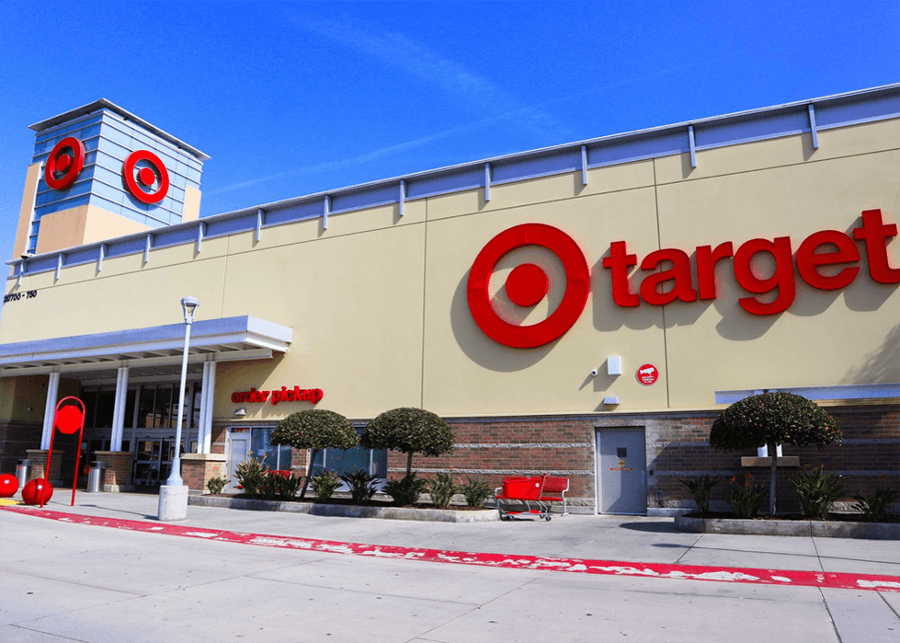
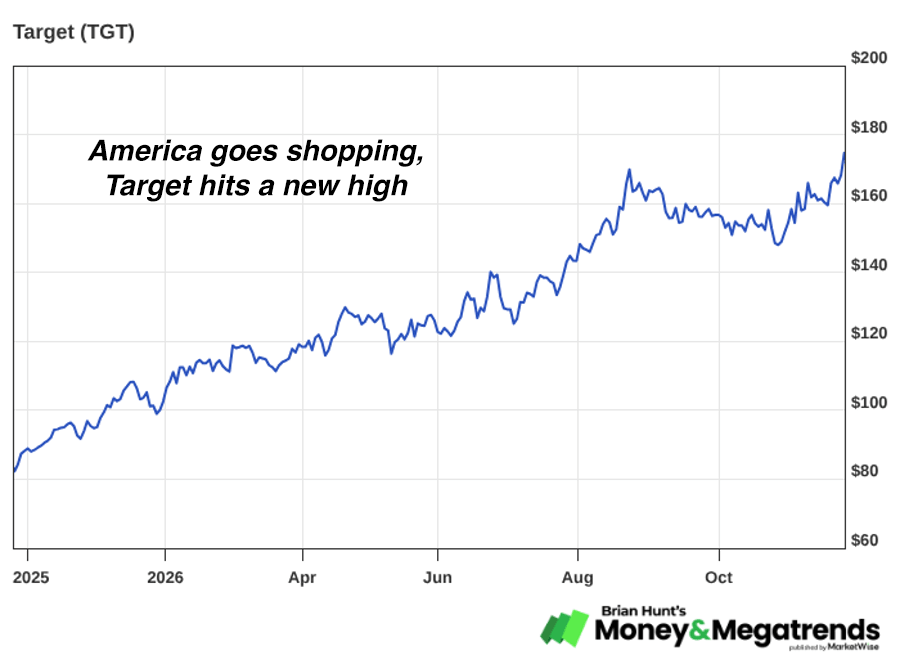
Today, trading in shares of mega retailer Target (TGT) confirmed this trend. It is one of the few large-cap stocks reaching a new one-year high today.
With a market cap of $79 billion, Target is one of America’s largest general merchandise retailers.
The company operates approximately 2,000 stores across the United States, selling groceries, clothing, electronics, beauty products, home furnishings, and household essentials. The company’s typical customer is middle-income to upper-middle-income. Think in between Dollar General and Whole Foods.
Target’s ubiquitous presence in American shopping life makes its stock price trend a good “real world” economic indicator. This is because Target’s fortunes rise and fall with America’s ability to make money and spend it on food, clothes, toys, electronics, and household goods.
Right now, this indicator – plus the ones detailed above – says the American consumer is doing much better than the mainstream media would have you think.
Does the U.S. economy have imbalances, distortions, and risks?
Absolutely. It always does. But those big problems are currently being overwhelmed by the even bigger positives.
The market prices of key cogs in the economic machine such as Visa, Mastercard, Best Buy, Williams-Sonoma, Marriott, and Target are strong. This does not happen when the economy is sputtering. Manage your financial affairs accordingly!
Market Notes
-
The biotech bull market continues: Drug royalty giant Royalty Pharma (RPRX) reached a new one-year high today.
-
Healthcare Diagnostics leaders Labcorp (LH) and Quest Diagnostics (DGX) reached new one-year highs today.
-
The iShares China Large-Cap ETF (FXI) reached a new one-year low today as the Chinese stock market struggles.
-
Oil and water royalty giant Texas Pacific Land Corporation (TPL) reached a new one-year low today.
-
Geothermal energy giant Ormat (ORA) reached a new one-year low today.
-
Air taxi stocks Joby Aviation (JOBY) and Archer Aviation (ACHR) reached new one-year lows today.
Top Themes to Buy Now
🦾 Amazon’s stock is doing something extraordinary
⚒️ These stocks are the best inflation hedges you don’t know about
📈 Quality dividend payers are delivering stability in a volatile market
Regards,


Brian Hunt
Editor, Money & Megatrends
An urgent message from our colleagues:
Tesla and SpaceX Merging? Think Bigger…

Rumors of a SpaceX-Tesla merger are heating up, but former VC insider Luke Lango says the mainstream media is missing the bigger picture. “If these two companies converge,” Lango says, “it could create $126 trillion in wealth.” That’s more than AI, robotics, clean energy, and driverless cars combined.
And one $15 stock is at the center of it all…