Geopolitical tensions intensified this week… and gold traders are emerging as the clear winners.
The yellow metal just hit another all-time high, climbing above $4,800 an ounce. This comes after gold had its best year in decades, and still more upside is likely as economic fears and uncertainty continue.
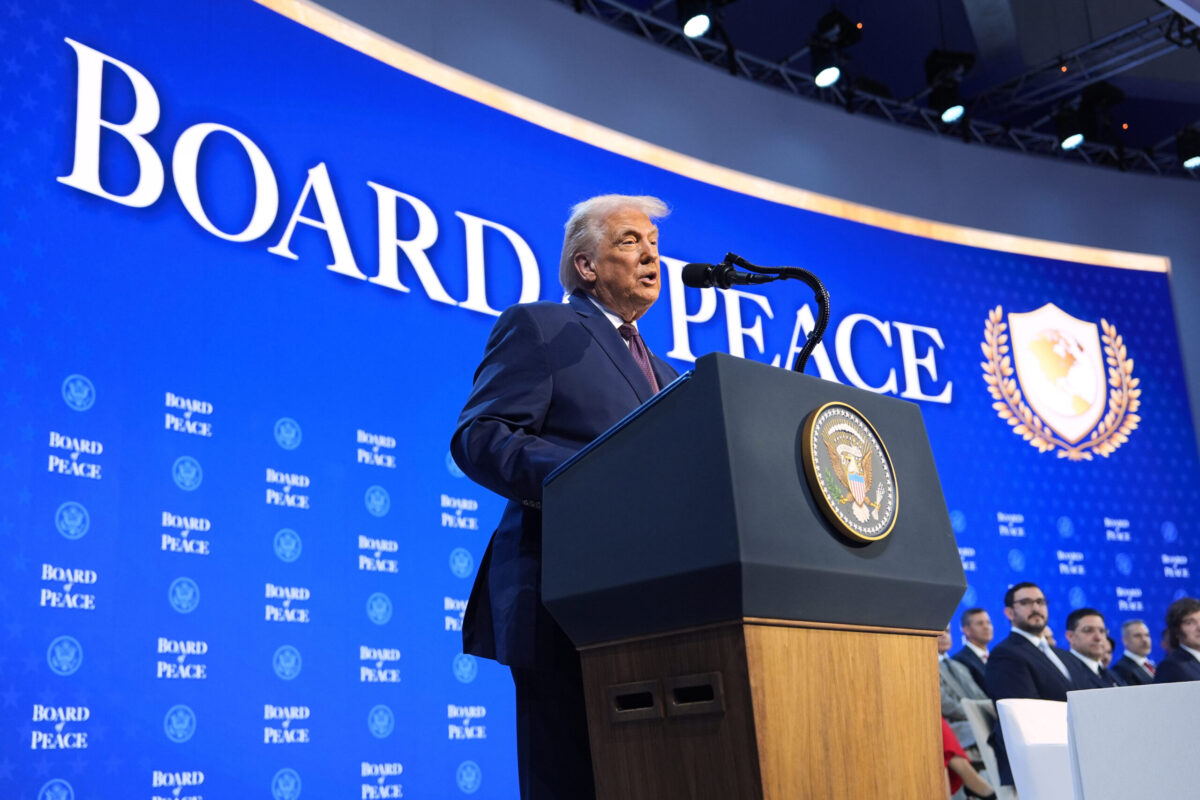
In short, President Donald Trump decided that he wants to take over Greenland… the massive North Atlantic island currently part of Denmark.
Denmark and other European Union nations have resisted, stating that the island isn’t up for grabs. The situation had been rapidly escalating, with both the U.S. and EU threatening to reignite a global trade war…
Trump announced that he would impose a 10% import tax on goods coming from several European nations.
Meanwhile, some EU leaders called for a “trade bazooka” that would set counter tariffs on the U.S., suspend business licenses for American companies, and restrict U.S. access to European markets, among other things.
Then, Trump backed off his threat after coming to an agreement with NATO on the framework of a future deal regarding Greenland.
While tensions have settled down for the moment, investors shouldn’t think a trade war is fully off the table… especially if Trump doesn’t get what he wants later on.
Overall, there’s still plenty of room (and plenty of reasons) for the price of gold to head higher.
U.S.-EU Tensions Are Rising – Here’s What You Need to Know
Gold had already been rising on instability. That includes a string of events in recent weeks that have kept a floor under the metal’s price…
- The American-conducted ouster of former Venezuelan President Nicolás Maduro (a move that, despite Trump’s promises, is unlikely to help American oil companies in the short term)
- Rising tensions in the Middle East between Israel and Iran
- The Department of Justice launching a criminal investigation into Federal Reserve Chairman Jerome Powell
- The potential for Trump’s tariffs to be declared “unconstitutional” by the Supreme Court (which would mean refunds on tariff revenue already collected and the U.S. likely needing to issue more debt)
Trump’s previous statements that he wanted to “buy” Greenland had been on the back burner for months.
But this week, they took center stage and completely rocked NATO, the decadeslong military alliance between North American and European countries.
In response to Trump’s calls that the U.S. should take over Greenland, key European allies – including France, Germany, Sweden, Norway, Finland, the U.K., and the Netherlands – began sending troops and personnel to the Arctic island. French President Emmanuel Macron said that further “land, air, and sea assets” would follow.
Then Trump threatened to impose the aforementioned 10% tariff on those countries, as well as Denmark, on February 1 if no agreement for the U.S. to buy Greenland is in place. (As noted, Trump has since “paused” these tariffs.)
According to Reuters, these countries are already subject to tariffs of between 10% and 15%. Trump had even teased a 200% tariff on French wine and champagne.
The EU had been preparing its own round of tariffs in a possible retaliation – which would affect about $108 billion worth of U.S. goods – as well as other harsher measures like the bazooka I mentioned earlier.
For the moment, both sides are cooling off. But a further escalation later on has the potential to destabilize NATO and the broader U.S.-EU alliance. And it could significantly hurt America’s leadership position as well as the U.S. dollar’s status as the world’s reserve currency.
One Danish pension fund already said it would liquidate its U.S. Treasury holdings, though they’re just $100 million in total compared with the some $30 trillion in existing Treasurys.
Still, if more folks jump on the “sell America” trade, it could boost U.S. interest rates, at least for a period of time.
While this one divestment is small potatoes, it shows the intense European sentiment against Trump’s actions and signals backlash that could hurt U.S. interests in more meaningful ways.
Gold at $5,000 Is on the Horizon
While the conflict with Greenland and other EU countries is a big driver in gold’s recent rise past $4,800 an ounce, other fundamental factors are at play as well.
As I wrote in “Gold’s Historic Year: Is It Still Time to Buy?” some of those include:
- Surging U.S. deficits and debt: The U.S. is running unsustainably high budget deficits, which have led over time to enormous federal debt. The ratio of federal debt to GDP was nearly 119% as of the second quarter of last year, according to the Federal Reserve. Deficits are set to continue climbing for years with the passage of the One Big Beautiful Bill Act in 2025, which adds an estimated $3.3 trillion in incremental deficit spending over the next decade.
- Concerns about inflation: Deficits tend to lead to higher inflation, so buying a proven store of value can help hedge against these inflationary effects. Combine the deficits with expected Fed rate cuts, which could help rekindle inflation, and you have a recipe for higher long-term inflation.
- Concerns about the U.S. dollar: The economic weakness is also spilling over into foreign exchange markets, as investors are concerned about the status of the dollar as a reserve currency, as well as the dollar’s depreciation due to surging deficits. Remember, gold and the dollar tend to have an inverse relationship. As the dollar weakens, gold tends to rally.
- Increased purchases by central banks: Central banks are buying more gold as a reserve, diversifying away from the U.S. dollar, according to the World Gold Council. Central banks have amassed more than 1,000 tons of gold in each of the last three years, compared with about 400 to 500 tons annually in the preceding decade. China is a key player in the increased buying.
These are the key fundamental factors driving gold prices up. Recent events, such as the conflict with Greenland and other EU nations, and even the possible prosecution of Jerome Powell, are really sideshows. But they all add fuel to the fire and keep gold prices moving higher.
Many are predicting gold could hit $5,000 per ounce or more in the coming weeks. But most people don’t realize there’s a right way (and a wrong way) to invest in gold…
One analyst says there’s a better way than buying gold bars… coins… or even a risky gold miner. Best of all, you can get started with his No. 1 way to buy gold in 2026 for less than $50.
Good investing,
James Royal
P.S. Gold has already shattered records this year…
But Stansberry Senior Partner Dr. David “Doc” Eifrig says history shows it could be on the verge of its biggest bull run in over half a century.
His research shows it could be triggered by a major event, eerily similar to what happened in the 1970s. It’s NOT inflation, fed rate cut expectations, escalating geopolitical tensions, or anything you’re likely expecting.
And Doc believes you MUST own shares of his top gold stock.
He says you could 10x your money without touching a risky miner or a boring exchange-traded fund.
It’s the centerpiece of Doc’s full gameplan for this wild market, with extraordinary upside potential.
Click here for the full details on this developing gold story.