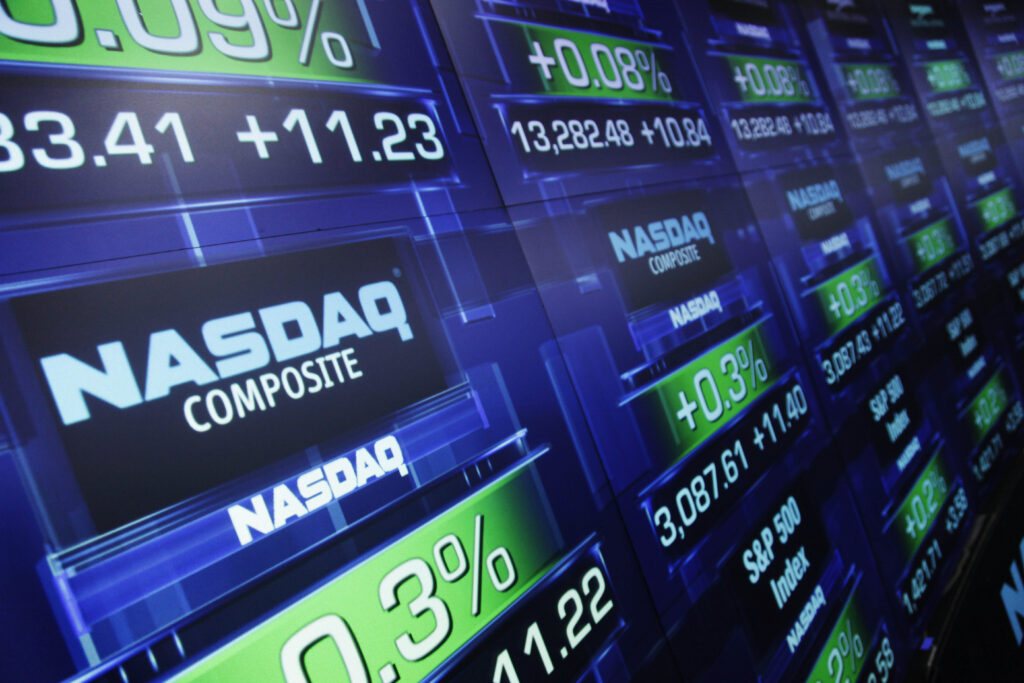
The Standard & Poor’s 500 stock index, also known as the S&P 500 Index, is the most widely tracked stock index in the world. The S&P 500 contains about 500 of the largest publicly traded stocks in the U.S., including stocks across all 11 sectors, so it’s THE index for investors to watch.
Because of its strong performance over time – the S&P 500 has returned about 10% annually over long periods – it’s a bellwether for investors. When investors talk about “beating the market,” they’re generally referring to outperforming the S&P 500, a tough but possible goal.
While beating the S&P 500 is hard, investors can outperform it by investing smartly. Here’s how.
How the S&P 500 Works
The S&P 500 stock index represents about 80% of the total market cap of all stocks in America’s public markets. So, because of this coverage, when most people talk about “the market,” they mean the S&P 500.
The S&P 500 contains hundreds of stocks, but they’re not all weighted equally, so they impact the performance of the index differently, depending on their weight. In this index, the stocks are weighted based on their market capitalization, which is the total value of all their outstanding shares.
In short, the higher the market cap, the higher the weighting in the S&P 500. That said, Standard & Poor’s does make a few adjustments based on how much of a company’s stock is actually traded on the exchange and how much remains untraded and therefore off the market.
The S&P 500 is quoted in points rather than dollars, as stocks are. As those component stocks rise or fall, the index rises or falls based on those stocks’ weightings in the index.
It can be valuable for a company to be included in the S&P 500. It’s not only a mark of prestige, but inclusion in the index also means that index funds and other funds that track the S&P 500 must buy the stock. With billions flowing into index funds every month, inclusion helps push up the stock price.
Stocks that are removed from the index are sold by these same index funds, hurting the price.
How Can You Invest in the S&P 500?
It’s easy to invest in an S&P 500 index fund, and you’ll own a slice of all the stocks in the index if you do. A handful of index funds try to mirror the index directly, and the best funds charge very low fees.
Some of the top index exchange-traded funds (ETFs) include the following:
- SPDR S&P 500 Fund (SPY)
- Vanguard S&P 500 Fund (VOO)
- iShares Core S&P 500 Fund (IVV)
These funds charge expense ratios of just 0.095%, 0.03%, and 0.03%, respectively. In other words, they would cost between $3 and $9.50 annually for every $10,000 invested in them.
Besides the S&P 500, other popular indexes include the Dow Jones Industrial Average, which tracks 30 stocks, and the Nasdaq 100, which follows 100 nonfinancial stocks traded on the Nasdaq stock exchange.
How Do Stocks Get Selected for the S&P 500?
Not just any stock can be included in the S&P 500. Standard & Poor’s has detailed criteria for making the cut, and stocks are admitted (and booted) on a quarterly basis. Here are the key criteria for making it into the index, as of 2025:
- Must be a U.S.-based company
- Must be traded on a major U.S. exchange, such as the New York Stock Exchange or Nasdaq
- Must have a market cap of at least $20.5 billion
- Must be profitable in the most recent quarter as well as in the previous four quarters together
- Must have trading volume of at least 250,000 shares per day in the six months before inclusion
Standard & Poor’s also factors in how the inclusion of a stock affects the balance of sectors in the index. The goal is to give a representative sample of major American businesses.
The Largest Companies in the S&P 500
The largest companies in the S&P 500 make up a huge share of the total index’s performance. As mentioned above, that’s because the index is market-cap-weighted. The larger the market cap, the larger the weight in the index.
Here’s the weighting of the largest stocks as of January 15, 2026, according to Slickcharts:
- Nvidia (NVDA): 7.23%
- Apple (AAPL): 6.04%
- Microsoft (MSFT): 5.40%
- Amazon (AMZN): 4.05%
- Alphabet Class A (GOOGL): 3.31%
- Alphabet Class C (GOOG): 3.08%
- Broadcom (AVGO): 2.58%
- Meta Platforms (META): 2.49%
- Tesla (TSLA): 2.32%
- Berkshire Hathaway Class B (BRK-B): 1.69%
These 10 stocks by themselves comprise about 38% of the value of the index, with the remaining 490 or so stocks in the S&P 500 comprising less than 62%. Each of the companies in the top 10 is valued at more than $1 trillion, nearly 50 times the minimum to join the index.
How Much Does the S&P 500 Return Each Year?
Over time, the S&P 500 has returned about 10% annually on average. But that figure can differ significantly in the short run or over various time periods. More recently, the S&P 500 has exceeded this historical performance, as the largest companies continue to grow quickly.
So, the return in any individual year is likely to look much higher or lower than 10%.
Here is the S&P 500’s performance over the past year and other periods, including its total return as well as its annualized (i.e., per-year) returns, as of January 8, 2026.
| Time | 1 year | 3 years | 5 years | 10 years |
| Annualized return | 16.9% | 21.1% | 12.6% | 13.7% |
| Total return | 16.9% | 77.7% | 81.0% | 260.1% |
The figure to really pay attention to is the annualized return, since that’s what you can earn in an average year, and it’s easy to compare with other potential investments.
So, in the recent past, the S&P 500 has offered 13% to 14% annual returns, which is above its historical average. The trailing three-year return is a bit of an outlier, historically speaking. Bolstered by AI development and rapid earnings growth from the largest constituents, the S&P 500 returned 26.3%, 25%, and 17.9% in 2023, 2024, and 2025, respectively. Performance like that is how you end up with a 20%-plus annualized return over that period.
This level of strong returns is what makes the S&P 500 such a bellwether index – and the standard to beat when it comes to investing.
How Can You Beat the S&P 500?
Yes, it’s possible to beat the S&P 500. And the place to begin is to look at what the S&P 500 is actually measuring.
The S&P 500 is a weighted average of the performance of the stocks in the index. So, the index’s return is just an “average” return. But that means that a number of stocks in the index have beaten that average.
So, to beat the index, you’ll need to invest in those above-average performers that are pulling up the market’s returns and ideally avoid those that are pulling down the average.
Of course, that’s easier said than done. And a strategy that outperforms the S&P 500 in one year might be a recipe to underperform in the next.
Given the high impact of the largest stocks in the S&P 500, one of the best places to look for outperformers in recent years has been in the largest stocks, particularly those that already have a strong record.
For example, the Magnificent Seven stocks have turned in a stunning performance over the past few years, leading the market higher. They include seven of the names you see above – Alphabet, Apple, Amazon, Meta Platforms, Microsoft, Nvidia, and Tesla.
Investing in those companies – and eschewing the rest of the S&P – has led to outperformance in recent years.
For example, the Roundhill Magnificent Seven Fund (MAGS) invests in just those seven stocks. In total, it has returned 102% over the past two years – higher than the S&P 500’s 51%.
Of course, past performance is no guarantee of future results. While the Mag 7 have beaten the S&P 500 in recent years, it’s not a guarantee that they always will. After all, even great trades only last so long, which is why beating the S&P 500 over long periods of time is so difficult.
But the important point is that individual investors have an advantage over the index. Unlike the S&P 500, which holds hundreds of stocks, individual investors can structure their portfolio just the way they want. They’re not obligated to hold any single position.
So, a concentrated portfolio in the highest performers can also lead you to beat the index. But there’s also a downside to this lack of diversification. If the companies in that concentrated portfolio fall further than the index, you arrive at underperformance. That’s always a risk if your goal is to beat the S&P benchmark.
As a general rule, beating the S&P over sustained periods typically means recognizing high-potential opportunities that most investors overlook… and having the risk tolerance to execute those trades when they come.
Our team of researchers and analysts is constantly scouring the market for overlooked, undervalued opportunities and is sharing these ideas with subscribers.
Right now, a renowned former hedge-fund founder and his research team have found what they believe is the next big tech trend that could make investors rich.
It’s a breakthrough they’re calling “Helios” – and if you haven’t yet heard of it, you soon will.
Over the next few years, it could impact the food you eat… the water you drink… the places you live and work… and even the prices you pay for airfare, gas, electricity, and household goods.
“Helios” is going to cause a lot of people to lose money, too. Dozens of well-known businesses could go bankrupt. But if you own a stake in this new tech, the positive effects will far outweigh the negatives. Get the facts for yourself. Make sure you’re not on the wrong side of this trend. Click here to see this new analysis…