Precious metals were putting up historic returns in January, following some strong years of performance.
As measured by the SPDR Gold Shares (GLD), gold rose approximately 25% from the start of the month to January 29.
Silver did even better. Using the iShares Silver Trust (SLV) as a proxy, the metal soared 64% through January 29.
But on the morning of January 30, gold and silver plummeted, putting up double-digit declines.
But despite the volatility, there are still a few reasons to be optimistic on gold as we go forward. Central banks around the world continue to buy the metal as a long-term store of value, and they had been doing so well before the recent spike in gold’s price.
And U.S. debt levels continue to climb, increasing inflation and hurting the value of the dollar.
If the long-term direction for gold is higher, then the sell-off on January 30 could be remembered as a great entry point for investors looking to gain exposure to gold.
Now the question – what’s the best way to do that?
The Many Ways to Own Gold
While some investors like to own the physical bullion directly, others prefer to invest in gold through exchange-traded funds (“ETFs”), which can offer a number of advantages.
Those seeking the best gold ETFs have funds that provide several types of exposure:
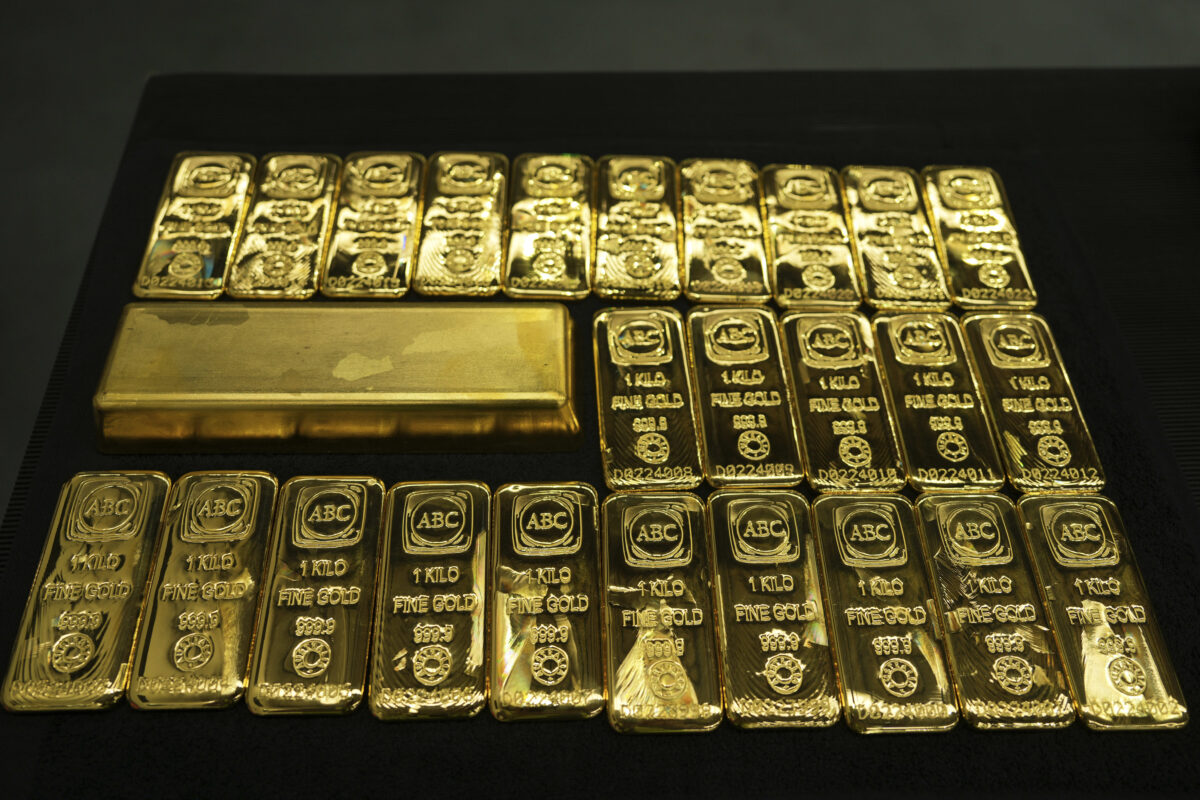
- Physical gold: These funds own physical bullion locked away safely in a vault, so the fund’s performance closely reflects the performance of gold prices minus the fund’s expense ratio. It’s a good alternative to holding gold yourself.
- Established miners: These funds own stocks of companies that are digging gold out of the ground along with a variety of other metals. When the price of gold moves higher or lower, they tend to fluctuate more than funds based on physical gold.
- Junior miners: These funds own more speculative plays, the junior miners, which may not even have a working mine yet, perhaps just some land and high hopes.
So, it’s important to understand just what’s under the hood of your gold ETF and the type of exposure you’re looking for. These funds can respond quite differently as gold prices surge or fall. And gold may be moving for any number of reasons, including the Federal Reserve’s interest-rate moves.
You can see the key performance differences in the table below. The physical gold funds have similar levels of performance, while the miner ETFs have soared even higher, even with the recent drawdown. Again, when the price of gold moves, miner ETFs can move even more… both up and down.
Top Gold ETFs: Overview
All the gold ETFs below have three things in common:
- U.S. funds classified as gold or materials funds
- Expense ratios under 0.75%
- Assets under management of at least $500 million
| Fund | 1-year performance | Expense ratio | Assets |
| SPDR Gold MiniShares (GLDM) | 65.8% | 0.10% | $31.4 billion |
| iShares Gold Trust Micro (IAUM) | 67% | 0.09% | $7.6 billion |
| GraniteShares Gold Trust (BAR) | 65.8% | 0.17% | $1.7 billion |
| VanEck Gold Miners Fund (GDX) | 143.5% | 0.51% | $29.4 billion |
| iShares MSCI Global Gold Miners Fund (RING) | 152% | 0.39% | $3.3 billion |
| Sprott Gold Miners Fund (SGDM) | 146% | 0.50% | $731 million |
| VanEck Junior Gold Miners Fund (GDXJ) | 162.2% | 0.51% | $10.4 billion |
Source: ETF.com, as of February 3, 2026
1. SPDR Gold MiniShares (GLDM)
This fund is the “mini” version of the much larger SPDR Gold Shares fund, both of which invest in physical gold. The key advantage with the mini shares is that its expense ratio is much cheaper. This fund will closely track the price of gold spot prices minus the expense ratio.
- Five-year annual return:20.3%
2. iShares Gold Trust Micro (IAUM)
This fund is the “micro” version of the larger iShares Gold Trust (IAU), and each invests in physical gold bars. The major advantage here is that this micro version has a much lower expense ratio than its larger sibling. This fund closely tracks the spot price of gold less its tiny expense ratio.
- Three-year annual return:34.5%
3. GraniteShares Gold Trust (BAR)
GraniteShares Gold Trust is another fund holding physical gold, though its net assets are lower than the first two funds on this list. This fund owns gold held in a London vault and safeguarded by ICBC Standard Bank. Its price closely follows gold’s spot price minus its low expense ratio.
- Five-year annual return:20.2%
4. VanEck Gold Miners Fund (GDX)
This fund holds gold-miner stocks, and has seen stronger returns than the physical bullion funds over the last year. Key positions include Agnico Eagle Mines (AEM.TO), Newmont (NEM), and Barrick Mining (ABX.TO).
- Five-year annual return:23.9%
5. iShares MSCI Global Gold Miners Fund (RING)
This BlackRock fund invests in gold-miner stocks, and has seen stronger returns than the physical gold funds, too. Key stocks include Newmont, Agnico Eagle Mines, and Barrick Mining.
- Five-year annual return:25.1%
6. Sprott Gold Miners Fund (SGDM)
Sprott is a well-known name in the commodities space, and this fund of miner stocks has delivered strong returns recently. Key stocks include Newmont, Agnico Eagle Mines, and Wheaton Precious Metals (WPM.TO).
- Five-year annual return:22.9%
7. VanEck Junior Gold Miners Fund (GDXJ)
As its name suggests, this ETF owns stakes in junior miners that generate at least half of their sales from gold and silver, with many based in Canada. Key holdings include Pan American Silver (PAAS.TO), Coeur Mining (CDE), and Alamos Gold (AGI.TO).
- Five-year annual return:21.7%
Pros and Cons of Buying Gold ETFs
Here are the advantages and disadvantages of investing in a gold ETF.
Advantages of Gold ETFs
- Defensive store of value: Gold has long acted as a defensive store of value, with investors turning to the metal when economic times get tough. Many investors turn to gold when political or social upheaval makes the future look less certain, whether that’s President Donald Trump’s threats of tariffs or surging U.S. deficits.
- Inflation hedge: Investors use gold as an inflation hedge, to protect against runaway inflation. If investors fear that a government may not keep inflation at a low level, they may invest in gold, which can act like a supra-national currency.
- Low correlation to stocks and other assets: Gold has historically had a low correlation to stocks, helping reduce the volatility of a portfolio. During tough times, its price may actually rise even as stocks or other speculative assets are falling. That’s part of its nature as a store of value, too. And it had one heck of a year in 2025 as risks were rising.
- Portfolio diversification: Investors may use gold as a way to diversify their portfolio, and many advisers recommend a 5% to 10% position to help balance things out.
- Easier to invest in gold: A gold ETF that owns miners allows investors to avoid the heavy analysis required to buy individual stock positions. A miner ETF owns stakes in various companies, meaning investors can play the trend rather than a specific firm.
- Trades at fair market value: An ETF that owns bullion is a much better buy than owning bullion yourself. You’ll get fair market value when you buy and sell an ETF, rather than having to pay a potentially enormous spread on both sides of a transaction when buying bullion. This spread is the dealer’s profit, and it could easily eat 15% of your investment.
- Miner ETFs have leveraged upside to gold: One of the advantages of buying a miner stock is that it has leveraged exposure to the metal. If gold rises, its profits will rise even faster, so miner stocks may do much better than gold itself. Broadly, that advantage translates over into the ETFs that hold miner stocks.
- Don’t need to secure your gold: If you want to invest in bullion, physical gold ETFs let you avoid all the headache of keeping your gold safe. That’s the fund company’s job.
Disadvantages of Gold ETFs
- Pricing can be speculative and hard to value: Gold can be highly speculative, so gold’s fair value is not that certain, and physical gold ETFs are just as hard to value. (In contrast, cash-flowing businesses in an ETF can be valued more accurately.)
- Gold prices can be volatile: As demonstrated on January 30, gold prices can fluctuate a lot in the short term, even if it does act as a store of value in the long term. Gold has soared over the past few years, but history shows that such volatile moves are followed by strong reversals, even if the overall trajectory is higher.
- Leverage works both ways: Looking at the miners specifically, we can see they have natural leverage to the price of gold. Put more simply, if gold goes up, the miners tend to rise further. But leverage works both ways.
- Physical gold ETFs face higher tax rates: Funds holding physical gold, which the Internal Revenue Service considers a collectible, are faced with tax rates up to 28% – higher than long-term capital gains rates, though no worse than what you’d pay for owning bullion directly.
- Gold doesn’t generate cash flow: Gold is just a metal, so any investment in physical bullion, whether directly or through an ETF, does not produce cash flow or dividends for investors. So the only way to make money with this kind of investment is if the price of gold rises over time. ETFs invested in miners can produce dividends, however.
- Long-term returns are lower than stocks: Notwithstanding gold’s strong run in the past few years, its long-term returns are decidedly lower than the S&P 500 Index’s returns, which have averaged about 10% annually over time. In contrast, gold has averaged closer to 7% annually in recent decades.
- Miner ETFs are not pure plays: Miners dig up more than just gold, including silver and various other metals. These miner ETFs won’t offer you pure exposure to gold.
How to Buy Gold ETFs
Investors can buy gold ETFs at any stock brokerage, since these funds trade just like stocks. But for investors, the key is understanding what you’re getting when you buy any fund and whether it matches up well with the type of exposure or investment you want to make.
- Understand your goals: What are you trying to do by investing in gold? Do you want to match the price of gold, or do you want to try for even better returns? Are you looking for diversification and relative safety, or are you using gold for strong, long-term returns?
- Know the fund’s holdings: The gold ETFs listed above perform differently. Funds with physical gold track the spot price closely, while miner ETFs will move around more, making the latter more risky, though potentially more profitable. Match your goals to the fund’s holdings.
- Check the expense ratio: Some of the most popular gold ETFs (not listed here) are actually more expensive than their “micro” or “mini” versions mentioned here. There’s no reason to pay the extra fee, however, since you’re getting the same exposure to gold. And the lower fees mean that your return is actually higher.
You don’t have to shoot for the moon with riskier plays. Simply adding some gold exposure may buffer a portfolio, and even after the recent crash, more upside may remain for gold.
Gold ETF FAQs
Are gold ETFs better than owning gold coins or bullion?
Gold ETFs can be an excellent alternative to coins or bullion. If you want exposure to the spot price of gold, look for funds holding physical gold. These funds own bullion, so their performance looks like that of gold itself, minus the fund’s expense ratio. But these funds offer a key advantage over owning bullion directly.
If you own physical gold, a metals dealer will always take a spread on the price, since the spread is the dealer’s profit. You’ll pay more than the spot price when you buy and you’ll sell for less than the spot price when you sell – never getting fair market value. Depending on how fast you need to sell your gold, you could easily lose 15% of the total value just from the spread.
But with physical gold ETFs, you’ll always buy and sell at fair market value, since the ETFs are priced this way throughout the trading day. They deliver the same price performance as gold itself, less the expense ratio. Plus, you can sell any day the market is open with no hassle, and you don’t need to worry about the problems of safeguarding your gold either.
Do gold ETFs perform better than physical gold?
The price performance of a gold ETF depends on exactly what it’s invested in. That means a gold ETF’s performance may differ from the performance of gold prices.
For example, a physical gold ETF holds actual bullion in a vault somewhere. This fund will perform almost exactly like the spot price of gold, less the fund’s expense ratio.
In contrast, a fund investing in miners will tend to be more volatile than the price of gold. Mining stocks will typically rise faster than the price of gold rises and fall faster than gold falls.
So, it’s key to understand how a fund is likely to perform in response to changes in gold prices.
What is the minimum investment in a gold ETF?
Typically, a brokerage requires you to buy at least one whole share of an ETF to make a purchase, so the minimum investment can vary depending on the price of the ETF at the time. One ETF might be $20, while another might be $100 or $200.
However, many brokerages now allow you to buy fractional shares of stocks, often with as little as $5. So you can buy a portion of a share, meaning no fund is off-limits, regardless of price. Fractional shares are a great way for beginners to buy gold ETFs or any other stocks.
Regards,
James Royal
The flash crash in precious metals has investors on edge…
But Stansberry Research Senior Partner Dr. David “Doc” Eifrig says history shows it could be on the verge of its biggest bull run in more than half a century.
His research shows it could be triggered by a major event, eerily similar to what happened in the 1970s. It’s NOT inflation, Fed rate-cut expectations, escalating geopolitical tensions, or anything you’re likely expecting.
And Doc believes you MUST own shares of his top gold stock.
He says you could increase your money by 10 times without touching a risky miner or a boring ETF.
It’s the centerpiece of Doc’s full game plan for this wild market, with extraordinary upside potential.
Click here for the full details on this developing gold story.