Image Credit: Associated Press
Listen to the audio version of this article (generated by AI).
Key Points
- The Office of the Comptroller of the Currency granted preliminary conditional approval for World Liberty Trust to organize as a national trust bank focused on the USD1 stablecoin.
- Partially owned by President Donald Trump, World Liberty Trust must still raise the required capital, pass a preopening examination, and receive final authorization. The preliminary approval expires on August 14, 2027, if those conditions are not met.
- The emergence of a regulated pathway for stablecoins in a market worth nearly $300 billion could be a bullish signal for the broader crypto market.
One of the biggest crypto stories this month didn’t happen on an exchange… but instead, inside the federal banking system.
The Office of the Comptroller of the Currency (“OCC”) granted preliminary conditional approval on August 14 to World Liberty Trust to organize as a national trust bank.
The proposed institution is connected to World Liberty Financial (WLFI), the crypto venture behind the USD1 stablecoin. Its business would revolve around issuing and redeeming USD1, managing its reserves, and providing digital-asset custody to institutional customers.
Four days after the approval, the Treasury Department published another major piece of the federal stablecoin rule book to implement the GENIUS Act. (More on this below.)
Taken together, these developments show that stablecoins are moving beyond political debate and into the operational phase of regulation.
Now, it’s important to understand that World Liberty Financial, USD1, World Liberty Trust, and the WLFI governance token are not interchangeable. The OCC approval covers the proposed bank’s USD1, custody, and conversion activities. The decision specifically says, “The bank will not issue, custody, or deal in WLFI tokens.”
In other words, World Liberty Trust can touch USD1 stablecoins… but not WLFI tokens.
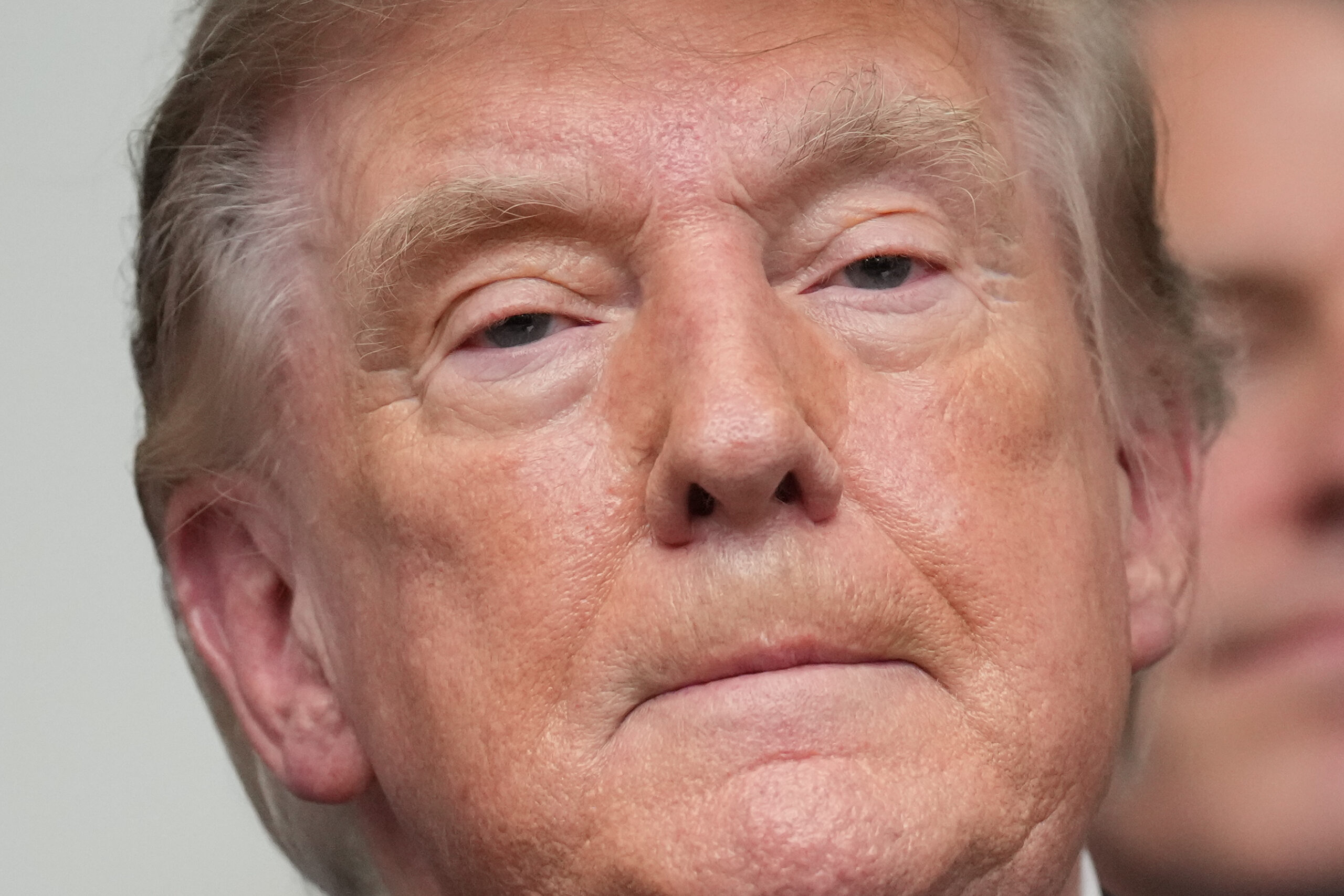
World Liberty Financial’s ties to President Donald Trump’s family have also drawn significant conflict-of-interest scrutiny. The OCC says career staff reviewed the application under the agency’s established procedures and would generally supervise the institution.
As of right now, licenses are being considered, capital requirements are being set, compliance systems are being built, and companies are preparing to bring digital dollars deeper into the traditional financial system.
For long-term crypto investors, that’s the part worth watching…
The USD1 Stablecoin Banking Bet
World Liberty Trust wouldn’t resemble the bank around the corner from your house. It wouldn’t be an insured depository institution, make ordinary loans to the public, or operate a public-facing branch.
Instead, it would operate as a limited-purpose, uninsured national trust bank focused primarily on digital assets.
Its proposed activities include issuing and redeeming USD1, maintaining the assets backing the stablecoin, providing fiduciary digital-asset custody, and converting certain approved stablecoins into USD1 for custody customers. The company plans to serve institutional clients nationwide.
Today, digital-asset bank BitGo handles the main issuance, custody, and reserve functions for USD1. Once World Liberty Trust is established and receives final authorization, it plans to acquire the reserve assets and related liabilities from BitGo and take over those operations.
That transition is important because USD1 has already surpassed $4 billion in circulation. It’s no longer a small test product operating at the market’s edge. And moving issuance, custody, and reserves from BitGo, which is already a federally chartered national trust bank, to the proposed World Liberty Trust would significantly change who controls those operations.
But again, the approval is preliminary…
World Liberty Trust can’t begin banking operations until it completes the OCC’s preopening requirements and receives final authorization. The OCC can also modify, suspend, or rescind the approval if circumstances change before the bank opens. The OCC hasn’t specified a possible opening date.
Behind the Dollar Promise
USD1 looks simple from the outside. One token is designed to maintain a 1-to-1 value with the U.S. dollar.
But behind that promise sits a complicated network of issuers, custodians, banks, compliance providers, reserve managers, blockchain systems, and redemption processes.
Each operational handoff can add cost, delay, and risk.
World Liberty Trust’s plan would move issuance, custody, and reserve management from BitGo to an institution affiliated with World Liberty.
The proposed bank would oversee issuance, redemptions, reserve management, and institutional custody. That structure could reduce World Liberty’s reliance on an outside provider and place those functions under one affiliated OCC-supervised entity.
For large financial companies, that’s a huge difference.
Asset managers, exchanges, corporations, payment platforms, and market makers generally need more than a blockchain address and a promise. They need defined redemption procedures, compliance programs, audited financial statements, cybersecurity controls, and an institution that regulators can examine.
The OCC’s conditions reflect those concerns. World Liberty Trust must maintain at least $20 million in Tier 1 capital. More than 50%, or $10 million of that capital, must be held in eligible liquid assets. It must also maintain a separate liquid-asset cushion sufficient to cover 180 days of operating expenses. These requirements will remain in effect during the bank’s first three years of operation.
The bank must also build formal audit, information-security, anti-money-laundering, sanctions-compliance, governance, and risk-management programs before opening.
Federal supervision can’t remove all stablecoin risks. But it creates a structure for monitoring those risks, assigning responsibility, and enforcing minimum operating standards. That could make digital dollars easier for traditional institutions to use.
The GENIUS Act’s Stablecoin Framework Is Taking Shape
The timing of World Liberty Trust’s preliminary approval is important.
On August 18, the Treasury Department published proposed rules implementing a central section of the GENIUS Act, the federal payment-stablecoin law enacted in 2025. (Its full name is the Guiding and Establishing National Innovation for U.S. Stablecoins Act.)
The proposal addresses when a stablecoin is considered “issued” in the United States and when exchanges, custodians, and other digital-asset service providers are allowed to begin offering or selling stablecoins to U.S. customers.
Public comments are due by October 19, with the GENIUS Act expected to take effect on January 18, 2027. However, an earlier effective date could be triggered after federal regulators issue final implementing regulations.
Another important deadline is set for July 18, 2028. Beginning then, most digital-asset service providers will not be allowed to offer or sell payment stablecoins to people in the U.S. unless the tokens are issued by a permitted stablecoin issuer.
A separate proposal covering customer-identification requirements for permitted stablecoin issuers remains open for public comment through August 21.
These dates show that the regulatory process is accelerating. So, while the rules are still being finalized, the industry now has a visible timeline. That helps companies plan for the implementation.
Stablecoin issuers can begin designing their reserve, redemption, compliance, and reporting systems around a federal framework. Exchanges can evaluate which stablecoins they can offer. Banks and custodians can decide how they want to participate.
And World Liberty Trust’s approval is directly tied to that framework. The OCC requires the proposed bank to change, stop, or divest stablecoin activities if necessary to comply with the GENIUS Act and its final implementation.
In other words, World Liberty Trust is on a path toward opening, but it must be built around the forthcoming rules.
A Federal Route for Crypto Firms to Meet Banking Regulations
World Liberty Trust isn’t the first digital-asset company to pursue a national-trust-bank charter.
The OCC’s decision points to previous approvals involving BitGo, Paxos, Ripple, Fidelity Digital Assets, Bridge, Foris Dax, and First National Digital Currency Bank. Their business plans differ, but many focus on stablecoins, digital-asset custody, settlement, or related financial infrastructure.
That pattern is more important than any one approval. It suggests that a repeatable federal route is forming for crypto companies willing to meet banking-style standards.
For years, digital-asset regulation was dominated by enforcement actions, court cases, and disagreements over how existing financial laws applied to new technology.
The national-trust-bank model offers a more direct route: A company presents a business plan… Regulators evaluate its capital, governance, custody, technology, and risk controls… And the company operates under continuing federal examination if it satisfies the requirements.
The process may be slower and more expensive than launching an unregulated token, but it creates the type of structure institutional markets tend to require.
Not every applicant succeeds. And a charter will not turn every stablecoin into a widely used product. But the existence of a regulatory lane lowers one of the largest barriers facing the industry: uncertainty over how a compliant stablecoin business can operate at a national scale.
Where the Upside Flows
The immediate commercial opportunity belongs to World Liberty Trust and USD1. But the larger one extends across the digital-asset economy.
For example, stablecoins allow dollar-denominated value to move across blockchain networks 24/7. They can be used for trading, payments, collateral, treasury management, cross-border transfers, and financial settlement.
As more regulated stablecoins enter the market, more dollar liquidity could move onto blockchain infrastructure, creating potential activity for the networks processing those transactions, the exchanges providing liquidity, and the applications that make those stablecoins more useful.
The strongest beneficiaries will likely be the platforms that attract sustained financial activity rather than temporary speculation. Factors like stablecoin supply, transaction volume, institutional integrations, security, and developer activity all paint a clearer picture of adoption than social media attention or short-term price.
Meanwhile, financial institutions are already experimenting with tokenizing Treasurys, money-market funds, private credit, equities, and other traditional assets.
But tokenized markets need more than tokenized investments. They also need a dependable payment and settlement asset.
Regulated stablecoins could provide that cash component, closely connecting the growth of stablecoins and tokenized assets. One side represents money, and the other represents investments and financial claims.
As those markets expand together, blockchains could play a larger role in the infrastructure behind traditional finance.
The Deadlines That Matter
At Crypto Capital, Eric Wade and I follow the pulse of the crypto market closely. And we’re always looking for projects and cryptos that will benefit from the rise of stablecoins and tokenization.
Right now, a couple of deadlines have caught our eye.
World Liberty Trust now has a specific window in which to move from preliminary approval to an operating institution.
- The required capital must be raised within 12 months of the August 14 approval. That places the capital deadline at August 14, 2027.
- At least 60 days before its planned opening, the company must notify the OCC that it’s operationally ready, provide its anticipated opening date, and request a preopening examination.
- The bank must then open no later than 18 months after preliminary approval, giving it a deadline of February 14, 2028.
So, the next meaningful headlines to watch for will most likely involve execution. We’re looking for confirmation that the capital has been raised, notice of a preopening examination, completion of the planned transfer from BitGo, an official opening date, and final OCC authorization.
Any one of those events would show that the project is closer to becoming operational.
From Speculation to Infrastructure
Exchange-traded funds made crypto exposure easier to obtain through an ordinary brokerage account.
National-trust-bank charters could make blockchain-based assets easier to use inside regulated financial markets.
That second development may have even broader consequences.
Stablecoins can provide the digital cash used to settle tokenized investments. Custodians can give institutions a regulated place to hold digital assets. And banks and payment companies can connect blockchain networks to existing financial accounts. Each piece strengthens the others.
World Liberty Trust still has major requirements to meet. On top of that, its approval is conditional, its opening date is unknown, and the final stablecoin rules are still being developed.
But the broader direction is becoming clearer. The U.S. is moving from debating whether stablecoins belong in the financial system to defining how issuers will be licensed, supervised, capitalized, and permitted to serve customers.
Crypto’s next stage may look less like a speculative frenzy and more like ordinary financial infrastructure: charters, reserves, audits, custody, reporting, and settlement.
That may sound less exciting than a sudden bitcoin rally. But for long-term adoption, it’s far more important.
Good investing,
Stephen Woolridge
Editor’s Note: Whitney Tilson — the hedge fund manager CNBC called “The Prophet” — says America has reached its “Ripping Point.“ The old financial order is being torn apart, and he believes most investors have no idea what’s coming in the next six months. He’s named the stocks he thinks will be destroyed in the chaos — and the ones he believes will soar. Watch his free presentation while it’s still available.